After the South American Summit, Brazil’s leaders say that if Brazil doesn’t lead the region, China and the US will do so
Brazil is trying to regain regional leadership and economic gains with the leaders’ summit in Brasilia.
For an analyst interviewed by Sputnik, the reception of the South American presidents is already a diplomatic victory for Lula, who managed to re-establish ties with Maduro.
On May 30, President Luiz Inácio Lula da Silva received the South American heads of state for joint meetings in Brasília.
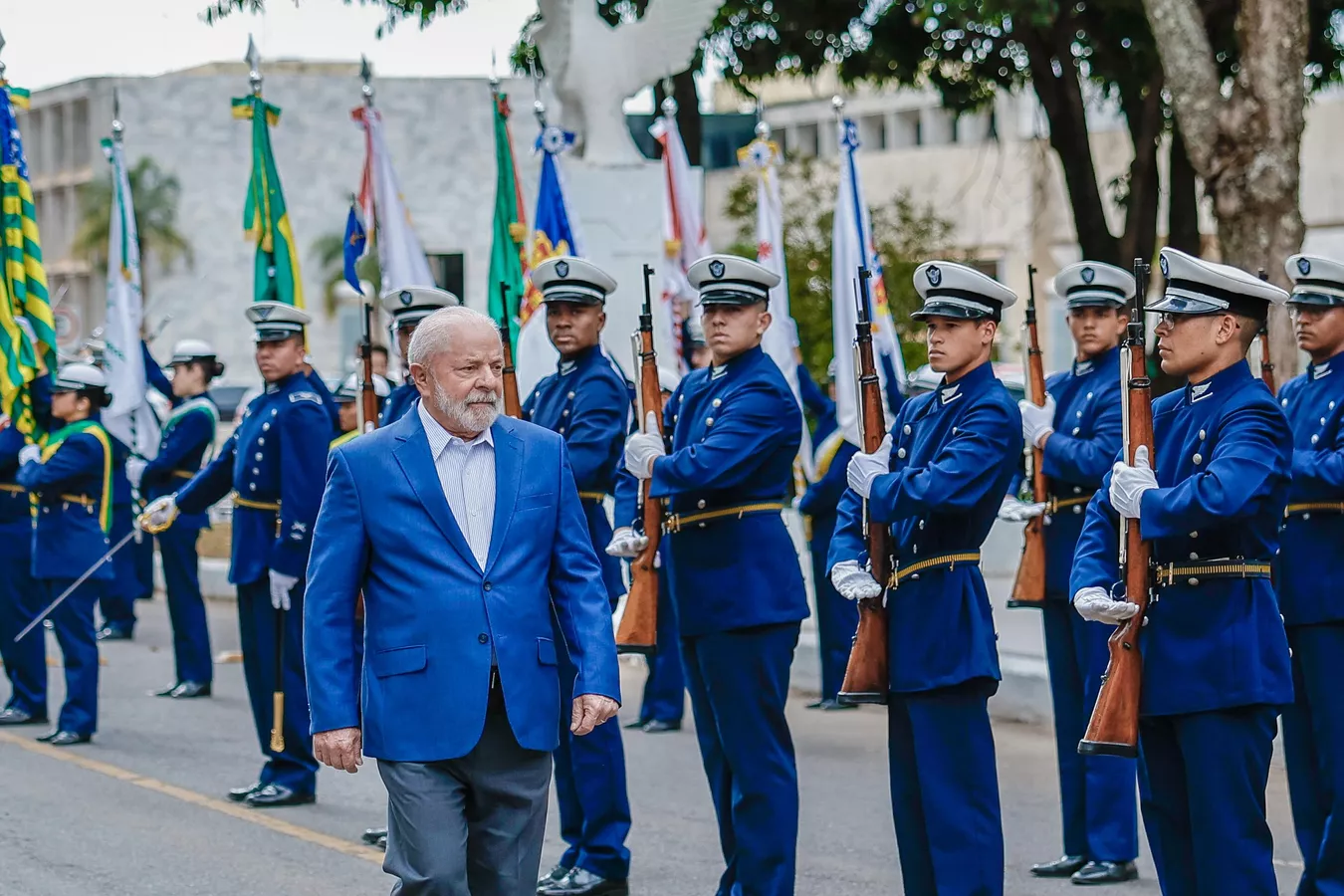
The purpose of the meeting was to resume regional integration projects and to recover Brazil’s leadership in the South American space.
According to the Brazilian president, the resumption of projects such as the Union of South American Nations (Unasur) and the Community of Latin American and Caribbean States (CELAC) are essential to “strengthen the unity of Latin America and the Caribbean”.
“A strong, secure, and politically organized South America expands the possibilities of affirming, at the international level, a true Latin American and Caribbean identity,” said Lula during his inaugural speech.
In his speech, Lula defended the legacy of Unasur and lamented the decline of regional coordination on issues such as health, infrastructure, and defense.
“For more than ten years, Unasur allowed us to get to know each other better,” Lula recalled.
“Unasur was effective as a forum for resolving disputes between countries in the region, especially in the crisis between Colombia and Ecuador and in the Bolivian separatist conflict,” he added.
Despite the president’s enthusiastic support, the Brazilian Foreign Ministry did not achieve its goal of announcing the resumption of Unasur’s work already at the beginning of the summit.
The high degree of institutionalization and the costs associated with the project divide regional leaders, reported Folha de São Paulo.
Aware of the impasse, Lula said that the leaders’ meeting must take concrete decisions so that an action plan for the resumption of integration can be adopted within 120 days.
“As long as we are disunited, we will not make South America a continent developed to its full potential. Integration must be a permanent goal for all of us.”
“We need to leave strong roots for future generations.”
“Letting divergences take hold would be very costly, besides wasting much of what we have already built together”, stated the Brazilian president.
Despite the postponement of the resumption of Unasur, the coordinator of the Regionalism Observatory and professor of International Relations at Unifesp, Regiane Nitsch Bressan, believes that the meeting of South American leaders in Brasília already represents a diplomatic victory for the government.
“I think the coming of the leaders is a very positive nod that the region was longing for this kind of initiative,” Bressan commented to Sputnik.
“But let’s not forget that we have a group of leaders who are ideologically in favor of integration,” she said.
The presidents of Argentina, Bolivia, Chile, Colombia, Ecuador, Guyana, Paraguay, Suriname, Uruguay, and Venezuela attended the Brasília meeting.
Only the president of Peru, Dina Baluarte, who did not attend for legal reasons, decided to send a representative.
Brazil’s interest in resuming its leadership responds to the general objectives of Lula’s foreign policy but also seeks to strengthen Brazil’s position in international trade.
“Brazil wants to resume its leadership, but we also need to solve trade economic problems pragmatically,” Bressan stressed.
“South America is the main consumer of our manufactured products; we need to pay attention to it.”
“We need to seed political leadership and commercial and economic gains,” he added.
However, the results of the meetings of the heads of state and government will make it clear whether the other countries in the region will welcome Brazil’s leadership.
“The region expects some country to play a leading role. And when Brazil leaves that space free, another one occupies it,” Bressan considered.
In addition to the permanent presence of the United States, the specialist notes the increase of Chinese influence in the region during the years Brazil abstained from its regional leadership.
“Conversely, Brazil can address China and Japan and have access to international power groups.”
“So the neighbors are interested in taking advantage of this Brazilian access,” Bressan opined.
The analyst recalls that the region’s countries yearn for international cooperation to overcome economic difficulties and the persistent effects of the Covid-19 pandemic.
In this sense, Lula suggested during the leaders’ meeting the possibility of mobilizing regional banks such as the Development Bank of Latin America (CAF), the Financial Fund for the Development of the La Plata Basin (Fonplata), and the National Bank for Economic and Social Development (BNDES) to meet the demand for credit in the region.
THE VENEZUELAN ELEPHANT IN THE ROOM
The diplomatic success achieved by the Brazilian Federal Government was partially overshadowed by blunt criticism from members of the Legislative Branch of the reception of Venezuelan President Nicolás Maduro on Brazilian soil.
Congressman Paulo Barbosa (PSDB/SP), chairman of the House Foreign Relations Committee, said in an interview with GloboNews that he would make a note of repudiation of the current Brazilian position concerning the political order in Venezuela.
For Regiane Nitsch Bressan, however, Brazil is right to restart the high-level dialogue with its Amazonian neighbor.
“It is essential that we restart relations with Venezuela to address the problems common to both countries,” Bressan stated.
“We have serious problems in migration, health, environment, indigenous communities, drug trafficking, and trade.”
“Resuming relations is a way to negotiate solutions to these problems,” stressed the professor.
The expert also recalled the harmful consequences of economic embargoes on local populations, which do not contribute to resolving complex political crises.
“In this sense, the reactivation of Unasur would be of great value to discuss Venezuela and also to be a forum for dialogue and anticipation of information about neighboring countries,” the professor explained.
“Unasur toasts for these desires and possibilities”, concluded Bressan.
On May 30, the Brazilian president received 11 South American leaders for a press conference at Itamaraty Palace, followed by a dinner at Lula’s official residence, Alvorada Palace.
This was the first regional meeting of heads of state and government in more than eight years.
With information from Sputnik
News Brazil, English news Brazil, Brazilian diplomacy
More: Brazil news in English, every day from The Rio Times.
Editorial responsibility: Matthias Camenzind, Editor-in-Chief · Editorial standards · Report an error