Workers’ Party Speaks of Need for Renewal, but Still Insists on Lula
RIO DE JANEIRO, BRAZIL – When Federal Deputy Natália Bonavides, 31, was born, the Workers’ Party (PT) was already eight years old. On the day she turned five months old, the party had its first great electoral success, winning mayoralties in capitals such as São Paulo (São Paulo State), Porto Alegre (Rio Grande do Sul State), and Vitória (Espírito Santo State).

In comparison, the more recently formed PSL, which has built a parliamentary bench equivalent to that of PT, includes 18 federal deputies in this age bracket.
Upon turning 40 on Monday, February 10th, PT seeks to emerge from its most difficult period, when Lava Jato, recession, the impeachment of a president and the imprisonment of its greatest leader occurred.
To this end, one of the most urgent tasks, according to party leaders heard by the story, is to reconnect with sectors that have been lost to the right-wing, whether liberal or conservative. Among them, young voters.
“The main challenge of the PT is to reconnect with parts of the working class and youths that migrated to another political project in 2018,” Bonavides says.
The deputy followed a career path common to the many of the party’s youth wing. A daughter of leftists, she climbed onto Lula‘s platform during a rally in her state in the 2002 presidential campaign. “I have a picture beside him, very young, wearing braces. I was 14,” she recalls.
Later, she became a student leader, worked with popular movements, was elected city councilor in Natal, the capital of Rio Grande do Norte, and finally reached Brasília in the 2018 elections.
This path is becoming increasingly rare. According to the PT’s of Organization Secretariat, the party has 137,000 affiliates up to the age of 30, which represents just eight percent of the total who reported their age in the party’s records. By comparison, those over 60 are 24 percent of this total.
“The question of renewal is dramatic for us. The PT is an aging party,” says Gilberto Carvalho, 69, a former head of Luiz Inácio Lula da Silva’s cabinet in the presidency and one of the party’s historical figures.
“To the left, the PSOL party, has achieved a degree of renewal. To the right, this happened due to investments made by [businessman Jorge Paulo] Lemann that resulted in leaderships like [federal deputy] Tabata Amaral, as well as groups like the MBL [Free Brazil Movement],” Carvalho says.
According to him, to recover this ground is to find a new discourse for structural changes that have occurred in society since the PT was removed from the presidency four years ago.
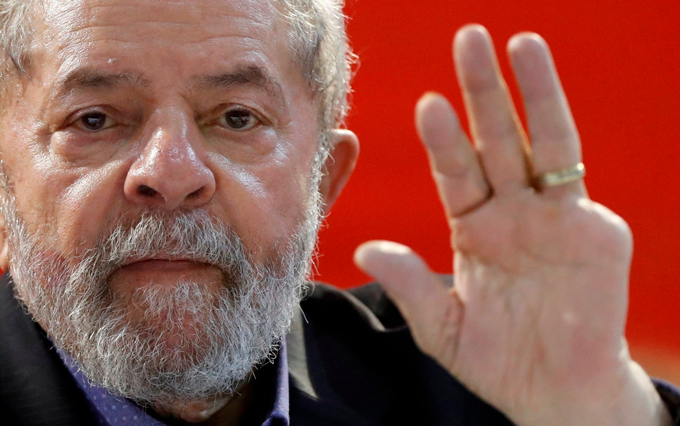
He mentions the growth of informal labor relations, which occurred after the labor reform law was passed, and the so-called “uberization”. “We cannot reproduce old dogmas. The world has changed, society has changed”, he says.
What remains unchanged in the party is the deference to Lula and the permanent advocacy of his presidential candidacy.
After a long period of political siege, due to Lava Jato and the scandals that have reached the figure of its greatest leader, the party seems to have regained some self-confidence.
Vaza Jato, the ex-president’s release, and the political mistakes of Jair Bolsonaro’s government have encouraged leftists to cry out “Lula 2022,” despite all the lawsuits he is facing.
“We must encourage other leaders, but none have matched him. We have no other seductive figure like Lula. I advocate him [the candidate], for sure,” Carvalho says.
In the 1988 red wave, former banker Olivio Dutra handed the party one of its greatest victories by winning Porto Alegre’s city hall. Later, he was governor of Rio Grande do Sul and Lula’s minister, to whom he remains very close.
Founder of the party, he favors an intense self-examination of the PT to identify mistakes. Scandals such as Lava Jato and ‘Mensalão’ would be the result of a certain permissiveness in the party’s practices.
“In those 40 years, the PT has become very similar to other parties, by making political activity a pragmatic thing, by promoting a ‘give-and-take’, that by giving one receives, a laxity in alliances,” Dutra, 78, says.
According to him, the party has to constantly reassess itself. “Instigation is needed, recognizing that what it did was not a small thing, but that it was also wrong and made mistakes at other points,” he says.
Dutra, like other iconic party personalities, continues to advocate for Lula but demonstrates a certain annoyance with the personification of the PT in the figure of its greatest exponent.
“The party is not Lula. If it were not for the Workers’ Party, Lula would not exist. The party cannot rely solely on an individual personality, no matter how much we respect him,” he says.
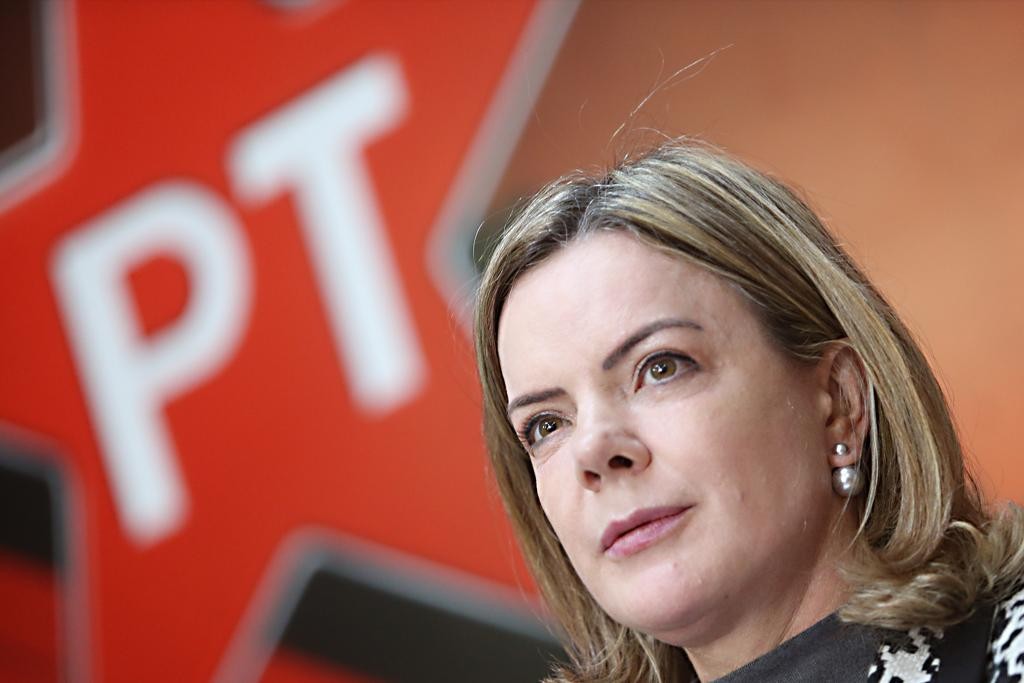
Since his release in November last year, the ex-president has gladly returned to party activity. He has even taken part in meetings for which he has never had much patience, with state party leadership.
In São Paulo, he was directly involved in the hitherto unsuccessful attempt to find a consensus candidate to run for mayor. In his office at the headquarters of the Lula Institute, in the São Paulo district of Ipiranga, he works almost daily, welcoming leaders from various parties.
The PT members know that the chances of Lula being legally able to run for the presidency again are minimal. The ex-president has already been convicted in two lawsuits and is a defendant in another six.
If he is unable to run, the name of São Paulo’s former mayor Fernando Haddad again emerges as the favorite. Another alternative mentioned is the governor of Bahia, Rui Costa. Supporting a name from another party, as always, is something virtually discarded.
The party’s national president, re-elected in November for another four-year term, federal deputy Gleisi Hoffmann, 54, says Lava Jato is a constant threat against the PT. “Lava Jato remains as a sword over the head of the PT, because it is used as a political tool. There is always an inquiry, an investigation. That kind of persecution is very strong,” she says.
However, she senses a certain cooling down in the negative assessment that people have of the party, motivated by the questioning of the methods used by the current Minister of Justice Sérgio Moro when he was a federal judge in Curitiba. “The perception of Lava Jato and the PT is very different today from what it was in 2016 [the year of Dilma Rousseff’s impeachment]. Vaza Jato helped us,” she says, in reference to the disclosure of dialogues between Moro and prosecutors.
According to Gleisi, there was a “huge” burden on the PT. “No party deserved the deconstruction suffered by the PT. What’s Lula’s score abroad? The PSDB has one,” she says. She believes that this new climate provides conditions for the party to resume part of the political strength it has lost to Bolsonaro. “This loss is temporary,” says Gleisi, to whom Brazilian society is always in dispute.
To the allegation that the PT has moved away from its historical base, Gleisi says it was part of an inevitable process in which leaders were called upon to contribute to the government. “There was a transfer of officials, to face the challenge of governing. In fact, this left the party very fragile,” she says.
The next step on PT’s path to try to pull itself together is the municipal elections in October. Since the 2016 results were disastrous, it is virtually impossible for the party not to grow.
“The potential strengthening of Bolsonaro, fuelled by the country’s relative economic improvement, is not alarming,” said the PT president. “Even if the GDP grows 2.5 percent, people’s lives won’t improve. Poverty has increased, hunger has returned. All you have to do is stand at the doors of supermarkets,” she says.
Source: Folhapress
More: Brazil news in English, every day from The Rio Times.
This article was produced by The Rio Times’ automated newsroom system. How we use AI · Report an error
Read More from The Rio Times