
GUIDES · KENYA
Key Facts
- —Kenya East Africa’s Indian Ocean economy, worth about KSh17.6 trillion (about US$135.5 billion) in 2025. Real output grew 4.6 percent that year, per the statistics office.
- —Currency The Kenyan shilling, at KSh129.71 per US dollar on 1 October 2026, the central bank’s rate. This guide converts at that rate.
- —Policy makers Treasury Cabinet Secretary John Mbadi and Central Bank of Kenya Governor Kamau Thugge, as of October 2026. Thugge took office on 19 June 2023.
- —Safaricom The M-Pesa owner, with revenue of KSh427.6 billion (about US$3.30 billion) in the year to March 2026. A court voided its 2026 change of control.
- —Stock market The Nairobi Securities Exchange was worth KSh4.12 trillion (about US$31.8 billion) on 30 September 2026.
- —US link Duty-free access under AGOA now runs to 31 December 2028. Kenya sold goods worth KSh79.7 billion (about US$614 million) to the US in 2025.
Kenya’s economy is steered by a small cast: the Treasury, the central bank, Safaricom, the big banks, state companies and family fortunes. For a US reader they decide what Kenyan assets are worth, whether duty-free garments keep flowing and where American money can enter. This guide maps the Kenya economy key players as of October 2026.
Kenya’s Economy at a Glance
Kenya’s real output grew 4.6 percent in 2025, after 4.7 percent in 2024. That is the finding of the Economic Survey 2026 from the Kenya National Bureau of Statistics (KNBS), the state statistics office. Nominal output reached about KSh17.6 trillion (about US$135.5 billion).
Treasury Cabinet Secretary John Mbadi put income per person at US$2,549 when he released the survey. Growth averaged about 4.8 to 4.9 percent in the first three quarters of 2025, then slowed to 4.0 percent in the fourth. He blamed drought, which cut farm growth to 3.1 percent.
Agriculture, forestry and fishing still make up more than a fifth of the economy. Construction rebounded by 6.8 percent in 2025 and accommodation and food services grew 15.6 percent. Finance and insurance expanded 6.5 percent, information and communication 4.8 percent.
Prices are the pressure point in late 2026. Inflation rose to 6.8 percent in September from 6.6 percent in August, the Central Bank of Kenya (CBK) reported on 2 October. Reserves stood at US$14.93 billion on 1 October, enough for 6.1 months of imports.
The Policy Makers: Treasury and Central Bank
John Mbadi is Cabinet Secretary for the National Treasury and Economic Planning, the finance minister in all but name. He chaired parliament’s Public Accounts Committee before his appointment. He presented the 2026/27 budget to the National Assembly on Thursday 11 June 2026.
He answers to President William Ruto, who appoints the cabinet. Ruto is expected to seek a second term in the general election due in August 2027. Lee Kinyanjui, Cabinet Secretary for Investments, Trade and Industry, leads on AGOA and trade with the United States.
Kamau Thugge has been CBK governor since 19 June 2023, after years as a senior Treasury official. He chairs the Monetary Policy Committee, which sets monetary policy independently of the bank’s board. The overnight interbank rate held at 8.75 percent in the week to 1 October.
The International Monetary Fund is the missing player: its last US$3.6 billion Kenya programme ended early in 2025, before its final reviews. An IMF spokesperson said in October 2026 that staff will visit Nairobi in December. The visit is for an Article IV review, the Fund’s annual health check.
Safaricom and the Fight Over Its Control
Safaricom is the mobile operator behind M-Pesa, the phone money service with 40.99 million monthly active users in Kenya. It held 66.8 percent of mobile customers in December 2025, the company says. Peter Ndegwa has been chief executive since April 2020.
In the year to 31 March 2026, total revenue rose 10.0 percent to KSh427.6 billion (about US$3.30 billion). M-Pesa earned KSh182.7 billion (about US$1.41 billion), 45.6 percent of Kenyan service revenue. The Kenyan business made net income of KSh119.1 billion (about US$918 million).
M-Pesa moved KSh41.68 trillion (about US$321 billion) during that year, more than twice national output. Safaricom paid the state KSh163.06 billion (about US$1.26 billion) in duties, taxes and licence fees. That makes it a fiscal asset as much as a company.
The state sold 15 percent of Safaricom for KSh204.3 billion (about US$1.58 billion), or KSh34 a share (about US$0.26). It also took about KSh40 billion (about US$310 million) for future dividends on its remaining 20 percent. The buyer was Vodafone Kenya, a vehicle that South Africa’s Vodacom Group took full ownership of in the deal.
The deal closed on 30 June 2026 and lifted Vodacom’s stake from about 39.9 percent to 55 percent. On Tuesday 15 September 2026 a three-judge High Court bench declared it null and void. It ordered the shares restored to the government; Treasury and Vodacom both said they would appeal.
The Banks That Finance Kenya
Banking is where Kenyan private capital is deepest. Equity Group, led by chief executive James Mwangi, posted the highest half-year pre-tax profit among lenders that had reported by August. Its profit after tax rose 32 percent to KSh45.5 billion (about US$351 million) in the six months to June 2026.
KCB Group, run by chief executive Paul Russo, earned a record KSh36.87 billion (about US$284 million) after tax, up 14 percent. Its total income reached KSh108.1 billion (about US$833 million) for the half. Equity says subsidiaries outside Kenya now provide 42 percent of its banking profit.
Co-operative Bank earned KSh18 billion (about US$139 million) in the half, and Absa Bank Kenya KSh10.5 billion (about US$81 million). Stanbic Bank Kenya earned KSh6.48 billion (about US$50 million).
NCBA Group is changing hands. The CBK approved on Friday 28 August 2026 the purchase of up to 66 percent of NCBA by South Africa’s Nedbank Group. NCBA, led by John Gachora, said the last approvals were expected around the end of the third quarter.
State Companies and the Privatisation Push
The state still owns much of the energy and transport backbone, and it has started to sell. Kenya Pipeline Company, the state fuel pipeline operator, floated 65 percent of its shares at KSh9 each (about US$0.07). The offer raised KSh106.3 billion (about US$820 million) and was 105.7 percent subscribed.
Trading began on the Nairobi exchange on Tuesday 10 March 2026, with the Treasury keeping 35 percent under a two-year lock-in. President Ruto said the proceeds will capitalise a new National Infrastructure Fund.
KenGen, the main generator, is 70 percent owned by the government, its 2025 annual report says. It earned KSh59.7 billion (about US$460 million) in revenue in the year to June 2026. Profit after tax was KSh10.35 billion (about US$80 million). It supplied 57.2 percent of the power fed into the national grid, as peak demand hit a record 2,549 megawatts.
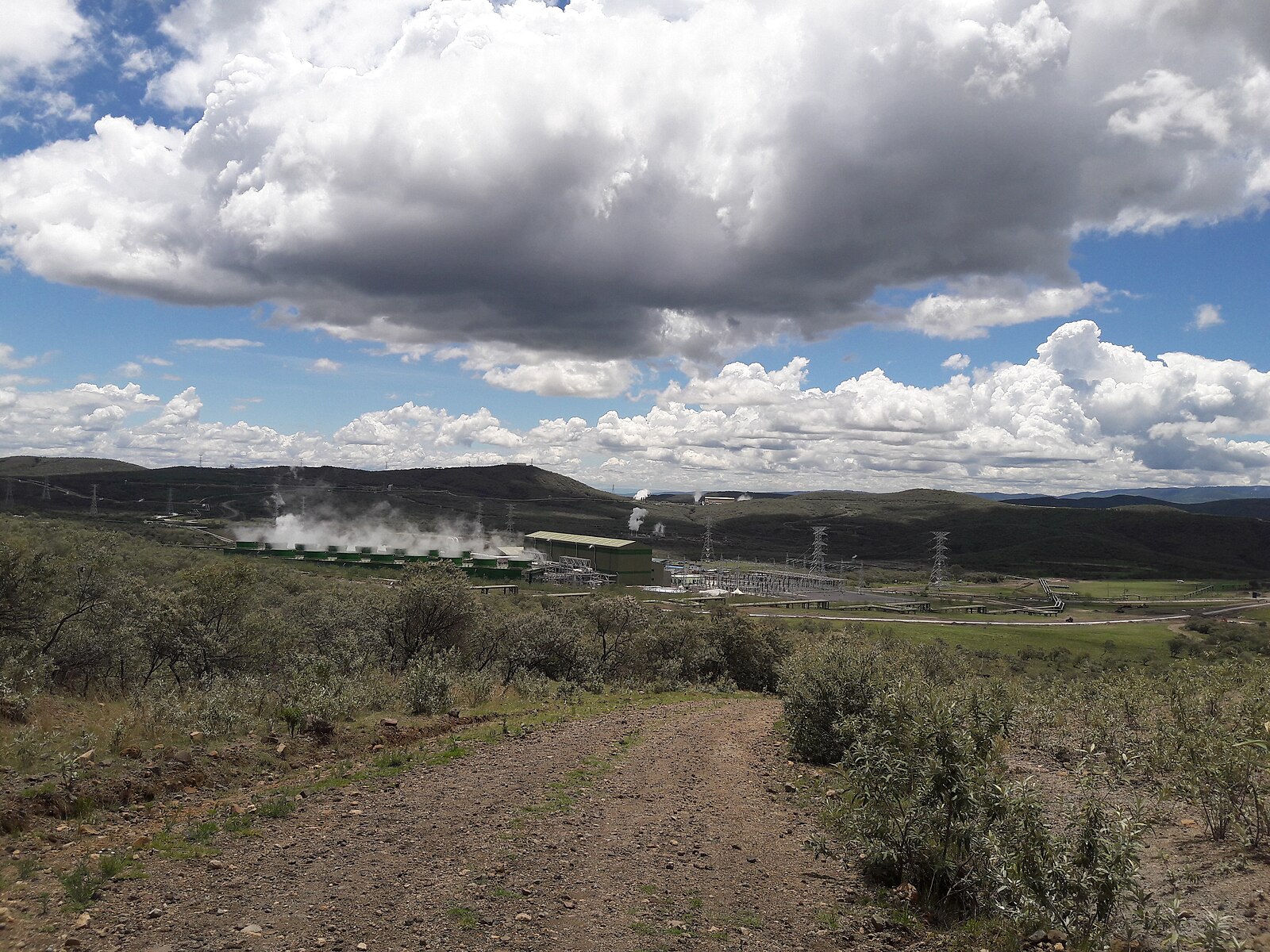
Kenya Power, the distributor, is 50.09 percent owned by the Treasury and run by managing director Joseph Siror. Profit after tax rose to KSh24.99 billion (about US$193 million) in the year to June 2026. Electricity sales grew 12.05 percent to 12,777 gigawatt hours.
Kenya Airways is the weak link; the Treasury holds 48.9 percent, its 2025 annual report shows. It lost KSh16.1 billion (about US$124 million) in the first half of 2026 on revenue of KSh81.25 billion (about US$626 million). Its equity was negative by about KSh147.9 billion (about US$1.14 billion), and management wants to raise capital.
Business Families and Private Groups
Old money sits mostly in banking. Enke Investments, long associated with the family of founding president Jomo Kenyatta, holds 13.2 percent of NCBA. In May 2026 NCBA disclosed that Muhoho Kenyatta, of that family, holds 227.3 million shares directly and indirectly.
That stake was then valued at about KSh20 billion (about US$154 million). Business Daily, a Nairobi paper, called it the largest disclosed personal fortune on the exchange. The family is also linked to Brookside Dairy and the Heritage Hotels chain.
The family of Philip Ndegwa, a former CBK governor, holds 14.94 percent of NCBA through First Chartered Securities. James Mwangi of Equity holds 127.8 million Equity shares, and I&M director Suresh Shah holds 174.9 million I&M shares. These listed stakes are the fortunes that can be checked.
Large private family groups also shape industry, such as the Shah family’s Bidco Africa, a maker of edible oils, soaps and drinks. They do not publish accounts, so their size cannot be verified. Published rankings of Kenyan wealth rely on estimates.
Exports, Remittances and the Trade Gap
Kenyans abroad send home more dollars than tea earns. Remittances reached US$5.04 billion in 2025, up 1.9 percent, CBK data show. The United States supplied about 54 percent of inflows in the first nine months of 2025.
Tea is the largest farm export. The Tea Board of Kenya says export earnings rose to KSh186.91 billion (about US$1.44 billion) in 2025 on 652.8 million kilograms. Pakistan took 36 percent of the volume, followed by Egypt and the United Kingdom.
Uganda is the top single export market, taking KSh162.4 billion (about US$1.25 billion), or 14.5 percent of export earnings. China is the top supplier, with imports of KSh671.2 billion (about US$5.17 billion). The trade deficit widened to KSh1.65 trillion (about US$12.7 billion) in 2025.
What It Means for US Readers
Investors: The big Kenyan names trade in Nairobi, while two key buyers, Vodacom and Nedbank, are listed in Johannesburg. The Kenya Pipeline offer excluded US persons under Regulation S of the US Securities Act. Kenya’s dollar Eurobonds are another route; their yields rose 22 basis points on average in the week to 1 October.
Trade: Washington extended AGOA, the duty-free scheme for African goods, to 31 December 2028 under Public Law 119-103. Kenya shipped apparel worth KSh60.6 billion (about US$470 million) under the scheme in 2024. That trade supported about 66,800 direct jobs, per the Kenya News Agency, the state news service.
Families and senders: A 1 percent US federal tax on cash remittances took effect in January 2026, touching Kenya’s largest source of transfers.
Travellers and expats: The shilling has been steady near 129.7 to the dollar, which keeps costs predictable. Inflation at 6.8 percent means local prices are rising faster than in the United States. Watch the Safaricom appeal, because M-Pesa is how most bills are paid.
Connected Coverage
Kenya Explained: The Country, Its Politics, Its Economy and What to Watch
What Is Safaricom, Kenya’s M-Pesa Giant Explained
Nairobi Securities Exchange (NSE): how it works, who runs it, and what issuers must disclose
Kenya Geopolitics Explained 2026
Kenyan Banks Strengthen as South African Rivals Enter
What Is Not Known
Who will own Safaricom. The High Court ordered the 15 percent stake returned, but the Court of Appeal has not ruled. How a completed share transfer and a paid dividend advance would be unwound is unclear.
When Nedbank takes control of NCBA, and how many shares the Kenyatta and Ndegwa families sold into the offer. NCBA’s latest filing, dated 1 September 2026, said some approvals were still pending.
Whether Kenya gets a new IMF programme before the 2027 election. Treasury has budgeted without Fund money, and the December visit is a review, not a loan negotiation.
How Kenya Airways will be recapitalised, by whom and at what cost to the state. The size of the private family groups is also unknown, because they publish no accounts.
Frequently Asked Questions
Who are the key players in Kenya’s economy?
The Treasury under John Mbadi and the Central Bank of Kenya under Governor Kamau Thugge set policy. Safaricom, Equity Group, KCB Group, KenGen, Kenya Power and Kenya Pipeline Company are the biggest corporate names, with family wealth concentrated in banking.
Who controls Safaricom?
It is disputed. Vodacom raised its stake to 55 percent on 30 June 2026 by buying 15 percent from the government. On 15 September 2026 the High Court voided the sale and ordered the shares returned, and an appeal is pending.
Which Kenyan bank is the most profitable?
Equity Group reported the highest half-year pre-tax profit among lenders that had reported by August 2026, at KSh57.8 billion (about US$446 million). KCB Group followed at KSh49.32 billion (about US$380 million).
How big is Kenya’s economy?
Nominal output was about KSh17.6 trillion (about US$135.5 billion) in 2025, and real growth was 4.6 percent. Income per person was US$2,549, according to the Treasury.
Does AGOA still apply to Kenya?
Yes. The United States extended the African Growth and Opportunity Act to 31 December 2028. Kenyan apparel, which employs about 66,800 people directly, is the main beneficiary.
Is the Kenyan government selling state companies?
Yes. It sold 65 percent of Kenya Pipeline Company in an offer that raised KSh106.3 billion (about US$820 million), with trading from 10 March 2026. Its sale of 15 percent of Safaricom was voided by the High Court.
Sources: KNBS, Economic Survey 2026; Central Bank of Kenya, Weekly Bulletin 2 October 2026, governance page, diaspora remittances and NCBA approval; National Treasury; Safaricom FY26 results and announcement of 16 September 2026; High Court judgment, Petition E051 of 2026; Equity Group H1 2026; KCB Group H1 2026; NCBA announcement of 1 September 2026; Kenya Pipeline Company IPO results and Information Memorandum; KenGen FY2026 results and 2025 annual report; Kenya Power annual report; Kenya Airways H1 2026 and 2025 annual report; Tea Board of Kenya 2025 report; US Federal Register, AGOA apparel limits; Kenya News Agency on AGOA; Business Daily on the IMF and NCBA holdings; The Star on 2025 trade; Bidco Africa. All accessed 6 October 2026.
This article was produced by The Rio Times’ automated newsroom system. How we use AI · Report an error · Editorial responsibility: Matthias Camenzind, Editor-in-Chief