
KENYA · MOMBASA
Key Facts
- What is happening Mombasa, Kenya’s main seaport, handled 45.45 million tonnes of cargo in 2025, up 10.9%, while Governor Abdulswamad Shariff Nassir runs a county of about 1.2 million people before the 10 August 2027 general election.
- Why it matters Mombasa is Kenya’s gateway to the Indian Ocean: transit cargo, goods passing through Kenya to other countries, reached 15.88 million tonnes in 2025, up 19.5% on 2024.
- The numbers The 2019 census counted 1,208,333 residents on about 220 square kilometres of land, all urban, or 5,495 people per square kilometre, and the port moved 2.11 million container units (TEUs) in 2025.
- Who is who Abdulswamad Shariff Nassir is governor of Mombasa County, Erastus Ethekon chairs Kenya’s electoral commission, and the Kenya Ports Authority, a state corporation, runs the port.
- What to watch Watch the 10 August 2027 general election, set by the Independent Electoral and Boundaries Commission, and the Kenya Ports Authority’s full-year 2026 cargo figures, which it publishes after the year ends.
- What it means for you The US State Department tells Americans to exercise increased caution in Kenya, warns of terrorism and kidnapping on parts of the coast, and urges careful thought before using the Likoni ferry.
Mombasa is Kenya’s main seaport and a dense, fully urban county of about 1.2 million people. It is a working gateway city, with a Portuguese-built fort at its edge.
This Mombasa city guide explains Kenya’s port city in November 2026: who lives there, who governs it and what its harbour handles. It uses only official pages and leaves out what it could not confirm.
Mombasa is small in area but large in role. Its port serves Kenya and the countries beyond it.
Mombasa City Guide: Kenya’s Port on the Indian Ocean
Mombasa is a city and county on Kenya’s Indian Ocean coast, known mainly for its seaport. The Kenya Ports Authority, the state port operator, reported 45.45 million tonnes of cargo for 2025, up 10.9% on 2024.
Container traffic reached 2.11 million twenty-foot equivalent units (TEUs, the standard container measure) in 2025, up 5.5%. Transit cargo, which passes through Kenya to other countries, rose 19.5% to 15.88 million tonnes.
That makes Mombasa less a tourist postcard than a working gateway. The county’s own government, based in the city, runs services for about 1.2 million residents.
More coverage sits on the Rio Times Kenya page and in the Rio Times guide to booking the Nairobi to Mombasa train. No facts in this guide come from those pages.
Population and Neighbourhoods
Kenya’s 2019 census, run by the Kenya National Bureau of Statistics, counted 1,208,333 people in Mombasa County, up from 939,370 in 2009. The Commission on Revenue Allocation, a public body that advises on sharing revenue with counties, lists none of them as rural.
Density was 5,495 people per square kilometre in 2019, up from 4,289 in 2009. That implies about 220 square kilometres of land, the area this guide uses.
The county’s 2017 plan gives a larger 229.9 square kilometres of land plus 65 of water. The census counted 378,422 households in 2019, averaging 3.2 people, down from 3.5 in 2009.
County planners had projected 1,266,358 residents for 2018 on the 2009 base. That was above the later census count.

Mombasa has six sub-counties: Mvita, Nyali, Changamwe, Jomvu, Kisauni and Likoni. They hold 30 wards in the county’s 2017 plan, with Kisauni at seven, Jomvu at three and the rest at five each.
The plan also lists 57 sub-locations and 657 villages, the smallest units of local administration, as of 2017. It does not rank the districts by wealth, so this guide does not either.
Politics and Governance
Mombasa is both a city and a county, and its county government sits under a governor. In November 2026 the county’s website names Abdulswamad Shariff Nassir as governor.
The county lists ten departments, among them Finance, Health, Education, Tourism and Trade, Lands and Urban Planning, and Environment and Water. It also has offices for a county secretary, a county attorney and a public service board.
The county raised KSh 3,314.5 million (US$25.5 million) from its own sources in FY2020/21, the latest year on the fact sheet. Its equitable share, the formula payment from national government, was KSh 7,567.4 million (US$58.2 million) in FY2021/22.
Dollar values use KSh 129.94 per US$, from open data of 2 November 2026, so they show today’s size of older budgets. The Independent Electoral and Boundaries Commission, Kenya’s election authority, lists 10 August 2027 as the next general election.
Its chairperson is Erastus Ethekon. Its page did not say which Mombasa posts are on that ballot.
The Port and the Economy
The fact sheet names transport and storage as Mombasa’s dominant economic activity. Manufacturing and transport each contribute roughly 10% of the county’s gross value added, though the chart is hard to read.
Wholesale and retail trade was the largest employer in 2015/16, at about 21% of people in work. The county’s share of national output stayed between 4.7% and 5.6% over 2013 to 2020, with values not matched to years.
Poverty affected 27.1% of residents in 2015/16, down from 37.6% in 2005/06. The Gini coefficient, an inequality measure where zero is perfect equality, was 28.9.
The port authority’s website, read on 3 November 2026, lists berth productivity of 33.5 gross moves per ship per hour. It gives ship waiting time as 0.69 days and container ship turnaround as 2.9 days, without a year.
A new tariff for port services took effect on 15 September 2025, according to the same site. The authority’s pages on berths and terminals were closed to automated readers, so this guide gives no terminal counts.
Getting Around: Ferry, Rail and Roads
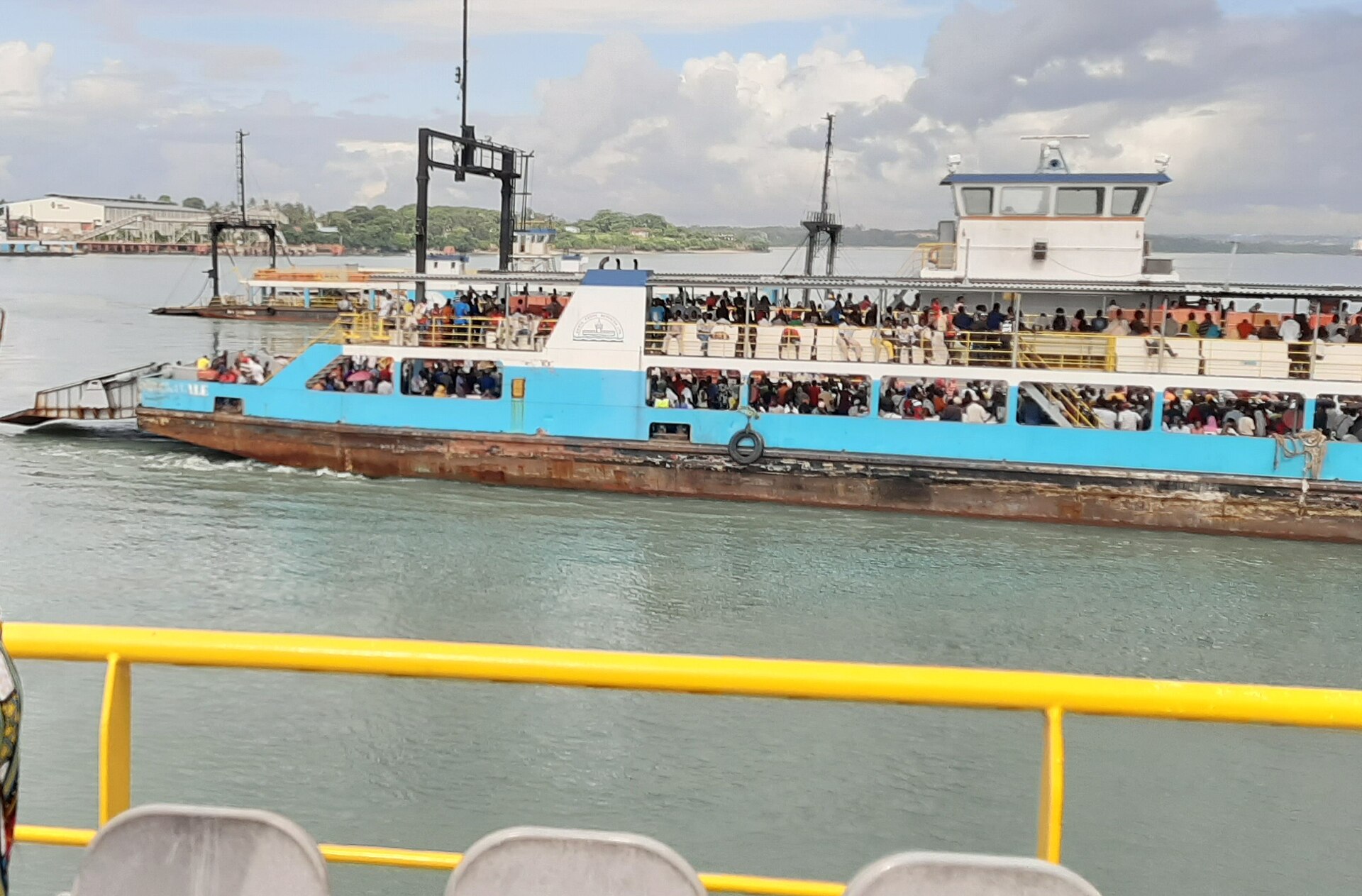
Mombasa’s best-known crossing is the Likoni ferry, which the State Department’s Kenya advisory singles out. It tells travellers to consider carefully whether to use it, citing safety concerns.
The photo above shows how crowded a ferry can be. The advisory does not say how many people cross each day, and this guide could not confirm a passenger figure.
The railway, the airport and the road projects are part of daily life, but their operators’ sites were closed to this guide. It gives no figures for them rather than repeat unchecked numbers.
The Rio Times Mombasa carnival guide covers one street event on Moi Avenue. Check the operators before you book any journey.
Heritage, Health and Daily Life
The Portuguese built Fort Jesus between 1593 and 1596 to protect the port, to a design by Giovanni Battista Cairati. UNESCO, the United Nations cultural agency, lists it as a World Heritage property of 2.36 hectares.
UNESCO says it stands on a coral rock spur at Mombasa’s southern edge. It cites the exchange of cultural values among African, Arab, Turkish, Persian and European peoples during the early years of global trade.
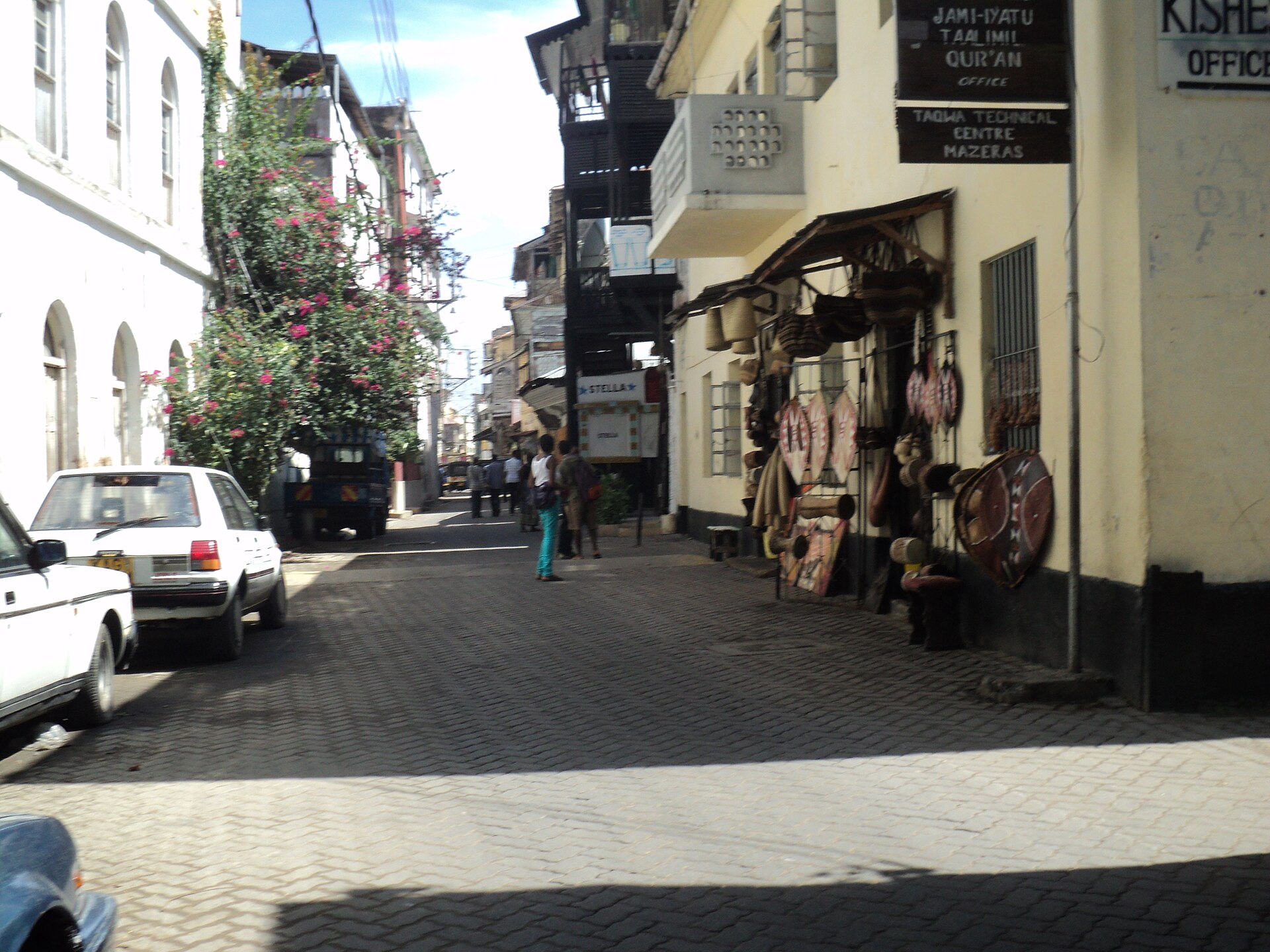
In 2019, 86.3% of households had electricity and 91.1% had improved sanitation. Only 56.6% had safe drinking water, down from 73.9% in 2009.
Literacy was 90% in 2015/16. The fact sheet puts internet use at 29.2% and mobile phone ownership at 61.8% of the population.
Life expectancy at birth in 2019 was 65.7 years for men and 71.1 years for women. Mombasa had 33 hospital beds per 10,000 people, ranked first among Kenya’s counties.
Security and Safety
The State Department’s Kenya advisory says to exercise increased caution because of crime, terrorism, civil unrest and kidnapping. It marks some coastal areas Level 4, Do Not Travel, for terrorism and kidnapping.
The advisory text read for this guide does not name those coastal areas, so check its current map before you go. It also lists the Kenya-Somalia border counties at Level 4.
The county site and the fact sheet give no police or crime figures for Mombasa. This guide therefore draws no conclusion about how safe individual districts are.
What It Means for US Readers
Americans planning a trip should read the State Department’s current Kenya advisory before booking. It treats parts of the coast differently from the rest of the country.
For investors, the clearest public signal is the port’s growth: cargo up 10.9% and transit cargo up 19.5% in 2025. The county’s own budget is small, with own-source revenue near US$26 million in FY2020/21.
Kenya’s next general election on 10 August 2027 may shift policy on ports and county spending. The Rio Times explainer on the 2027 succession race follows it.
What Is Not Known
This guide could not confirm berth and terminal counts, rail, airport and ferry traffic, officials below the governor, or crime data. Official pages for those were closed to automated readers or silent.
The area differs between sources: about 220 square kilometres of land from census density, and 229.9 in the county plan. The census is from 2019 and the budget figures are from FY2020/21 and FY2021/22, so newer numbers may differ.
Frequently Asked Questions
What is Mombasa known for?
Mombasa is known for Kenya’s main seaport, which handled 45.45 million tonnes of cargo in 2025. It is also known for Fort Jesus, a UNESCO World Heritage property built by the Portuguese in 1593 to 1596.
How many people live in Mombasa?
Kenya’s 2019 census counted 1,208,333 people in Mombasa County. The county covers about 220 square kilometres of land, from census density, and is entirely urban.
Who governs Mombasa in 2026?
The county government’s website names Abdulswamad Shariff Nassir as governor in November 2026. Kenya’s next general election is on 10 August 2027.
How big is the Port of Mombasa?
The Kenya Ports Authority reported 45.45 million tonnes of cargo and 2.11 million TEUs in 2025. Transit cargo reached 15.88 million tonnes.
Is Mombasa safe for American visitors?
The State Department says to exercise increased caution in Kenya and marks some coastal areas Do Not Travel for terrorism and kidnapping. It also urges care over using the Likoni ferry.
What is the Likoni ferry?
It is a ferry crossing in Mombasa that the State Department’s advisory mentions for safety concerns. This guide found no official passenger figure.
Sources: Commission on Revenue Allocation, Kenya (Mombasa County fact sheet, 2019 census); Mombasa County Government; Mombasa County (Annual Development Plan 2018/19); Kenya Ports Authority; Government of Kenya (Mombasa port 2025 cargo performance); UNESCO World Heritage Centre (Fort Jesus, Mombasa); US State Department (Kenya travel advisory); Independent Electoral and Boundaries Commission, Kenya; Open exchange-rate data (2 November 2026) (all accessed 3 November 2026).
This article was produced by The Rio Times’ automated newsroom system. How we use AI · Report an error · Editorial responsibility: Matthias Camenzind, Editor-in-Chief
The Mombasa Guide
What The Rio Times publishes for foreigners in Mombasa, Kenya.
Coming up in Mombasa
Understand Kenya