Where to Live in Costa Rica: Six Regions Compared for 2026
Guides · Costa Rica
Key Facts
- The country — Costa Rica is a small Central American republic with two coasts, a mountain spine and a densely populated Central Valley above 900 metres, where most jobs, hospitals and schools sit.
- The standing rule — residential leases run under Ley 7527, and the housing ministry publishes the monthly index that governs how much a colon-denominated rent may rise each year. Dollar leases sit outside that protection.
- What matters now — every published monthly index reading for 2026 is negative, and no adjustment resolution has been issued this year, so colon rents are effectively frozen while market rents drift up.
- What happened — this guide compares six places expats actually choose, with rent ranges, climate, internet, hospitals and airport times, as they stand in September 2026.
- The numbers — market rents rose 2.98 percent in the year to August 2026; the priciest metropolitan districts pass US$15 per square metre; coastal rents can double in the dry season.
- What it means for you — your rent, your power bill and your distance from a hospital are set by which of these six areas you pick, and the gaps between them are large.
- Still open — reliable primary rent data for the beach towns and the smaller valley towns does not exist, so those ranges come from agencies and listing sites.
A two-hour drive in Costa Rica changes the climate, doubles the rent and moves the nearest hospital an hour further away. Choose the region before you choose the house.
Deciding where to live in Costa Rica sets your budget, your commute and your distance from an emergency room. The country is small, but a short drive changes the weather, the rent and the internet. This guide compares the six areas foreigners actually choose, gives the rent ranges behind each one, and says plainly where those numbers are soft.
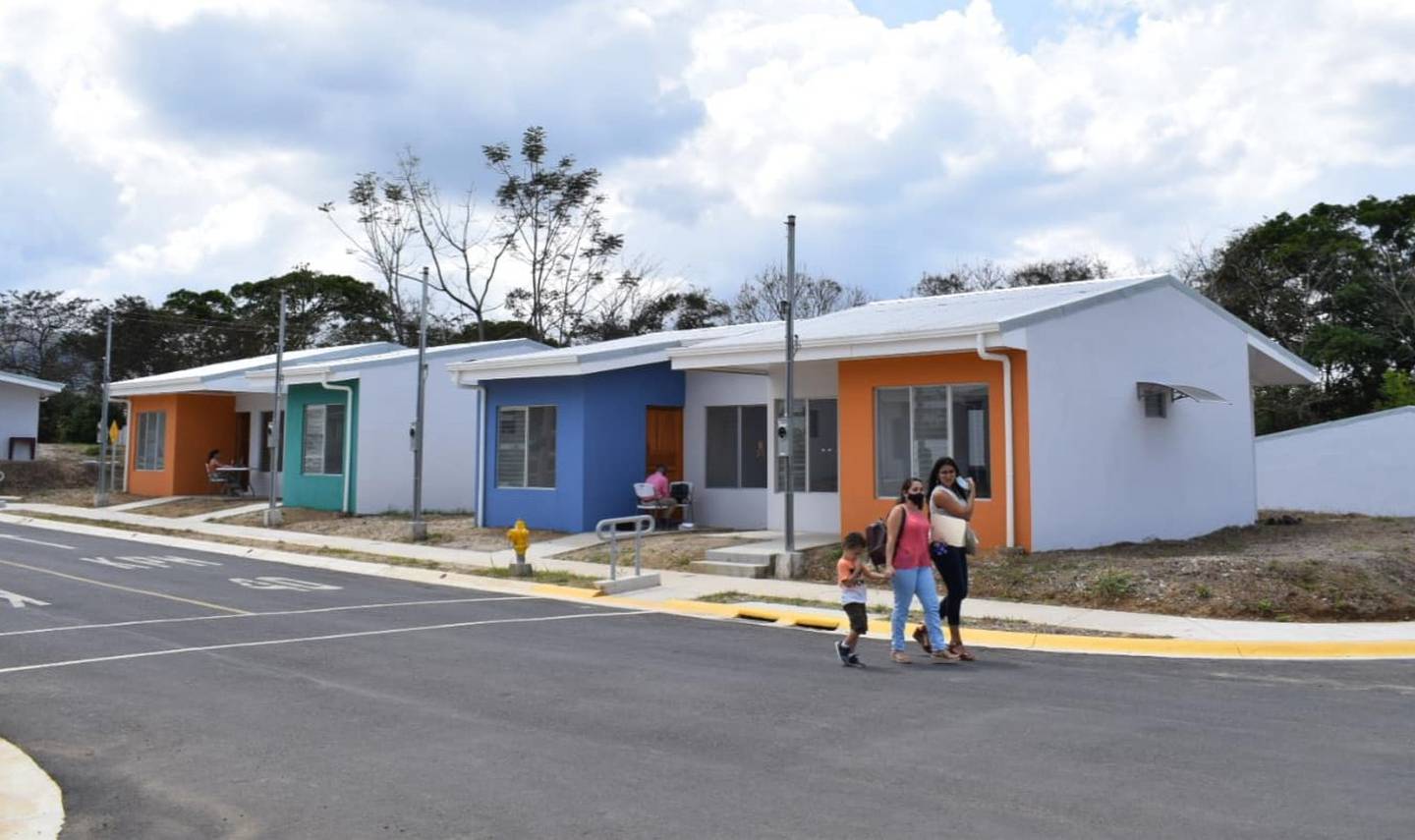
Where to live in Costa Rica: read the rent index first
Rents quoted in colones are barely moving. The housing ministry publishes the monthly variation used for the statutory lease adjustment. Every published reading from January to August 2026 is negative, between minus 2.53 and minus 0.17 percent. No adjustment resolution has been issued for 2026 at all.
Market rents are a different measure and they did rise, by 2.98 percent in the year to August 2026, with one projection near 3.25 percent by December. On a ¢300,000 (about US$667) rent that is about ¢9,750 (about US$22) more a month. Colón figures here are converted at ¢450 (about US$1) to the dollar, the reference rate on 23 September 2026.
So if a landlord will quote you in colones, take it. Colón leases track an index near zero while dollar leases in expat districts do not. More than 361,000 homes here are rented, housing about 1.05 million people, so this is a normal, well-used market.
San José and the eastern suburbs
El Financiero analysed listings across 70 metropolitan districts in March 2026. The dearest of them, including Mata Redonda, Cinco Esquinas, Carmen and Merced, pass US$15 per square metre. That puts an 80-square-metre flat at roughly ¢600,000 (about US$1,333) a month.
East of the centre, in Barrio Escalante, Los Yoses, San Pedro and Curridabat, a one-bedroom usually costs US$500 to US$900. You sit at about 1,170 metres, so days are mild and nights cool. Fibre is universal, the Clínica Bíblica and La Católica hospitals are minutes away, and the airport is roughly half an hour. This is the cheapest base with full infrastructure.
The seasons in the Central Valley are simple enough to plan around. The dry season runs roughly from December to March. April is transitional, and the wet season runs from May to October, broken by a relative dry spell in July and August. September and October are the wettest months of the year.
Escazú and Santa Ana, the default landing spot
This is where corporate moves and families with school-age children usually end up. A furnished one-bedroom runs US$900 to US$1,400, a premium condominium US$1,400 to US$2,500, and a two-bedroom with parking US$1,300 to US$2,200. San Rafael de Escazú and Lindora are among the dearest addresses in the country.
You are paying for density of services. Hospital CIMA is in Escazú itself, Clínica Bíblica has a Santa Ana branch, and most international schools sit within ten kilometres. The trade-offs are the airport run, about 45 to 50 minutes, and traffic that will shape your day.
Elevation runs from about 900 metres in Santa Ana up to roughly 1,300 metres in the hills above Escazú, so the lower you live the warmer your afternoons get. The weather pattern is the same as central San José. Fibre coverage is the best in the country outside the capital, which matters if your income depends on a stable line.
Atenas, Grecia and San Ramón: the retiree belt
A furnished one-bedroom here runs US$500 to US$900, and a two-bedroom with a mountain view US$900 to US$1,400. Houses with gardens in Grecia and San Ramón go for US$700 to US$1,000. One comparison puts a single person all-in at about US$1,550 a month against US$2,250 in Escazú.
Climate is the reason people come. Mid-elevation air stays reliably between 18 and 28 degrees, humidity is low and nobody runs air conditioning, so power bills sit near US$40 to US$70. Atenas is 32 minutes from the airport, closer than the capital. The risks are connectivity and healthcare: check fibre at the exact address, and accept that private hospitals are 45 to 70 minutes away.
The Guanacaste beaches
In Tamarindo, studios run ¢400,000 (about US$890) to ¢550,000 (about US$1,220), and one-bedrooms average near ¢625,000 (about US$1,390). Nosara is dearer, with good two-bedrooms around ¢1,100,000 (about US$2,440). Playa Flamingo runs ¢1,100,000 (about US$2,440) to ¢1,600,000 (about US$3,550).
Two warnings. Coastal rents commonly double in the dry season, so a unit at US$1,400 in May may be listed at US$2,800 in January; sign a twelve-month fixed lease. And air conditioning runs six to ten hours a day from December to March, pushing electricity to US$150 to US$300 a month.
Fly into Liberia rather than the capital. Tamarindo is an hour from Liberia against five hours from San José. Hospital Metropolitano has sites in Liberia and at Huacas, the closest real facility to Tamarindo and Flamingo, and Clínica Bíblica runs a Liberia branch around the clock.
The Southern Zone and the Caribbean side
Uvita and Dominical are the fastest-growing new expat zone. A furnished two-bedroom runs US$1,200 to US$2,500, while inland around San Isidro de El General the same thing costs US$700 to US$1,200. The catch is distance. Uvita is four hours from the capital and has no private hospital of any scale.
Puerto Viejo de Talamanca is the cheapest established expat town, at US$600 to US$1,200. Its weather is genuinely different. There is no defined dry season here at all. The two drier windows fall in February and March, and again in September and October, exactly when the Pacific side is at its wettest.
Healthcare there is the weakest of the six areas. The nearest hospital is the public Tony Facio in Limón, about 45 minutes away. The drive to the capital is 4.5 hours on paper and often five to seven, because Route 32 is the main container road to the port.
One honest caveat covers every coastal figure above. The metropolitan numbers come from El Financiero and the housing ministry. The town-by-town coastal ranges come from agencies and listing sites, not from primary data. Treat them as bargaining ranges, not quotes.
Frequently Asked Questions
Where is the cheapest place to live in Costa Rica as a foreigner?
Among established expat towns, Puerto Viejo de Talamanca on the Caribbean is the cheapest, with rentals around US$600 to US$1,200. Inland San Isidro de El General and the Central Valley towns of Atenas, Grecia and San Ramón are the cheaper mainland options.
Should I rent in colones or in dollars?
In colones, if the landlord will agree. Colón leases are tied to a statutory index that has been negative all year, while dollar leases in expat districts are not protected in the same way.
Which region has the best internet and hospitals?
The Central Valley, meaning San José, Escazú and Santa Ana. Fibre coverage is universal there and the main private hospitals sit inside the same ten kilometres as the international schools.
Do beach rents really double in the dry season?
In Guanacaste they commonly do. A unit listed at US$1,400 in May can be advertised at US$2,800 in January, which is why a twelve-month fixed lease is worth more than a flexible monthly one.
Connected Coverage
- Cost of Living in Costa Rica: Budgets and Rent
- Moving to Costa Rica: The Full Relocation Guide
- Costa Rica Property Guide for Foreigners
This article was produced by The Rio Times’ automated newsroom system. How we use AI · Report an error
Read More from The Rio Times
Rotate for Best Experience
This report is optimized for landscape viewing. Rotate your phone for the full experience.
You've reached your free article limit
Subscribe to The Rio Times for unlimited access to expert analysis, market intelligence, and daily briefings on Latin America.