Costa Rica Court Strikes Down Budget Curbs
The ruling is about procedure, not about whether the spending limits could ever be lawful, so the budget fight is not over.

Politics: Costa Rica
Costa Rica’s Constitutional Chamber ruled on Friday 20 November 2026 that Congress broke the rules when it wrote limits on the judiciary and a cut to university funding into the 2027 budget bill. The seven justices, who decide whether laws follow the constitution, voted unanimously.
The decision answers a warning from Supreme Court President Patricia Vargas that the budget rules would hobble the courts. It also means part of the governing party’s 2027 budget bill must go, or be treated as excluded, before the 30 November deadline.
Key Facts
- Who. Costa Rica’s Constitutional Chamber (Sala IV), the court that checks laws against the constitution.
- What. Congress must delete four judiciary budget rules and a university cut; the ruling covers procedure only.
- Money. Judiciary funds affected: ₡29.84 billion (US$67.6 million); university cut: ₡8.05 billion (US$18.2 million).
- Power Index. Costa Rica ranks 9th of 14 in The Rio Times Latin America Power Index, with 35.5 points (November 2026 edition).
- As of. Saturday 21 November 2026, 11:00 GMT
The ruling is about procedure, not about whether the spending limits could ever be lawful, so the budget fight is not over.
The Chamber, often called Sala IV, ordered the Legislative Assembly to delete rules 9, 10, 11 and 12 of article 7 of the budget bill. Those rules made the judiciary’s access to ₡29.84 billion (US$67.6 million at ₡441.7 per US$1) and to 2,463 court posts depend on a cost-benefit study by the Comptroller General (the state auditor) and approval by a legislative commission.
The justices said the courts were never consulted as the constitution requires, and that such rules do not belong in a budget law. They also said the provisions gave outside bodies a say over how the judiciary is run.
A second request came from lawmakers of the National Liberation Party, a traditional opposition party, and the Frente Amplio, a left-wing party. The Chamber found that a ₡8.05 billion (US$18.2 million) cut to the public universities’ fund, known as FEES, violated article 85 of the constitution, which protects university funding.
That money was part of university funds postponed in 2020 and 2021. A motion in the budget committee had moved it to pay obligations of Jupema, the teachers’ pension board.
The ruling follows an urgent order of 9 November that froze the final budget vote until the Chamber could rule. Vargas had told the court that the budget’s spending rules would partly paralyse the judiciary from 1 January 2027.
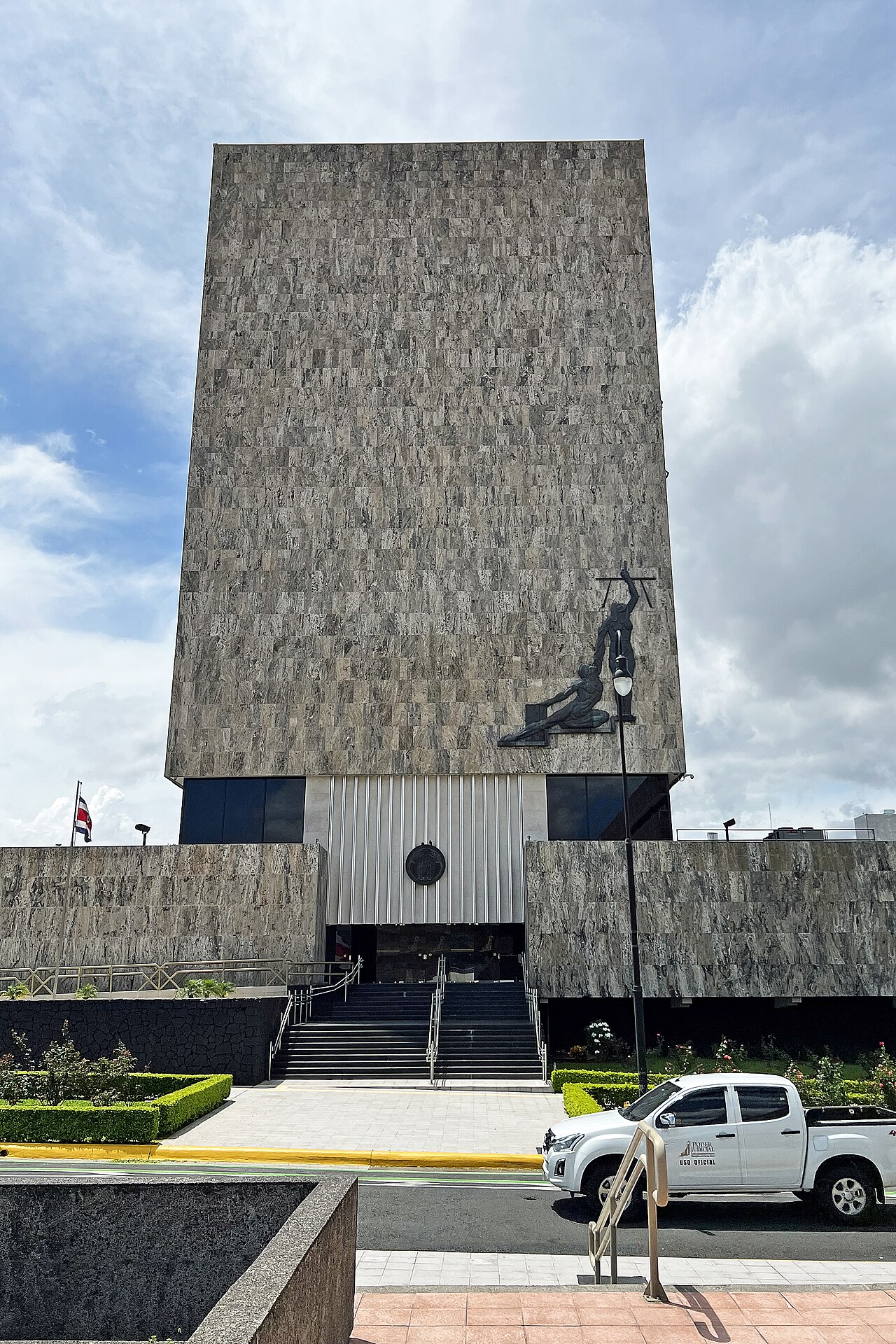
After the ruling she said the judiciary is not asking for more money or a bigger budget. She added that the courts will comply and that she trusts the other branches will too.
President Laura Fernández said hours before the decision that her government would comply fully with any ruling of the constitutional court. The next move is the Assembly’s, which must now remove the affected articles.
The decision rules out the four judiciary rules and the FEES cut in their current form. It does not say whether Congress may ever attach conditions to court spending, because the justices examined only the procedure.
If lawmakers do not correct the text, the Chamber said, the disputed rules count as excluded from the budget. Justice Luis Fernando Salazar added a separate note arguing that the universities themselves also had to be consulted under article 88.
For foreign readers the case is a test of how far a Central American government can steer a court through its purse. A judiciary that cannot fill posts hears fewer cases, which matters to investors with contracts in Costa Rica and to residents waiting on rulings.
Lawmakers must now correct the bill before any final vote. Costa Rica’s constitution says the budget must be approved before 30 November, and the Chamber’s earlier order barred a final vote before 29 November.
Frequently Asked Questions
What did Costa Rica’s Constitutional Chamber decide on 20 November?
It ordered Congress to remove four judiciary rules and a university funding cut from the 2027 budget bill. The vote was unanimous and covered procedure only.
Does the ruling end the budget dispute?
No. Congress must still correct the bill and hold its final vote, and the court did not rule on the merits of the spending limits.
Who asked the court to act?
Supreme Court President Patricia Vargas raised the judiciary’s case. Lawmakers of the National Liberation Party and the Frente Amplio challenged the university cut.
Sources
Costa Rica Constitutional Chamber ruling on bill 25.754 of 20 November 2026; statements by Supreme Court President Patricia Vargas and President Laura Fernández; Legislative Assembly budget bill 2027; exchange rate from RT, ₡441.73 per US$1 on 21 November 2026. Sala Constitucional · Asamblea Legislativa
Connected Coverage
Costa Rica news · Costa Rica Court Halts National Budget Vote · Costa Rica’s Record-Strong Colón · Latin America Power Map
This article was produced by The Rio Times’ automated AI newsroom. Editorial responsibility: Matthias Camenzind, Publisher and Editor-in-Chief. The Rio Times also runs Ask Rio Times, which answers from 100,000+ of our own articles, the daily Latin America Power Map, and prediction-market odds on elections and markets.. How we use AI · Report an error