Venezuela Night Protests Over Power Cuts Spread to Mérida, Anzoátegui and Guárico
NEWS · VENEZUELA
Key Facts
- —The country Venezuela, governed by acting president Delcy Rodríguez since US forces captured Nicolás Maduro in January 2026, rations electricity outside Caracas, with cuts of six to eight hours a day in several states, El Diario reported.
- —What happened On Tuesday night, 29 September 2026, residents of Guárico, Anzoátegui and Mérida states blocked roads and banged pots over power cuts of up to nine hours, El Nacional and El Diario reported.
- —The numbers Venezuela’s Social Conflict Observatory counted almost 4,200 protests in 2026 by late September, against 160 in all of 2025, El País reported on 29 September.
- —What it means for you Expect evening road blockades in interior states and daily rationing outside Caracas. The government promises 1,300 megawatts of new capacity between October and December 2026.
- —Still open Whether the new units arrive on time, when rationing ends, and how security forces respond if blockades continue. No official end date for rationing has been announced.
Venezuela night protests over power cuts spread across the interior on Tuesday 29 September, reaching Mérida, Anzoátegui and Guárico states. Residents banged pots, burned tyres and blocked highways, the newspapers El Nacional and El Diario reported on Wednesday.
The protests came hours after the electricity minister promised 1,300 megawatts of new capacity before the end of the year. That plan is the government’s main answer to rationing that Infobae says now reaches almost every region except Caracas.
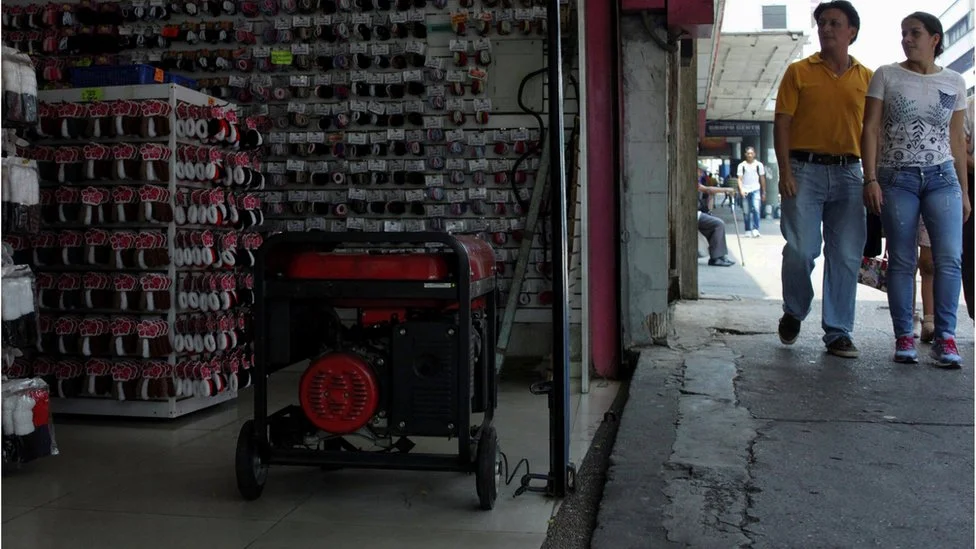
Where the protests spread on Tuesday night
In Las Mercedes del Llano, in Guárico state, residents blocked the national road towards Chaguaramas and Valle de la Pascua. They said cuts last up to nine hours a day, and some chanted “Elections now”.
In Puerto Píritu, on the Anzoátegui coast, residents burned tyres across the motorway to Barcelona. Police arrived to try to reopen the road, both newspapers reported.
In the Andean city of Mérida, residents of El Campito held a pot-banging protest after power failed twice in one day. Supply went off in the morning, returned at 4 pm and failed again at 8 pm, residents said.
In Guárico, security forces tried to persuade protesters to leave, but they stayed. Neither newspaper reported arrests on Tuesday night.
The government promises 1,300 megawatts
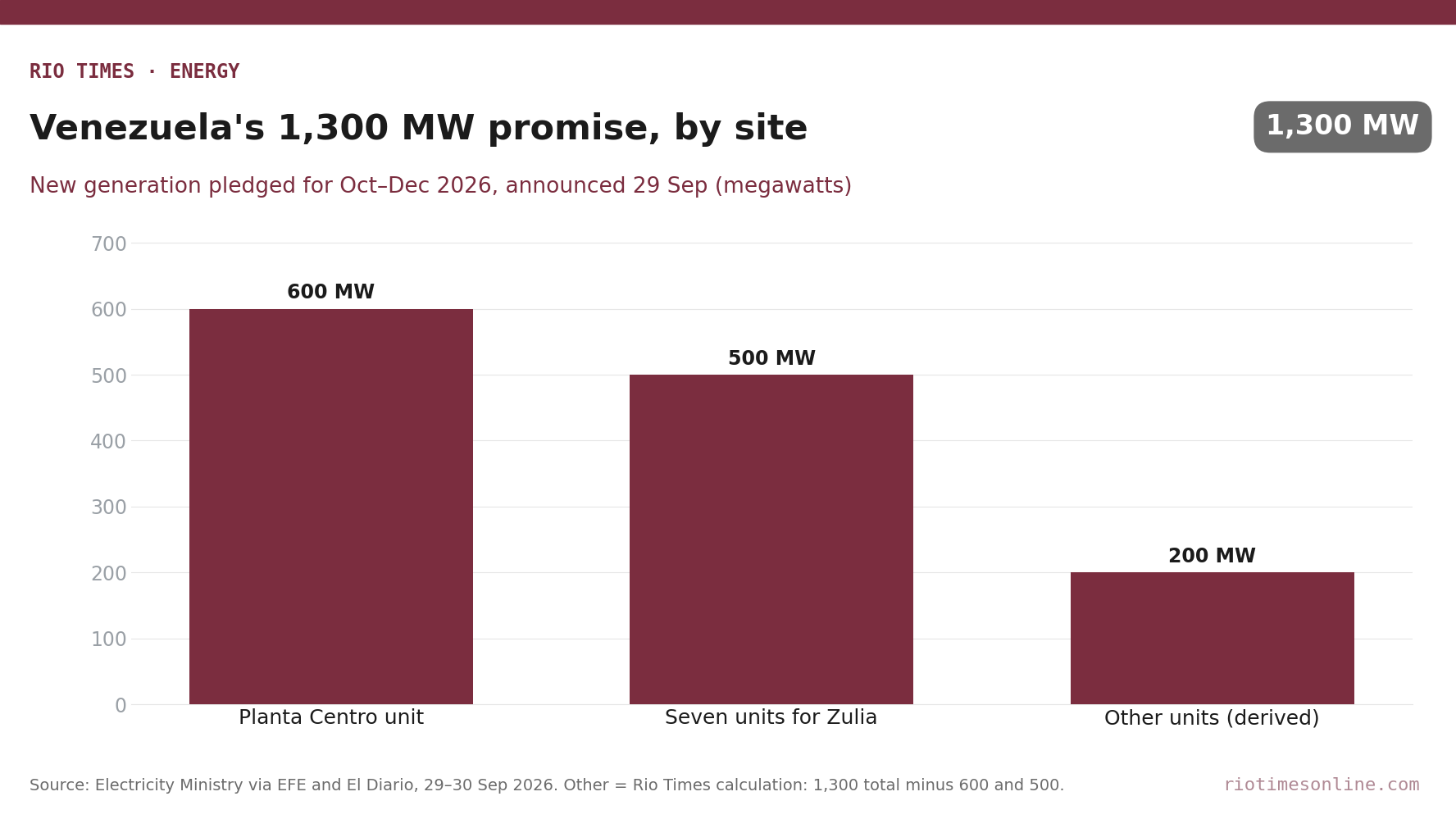
On Tuesday evening, electricity minister Rolando Alcalá and Juan Fernández, head of the state utility Corpoelec, addressed the nation. Alcalá said 1,300 megawatts would be added in the last quarter of 2026, the Spanish news agency EFE reported.
A 600-megawatt unit at Planta Centro, the main plant for the centre-west, is due within days. Seven units totalling 500 megawatts are meant for Zulia, the state hardest hit by failures.
Fernández said a new transformer at Planta Centro should enter service in late November, sending power to the Andes. Corpoelec put demand at a peak of 16,424 megawatts on 23 September, El Diario reported.
The minister blamed rising demand, El Niño heat and the June earthquakes for delaying repairs. The opposition and independent experts blame years of corruption and missing maintenance, EFE reported.
Venezuela night protests: a week across the interior
Tuesday’s protests extend a run of nightly protests reported since 25 September. El Diario reported protests in Puerto Cabello, Carabobo, that day, then in Cojedes and Guárico on Saturday.
On Sunday night residents protested in Aragua, Cojedes and Portuguesa. In Guanare, Portuguesa, neighbours blocked the José Antonio Páez motorway after more than 11 hours without power.
On Monday night protests hit San Carlos, in Cojedes, and Maturín, in Monagas. In Maturín, families blocked an avenue from 8 pm until 3 am, the hours when they say Corpoelec cuts supply.
The protests follow those covered in Venezuela Blackouts Spark Street Protests as Grid Deficit Widens. Protest carries legal risk, as shown in Venezuela: Five Charged After Barinas Power Cut Protest.
What the new capacity can and cannot fix
Venezuela’s Social Conflict Observatory counted more than 650 protests in August alone, its director told El País. Nearly a third were over power cuts.
If delivered on time, the new units should ease rationing first in the centre-west and in Zulia. A new electricity law also opens generation and distribution to private companies, officials said.
Corpoelec has signed agreements with General Electric, Siemens and Argentina’s Impsa. Alcalá said Venezuela now has access to original spare parts from major manufacturers, which it lacked in earlier years.
What Is Not Yet Known
It is not known whether the Planta Centro unit will start this week, or how many hours of rationing it would remove. No official end date for rationing has been announced, El Diario reported on 29 September.
Nor is it clear how security forces will respond if Venezuela night protests continue. On Tuesday they tried persuasion; in Barinas in September, five protesters were charged.
More: Venezuela news in English, every day from The Rio Times.
Sources: El Nacional, 30 September, 29 September and 28 September 2026; El Diario, protests, 1,300 MW plan and rationing fact-check, 29–30 September 2026; EFE via Infobae and Infobae, 30 September 2026; El País, 29 September 2026, citing the Venezuelan Social Conflict Observatory.
This article was produced by The Rio Times’ automated newsroom system. How we use AI · Report an error
Read More from The Rio Times