Vale Wants Brazil’s Mining Output to Reach US$99 Billion a Year by 2035
Brazil · Mining
Key Facts
- The number Brazil’s annual mineral output could rise from about R$300 billion (US$55 billion) today to as much as R$535 billion (US$99 billion) a year by 2035.
- The condition That figure is a ceiling, not a forecast. It assumes 15 proposed measures across four policy agendas are adopted.
- The jobs Total employment supported by the sector — direct, indirect and induced — would go from about 3 million to 5.3 million. That is 2.3 million more than today.
- The tax The study puts the sector’s contribution at R$1.3 trillion (US$241 billion) over 2026 to 2035, against about R$750 billion (about US$139 billion) in the previous decade.
- Who wrote it Vale, with the consultancy Accenture. It was launched at a forum called Destravando o Potencial da Mineração no Brasil, with Vale’s chief executive Gustavo Pimenta taking part.
- Where it goes The document is to be handed to every candidate for the presidency in the October 2026 election.
This is not a spending plan. It is a list of things Vale wants the next government to do, with a number attached to what happens if it does them.
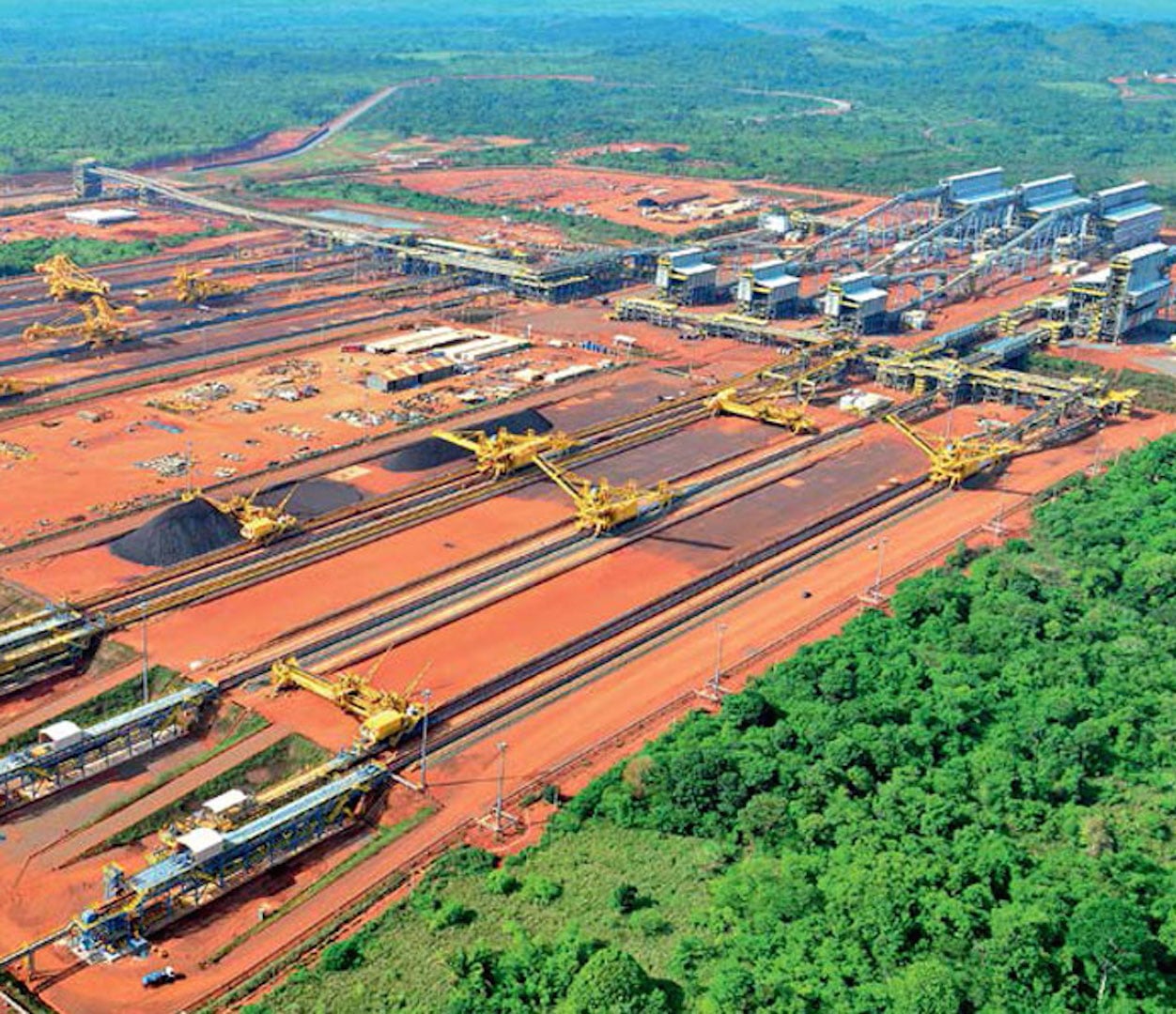
Vale launched a report in Brasília on Tuesday that puts a figure on what Brazilian mining could be worth in ten years. The number is large and the document is honest about what it is: a set of asks for whoever wins the October election.
What the document actually is
It is worth being precise, because the framing changes what the number means. This is not a Vale investment plan and R$535 billion (US$99 billion) is not Vale’s output target.
It is a sector-wide policy agenda. Vale commissioned it, Accenture produced it, and the audience is the people who will be running Brazil from January.
The company is positioning itself on public policy. That is a normal thing for the largest miner in the country to do in an election year, and it is better read as a negotiating document than as a projection.
The R$300 billion (about US$55 billion) baseline and the 3 million jobs figure are described in the study as current, without a stated base year. Treat them as the study’s own starting point.
Live Company IntelligenceVale SA ADR — the full investor dossier
Wall Street view
Valuation & profitability
Price & risk
$9.8852-wk high
$17.44
Revenue trend · 6y
Ownership
Dividend
The four agendas
The 15 initiatives sit under four headings: licensing and the fundamentals of mining, integrating the mineral chain, the business and regulatory environment, and shared value creation.
The licensing asks are the concrete ones. They want the permitting process standardised and made predictable, and the agencies that run it — Ibama, Iphan, ICMBio, Funai and the state environment secretariats — strengthened rather than bypassed.
There is a proposal to modernise how mineral titles are managed, and one for the Serviço Geológico do Brasil to partner with private companies on geological mapping.
The rest is about pushing more processing into Brazil rather than exporting raw ore, and about making better use of the CFEM, the royalty that mining pays to the states and municipalities where it operates.
Why the timing is not an accident
Brazil votes in October. A document handed to every presidential candidate two months before the first round is designed to shape a manifesto, not a quarterly report.
Vale has also been under public pressure from the Lula government to invest more and hire more. A study saying the sector could add 2.3 million jobs if the state fixes licensing is an answer to that pressure as much as a proposal.
None of which makes the analysis wrong. It makes it interested, which is a different thing, and readers should hold both facts at once.
The numbers, and what they are not
R$1.3 trillion (US$241 billion) is the sector’s projected tax contribution across 2026 to 2035, against about R$750 billion (about US$139 billion) over the previous decade. That is a doubling, and it is the figure most likely to be quoted at a candidate.
It is worth noting what kind of number this is. It is a projection conditional on a policy programme, produced by the largest company in the industry it describes.
The employment figure has the same shape. Five point three million is the total the sector would support, counting the jobs it creates directly, the jobs at its suppliers, and the jobs created when all those people spend their wages.
Only 2.3 million of those are new. Most Brazilian headlines led with that figure, and it is the more honest one to lead with.
What it means if you are invested in Latin America
Mining permitting is the single largest swing factor in Latin American resource investment, and it is where Chile, Peru and Brazil compete directly.
Chile is running a fiscal argument about copper revenue. Peru has just seen two miners restart stalled projects. Brazil is being asked, in public, to make its permitting predictable.
Whichever country gets there first will take capital from the others. That is the real content of a document like this one.
For anyone holding Brazilian mining equity, the number to watch is not R$535 billion (US$99 billion). It is whether any of the 15 measures appears in a winning candidate’s programme.
What we could not confirm
Vale has not published the report on its own investor site as of Tuesday evening, so the figures here come from the launch coverage rather than from a company release.
Where a number is the study’s own estimate rather than an official statistic, we have said so.
Background: our buying property in brazil as a foreigner complete guide.
More: Brazil news in English, every day from The Rio Times.
Frequently Asked Questions
Is this a Vale investment plan?
No. It is a policy agenda for the Brazilian mining sector as a whole, produced by Vale with Accenture and aimed at the candidates in the October 2026 presidential election. The R$535 billion (US$99 billion) figure is national mineral output, not Vale’s.
Is it 2.3 million jobs or 5.3 million?
Both, measuring different things. The study puts total employment supported by the sector at up to 5.3 million by 2035, against about 3 million today — an increase of 2.3 million.
How much is R$535 billion (US$99 billion) in dollars?
About US$99 billion a year at current rates. The current figure of roughly R$300 billion (about US$55 billion) is about US$55 billion.
When does Brazil vote?
October 2026. That is why the document is being handed to candidates now.
Connected Coverage
Brazil Mining 2026: Iron Ore Critical Minerals and Vale
Vale’s Bacaba Copper Project: A New Chapter for Mining in Brazil
Sources: Rio Times desk research
This article was drafted with automated assistance and reviewed before publication. How we use AI · Report an error · Editorial responsibility: Matthias Camenzind, Editor-in-Chief