USA & Canada Intelligence Brief August 14, 2026: The Spending Cracked
Executive Summary
USA & Canada Intelligence Brief for August 14: American retail sales fell 0.6% in July, the steepest drop since May 2025, and consumer sentiment slid
Rio Times · USA & Canada Intelligence Brief August 14
Key Facts
—Spending fell American retail sales dropped 0.6% in July from the previous month, the steepest decline since May 2025.
—Against a rise Economists polled by Reuters had forecast an increase of about 0.1%, after June’s unrevised 0.2% gain.
—Sentiment slid Consumer sentiment fell about 8% early this month to a preliminary reading of 51, ending a two-month rising streak.
—Worse than forecast Both readings came in below what economists had estimated, with sentiment expected around 55.
—Who pulled back The survey director noted large reductions among older consumers, lower-income consumers and those without a college degree.
—Two thirds of the economy Consumer spending accounts for around two-thirds of American economic growth.
USA & Canada Intelligence Brief August 14 — For four months American prices ran ahead of American wages, and this week the shops found out.
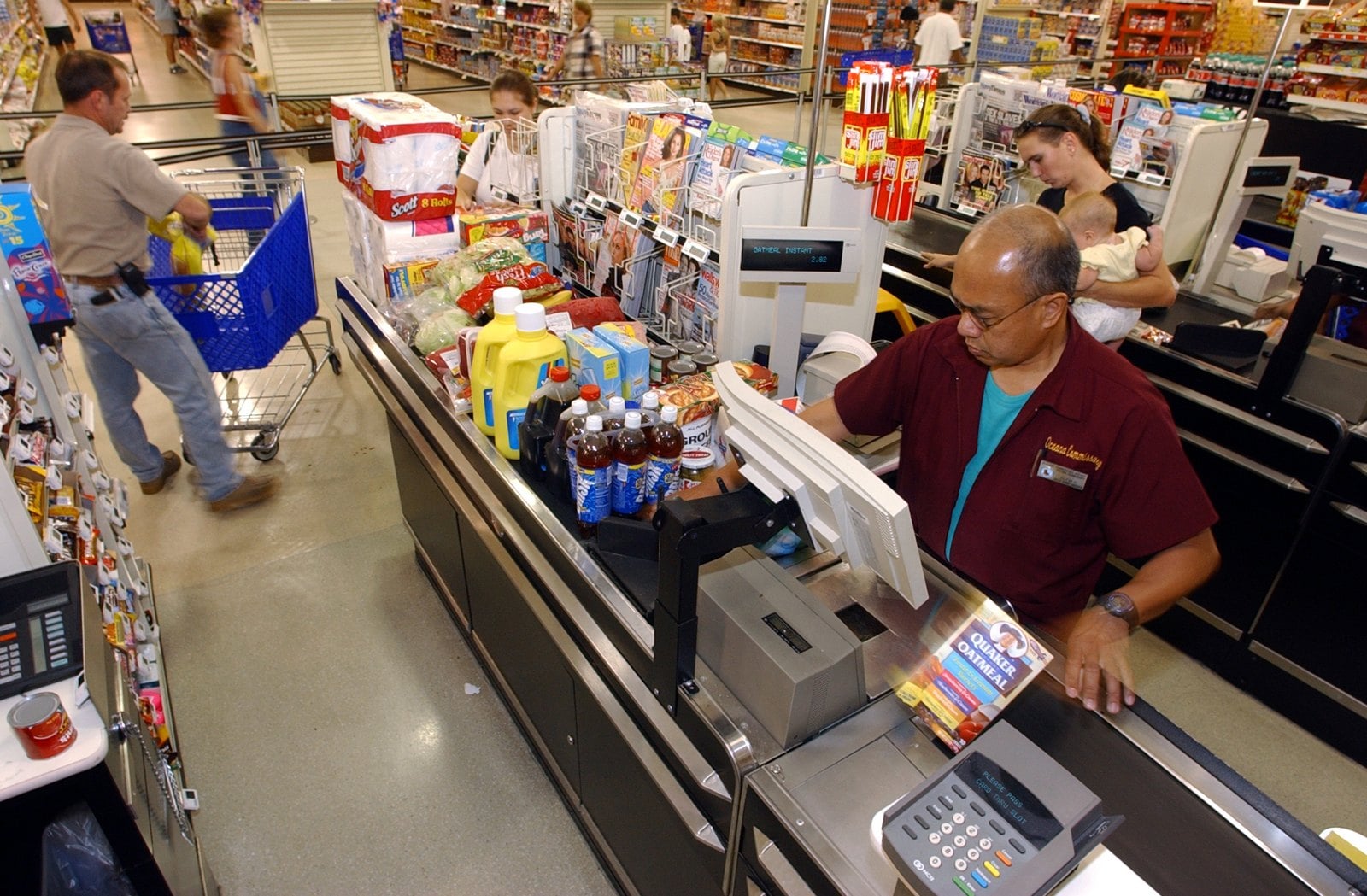
Retail sales fell 0.6% and consumer sentiment dropped about 8%, both worse than anyone had forecast.
United States – The Month Spending Turned
Down 0.6%, against an expected rise
Retail and food services sales fell 0.6% in July to 763.6 billion dollars, the Census Bureau reported on Friday, down from a revised 768.1 billion in June and marking the steepest drop since May 2025. Economists polled by Reuters had forecast a rise of about 0.1%, with estimates ranging from a 0.5% fall to a 0.7% gain.
The narrower control group used to calculate economic growth, which excludes autos, building materials, food services and fuel, fell 0.4%. Excluding autos and gasoline alone, sales fell 0.2%.
Two thirds of the economy
Consumer spending accounts for around two-thirds of American economic growth, which is why a single monthly figure carries this weight. The advance estimate carries a sampling margin of error of 0.4 percentage points, so the decline is real but its precise size is not.
Sales were still 5% higher than a year earlier and the May to July period ran 6.3% above the same stretch last year. The national temper is not shock but recognition.
Sentiment – Eight Percent in a Fortnight
A preliminary reading of 51
The University of Michigan reported consumer sentiment declining about 8% early this month to a preliminary 51, from a final 55.2 in July. Economists had projected around 55.
That ends a two-month streak of rising sentiment. July’s reading had been the highest since February.
Where the decline was concentrated
The survey director described the weakness as pervasive across demographic groups, with notably large reductions among older consumers, lower-income consumers and those without a college degree. Republicans showed the strongest monthly decline across the political spectrum.
A decline that reaches the president’s own supporters is a different kind of economic signal. It arrives in politics before it arrives in policy.
The Sequence – Four Months, Then a Month
What preceded this
Consumer prices have run at 3.4% against wage growth of 3.2% for four consecutive months, with real average hourly earnings down 0.2% over the year. The household savings rate had fallen to a four-year low.
Economists point to a more immediate cause as well. Generous tax refunds had softened the blow from higher fuel prices and supported robust spending in the second quarter, and those refunds have now been exhausted.
A predictable arithmetic
Some of the fall is also a base effect, since June online sales were inflated by a retail promotion that ran earlier than in previous years. Online sales fell 2.2% in July and motor vehicles 1.8%, while clothing rose 1.9% and restaurants 0.5%.
Europe confirmed growth of 0.4% on the same morning, which analysts attribute to households there pulling back on saving rather than spending. It is running the identical trade one quarter behind.
American retail sales fell 0.6% in July and consumer sentiment dropped about 8% to 51 — four months of prices outrunning wages and a savings rate at a four-year low finally reaching the shops.
The Federal Reserve – An Argument That Just Moved
Three cooling signals in one week
Consumer prices came in as forecast on Wednesday at 3.4%, producer prices were flat on Thursday with the annual rate falling to 4.7%, and consumption cracked on Friday. Markets now price around a 35% chance of a September increase, down from 55% a week earlier.
A sitting Federal Reserve official published a case for raising rates on Tuesday. That argument is considerably harder to make on Friday evening than it was on Tuesday morning.
The component still pointing the other way
Thursday’s producer report contained a narrow measure excluding food, energy and trade services that rose 0.4%, four times June’s pace, driven partly by a 6.5% surge in portfolio management fees. Those categories feed the gauge the central bank actually targets, published on 26 August.
So the week ends with consumption weakening and one inflation component accelerating. Neither reading is complete without the other.
Canada – Five Days
The tariff arrives Wednesday
A 50% American tariff on roughly 20 billion dollars of Canadian goods takes effect on 19 August, five days from now, covering products that comply with the continental trade agreement. Canada added 75,100 jobs in July and cut unemployment to 6.4%, its lowest since July 2024.
Its ten-year yields have been near 3.68%, more than a point below American equivalents, with no policy change expected through 2026. None of that moves the date.
And a customer that just weakened
Canadian exporters face a tariff into a market where retail spending has just fallen 0.6% and consumer sentiment has dropped 8%. Those two facts compound rather than offset.
Ottawa’s position remains competent and constrained. It has controlled what it can and is waiting on what it cannot.
What This Means From Latin America
The order book signal
American consumer spending is roughly two-thirds of the economy that Mexican manufacturers and Brazilian exporters ultimately sell into. A 0.6% monthly fall with sentiment down 8% is the clearest demand warning of the quarter.
The transmission runs through orders rather than through headlines, and it takes quarters. Planning for softer North American demand into 2027 is the reasonable response.
And the offsetting relief
Weaker consumption makes a September Federal Reserve increase less likely, and markets have already cut those odds to around 35% from 55%. That eases pressure on regional currencies and debt service.
Cheaper money and a weaker customer arrive together, which is the trade the region has to price. One helps the balance sheet and the other hurts the revenue line.
The Bigger Picture
American retail sales fell 0.6% in July, the steepest drop since May 2025, against an expected rise of about 0.1%, while consumer sentiment slid about 8% early this month to a preliminary 51 from 55.2. Both came in worse than economists had estimated.
The sequence was predictable. Consumer prices ran at 3.4% against wage growth of 3.2% for four consecutive months, real earnings fell 0.2% over the year, and the savings rate reached a four-year low before consumption gave way.
For Latin American readers two things arrive together. American consumption is two-thirds of the economy the region sells into and it has just weakened, while a September Federal Reserve increase is now priced at around 35% rather than 55%, which eases regional debt service.
USA & Canada Intelligence Brief August 14: What We Are Watching
- Later this month – The final August sentiment reading, after a preliminary 51.
- 26 August – The personal consumption expenditures index, which Thursday’s fee surge feeds into.
- 19 August – The 50% American tariff on roughly $20 billion of Canadian goods.
- September – The Federal Reserve meeting, now priced at around a 35% chance of an increase.
- Coming months – Whether August retail sales confirm July’s fall or reverse it.
- Ongoing – Real wage growth, negative for four consecutive months.
Go Deeper
The full US & Canada Intelligence Dossier — the interactive risk dashboard and the six people who matter — is updated daily by the Rio Times Intelligence Desk.
More from the Rio Times Intelligence Desk on August 14: the Africa Intelligence Brief, the Asia Intelligence Brief and the Europe Intelligence Brief. For how these stories developed, see the USA & Canada Intelligence Brief for August 13 and the USA & Canada Intelligence Brief for August 12.
The USA & Canada Intelligence Brief August 14 returns tomorrow morning.
The Big Picture
Frequently Asked Questions
How far did American retail sales fall in July?
Sales fell 0.6% to 763.6 billion dollars from a revised 768.1 billion in June, the steepest drop since May 2025, against a Reuters consensus of about 0.1% growth. The control group used to calculate economic growth fell 0.4%, sales excluding autos and gasoline fell 0.2%, and the advance estimate carries a sampling margin of error of 0.4 percentage points.
What happened to consumer sentiment?
The University of Michigan’s preliminary August index fell about 8% to 51, from a final reading of 55.2 in July, against a median forecast of around 55, ending a two-month streak of rising sentiment. The survey director described the weakness as pervasive across demographic groups, with notably large reductions among older consumers, lower-income consumers and those without a college degree, and with Republicans showing the strongest monthly decline across the political spectrum.
Why did this happen now?
Consumer prices have run at 3.4% against wage growth of 3.2% for four consecutive months, with real average hourly earnings down 0.2% over the year and the household savings rate at a four-year low. Economists also point to a more immediate cause, namely that generous tax refunds which had supported second-quarter spending have now been exhausted, while part of the July fall reflects a base effect from a retail promotion that ran earlier than usual in June.
What does this mean for interest rates?
Markets now price around a 35% chance of a Federal Reserve increase in September, down from 55% a week earlier, after consumer prices came in as forecast on Wednesday, producer prices were flat on Thursday and consumption weakened on Friday. Against that, Thursday’s report contained a narrow measure excluding food, energy and trade services that rose 0.4%, four times June’s pace, and those categories feed the personal consumption expenditures index published on 26 August.
Sources: CNN, Bloomberg, TradingKey, Bureau of Labor Statistics
This article was produced by The Rio Times’ automated newsroom system. How we use AI · Report an error
Read More from The Rio Times