
Gambia · Pillar
Gambia is one of Africa’s smallest countries, with 2,422,712 people in a strip of land that Senegal wraps on three sides, yet it matters in regional politics and international law. It belongs to ECOWAS (the Economic Community of West African States, the regional bloc created in 1975) and to the African Union (the continent’s 55-member political bloc), and it votes for a president on Saturday 5 December 2026.
For a US reader, three things make it worth knowing: it has an election in three weeks, its citizens now face a partial US visa suspension, and it brought a genocide case at the International Court of Justice (ICJ, the United Nations court that settles disputes between states) that ends with a ruling on Thursday 19 November 2026. This guide explains the country, its weight and its allies from scratch.
Key Facts
•Size. 2,422,712 people in the 2024 census run by the Gambia Bureau of Statistics (GBoS), with 227 people per square kilometre.
•Vote. Presidential election on Saturday 5 December 2026; 1,146,474 registered voters.
•Alliances. Member of ECOWAS and the African Union; rejoined the Commonwealth in February 2018.
•US link. Gambian nationals face a partial US entry suspension since 1 January 2026.
•Prediction markets. Polymarket, a prediction-market platform, prices President Adama Barrow at roughly 75% to 77% to win, as of 10:05 a.m. ET on 13 November 2026.
Gambia is tiny on the map, but it hosts a regional peace force, has taken a case to The Hague and votes on 5 December while living under US visa limits.
Gambia in Plain English
Gambia is a presidential republic in West Africa, shaped like a narrow ribbon along the Gambia River. The capital is Banjul, on the Atlantic coast, and the country follows the river inland.
In Plain English
ECOWAS: the regional bloc of West African states, set up in 1975 to promote trade and security.
ECOMIG: the ECOWAS Mission in The Gambia, a military and police force that has stood in Gambia since 2017.
IEC: Gambia’s Independent Electoral Commission, which runs the vote.
GBoS: the Gambia Bureau of Statistics, the national statistics office.
ICJ: the International Court of Justice, the United Nations court that settles disputes between states.
The census run by GBoS in 2024 counted 2,422,712 residents, a density of 227 people per square kilometre. The 2013 census had counted 174 people per square kilometre.
Why Gambia Matters Beyond Its Size
Small states count for more when they pick a niche, and Gambia has picked international law. In November 2019 it asked the ICJ to rule that Myanmar broke the Genocide Convention, the 1948 treaty that bans genocide, in its treatment of the Rohingya, a Muslim minority.
The court found in July 2022 that it had jurisdiction, and it heard the merits from 12 to 29 January 2026. The ICJ has announced that it will read its judgment on Thursday 19 November 2026 at 10 a.m. in The Hague in the Netherlands, which is 4 a.m. US Eastern time.
In November 2016 the government of then-president Yahya Jammeh formally notified the United Nations that Gambia would leave the International Criminal Court, the permanent war-crimes court. The new government revoked that notice in February 2017.
Jammeh had also taken Gambia out of the Commonwealth, the club of mostly former British territories, in 2013. The country rejoined in February 2018.
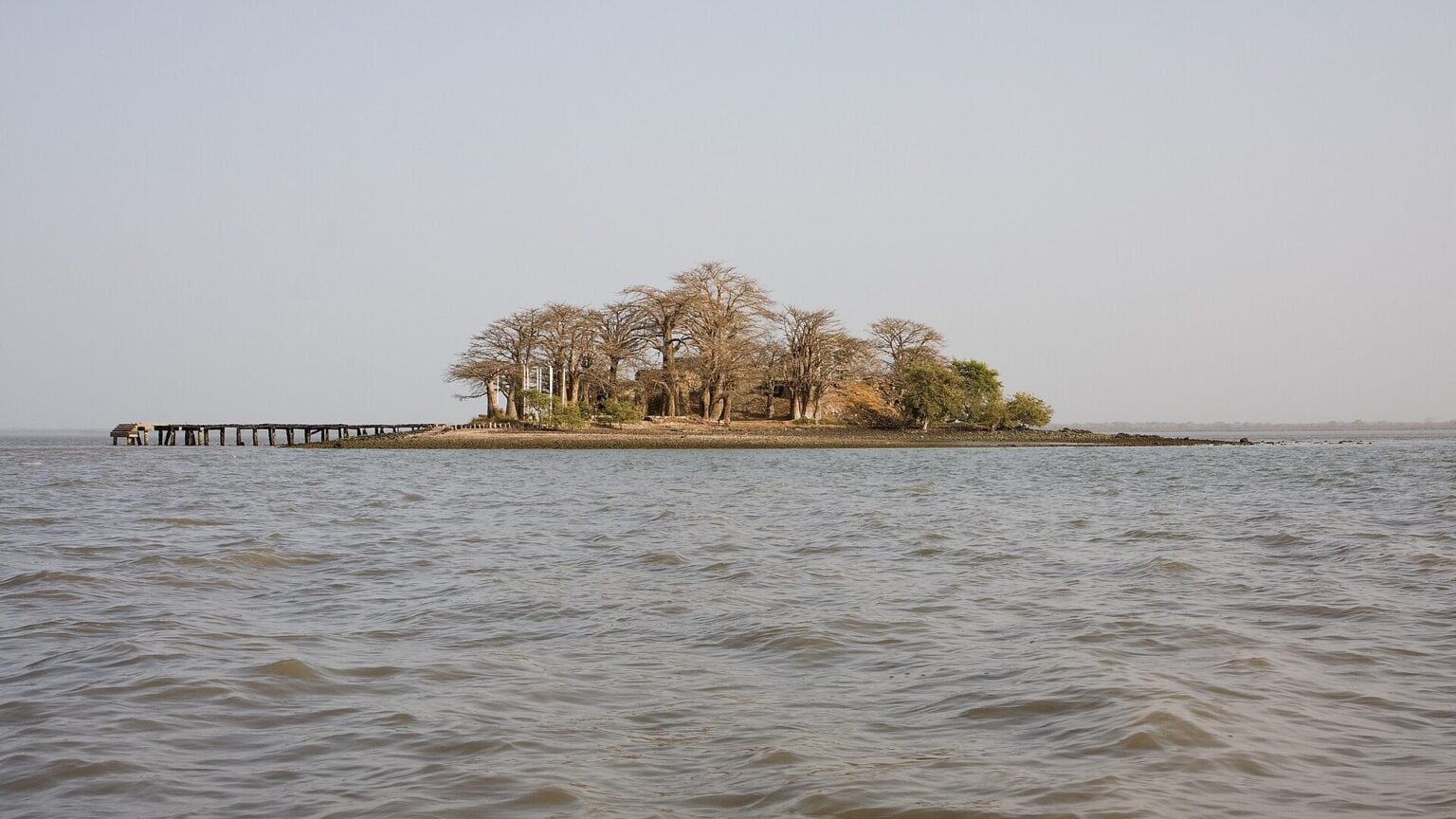
ECOWAS and the African Union: The Safety Net
Gambia has been a member of ECOWAS since the bloc was created in 1975, and the bloc sent troops in the last days of Jammeh’s rule. Jammeh lost the December 2016 election, refused at first to leave, and left office in January 2017.
ECOWAS says its force ECOMIG has been in Gambia since 2017 to support peace and democratic government. A new commander, Colonel Aliou Tine, took over in January 2026, and ECOWAS says units from several member states serve in the mission.
Gambia is also a member of the African Union, the 55-member continental body. Together, ECOWAS and the African Union are the two main regional bodies it belongs to.
Our guide to Gambia and its West African neighbours lays out the trade, border and power-grid ties. It also explains how ECOMIG works day to day.
Senegambia: Living Inside Senegal
Senegal surrounds Gambia on the north, east and south, so every land route out of Gambia leads into Senegal. The two countries tried to merge: they formed the Senegambia Confederation in 1982, and it was dissolved in 1989.
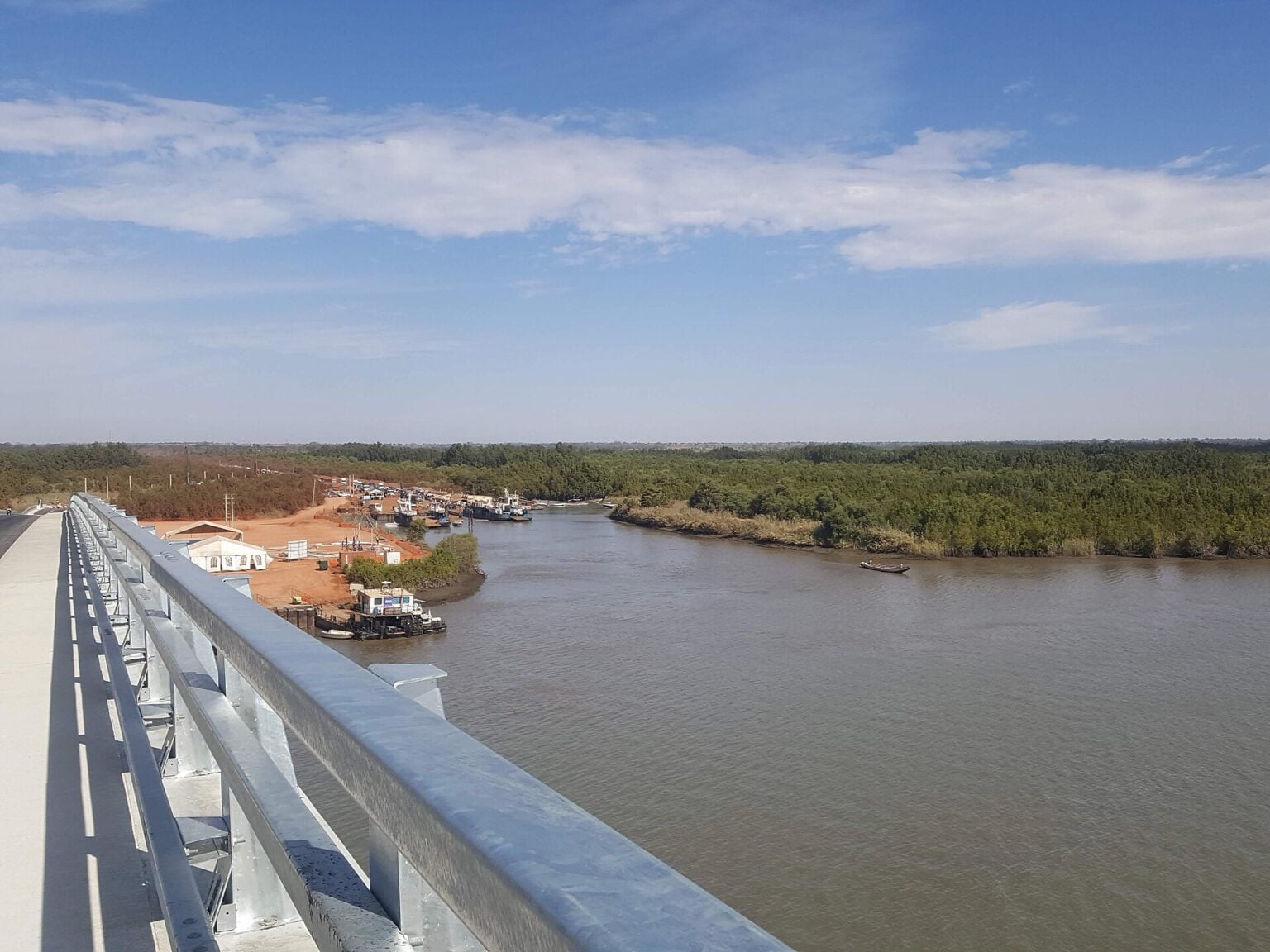
The best-known link today is the Senegambia Bridge over the Gambia River, opened on 21 January 2019 by presidents Adama Barrow and Macky Sall, then Senegal’s head of state. It spans the Gambia River.
Groundnuts, Tourism and Money From Abroad
Groundnuts, which Americans call peanuts, are Gambia’s best-known cash crop. We could not confirm a current official figure for the crop’s share of exports, so we do not quote one.
Tourism and remittances (money sent home by Gambians abroad) are the other pillars of the economy. We could not confirm a current official figure for either, so we quote none.
The Central Bank of The Gambia, the national central bank, shows its policy interest rate at 14% on its website. The local currency is the dalasi.
The 5 December Election
Gambians vote for a president on Saturday 5 December 2026, according to the IEC, and the IEC website lists 1,146,474 registered voters. Candidates filed their nomination papers in early November.
President Adama Barrow, who has led Gambia since January 2017, is seeking a third term. The 1997 Constitution sets a five-year presidential term but no limit on the number of terms.
Parliament tried to change the system. On 7 July 2025 the National Assembly, Gambia’s parliament, rejected a new draft constitution by 35 votes to 21, because the law requires three-quarters of members to approve it.
Our explainer on the electoral system walks through how the vote works. Our guide to the key players profiles the main figures.
What Prediction Markets Say
On Polymarket, a prediction-market platform where users trade real money on outcomes, the market “Gambia Presidential Election Winner” priced Adama Barrow at roughly 75% to 77% and opposition leader Ousainou Darboe at roughly 19% to 20% at 10:05 a.m. ET on 13 November 2026, depending on whether the midpoint or the headline price is read. About US$18,920 had been traded on the market.
These prices are bets, not polls, and a market this small can swing on a few large trades. Neither price says who will win.
Why we show this: prediction markets turn real-money bets into a live probability that moves within minutes of the news, which is why investors, campaigns and newsrooms in the United States now follow them closely. We show them next to polls and official results, never instead of them.
Gambia and the United States
A presidential proclamation of 16 December 2025 placed Gambia under a partial suspension of entry, effective 1 January 2026. It suspends entry of Gambian nationals as immigrants and as nonimmigrants on B-1, B-2, F, M and J visas (business, tourist, student and exchange visas), and it cuts the validity of other nonimmigrant visas.
The White House cited overstay rates of 12.70% for B-1/B-2 visas and 38.79% for F, M and J visas, and said Gambia “has historically refused to accept back its removable nationals.” Permanent residents, some dual nationals and holders of certain diplomatic visas are exempt, and case-by-case waivers exist.
That second point is the link to deportation flights: the proclamation names Gambia’s refusal to take back removable nationals as a reason for the restrictions. We could not find an official count of removals to Gambia, and we found no public agreement on accepting third-country deportees.
The US also returned money to Gambia. The Justice Department says it sent back about US$2.5 million forfeited from a Maryland property bought with the proceeds of alleged corruption by Jammeh, to compensate victims under Gambia’s 2023 victims reparations law.
What It Means for US Readers
Travellers and students from Gambia face a narrower path to the US, so US universities, employers and families with Gambian ties should check the current rules with the US State Department, which issues visas. The measure covers only Gambians outside the US without a valid visa on 1 January 2026, so existing visas are not revoked.
For investors, Gambia is not a market to trade, but its stability matters to neighbours that are. ECOWAS keeps its ECOMIG force in the country.
What Is Not Known
We could not confirm the final list of cleared presidential candidates from the IEC as of 13 November 2026. We also could not confirm a current official figure for groundnuts’ share of exports, tourism’s share of GDP, or the number of Gambians deported from the US.
We could not confirm from an official page whether Gambia is still on the US visa-bond list that began in 2025. The census figure is from GBoS’s preliminary 2024 report, and a final report may differ.
Related reading: Gambia explained, our country guide. More in our Gambia coverage.
Frequently Asked Questions
Is Gambia in West Africa?
Yes. Gambia sits on the Atlantic coast of West Africa and is almost entirely surrounded by Senegal. It is a member of ECOWAS, the regional bloc.
Is Gambia in ECOWAS and the African Union?
Yes to both. It has been in ECOWAS since the bloc was created in 1975 and is an African Union member. ECOWAS has kept its ECOMIG mission in Gambia since 2017.
When is the Gambia election?
Gambians vote for a president on Saturday 5 December 2026, according to the IEC. About 1.15 million people are registered to vote.
What is the Senegambia link?
Senegambia refers to the ties between Senegal and Gambia, including the 1982 to 1989 confederation and the bridge opened in January 2019.
Can Gambians travel to the US?
Entry is partly suspended since 1 January 2026 for immigrants and for B-1, B-2, F, M and J visa holders. Exemptions and waivers exist; check State Department guidance.
What does Gambia export?
Groundnuts are its best-known cash crop, and tourism is a major earner. We could not confirm current export shares from an official source.
What is the Gambia v. Myanmar case?
Gambia asked the ICJ in 2019 to rule that Myanmar breached the Genocide Convention. The judgment is due Thursday 19 November 2026 at 10 a.m. in The Hague.
Sources: Independent Electoral Commission of The Gambia (iec.gm); Gambia Bureau of Statistics, Preliminary Report of the 2024 Population and Housing Census (gbosdata.org); International Court of Justice, case 178 and press release of 3 November 2026 (icj-cij.org); White House proclamation of 16 December 2025 (whitehouse.gov); Central Bank of The Gambia (cbg.gm); ECOWAS (ecowas.int); The Commonwealth (thecommonwealth.org); UN Treaty Collection, Rome Statute (treaties.un.org); US Department of Justice (justice.gov); Constitution of The Gambia, 1997; Polymarket market “Gambia Presidential Election Winner”.
This article was produced by The Rio Times’ automated AI newsroom. Editorial responsibility: Matthias Camenzind, Publisher and Editor-in-Chief. The Rio Times also runs Ask Rio Times, which answers from 100,000+ of our own articles, the daily Latin America Power Map, and prediction-market odds on elections and markets.. How we use AI · Report an error
Part of our ongoing coverage
Africa: The New Scramble — the great-power contest over the continent.