Dollar Slips and Yields Ease After US Vote

Key Facts
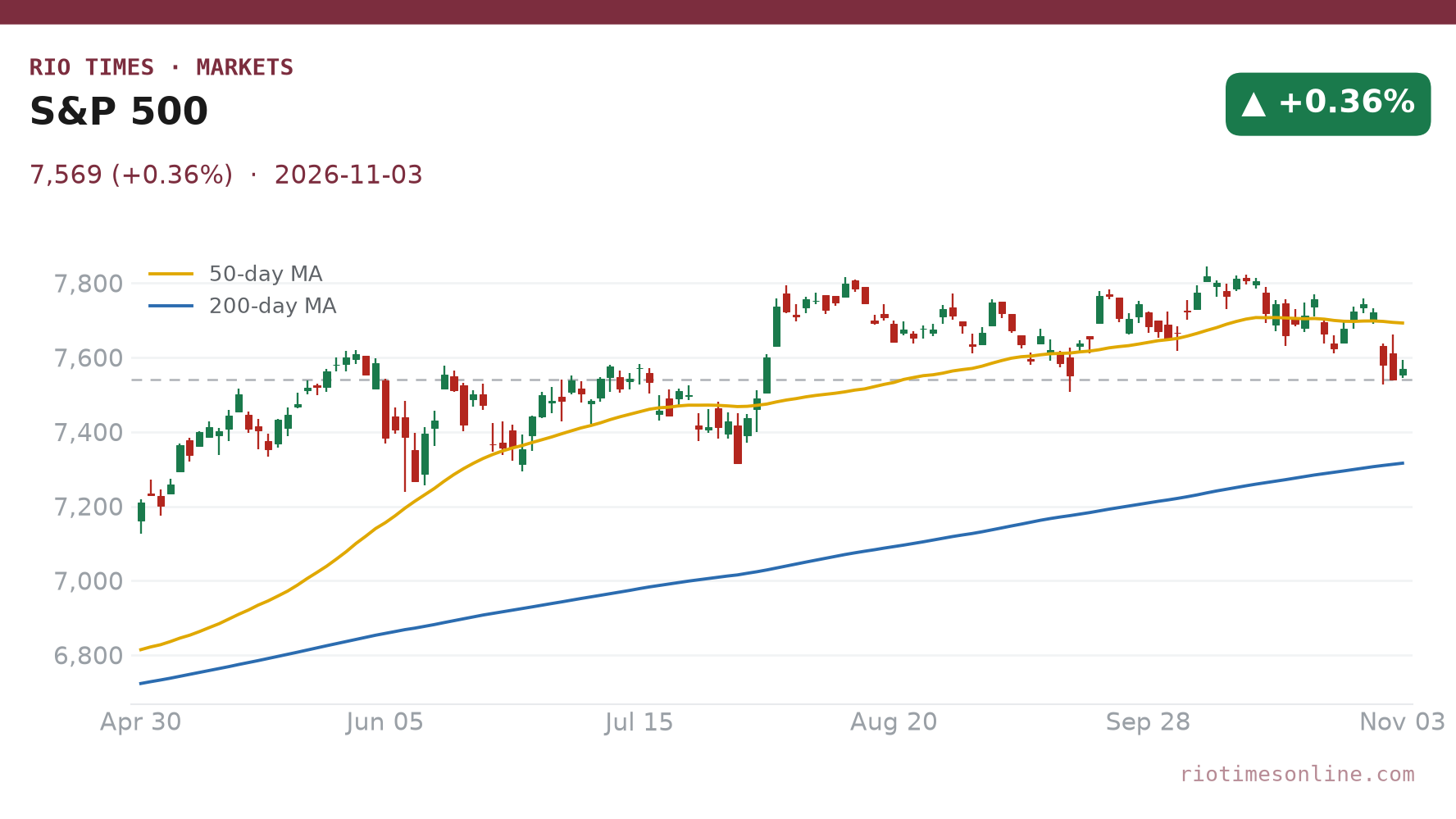
- Stocks: The S&P 500, a gauge of big US companies, rose 0.4% to 7,568.92; Wall Street opens 9:30 a.m. Eastern Time (ET).
- Dollar: Overnight the dollar slipped against the euro, yen and Mexican peso, as of 2:38 a.m. ET.
- Bonds: The 10-year Treasury yield, a benchmark borrowing cost, ended Tuesday at 4.95% and traded near 4.93% overnight.
- Prediction markets: Kalshi, a US-regulated exchange, settled Democratic House and Senate control as Yes; Polymarket gives Democratic leader Hakeem Jeffries 95% for Speaker.
Published Wednesday, 4 November, 2:49 a.m. ET · Source: RT market data, US Treasury, Kalshi, Polymarket, Rio Times analysisWall Street goes into Wednesday knowing news organisations have projected Democratic wins in both chambers of Congress in the midterm elections, which are held halfway through a president’s term.
The first overnight signals are mild: the dollar slipped and bond yields eased, while US stock markets do not open until 9:30 a.m. Eastern Time (ET). This report sets out what moved and what could change the picture.
Our live results page and our House and Senate reports have the counts.
Stocks Ended Mixed on Election Day
The S&P 500 rose 0.4% on Tuesday to 7,568.92, and the Nasdaq Composite, which is heavy in technology shares, gained 0.8% to 25,372.01. The Dow Jones Industrial Average, an index of 30 large US companies, slipped 0.4% to 51,786.72.
Those moves came before the first polls closed, so they say little about the result. The S&P 500 is still about 2.3% below its 28 October close of 7,743.98.
The Dollar Slips and Yields Ease
The dollar fell against most major currencies overnight. Compared with Tuesday’s New York close, the euro rose 0.3% to US$1.1242, the yen strengthened 0.4% to 158.08 per dollar, and the Mexican peso gained 0.9% to 18.66 per dollar, as of 2:38 a.m. ET.
The US Treasury put the 10-year yield, which sets the tone for mortgage and corporate borrowing costs, at 4.95% on Tuesday. On RT, a market-data provider, it traded near 4.93% early Wednesday, down from 4.97% on the same feed, and lower yields mean bond prices rose.
Asian Stock Indexes Split
Tokyo’s Nikkei 225 stock index fell 1.4% to 62,188.63, measured against Monday because Tokyo was shut on Tuesday for a holiday. South Korea’s Kospi gained 0.6% to 5,683.80, and Hong Kong’s Hang Seng rose about 1.4% to near 23,860 while still trading.
Why the Reaction Is Calm
The House result was widely expected. Kalshi traders priced Democratic control of the House at about 93% and of the Senate at about 73% to 75% through Tuesday afternoon.
Both jumped after the first polls closed around 7 p.m. ET, to 97% and 88%, and stood at 99.7% and 99.6% by 9:24 p.m. ET, before either chamber was called. No single cause explains the overnight moves.
What Prediction Markets Say
Kalshi, a US exchange regulated by the Commodity Futures Trading Commission (CFTC), the federal derivatives regulator, settled its House and Senate control markets as Yes for Democrats after the calls, with last prices of 99.9% each. On Polymarket, another prediction exchange, traders priced Hakeem Jeffries, the Democratic House leader, at about 95% to become Speaker, the House’s presiding leader, at 2:41 a.m. ET, in a thinly traded market.
These prices are bets on political results, not forecasts for stocks or bonds. They show how surprised investors were, not where stocks will go.
Why we show this: prediction markets turn real-money bets into a live probability that moves within minutes of the news, which is why investors, campaigns and newsrooms in the United States now follow them closely. We show them next to polls and official results, never instead of them.
What It Means for You
If you hold US stocks, bonds or dollars, the next tests are data rather than politics. ADP, a payroll processor, reports private jobs at 8:15 a.m. ET, with forecasts of 69,000 to 80,000 against 90,000 last month, and the Institute for Supply Management’s survey of service firms follows at 10 a.m. ET.
From January, any new tax or spending bill will need Democratic votes in the House. If you invest in Mexico, the peso gained as the dollar fell, while the Brazilian real barely moved, at about 5.49 per dollar.
What Would Change the Picture
The Labor Department’s monthly payrolls report on Friday 6 November at 8:30 a.m. ET is the next big test, with forecasts of 40,000 to 65,000 new jobs against 29,000 before. A weak figure could push yields lower, while a strong one could reverse the dollar’s slide.
The 10-year yield last closed above 5% on 28 October, at 5.05% by Treasury data, and a return above that line could add pressure on stocks. The real test of the reaction is the 9:30 a.m. ET open.
Sources
The Rio Times US midterms live results · RT, a market-data provider · US Treasury daily yield curve · Polymarket · Kalshi
This article was produced by The Rio Times’ automated newsroom system. How we use AI · Report an error · Editorial responsibility: Matthias Camenzind, Editor-in-Chief
Frequently Asked Questions
How did markets react to the US midterm results?
By 2:38 a.m. ET the dollar had slipped against the euro, yen and Mexican peso, and the 10-year Treasury yield traded near 4.93%. The S&P 500 closed Tuesday at 7,568.92, and US stocks open at 9:30 a.m. ET.
What data comes next for US markets?
ADP private jobs data is due at 8:15 a.m. ET and the Institute for Supply Management’s services survey at 10 a.m. ET on Wednesday. The Labor Department’s payrolls report follows on Friday 6 November at 8:30 a.m. ET.