Uruguay’s Rice Farmers See Record Exports
Uruguay’s rice farmers are enjoying a standout year, bucking the trend of past complaints about low grain prices.
For the first time in many years, they haven’t sought government assistance.
Quite the opposite, they’ve sold nearly their expected harvest of 1.26 million tons to foreign buyers.
Generally, Uruguay consumes 10% of its rice, exporting the rest. This year, however, has proven exceptional.
Farmers planted rice on 159,700 hectares, yielding an impressive 1.4 million tons in total.
Due to these numbers, Uruguay has become South America’s top exporter of quality rice and ranks sixth globally.
Several factors have combined to make this a landmark year for Uruguay. Chief among them is India’s decision to cut its rice exports to prioritize feeding its large population.
India typically accounts for about 40% of the world’s rice supply. When that flow stopped, along with other disruptions from climate change in Asia, it created a rice scarcity.
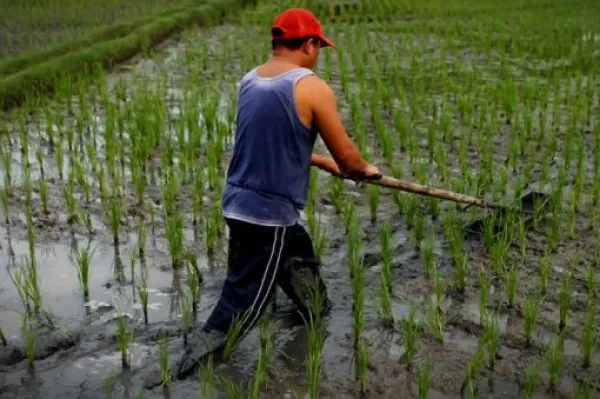
This, in turn, boosted international rice prices and favored Uruguayan producers.
Even with this good news, Uruguay’s rice sector faces challenges. The primary concern is insufficient rainfall to fill the dams and reservoirs used for irrigation.
In Uruguay, the irrigation of rice fields is entirely mechanical.
Each hectare requires between 11,000 to 14,000 cubic meters of water across a hundred days for a successful yield.
Brazilian Rice Industry
Comparatively, Brazil’s rice industry is on a downward trend. In September, its rice exports dropped by 53.8%, amounting to 81,700 tons.
Furthermore, the cost of rice imports in Brazil has surged by 25.3%, hitting $46.6 million.
So, while Uruguay enjoys a bumper year, Brazil confronts a set of challenges in its rice market.
Adding some historical context, Uruguay’s rice sector has not always been prosperous. The industry often relied on government subsidies to stay afloat.
Additionally, competition with neighboring countries like Brazil and Argentina had traditionally made the market challenging.
In the past, unfavorable weather conditions had also affected yields. However, recent technological advancements in irrigation have boosted production.
Additionally, the country’s focus on sustainable farming practices has made its rice more appealing internationally.
Uruguay’s success this year might be a model for other nations grappling with the volatile global rice market.
More: Brazil news in English, every day from The Rio Times.
This article was produced by The Rio Times’ automated newsroom system. How we use AI · Report an error
Read More from The Rio Times