Unprecedented phototherapy treatment in Brazil promises to reduce risk of brain tumor return
RIO DE JANEIRO, BRAZIL – According to estimates by medical experts, severe brain tumors affect 4.7 people per 100 thousand inhabitants worldwide. The procedure with light occurs shortly after the removal of severe tumors.
A team of doctors from Paraná reported the success, unprecedented in Brazil, of intraoperative photodynamic therapy (PDT) combined with the use of the dye 5-ALA to treat severe brain cancer. The following is an explanation of how it works.
The procedure promises to reduce the risks of disease recurrence and prolong patients’ lives.
HOW IT WORKS
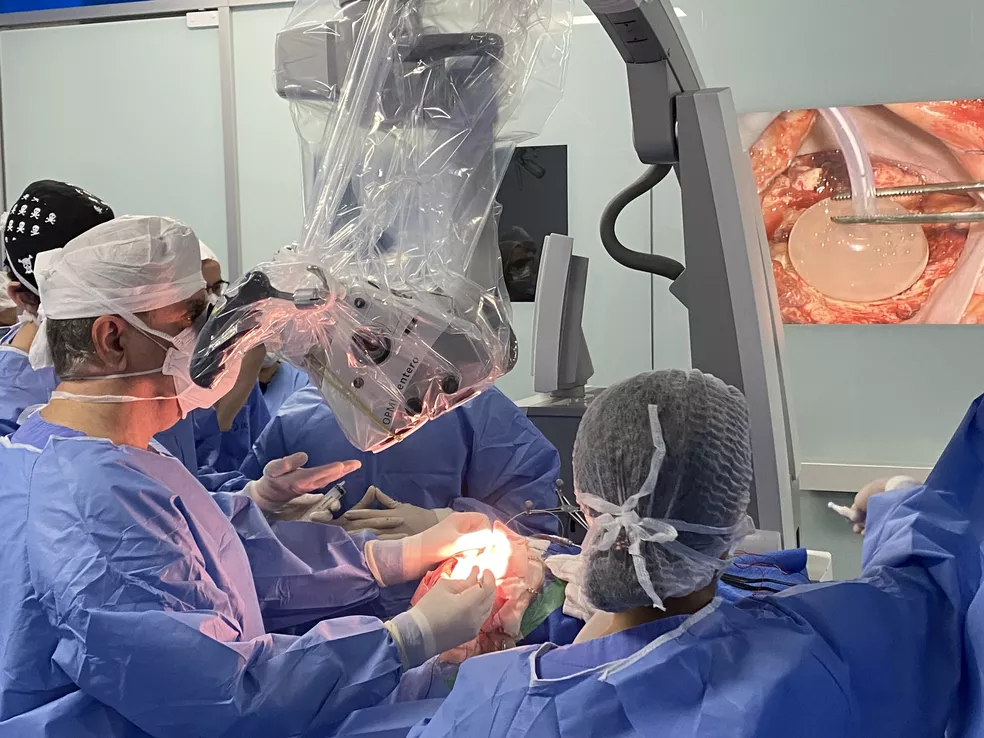
In a nutshell, the treatment uses a powerful red light through a diffuser to trigger a photochemical reaction at the tumor site that attacks cancer cells that remain in the body after surgery.
Neurosurgeon Erasmo Barros Júnior was one of the physicians involved in the first procedure performed in Brazil. His team reported the treatment was conducted in the first fortnight of May at the Institute of Neurology (INC) in Curitiba.
It is applied with the patient’s brain cavity open, immediately after surgery to remove the cancer.
Internationally, this photodynamic therapy is known by the acronym PDT. According to Barros Júnior, the effectiveness of the treatment is based on PDT added to the dye 5-ALA, the abbreviation of the substance aminolevulinic acid.
According to the neurosurgeon, this type of “married” procedure is performed only in Germany and France, where PDT was introduced in 2017. The medical community estimates that severe brain tumors affect 4.7 people per 100,000 population worldwide. According to Barros Junior, this type of tumor usually affects more men.
Data from the National Cancer Institute (Inca) in Paraná show that the estimated rate for brain tumor diagnoses in 2020 was 6.12 cases per 100 thousand men. For women, it was 4.92 cases per 100 thousand.
THE TECHNIQUE
Barros Junior explains that the procedure begins with the patient taking 5-ALA.
After a few hours, the substance causes high-grade gliomas to “glow” and turn red. The fluorescence facilitates surgery to remove the diseased part of the brain.
Surgery alone, however, does not significantly reduce the likelihood that the tumor will return in the future. And it is precisely to combat this return, known as relapse, that PDT is used.
According to the doctor, the treatment is performed in a single session because the brain cavity must be exposed. The procedure takes about an hour.
With the help of a diffuser, red lights cause a photochemical reaction at the site where the tumor was located, affecting the cancer cells that remain in the body after surgery. The doctor explains that the lights increase the oxygen supply to the sit during this procedure.
FUTURE
Until this Friday (20), only one patient had been treated in this way in Curitiba. However, according to the neurosurgeon, the INC is expected to perform three treatments with PDT and 5-ALA by the end of May.
Since this procedure is being performed as a study, post-surgery treatment at the NIC is free of charge.
However, the doctor emphasizes the effectiveness of the treatment, which has been proven in studies from other countries, ensuring a prolongation of the life of patients who undergo the procedure.
As for the possible inclusion of this type of treatment in the Unified Health System (SUS) with universal access for Brazilians, Barros Júnior believes that this still takes time.
With information from G1
More: Brazil news in English, every day from The Rio Times.
This article was produced by The Rio Times’ automated newsroom system. How we use AI · Report an error · Editorial responsibility: Matthias Camenzind, Editor-in-Chief