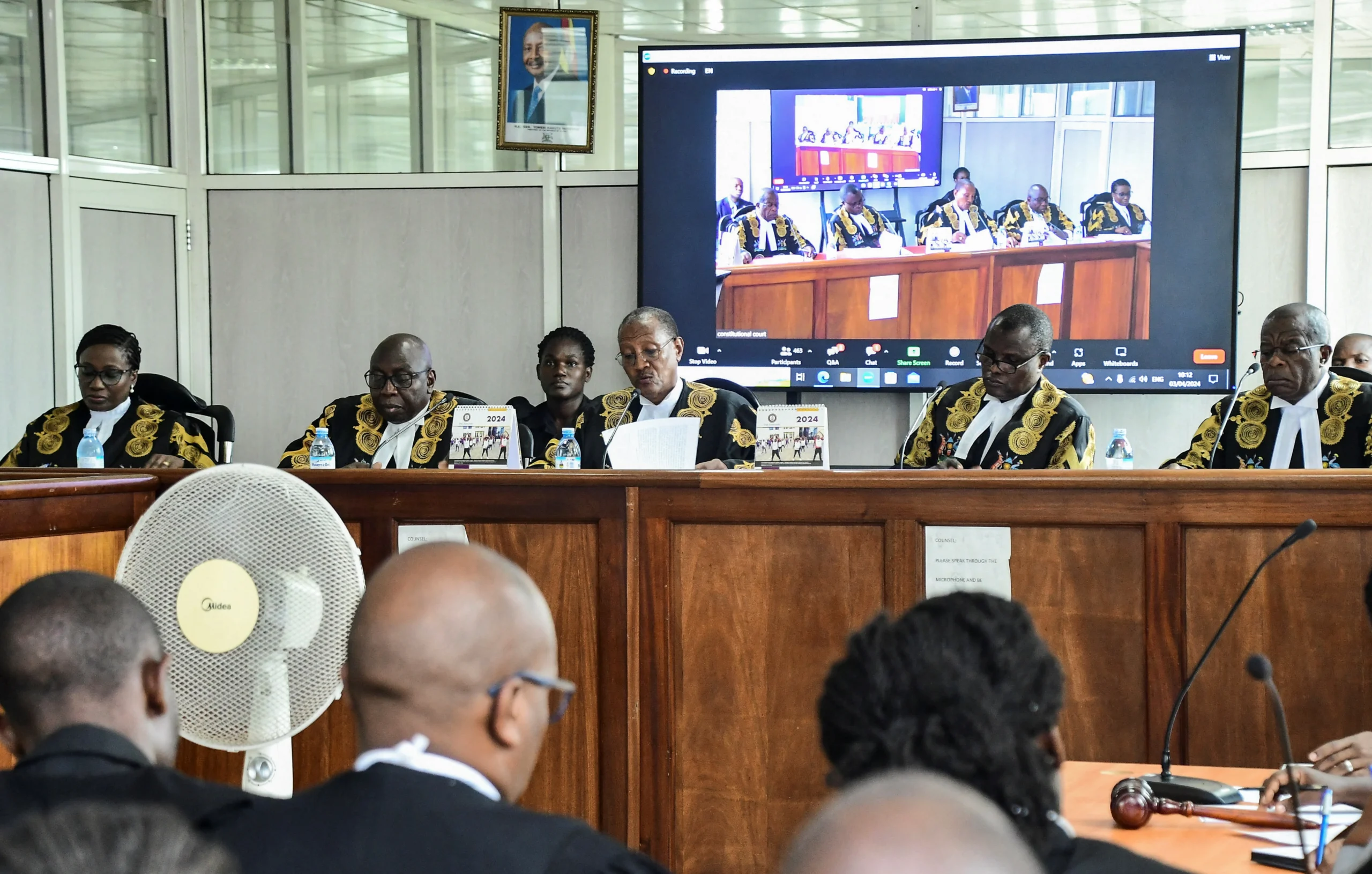
A Kampala court has kept a ruling-party MP in his seat even though it found election officials never counted 22 polling stations. The judge said the missing votes could not have changed the winner, in a country President Yoweri Museveni has led since 1986.
Published Monday, 2 November, 6:09 a.m. ET · Source: Uganda High Court ruling of 30 October 2026
Key Facts
- Ruling. On 30 October 2026, Uganda’s High Court dismissed a challenge to Fred Ruhindi’s parliamentary win in Kampala’s Nakawa East.
- Flaw. The court found 22 polling stations went uncounted, but said the omission did not substantially change the result.
- Margin. The declared margin was 3,508 votes; by our arithmetic, adding the omitted stations still leaves Ruhindi 3,035 ahead.
- Next. The petitioner’s lawyers said they would appeal; we found no confirmation of a filing.
Why the Court Dismissed the Petition
Justice Allan Paul Nshimye of Uganda’s High Court, the trial court for election disputes, dismissed the petition on Friday 30 October 2026. He upheld Fred Ruhindi, a former attorney general, as member of parliament for Nakawa Division East, a constituency in the capital Kampala.
Ruhindi stands for the National Resistance Movement (NRM), the party of President Museveni. The petitioner, Alex Waiswa Mufumbiro, is deputy spokesperson of the opposition National Unity Platform (NUP), which is led by Robert Kyagulanyi, known as Bobi Wine.
Each side must pay its own legal costs. The Electoral Commission, the state body that runs Uganda’s elections, was a defendant alongside Ruhindi.
The 22 Polling Stations That Were Never Counted
The court found that the Electoral Commission left the results of 22 polling stations out of the final tally. Rashid Hasakya, the returning officer for Kampala, who oversees the district count, told the court under cross-examination that the 22 stations were never tallied.
The election took place on 15 January 2026, and the declared result was 18,575 votes for Ruhindi against 15,067 for Mufumbiro, a margin of 3,508. The omitted stations gave Mufumbiro 1,072 votes and Ruhindi 599, according to the results forms the court reviewed.
By our arithmetic, adding those stations would cut Ruhindi’s lead by 473 votes, to 3,035. The judge held that the omission did not affect the result in a substantial manner.
Why the Petition Failed on Evidence
Mufumbiro relied on about 418 photocopied results forms, which the judge ruled inadmissible because they were uncertified. Only two witnesses, identified as Kato and Balinwezo, testified for the petitioner, and the judge criticised him for not calling polling-station agents.
The judge said the petitioner had not discharged his duty to prove his case. He also found no evidence linking Ruhindi, directly or indirectly, to any electoral malpractice.
Appeal and a Related Ruling
Mufumbiro’s lawyers said they would immediately file a notice of appeal, according to a report of the ruling, but we found no confirmation that a filing has been made. Mufumbiro was led from court under guard by prison warders, and Ugandan press reports describe him as in custody.
On the same day, Justice Nshimye upheld the election of Joel Ssenyonyi, the Leader of the Opposition in Parliament, in neighbouring Nakawa West, dismissing a petition by Ivan Bwowe. He treated a naming error in the nomination papers as correctable and ordered the commission to pay costs.
What It Means for US Readers
The ruling leaves one more Kampala seat with the ruling party and shows how Ugandan courts weigh a counting failure against the winning margin. For US investors and aid groups following Uganda’s politics, the appeal is the next marker, alongside our reports on power-sharing talks with the opposition and the withdrawal of Ugandan troops from Somalia.
The commission has not publicly responded, as far as we could find. The court’s written judgment is the primary source to check.
What Is Not Known
We could not find the full judgment text, so details come from reports of the ruling. The time of day of the judgment was not reported.
Reports differ on the omitted stations: one cites 1,117 voters affected, while the results forms show 1,671 votes cast. An earlier trial report gave slightly different totals for the two main candidates, 18,555 and 15,186, which we could not reconcile with the declared result.
Whether the appeal has been filed is unconfirmed. We found no new developments between 31 October and 2 November.
Sources
Judiciary of Uganda · Electoral Commission of Uganda · Rio Times Uganda coverage
This article was produced by The Rio Times’ automated newsroom system. How we use AI · Report an error · Editorial responsibility: Matthias Camenzind, Editor-in-Chief
Frequently Asked Questions
Why did the court keep Fred Ruhindi in his seat?
The High Court found 22 polling stations were never counted, but held the omission did not substantially affect the result. The petitioner also failed to prove his case with admissible evidence.
Will Mufumbiro appeal the Nakawa East ruling?
His lawyers said they would file a notice of appeal. We found no confirmation that a notice has been filed.