IBOV 183,476.86 ▼ 0.27% IPSA 11,256.80 ▼ 0.38% IPC MEX 64,992.23 ▲ 1.13% MERVAL 2,893,751 ▼ 1.57% COLCAP 2,584.72 ▼ 0.95% BVL PERÚ 59,934.37 ▲ 1.27% USD/BRL5.19▼ 0.12% USD/MXN17.68▼ 0.27% USD/CLP960.63▼ 0.27% USD/COP3,293▲ 0.20% USD/PEN3.39▼ 0.67% USD/ARS1,525▲ 0.30% USD/UYU40.21▲ 3.50% USD/PYG5,870▲ 2.23% USD/BOB12.17▲ 2.05% USD/DOP59.35▲ 0.25% USD/CRC450.87▲ 2.53% USD/GTQ7.64▲ 3.22% USD/HNL26.85▲ 0.31% USD/NIO36.62— 0.00% USD/VES853.52▼ 0.13% USD/PAB1.00— 0.00% USD/BZD2.00— 0.00% USD/JMD 157.28 — 0.00% USD/TTD6.77▲ 2.72% EUR/BRL5.91▲ 0.63% BRENT 88.88 ▼ 0.03% WTI 83.11 ▼ 0.11% IRON ORE 161.91 — — COPPER 6.61 ▲ 0.03% GOLD 4,461 ▲ 1.78% SILVER 65.59 ▲ 1.26% SOY 1,184 ▲ 3.20% CORN 480.50 ▲ 10.02% WHEAT 655.00 ▲ 3.93% COFFEE 317.25 ▼ 5.51% SUGAR 16.43 ▼ 1.79% ORANGE JUICE 138.55 ▼ 0.47% COTTON 85.03 ▲ 2.33% COCOA 5,719 ▲ 3.18% BEEF 223.60 ▼ 3.93% CATTLE 339.10 ▼ 3.16% LITHIUM 75.20 ▲ 1.47% PETR4 41.64 ▼ 0.05% VALE3 72.97 ▲ 0.83% ITUB4 38.60 ▼ 1.03% BBDC4 16.85 ▲ 0.36% ABEV3 14.89 ▼ 0.80% BBAS3 19.37 ▲ 0.47% B3SA3 14.26 ▼ 0.21% WEGE3 47.59 ▲ 0.49% PRIO3 59.14 ▼ 0.19% SUZB3 41.33 ▲ 2.35% RENT3 34.68 ▼ 0.09% AZZA3 15.89 ▼ 2.63% CSAN3 3.22 ▼ 1.83% RAIZ4 0.25 — 0.00% PCAR3 2.75 ▼ 0.36% GMAT3 3.65 ▼ 1.08% PSSA3 48.13 ▼ 0.54% CVCB3 1.33 ▼ 2.92% POSI3 3.36 ▲ 2.44% SLCE3 13.34 ▲ 0.30% NATU3 8.14 ▼ 0.73% IBOV 183,476.86 ▼ 0.27% IPSA 11,256.80 ▼ 0.38% IPC MEX 64,992.23 ▲ 1.13% MERVAL 2,893,751 ▼ 1.57% COLCAP 2,584.72 ▼ 0.95% BVL PERÚ 59,934.37 ▲ 1.27% USD/BRL 5.16 ▲ 0.01% USD/MXN 17.06 ▼ 0.24% USD/CLP 913.98 ▲ 0.04% USD/COP 3,140 ▲ 0.03% USD/PEN 3.36 ▼ 0.66% USD/ARS 1,493 ▲ 0.10% USD/UYU 40.27 ▲ 1.24% USD/PYG 5,939 ▲ 1.68% USD/BOB 11.64 ▼ 0.76% USD/DOP 58.34 ▲ 1.25% USD/CRC 445.92 ▲ 0.89% USD/GTQ 7.62 ▲ 2.21% USD/HNL 26.79 ▲ 1.57% USD/NIO 36.62 ▲ 0.69% USD/VES 762.44 ▼ 0.13% USD/PAB 1.00 — 0.00% USD/BZD 2.00 — 0.00% USD/JMD 157.28 — 0.00% USD/TTD 6.70 ▲ 0.61% EUR/BRL 5.95 ▲ 1.01% BRENT 88.88 ▼ 0.03% WTI 83.11 ▼ 0.11% IRON ORE 161.91 — — COPPER 6.61 ▲ 0.03% GOLD 4,461 ▲ 1.78% SILVER 65.59 ▲ 1.26% SOY 1,184 ▲ 3.20% CORN 480.50 ▲ 10.02% WHEAT 655.00 ▲ 3.93% COFFEE 317.25 ▼ 5.51% SUGAR 16.43 ▼ 1.79% ORANGE JUICE 138.55 ▼ 0.47% COTTON 85.03 ▲ 2.33% COCOA 5,719 ▲ 3.18% BEEF 223.60 ▼ 3.93% CATTLE 339.10 ▼ 3.16% LITHIUM 75.20 ▲ 1.47% PETR4 41.64 ▼ 0.05% VALE3 72.97 ▲ 0.83% ITUB4 38.60 ▼ 1.03% BBDC4 16.85 ▲ 0.36% ABEV3 14.89 ▼ 0.80% BBAS3 19.37 ▲ 0.47% B3SA3 14.26 ▼ 0.21% WEGE3 47.59 ▲ 0.49% PRIO3 59.14 ▼ 0.19% SUZB3 41.33 ▲ 2.35% RENT3 34.68 ▼ 0.09% AZZA3 15.89 ▼ 2.63% CSAN3 3.22 ▼ 1.83% RAIZ4 0.25 — 0.00% PCAR3 2.75 ▼ 0.36% GMAT3 3.65 ▼ 1.08% PSSA3 48.13 ▼ 0.54% CVCB3 1.33 ▼ 2.92% POSI3 3.36 ▲ 2.44% SLCE3 13.34 ▲ 0.30% NATU3 8.14 ▼ 0.73%
since 2009
Sunday, September 27, 2026

North America Analysis

U.S. Tech Giants Rethink China Dependency

By · August 7, 2024 · 2 min read

The LatAm Brief

One email, every weekday morning. What moved in Latin American markets, politics and expat life.

Yesterday’s subject line: “The US Army is quietly planning for Cuba”

Free. We send a confirmation link first — nothing arrives until you click it. Unsubscribe with one click in any edition. If you stop opening us for 30 days we stop sending by ourselves, as we assume the interest is no longer there. See our privacy policy. We never share your email.

HP intensifies efforts to decentralize production, moving beyond China to counter geopolitical uncertainties.

This plan stems from growing tensions between China and Taiwan, along with along with complex U.S.-China relations.

Here, we examine HP’s strategic overhaul and how it aligns with shifts by other American tech giants.

HP’s Strategic Overhaul

HP plans to transfer over 50% of its personal computer production out of China within two to three years.

The company is setting up an auxiliary design hub in Singapore, complementing its primary center in Taiwan. This move aims to minimize risks from potential geopolitical conflicts.
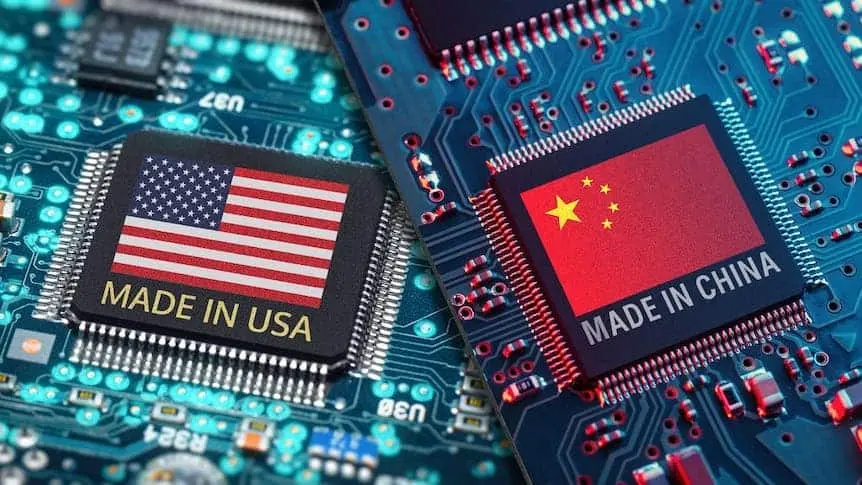
U.S. Tech Giants Rethink China Dependency
U.S. Tech Giants Rethink China Dependency.
One-stop reference
Company Intelligence
Every listed company in Latin America — financials, ownership and structure for 1,450+ companies across 26 exchanges, in one place.
Browse the directory →
RT
Ask Rio Times
17 years of Latin America reporting, on demand.
Open the full Ask Rio Times →

Strategic Details:

  • Objective: Redirect up to 70% of notebook production from China.
  • New Locations: Thailand, Singapore, and Mexico.
  • Time Frame: Complete initial relocation within 2-3 years.
  • Capital Deployment: Major investments in Thailand’s new manufacturing sites and expansion in Mexico.

Adaptive Strategies of U.S. Tech Majors

HP’s strategy reflects a broader trend among U.S. tech corporations adjusting supply chains due to geopolitical strains and the global pandemic’s aftermath.

Dell:

  • Approach: Removing “made in China” chips from its devices.
  • Relocations: Increasing production in Vietnam and other Southeast Asian nations.
  • Target: Produce 20% of its laptops in Vietnam by year-end.

Apple:

  • Approach: Diversifying production locales.
  • Relocations: Shifting MacBook, iPad, and Apple Watch production to Vietnam.
  • Investments: Enhancing R&D and manufacturing in Southeast Asia.

Microsoft:

  • Approach: Broadening supply chains.
  • Relocations: Considering production shifts to Southeast Asia.
  • Investments: Boosting regional sales and marketing efforts.

Context of Geopolitical and Economic Influences

HP and other U.S. enterprises are adapting due to several factors:

Geopolitical Concerns:

  • U.S.-China Dynamics: Persistent trade disputes and policy uncertainties.
  • Taiwan-China Tensions: Potential disruptions in supply chains.
  • Export Limitations: U.S. curbs on high-powered chips and vital components.

Economic Drivers:

  • Surging Costs in China: Rising labor and operational expenses.
  • Chain Resilience: Insights from COVID-19 underscore the need for diversified supply routes.
  • Emerging Markets: New business prospects in Southeast Asia and the Middle East.

Southeast Asia’s Rising Significance

The production pivot is elevating Southeast Asia as a pivotal manufacturing hub.

  • Thailand: Expanding facilities to bolster HP’s production shift.
  • Vietnam: Becoming a central hub for tech manufacturing, drawing significant capital from Apple and Dell.
  • Malaysia: Attracting investments in its burgeoning semiconductor industry.
  • Indonesia: Aiming to establish a comprehensive hub for electric vehicle production.

Conclusion

HP’s decision to reduce its production dependency on China is a tactical response to mitigate geopolitical threats and reinforce supply chain robustness.

This reflects a broader recalibration among major U.S. tech firms, signifying a substantial shift in global manufacturing dynamics.

With Southeast Asia’s rising prominence, the region is set to play a vital role in the worldwide tech supply chain, presenting a formidable alternative to China.

This article was produced by The Rio Times’ automated newsroom system. How we use AI · Report an error

Read More from The Rio Times

The Rio Times · Power Map
See who really holds power in Latin America
Click to open the Power Map →

Rotate for Best Experience

This report is optimized for landscape viewing. Rotate your phone for the full experience.