
BRAZIL · EXPLAINER
Key Facts
- The country Brazil is South America’s largest country, with more than 210 million people, and it holds a presidential runoff on Sunday 25 October 2026.
- What the TSE is The TSE is the Tribunal Superior Eleitoral, Brazil’s Superior Electoral Court, which runs elections and judges candidacy disputes.
- The legal roads A candidate can be barred under the Ficha Limpa (Clean Record) law after a conviction, or under the Constitution’s ban on paramilitary groups.
- The challenge Under Complementary Law 64 of 1990, a candidate, party, coalition or electoral prosecutor has 5 days from publication of a registration request to challenge it.
- What happened On Friday 23 October 2026 the electoral prosecution asked the TSE to bar Rio state deputy-elect Márcio Canella, who has not been convicted.
- Power Index Brazil ranks 1st of 14 in The Rio Times Latin America Power Index, with 75.0 points (October 2026 edition).
Runoff · Sunday, 25 October
Brazil Runoff 2026: Lula vs Flávio
Date, polls, debates, odds and how the runoff works, updated every day.
Read our Brazil election 2026 runoff guide →
Brazil election 2026 · Brazil election polls · Who will win: Brazil election odds · Brazil runoff date and results start · Brazil election results · Brazil election poll data (CSV) · All election stories
Prediction markets · who wins the runoff
Implied chance of winning Brazil’s presidency on 25 October, from traders’ prices.
Polymarket
Flávio Bolsonaro 82.8% · Lula 17.5% (US$195 million traded)
Kalshi (regulated in the US by the CFTC)
Flávio Bolsonaro 84% · Lula 18%
As of 24 October, 1:20 pm ET (18:20 Lisbon), updated every 20 minutes. Prices are bets, not polls, and can move fast.
Why we show this: prediction markets turn real-money bets into a live probability that moves within minutes of the news, which is why investors, campaigns and newsrooms in the United States now follow them closely. We show them next to polls and official results, never instead of them.
TSE candidate vetting can end in rejection over alleged organized crime ties even without a conviction, as Rio deputy-elect Márcio Canella’s case shows. This explainer sets out the law and deadlines, while our Brazil election 2026 coverage follows the vote.
The case leaves the presidential race alone, so the Brazil election polls, the Brazil election odds and the Brazil runoff date stay unchanged. Our news report on the electoral prosecutor’s request against Canella covers the filing itself.
TSE Candidate Vetting in Plain Terms
TSE candidate vetting is run by Brazil’s electoral justice, led by the Superior Electoral Court, which registers candidates and settles who may run. Before anyone appears on a ballot, a court must approve the registration, and approval can be challenged.
A challenge to a registration is called an impugnação in Portuguese. It is the main tool of the electoral prosecution when it believes a candidate is barred from office, including over alleged ties to criminal groups.
Who Decides: The TSE, Regional Courts and the Prosecutor
Complementary Law 64 of 1990, published on the Planalto presidency’s legal database, says the TSE judges challenges to presidential candidates. Regional electoral courts, the TREs, judge senators, governors and federal and state deputies, so a Rio state deputy starts at the TRE-RJ.
In TSE candidate vetting, the Ministério Público Eleitoral, the electoral prosecution, is the part of Brazil’s federal prosecution service that acts. The same law lets any candidate, party or coalition file a challenge, and that does not stop the prosecutor from acting.
Two Legal Roads: Ficha Limpa and the Paramilitary Ban
The first road is the Ficha Limpa, or Clean Record, law, Complementary Law 135 of 2010, signed on 4 June 2010. It makes a person ineligible after a conviction by a panel of judges, even while appeals continue, until eight years after the sentence is served.
The crimes listed include money laundering, drug trafficking, terrorism and crimes committed by a criminal organization, a gang or a band. Ficha Limpa therefore needs a conviction, and an inquiry or an arrest alone does not trigger it.
The second road is Article 17, paragraph 4, of the Constitution, which says political parties may not use a paramilitary organization. In May 2025 the TSE unanimously upheld a ban on a Belford Roxo council candidate, and prosecutors say the Constitution was the ground.
That candidate had been convicted of forming a private militia and sentenced to eight years, the same release says. The electoral prosecution argues that TSE rulings let it bar politicians tied to such groups without a final conviction, if the evidence is solid.
Steps and Deadlines of TSE Candidate Vetting
TSE candidate vetting begins when parties file registrations, by 7 p.m. on 15 August of an election year, under the electoral law of 1997. For 2026 the TSE calendar sets 14 September as the date by which lower courts must decide every registration, challenged ones and their appeals included.
Under Complementary Law 64, a challenge must come within 5 days of the publication of the registration request. The candidate then has 7 days to answer, and the law gives 4 days to hear witnesses when needed and 5 days for final arguments.
The judge or rapporteur then decides, and an appeal to the TRE or the TSE normally has to be filed within 3 days of publication. These deadlines are continuous and do not pause for weekends or holidays after the registration deadline, the law says.
A candidate whose registration is still disputed on election day may campaign and appear on the ballot, under Article 16-A of the electoral law. Votes for that candidate count only if a higher court finally approves the registration.
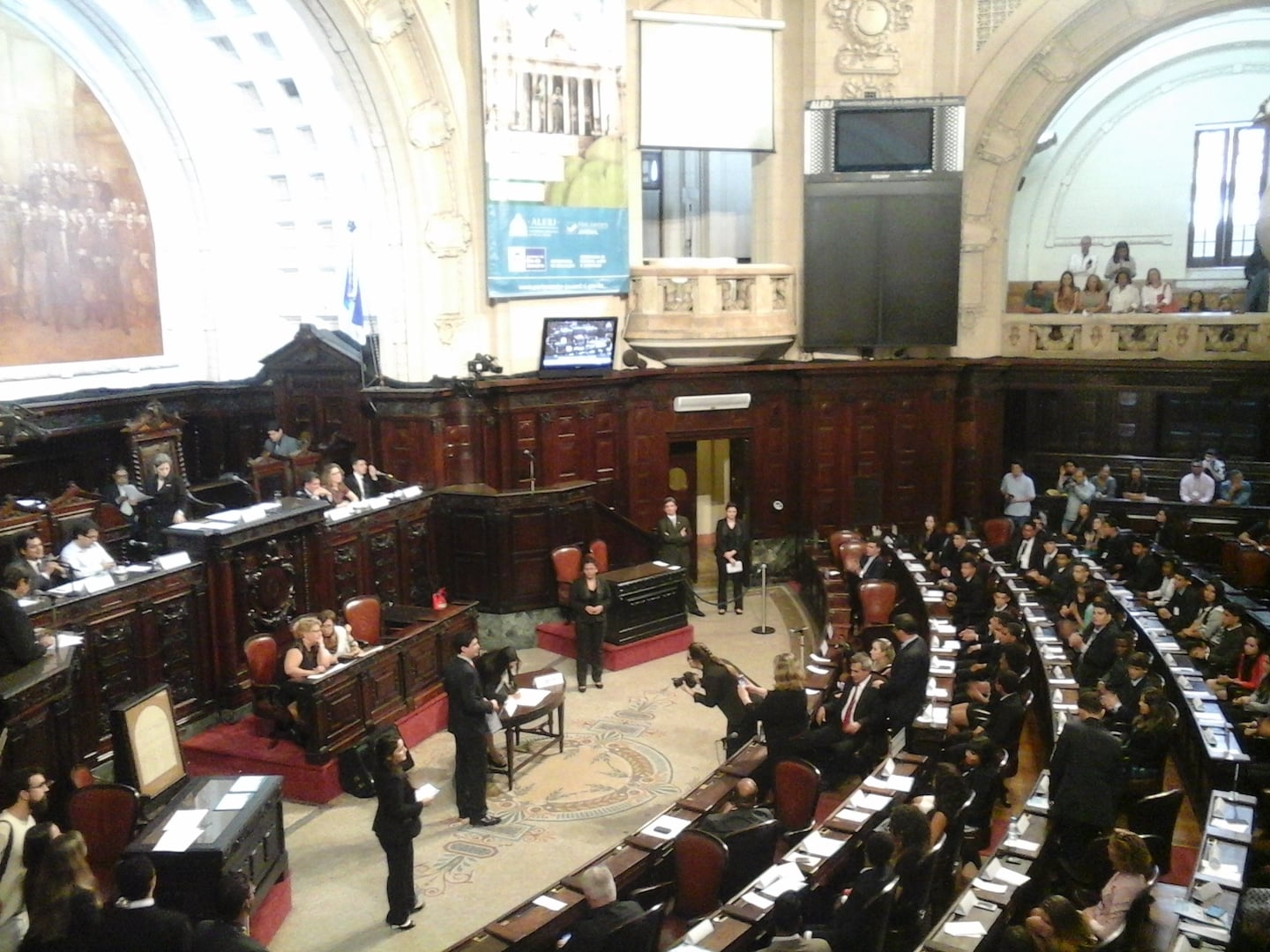
The Canella Case as a Live Example
Márcio Canella, of the União Brasil party, is a former mayor of Belford Roxo, a city in Rio’s Baixada Fluminense area. He won 197,178 votes for the Rio state assembly, the second-highest total among state deputies in Rio, Metrópoles and O Antagonista report.
On Friday 23 October 2026, deputy electoral prosecutor-general Alexandre Espinosa asked the TSE to bar Canella’s registration, Metrópoles, Gazeta do Povo and O Antagonista report. It also asks the TSE to overturn the TRE-RJ decision that cleared him.
The filing says Canella acted as a political organizer of a criminal scheme and cites alleged militia and Comando Vermelho gang ties, Metrópoles reports. Gazeta do Povo adds that it alleges he appointed militia leaders to city posts and received money from the scheme.
Metrópoles says the prosecutor argues that the Rio court ruled before seeing evidence from a Supreme Court inquiry, whose secrecy was lifted this month. Tribuna do Sertão reported that the TRE-RJ approved his registration by 6 votes to 1 on Tuesday 29 September.
That inquiry is Operation Unha e Carne, in which Canella was arrested on Thursday 15 October, Gazeta do Povo reports. Police say a fuel-station network moved R$7.6 billion (about US$1.5 billion) in six years, and no conviction against Canella has been reported.
Our earlier reports cover the arrest in the fuel-laundering probe and the three elected candidates flagged for crime links. The outlets carry no reply to the new filing, though his lawyer earlier called the militia claim an extravagant story, Tribuna do Sertão reported.
What Happens After the Vote
Winning does not end TSE candidate vetting, since a mandate can be challenged within 15 days of the ceremony where winners receive their certificate. That ceremony is called the diplomação, and the challenge needs proof of abuse of economic power, corruption or fraud.
If a court finally rejects a registration, the electoral law says votes cast for that candidate do not count. The TSE must now decide whether to keep or reverse the Rio ruling, and none had been reported by Saturday 24 October.
What It Means for US Readers
TSE candidate vetting shows how Brazil’s courts handle alleged criminal infiltration of politics, which matters to anyone following the country’s institutions. This case concerns one Rio state seat and does not affect the presidential runoff, trade or travel.
Observers should watch whether the TSE accepts the prosecution’s reading that credible evidence can bar a candidate without a conviction. A ruling for the prosecution would set a precedent for TSE candidate vetting of other elected figures questioned over crime links.
What Is Not Known
It is not known when the TSE will finish its candidate vetting of Canella or whether it will accept the opinion. Nor is it known how his 197,178 votes will be treated if the TSE reverses the Rio ruling.
No court has ruled on the new allegations, and Canella has not been convicted of any crime in the cases cited. His defense has not been reported responding to the filing, and the facts are for the courts to decide.
More: Brazil news in English, every day from The Rio Times.
Frequently Asked Questions
Can TSE candidate vetting reject someone without a conviction?
In TSE candidate vetting, the electoral prosecution argues that rulings allow it, under the Constitution’s ban on paramilitary groups, if the evidence is strong. The Ficha Limpa law, by contrast, requires a conviction.
What is the Ficha Limpa law?
Ficha Limpa, meaning Clean Record, is Complementary Law 135 of 2010, which bars people convicted by a panel of judges from running. The bar lasts until eight years after the sentence is served.
Who can challenge a candidate’s registration in Brazil?
Any candidate, party, coalition or the electoral prosecution can file within 5 days of publication of the registration request. The candidate then has 7 days to answer.
What did the prosecutor ask the TSE about Márcio Canella?
The deputy electoral prosecutor-general asked the TSE on Friday 23 October 2026 to bar his registration and reverse the Rio court’s approval. The filing’s allegations are unproven, and no TSE ruling has been reported.
Does the Canella case affect the 25 October runoff?
No outlet cited reports any effect on the presidential vote, which stays on Sunday 25 October 2026. The case concerns one seat in Rio de Janeiro’s state assembly.
Sources: Metrópoles, 24 October 2026; Gazeta do Povo, 24 October 2026; O Antagonista, 24 October 2026; Tribuna do Sertão, 5 October 2026; Presidency of Brazil, Complementary Law 64/1990, consulted 24 October 2026; Presidency of Brazil, Complementary Law 135/2010, consulted 24 October 2026; Presidency of Brazil, Law 9,504/1997, consulted 24 October 2026; Presidency of Brazil, Constitution, consulted 24 October 2026; Tribunal Superior Eleitoral, 2026 election calendar, consulted 24 October 2026; Federal Prosecution Service (MPF), 21 May 2025.
This article was produced by The Rio Times’ automated newsroom system. How we use AI · Report an error · Editorial responsibility: Matthias Camenzind, Editor-in-Chief