Trump’s ‘Last Chance Decapitation’ Ultimatum over Hormuz
United States · GEOPOLITICS
Key Facts
—The ultimatum: On 3 August 2026, Donald Trump warned Iran had one “last chance” to sign a peace deal before facing “decapitation” strikes targeting its leadership and infrastructure.
—The war context: The warning followed Operation Epic Fury, a joint United States-Israel campaign launched on 28 February 2026 that killed Supreme Leader Ali Khamenei and involved nearly 900 strikes in 12 hours.
—Strait of Hormuz: Trump tied the ultimatum to reopening the Strait of Hormuz, a critical oil chokepoint, and had repeatedly threatened to destroy Iran’s power plants and bridges if Tehran did not comply.
—Military scale: The United States deployed about 150 fighter aircraft, ten guided-missile destroyers, Patriot batteries, and 50,000 personnel across the Gulf, facing Iran’s roughly 610,000-strong military including about 190,000 Islamic Revolutionary Guard Corps cadres.
—Great-power dimension: China and Russia kept Iran solvent and supplied with military technology, deepening multipolar dynamics while avoiding direct confrontation with Washington.
—Strategic outcome: By mid-2026, analysts assessed the war had produced no decisive victor, eroding United States deterrent credibility despite overwhelming military dominance.
Donald Trump’s “last chance before decapitation” warning to Iran on 3 August 2026 marks the most extreme escalation of coercive diplomacy in a war that has already killed Iran’s supreme leader and reshaped global energy politics without delivering a decisive victor.
What Trump said and why it matters
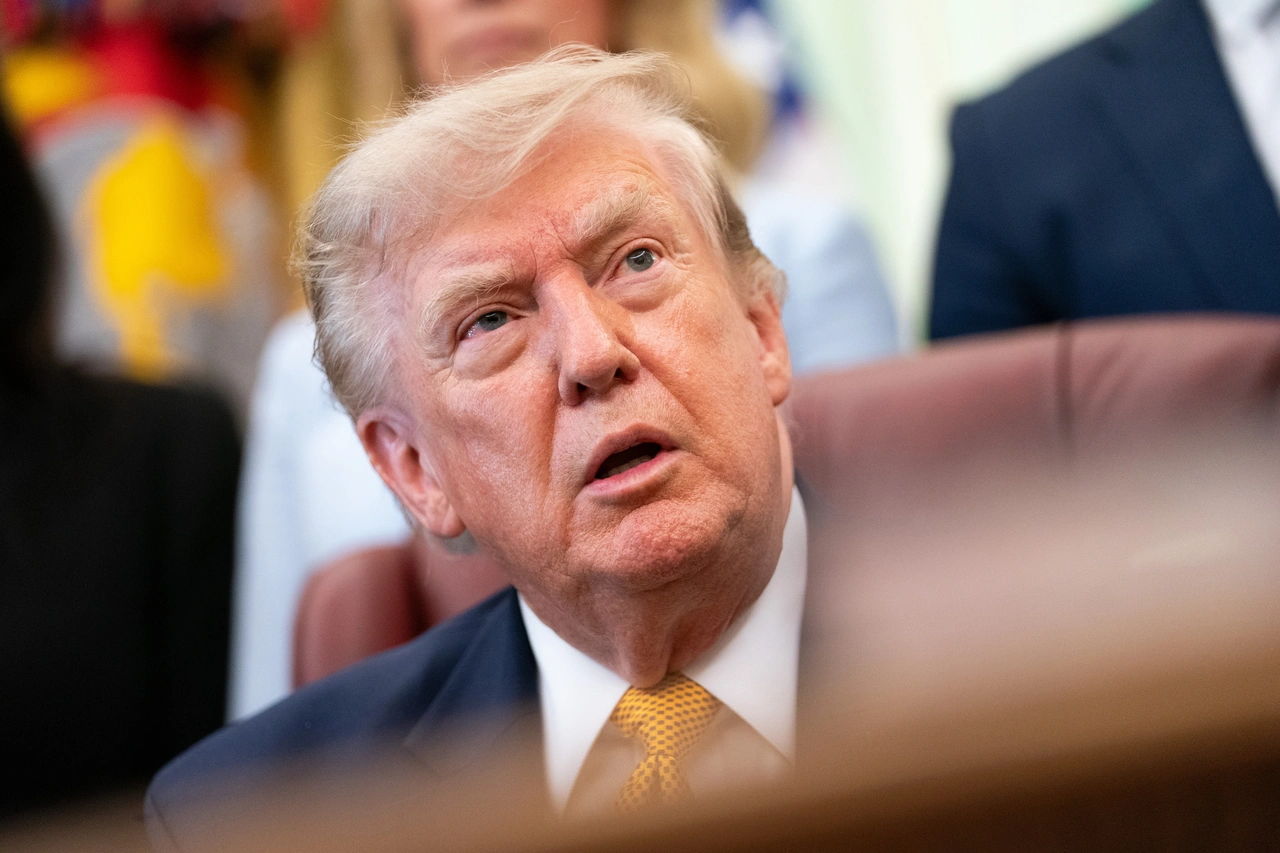
In the Oval Office on Monday, 3 August 2026, Trump told reporters that Iran had one “last chance” to sign a peace deal before facing “decapitation,” explicitly linking the ultimatum to large-scale strikes on Iran’s leadership and infrastructure. Euronews and Reuters both carried the remarks, with Trump insisting negotiations were “going on right now” even as Tehran publicly denied any talks.
The language was not new. Trump had previously threatened that Iran could be “taken out in one night” and that “every bridge in Iran will be obliterated” if no deal were reached. But the August statement tied the threat directly to a demand for reopening the Strait of Hormuz, the narrow maritime chokepoint off southern Iran through which a huge share of globally traded oil and liquefied natural gas passes.
Anadolu Agency reported Trump saying, “This is the last chance for them to sign a good document,” adding that the choice would be resolved “today or tomorrow… one way or the other.” The remark reflected a pattern of reset deadlines stretching back to March 2026, when Trump first demanded Iran “FULLY OPEN” the Strait within 48 hours or face attacks on its power plants.
The road to “last chance decapitation”
The war formally began on 28 February 2026 with Operation Epic Fury, a joint United States-Israel campaign that launched nearly 900 strikes in 12 hours against Iranian missiles, air defences, military infrastructure, and leadership sites. Supreme Leader Ali Khamenei was killed in the opening salvo, a de facto decapitation that nonetheless failed to collapse the regime.
By March, Trump had expanded his demands beyond nuclear and regional issues to include maritime and energy infrastructure. He threatened to target Kharg Island, Iran’s key oil export terminal, and desalination plants if Tehran did not fully reopen the Strait of Hormuz. A cascade of ultimatums followed: a 48-hour deadline on 21 March, a five-day extension on 23 March, a new 10-day deadline setting 6 April as decisive, and multiple resets in early April.
On 7 April 2026, Trump posted that “a whole civilization will die tonight, never to be brought back again” if there were no agreement. That same day, a two-week ceasefire was announced. Short Islamabad Talks followed on 11–12 April, and another memorandum was developed by mid-June, but no lasting settlement emerged.
What “decapitation” means in military terms
In military discourse, decapitation means targeting the leadership, command-and-control nodes, and critical infrastructure of a state to break its capacity and will to fight without a full-scale invasion. The United States war plan emphasised precision targeting of regime echelons, ballistic infrastructures, and nuclear facilities, seeking to recalibrate diplomatic equilibria without precipitating protracted ground engagements.
Trump’s August reference extended this logic beyond military targets to civilian infrastructure, blurring the line between decapitation and punishment of the broader society. Think-tank studies note that the prevailing paradigm “eschews comprehensive invasion in favor of precision decapitation operations” to avoid occupation while still signalling the ability to dismantle the regime’s power centres.
The approach reflects constraints on United States power. Washington can destroy infrastructure and kill leaders, but still struggles to translate that into stable political outcomes, especially against a state that fights through asymmetric tools and regional proxies. As our coverage of Africa: The New Scramble shows, great-power competition over strategic chokepoints is reshaping security calculations far beyond the Gulf.
The money and power behind the Strait of Hormuz
The Strait of Hormuz is central to the entire crisis. Intelligence reports indicate Iran tried to institutionalise a sovereign tolling system over all commercial transit in the strait, effectively monetising and weaponising its geographic position. Disruption threatens global oil prices, insurance costs, shipping routes, and downstream supply chains, with direct implications for Western economies and for China, India, and other energy-importing states.
A Gulf-focused analysis argues the United States obsession with Iran is guided by a geoeconomic logic aimed at controlling Persian Gulf energy flows and preventing China and Russia from using Iran as a strategic energy partner. The Trump administration combined maximum-pressure sanctions with threatened and actual strikes on critical economic infrastructure, offering partial sanctions relief and limited reconstruction in return for concessions on Strait access and highly enriched uranium stockpiles.
The war created extreme volatility in energy markets, prompting hedging behaviour by major firms and states and accelerating interest in alternative routes and supplies. Each week of Strait disruption imposed costs not only on Iran but on global trade and the United States itself, limiting Washington’s ability to push escalation indefinitely.
China, Russia, and the great-power contest
Strategic analyses see the 2026 Iran war as part of a broader United States attempt to preserve unipolarity and global deterrence by preventing the emergence of a regional hegemon allied with China or Russia. Washington aims to control Chinese development by controlling the region’s energy supply and to disrupt Eurasian integration and Iran’s “Look East” policy.
China and Russia have kept Iran solvent and supplied, providing economic lifelines and military technology short of direct intervention. Russia publicly warned in February 2026 that the United States military build-up and threats risked wider destabilisation. Their backing allows Iran to absorb strikes and continue limited operations while avoiding a full confrontation that neither Beijing nor Moscow wants.
This support deepens multipolar dynamics. The war reflects what analysts describe as the erosion of American primacy and the emergence of multipolar dynamics, with Iran positioned as a geopolitical pivot in the Eurasian system. Divisions among Western allies over the war’s objectives and methods further constrained United States options, limiting the ability to escalate indefinitely or sustain an open-ended campaign.
A strategic dead end and what comes next
By mid-2026, the war had produced no decisive victor. Iran’s leadership was fractured and key capabilities degraded, but the regime survived. The United States demonstrated military dominance yet failed to impose a durable settlement. Analysts describe Washington as facing a strategic dead end: it can continue strikes and sanctions but faces diminishing returns, rising costs, and limited diplomatic pathways to a clean victory.
One detailed six-phase assessment frames the war as governed by two logics: Iranian regime survival and American presidential survival. Trump’s repeated deadlines and decapitation threats were as much about domestic politics and demonstrating toughness as about actual military timelines. Each renewed ultimatum reflected the tension between appearing resolute and avoiding politically costly escalation.
For companies and investors, the episode underscores persistent political risk around the Strait of Hormuz and Gulf energy corridors. State actors are explicitly using threats to civilian infrastructure as bargaining tools. The growing importance of scenario planning for sudden escalation tied to political deadlines is clear, particularly when leaders frame ultimatums in existential terms like “decapitation” or “a whole civilization will die tonight.”
Frequently Asked Questions
What did Trump mean by “last chance before decapitation”?
Trump warned Iran on 3 August 2026 that it must sign a peace deal or face large-scale strikes targeting its leadership, command infrastructure, and critical facilities, echoing the decapitation logic of Operation Epic Fury that killed Supreme Leader Ali Khamenei in February 2026.
Why is the Strait of Hormuz central to the 2026 United States-Iran war?
The Strait of Hormuz is a narrow maritime chokepoint off southern Iran through which a huge share of globally traded oil and liquefied natural gas passes, and Iran attempted to impose a sovereign tolling system over commercial transit, threatening global energy prices and supply chains.
Has the 2026 Iran war produced a clear winner?
No, by mid-2026 analysts assessed the war had produced no decisive victor, with Iran’s regime surviving despite heavy damage and the United States failing to impose a durable settlement despite overwhelming military dominance.
Connected Coverage
For deeper analysis of how great-power competition over strategic resources is reshaping global security, read our pillar Africa: The New Scramble.
Sources
This article was produced by The Rio Times’ automated newsroom system. How we use AI · Report an error
Read More from The Rio Times