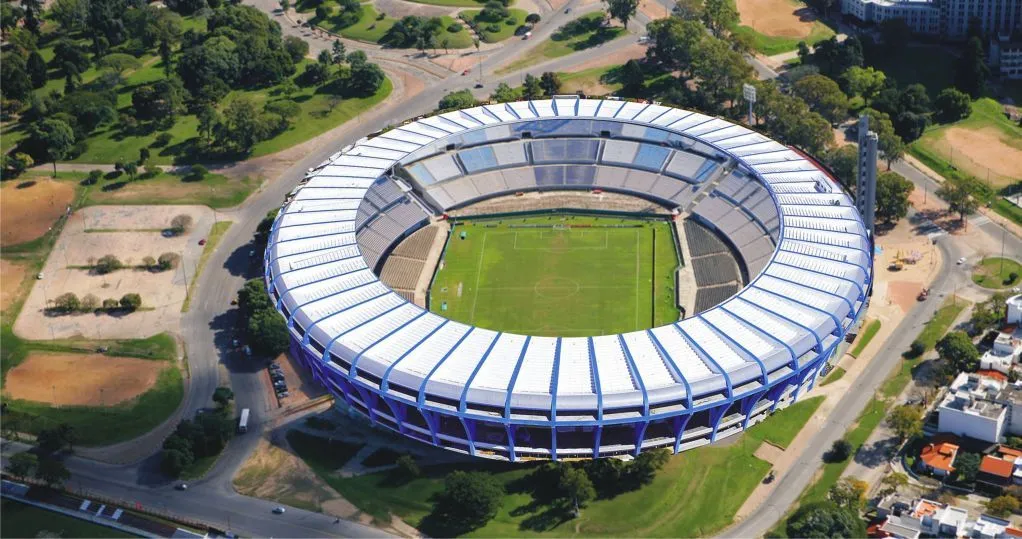
The 2030 World Cup, celebrating the event’s 100th anniversary, will commence with Uruguay playing at Montevideo’s Centenario Stadium.
Alejandro Domínguez and Gianni Infantino, Presidents of Conmebol and FIFA, made the announcement.
In addition, Argentina and Paraguay will host opening round matches.
Domínguez stated on social media, “South America will again host the tournament’s opening.”
Spain, Portugal, and Morocco will also serve as hosts. Unlike past editions, this one will feature 48 teams in 104 matches.
FIFA rules grant host countries an automatic spot. Therefore, six nations already qualify: Uruguay, Argentina, Paraguay, Portugal, Spain, and Morocco.
Initially, only three countries were set to host. However, the 100-year milestone led to South America’s inclusion for the opening.
Looking forward, the 2034 World Cup is likely to be in Asia and Oceania.
Specifically, Saudi Arabia could be a potential host. This news adds context to the diverse range of future World Cup locations.
Background
The 2030 World Cup’s multi-continental hosting is a game-changer. It sets a new precedent in the world of sports.
Locally, this decision boosts tourism and economy for the host countries.
For South America, especially Uruguay, it’s a nostalgic nod to the first World Cup held in 1930.
Meanwhile, Europe and Africa gain from the increased visibility and engagement.
On a global scale, it promotes international cooperation. It also brings an unparalleled level of diversity to the event.
Comparatively, the 2026 World Cup is only set to take place in North America. Therefore, the 2030 event is far more expansive in terms of host countries.
In conclusion, the 2030 World Cup seems to set new benchmarks in international sports.
It serves as an innovative template for future tournaments, promising an even more global experience.
More: Morocco news in English, every day from The Rio Times.
This article was produced by The Rio Times’ automated newsroom system. How we use AI · Report an error
Read More from The Rio Times