TCU audit opens into Lula campaign livestream at the Alvorada
Brazil · Politics
Key Facts
- —Brazil’s audit court acted The Tribunal de Contas da União accepted a complaint and opened an inspection into a campaign livestream from the presidential residence.
- —What was broadcast A campaign livestream for President Lula’s re-election went out from the Palácio da Alvorada on Sunday 13 September 2026.
- —The allegation The complaint is not about the cameras. It asks who paid for the electricity, the staff and the security.
- —The catch The audit court has no electoral jurisdiction. It cannot fine a candidate under electoral law or bar anyone from the ballot.
- —The precedent In 2023 the electoral court found prohibited conduct by Jair Bolsonaro over a livestream from the same building.
- —What is not known The case number has not been published, and no order by the rapporteur has been reported.
Brazil’s federal audit court has accepted an opposition complaint about a campaign broadcast from the president’s official home. It has decided nothing, and it cannot decide an electoral case at all.
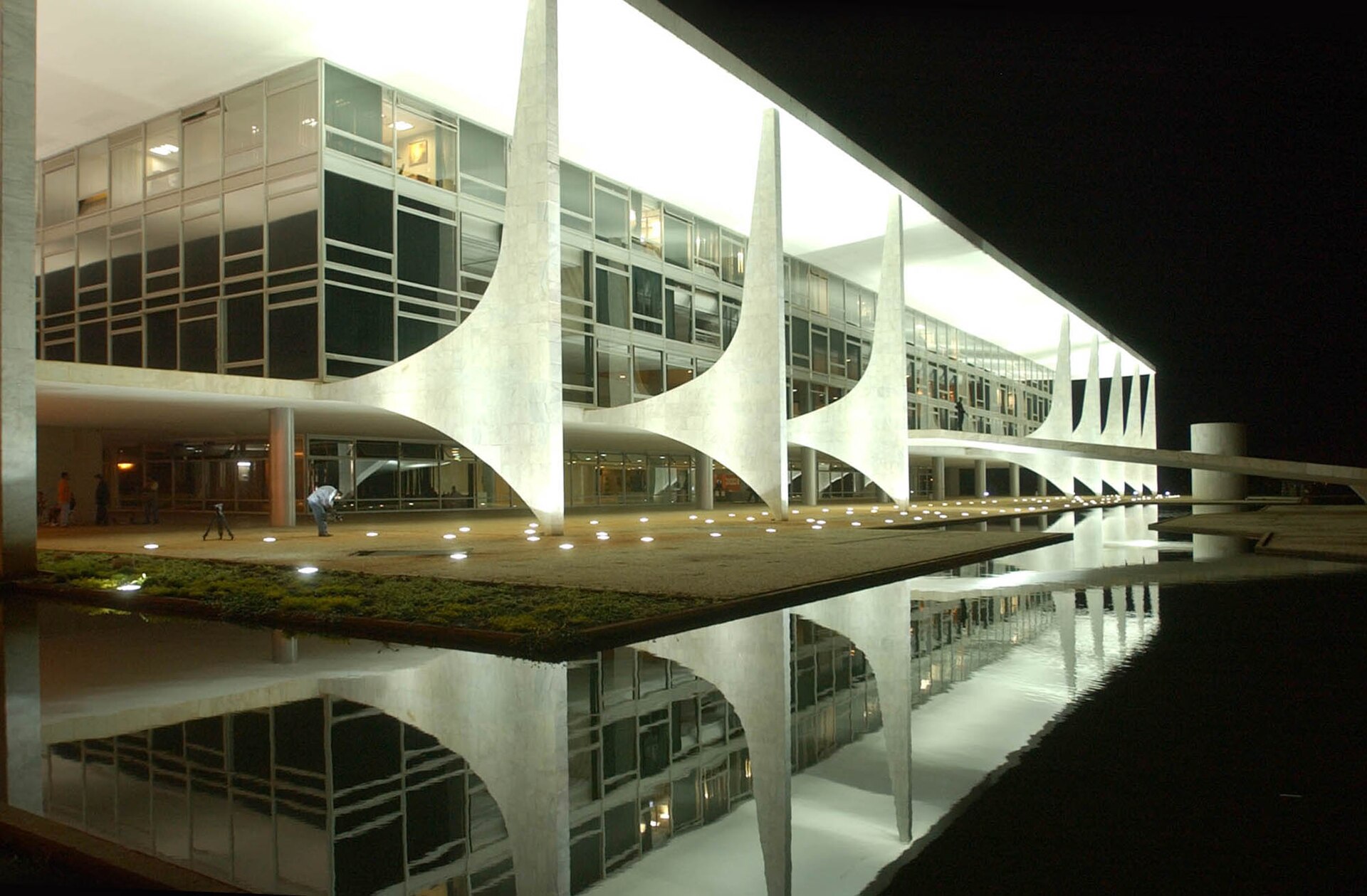
Brazil’s federal audit court has accepted a complaint and opened a TCU audit into a campaign livestream from the Alvorada palace. The broadcast went out on Sunday 13 September 2026.
This is a preliminary step and not a finding. The court has made no determination and has ruled on nothing.
The Palácio da Alvorada is the official residence of Brazil’s president, in Brasília. It is maintained and administered with public money.
The livestream was a campaign broadcast for President Luiz Inácio Lula da Silva’s re-election. It featured the Workers’ Party national president, Edinho Silva, and its communications secretary, Eden Valadares.
What the complaint actually alleges
The complaint was filed on 14 September 2026 by federal deputy Ubiratan Sanderson of the Liberal Party. He is a vice-leader of the opposition in the Chamber of Deputies and a Senate candidate.
The allegation is not about the cameras. Sanderson argues that public money may have paid for electricity, internet, server support, security, maintenance and staff.
He calls that a possible diversion of public purpose. His filing argues the point holds even if campaign equipment was used.
Sanderson made seven requests. They include a special accounting proceeding and an inventory of every government employee who supported the event.
He also asked the court to quantify spending on logistics, lighting, maintenance and technology. He wants reimbursement to the Treasury if irregularities are confirmed, and any electoral breach referred onwards.
Further requests seek an injunction against future political broadcasts from the official residence. He asked that the original recording, its metadata and access logs be preserved.
What the TCU audit covers is narrower than what was asked for. The court accepted the complaint, opened an inspection, and preservation of the recording was sought.
The rapporteur is Minister Walton Alencar Rodrigues. No order or determination by him has been reported, and the case number has not been published.
What the audit court is, and what it cannot do
The TCU, or Tribunal de Contas da União, is Brazil’s federal external-control court. It examines how public money is spent, under articles 70 to 72 of the 1988 Constitution.
A TCU audit can end in fines, an order to repay the Treasury, or an instruction to correct an illegality. It can also suspend a contested act.
What a TCU audit cannot do is decide an electoral question. The court has no electoral jurisdiction whatsoever.
It cannot find an electoral violation, fine anyone under electoral law, or bar a candidate from running. It can refer irregular accounts to the Electoral Justice under Lei Complementar 64/90.
Any electoral consequence would therefore have to come from a different court. That is the Superior Electoral Court, which runs and polices Brazilian elections.
The rule, and the gap the campaign is standing in
Article 73 of Lei 9.504/1997 bars public officials from transferring or using public property to benefit a candidate. Case law treats that prohibition as objective.
No proof of electoral intent or effect is needed. It is enough that restricted-access public property was used for campaign purposes.
Penalties under that article run from about R$5,320.50 (about US$1,033) to R$106,410.00 (about US$20,651), applied individually. A party can also lose access to public party-fund money.
There is a recognised exception for the official residence of the chief executive. That exception is the gap Lula’s campaign is standing in.
The Alvorada is therefore the pivot of the whole dispute. Sanderson calls it public property; the campaign calls it the president’s private residence.

The 2023 precedent, from the same building
On 17 October 2023 the Superior Electoral Court recognised prohibited conduct by then-president Jair Bolsonaro. The case concerned a livestream from the Palácio da Alvorada on 21 September 2022.
The court held that he breached article 73 by using the palace library for campaign purposes. He had displayed campaign material and asked for votes.
The rapporteur was Minister Benedito Gonçalves, then the court’s chief electoral inspector. He described that use of the library as creating confusion between public and private, institutional and electoral.
The plenary rejected a separate claim of abuse of political power, by majority. On the penalty the bench split, with the rapporteur imposing no fine and two colleagues voting for one.
In September 2022 the same court had barred Bolsonaro from campaign livestreams at the Palácio do Planalto, the presidential office. It later approved a rule for electoral livestreams from an official residence.
That rule requires a neutral setting, with no public or state symbols. Participation is restricted to the office-holder alone, with no use of public administration services.
The responses, and where they come from
Lula’s campaign press office says the transmission used strictly campaign equipment. It describes the Alvorada as the president’s private official residence and says the campaign followed the electoral court’s rules.
That statement comes from the campaign, not from the government. No response from the Attorney General’s Office or the presidential palace has been published.
Flávio Bolsonaro’s campaign says Lula should not use the structures of official palaces to make campaign material. It says it has insistently pressed the electoral court to prohibit the practice.
No filing by that campaign at the electoral court over this particular livestream has been published.
What this means in practice
The TCU audit is an inquiry into spending, not a verdict on the election. Its possible outputs are documents, figures and, at most, a bill.
The calendar matters more than the venue. Brazil votes on Sunday 4 October 2026, with a runoff on 25 October if nobody wins outright.
An audit of this kind does not resolve in seventeen days. Any electoral penalty would need a separate case at the Superior Electoral Court.
For anyone watching from outside, the practical question is narrow. It is whether public staff, power and security were used, and whether anyone can document it.
The TCU audit is the venue where that question acquires a paper trail. What is done with that trail is a decision for another court entirely.
More: Brazil coverage, every day from The Rio Times.
Frequently Asked Questions
What is the TCU, in plain terms?
The Tribunal de Contas da União is Brazil’s federal audit court, created by the 1988 Constitution to check how public money is spent. It is not part of the ordinary judiciary and it does not try crimes. Its powers include auditing federal bodies, judging the accounts of officials who handle public funds, imposing fines and ordering money repaid to the Treasury. It handles roughly 850 oversight operations a year, and anyone, including a member of congress, can ask it to look at something.
Why can the audit court not punish a candidate?
Brazil runs elections through a separate branch of the judiciary, the Electoral Justice, headed by the Superior Electoral Court. Only that branch can rule that a campaign broke electoral law, fine a candidate under it, or affect a candidacy. The audit court deals with public spending, so it can ask who paid for what and demand the money back. If it believes an electoral rule was broken, its route is to refer the matter onwards, not to decide it.
What is the Palácio da Alvorada?
The Alvorada is the official residence of Brazil’s president, a modernist building in Brasília. It is state property, maintained and staffed with public funds, but it is also where the president actually lives. That double character is the heart of this dispute. Electoral case law bars campaign use of public property, while recognising an exception for the chief executive’s official residence, and the argument is about where that line falls.
Has this happened before in Brazil?
Yes, and in the same building. On 17 October 2023 the Superior Electoral Court recognised prohibited conduct by then-president Jair Bolsonaro over a campaign livestream broadcast from the Alvorada on 21 September 2022. The court held that using the palace library to show campaign material and ask for votes breached article 73 of the 1997 elections law, though it rejected a wider claim of abuse of political power. The judges disagreed on the penalty, and the rapporteur imposed no fine at all.
Sources: O Povo on the inspection and the allegation, Revista Oeste on the complaint being accepted, Revista Oeste on the seven requests filed, Band on the rapporteur and the campaign reply, Tribuna do Norte on both campaigns’ responses, The audit court on its own powers, The Rio Grande do Sul electoral court on public property rules, The Superior Electoral Court on the 2023 Bolsonaro ruling, Consultor Jurídico on the 2022 livestream ban, CNN Brasil on the rule for official-residence livestreams
This article was produced by The Rio Times’ automated newsroom system. How we use AI · Report an error
Read More from The Rio Times