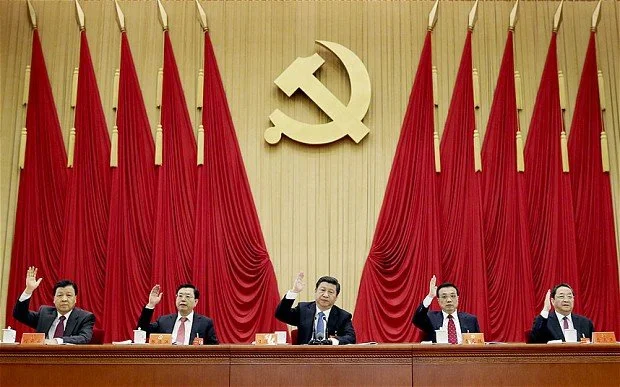
In a crucial plenary session, China laid out its economic roadmap under President Xi Jinping’s watchful eye.
The event, termed the third plenum, aimed to refine the nation’s strategy amid growing internal challenges and external pressures.
Unlike typical fall sessions, this one spotlighted ongoing reforms and critical personnel changes, signaling Beijing’s intent to solidify control while driving economic growth.
The session tackled systemic risks in the real estate market and government debt, areas that have long plagued China’s economic health.
Also on the docket were taxation and finance reforms, designed to stabilize and stimulate the economy.
Furthermore, China remains intent on bolstering national security and independence in science and technology—a response to heightened tensions with the U.S.
Despite these ambitions, the plenum’s outcomes seemed more like a continuation of current policies rather than a bold new chapter.
This has left some observers underwhelmed, despite clear signs of strategic positioning.
Economists noted the session reaffirmed China’s commitment to self-sufficiency in emerging sectors like electric vehicles and renewable energies, vital for technological sovereignty.
The focus was not just on high-level reforms. There was a strong push to boost industrial production and internal demand.
This shift aims to address economic issues like the weak real estate sector and domestic consumption, reducing reliance on exports and easing international tensions.
Steering the Dragon: Steady Continuation Over Bold Change in China’s Reform Agenda
China’s economic maneuvers are not solely for domestic consumption. They carry global implications, underscoring the country’s role in sustainable development and ecological preservation.
The plenum highlighted China’s drive to lead in renewable energy—a cornerstone of Xi’s Global Civilization Initiative, which promotes a balance between economic expansion and environmental stewardship.
As China continues to navigate its complex economic landscape, the third plenum’s decisions are crucial. They will guide policy until the 2027 party congress.
Though immediate responses seem conservative, the strategies reveal a calculated plan for China’s sustainable growth and modernization. This session is more than a routine gathering.
Conclusion
The plenary session reaffirmed China’s economic strategies under Xi Jinping. It focused on ongoing reforms and managing risks in real estate and government debt.
Key issues were addressed, and self-sufficiency in sectors like electric vehicles and renewable energies was emphasized.
However, the outcomes mainly continue current policies rather than introducing bold new initiatives.
This article was produced by The Rio Times’ automated newsroom system. How we use AI · Report an error
Read More from The Rio Times