China’s Rare Earth Sector Faces Challenges Amid Global Strategic Shifts
(Analysis) China’s major state-owned rare earth companies are facing substantial financial difficulties as prices for these critical materials decline.
Rising Nonferrous Metals, listed in Shanghai, expects a net loss of 271-311 million yuan ($37.33-$42.84 million) for the first half of the year.
This marks a significant downturn from a profit of 102.09 million yuan the previous year.
This financial strain is attributed to sharp decreases in the sales prices of key rare earth elements like dysprosium, terbium, and didymium.
China’s strategic consolidation moves have exacerbated the downturn in the sector.
They are integrating smaller companies into the massive China Rare Earth Group, which aims to strengthen Beijing’s control over these vital resources.
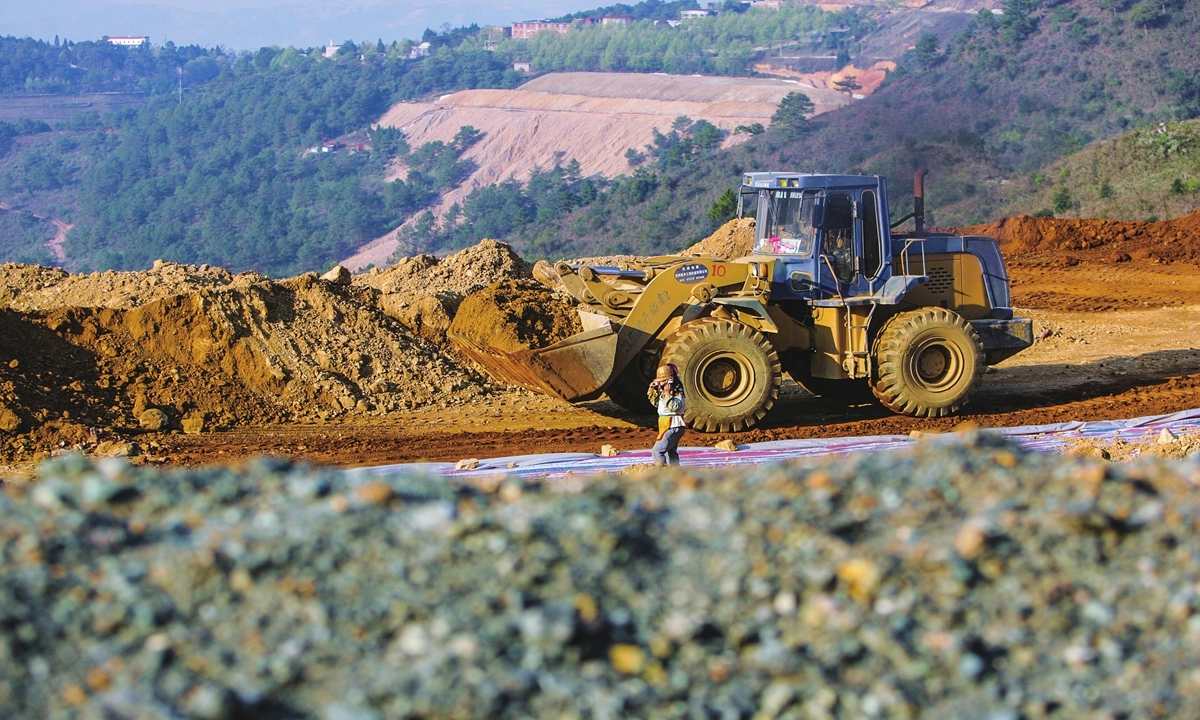
This development is part of a broader global narrative where new discoveries and strategic shifts are reshaping the rare earth market.
For instance, in Norway, a substantial rare earth deposit was recently uncovered at the Fen Carbonatite Complex. This positions Europe to reduce its dependence on Chinese rare earths.
Simultaneously, Critical Metals Corp. announced a significant acquisition in Greenland.
The Tanbreez mining project expects to supply large quantities of rare earths to Europe and North America.
These European ventures are critical as global demand for rare earths, essential for high-tech and defense, grows amidst geopolitical tensions.
Meanwhile, Brazil is emerging as a pivotal player in the rare earth sector, asserting itself in a market historically dominated by China.
The Serra Verde Project
The country’s Serra Verde project in Goiás has commenced production. It targets an initial output of 5,000 tons of rare earth oxides annually.
Ranked third globally in reserves, Brazil’s entry enhances supply chain diversity and reduces reliance on Chinese exports.
Brazil aims to boost critical materials supply through strategic initiatives and investments. These materials are vital for modern technologies and green energy solutions.
These shifts come as China faces challenges within its own borders, with several large rare earth producers reporting significant losses due to falling prices and operational difficulties.
Other countries’ strategic maneuvers further complicate the dynamics of the global market.
They aim to secure their own supply chains against a backdrop of increasing resource nationalism and security concerns.
Together, these developments illustrate a significant transformation in the global rare earths market.
They highlight the strategic importance of these materials in the geopolitical and economic arenas.
As Brazil and Norway enhance their capabilities and new players like Greenland emerge, reliance on China may decrease.
In short, this could potentially lead to a more diversified and secure global supply chain for these indispensable minerals.
This article was produced by The Rio Times’ automated newsroom system. How we use AI · Report an error · Editorial responsibility: Matthias Camenzind, Editor-in-Chief