Steel Fund Gains 0.55% as Brazil’s CSN Jumps 9.4% | Steel, Nov 4

Key Facts
- CSN, a Brazilian steelmaker, bounced hard but is still far below its peak: its New York shares rose +9.38% to US$0.7766 on Wednesday, November 4, 2026, one day after touching a 12-month low of 0.71, yet they remain 63.4% below the 2.12 reached on 2026-01-28.
- Gerdau, Brazil’s largest steelmaker, slipped: its New York shares fell -1.29% to US$4.6, leaving them 12.2% below their 12-month high of 5.24 set on 2026-10-20.
- Mexico held up better than Brazil: shares of Ternium, a Latin American steelmaker with large Mexican plants, eased -0.48% to US$51.40 a day after results showing net income of US$368m.
- The global steel-producers fund edged up: the SLX fund gained 0.55% to US$99.74, but it is still 12.2% below its 2026-06-02 high of 113.57.
- Cheap imports are the main Brazilian worry: Gerdau, Brazil’s largest steelmaker, earned adjusted net income of R$1.5 billion (about US$280 million) in the third quarter, up 4%.
Today’s Focus
Brazil’s steelmakers are caught between cheap Chinese metal and a weak local market, while Mexico’s Ternium is shielded by stronger demand. On Wednesday, November 4, 2026, that split showed again, with Gerdau down and Ternium slightly lower, but CSN’s New York shares sharply higher.
CSN’s jump looks like a rebound, not a recovery. The shares had fallen 36.86% over 20 sessions and hit a 12-month low of 0.71 the day before.
Broad markets helped. The S&P 500 rose 1.58% and the VIX, Wall Street’s fear gauge, dropped 20.26%, which encourages buyers to return to beaten-down stocks.
What matters today. Brazil’s steel stocks depend on whether Brazil shields them from cheap imports, while Mexico’s depend on US tariff talks.
01 The session in one read
Latin American steel moved in different directions on Wednesday, November 4, 2026. CSN’s New York shares rose +9.38%, Gerdau’s fell -1.29%, and Ternium’s slipped -0.48%.
The SLX fund, which holds steel producers worldwide, added 0.55%. That tells us the sector was steady, and the big swings came from individual companies.
Steel matters to ordinary people because it goes into buildings, cars and appliances. When steelmakers struggle, factory jobs and investment usually follow.
The evidence points to a bounce driven by a calmer global mood and bargain-hunting, not a change in Brazil’s import problem. Mexico’s earnings are solid, but US tariffs cap the upside for Ternium. The variable to watch is whether Brazil tightens its import protection.
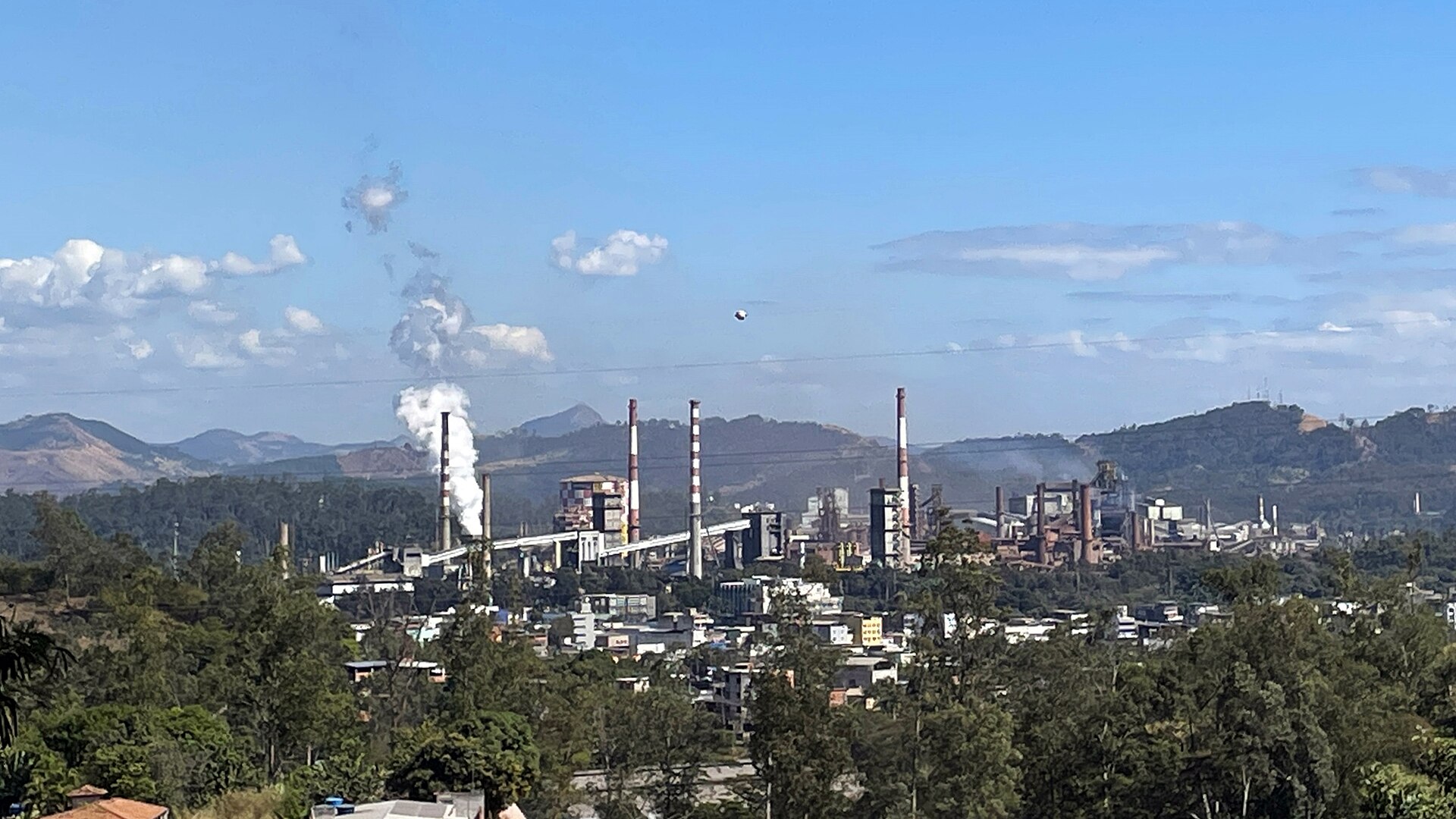
02 The board
CSN is the outlier. Its New York shares closed at US$0.7766, which is cheap in absolute terms and reflects a collapse this autumn rather than a sudden burst of good news.
Gerdau closed at US$4.6 and Ternium at US$51.40. The SLX fund ended at US$99.74, a quiet gain after a weak few weeks.
| Asset | Level | Change |
|---|---|---|
| Steel (SLX ETF) | US$99.74 | +0.55% |
| Gerdau | US$4.6 | -1.29% |
| CSN (ADR) | US$0.7766 | +9.38% |
| Ternium | US$51.40 | -0.48% |
Source: RT close, 2026-11-04. Where a commodity has no spot feed, an exchange-traded tracker or leading producer is shown as a labelled proxy.
Live Market IntelligenceThe live market board
Rio Times · Live Market Intelligence
Latin America — Cross-Market Board
| Instrument | Last | Change | YoY | Prev. | High | Low | Volume |
|---|---|---|---|---|---|---|---|
| IBOV | 167,563.47 | +1.23% | +19.56% | 165,528.92 | 178,526 | 175,157 | — |
| IPSA | 10,627.00 | +2.52% | — | 10,366.16 | 10,722 | 10,633 | — |
| IPC MEX | 71,385.90 | +1.71% | +12.74% | 70,184.33 | 70,008 | 69,383 | 49,372,306 |
| MERVAL | 2,848,945 | — | +12.65% | 2,859,051 | — | — | — |
| COLCAP | 2,506.42 | -0.84% | — | — | — | — | — |
| USD/BRL | 5.34 | -1.32% | -0.84% | 5.42 | 5.42 | 5.30 | — |
| EUR/BRL | 5.95 | +7.53% | -4.87% | 5.54 | 6.04 | 5.92 | — |
| USD/MXN | 18.69 | +0.62% | +1.45% | 18.57 | 18.69 | 18.54 | — |
| USD/CLP | 983.47 | -0.57% | +5.64% | 989.13 | 991.87 | 979.07 | — |
| USD/COP | 3,149 | +3.06% | -18.02% | 3,056 | 3,173 | 3,111 | — |
| USD/PEN | 3.45 | +0.17% | +3.85% | 3.44 | 3.45 | 3.44 | — |
| USD/ARS | 1,537 | -0.28% | +3.77% | 1,541 | 1,541 | 1,537 | — |
| USD/UYU | 40.21 | +3.57% | +2.29% | 38.83 | 40.21 | 40.08 | — |
| USD/PYG | 5,803 | +3.78% | -16.54% | 5,592 | 5,803 | 5,735 | — |
| USD/BOB | 11.97 | +4.93% | +77.92% | 11.41 | 11.97 | 11.82 | — |
| USD/DOP | 60.54 | +1.83% | -4.34% | 59.45 | 61.14 | 59.85 | — |
| USD/CRC | 451.24 | +2.13% | -7.80% | 441.83 | 451.40 | 450.04 | — |
| USD/GTQ | 7.64 | +3.23% | +2.18% | 7.40 | 7.64 | 7.64 | — |
03 Why it moved
First and heaviest is the market backdrop. The S&P 500 gained 1.58%, the VIX fell 20.26% and the dollar index eased 0.37% to 101.49, which usually helps emerging-market shares.
Falling US bond yields helped too: the 10-year Treasury yield dropped 5 basis points to 4.90%. Lower yields make riskier assets, including Brazilian steel, more attractive. Confidence in this reading is medium to high.
Second is a technical rebound in CSN. After a 36.86% slide in 20 sessions and a fresh low the day before, bargain-hunters and traders closing bets against the stock can produce a one-day jump of this size, though we found no company announcement behind it. Confidence is medium.
Third is the drag from cheap imports, which keep squeezing Brazilian mills even though Gerdau reported adjusted net income of R$1.5 billion (about US$280 million) in the third quarter, up 4% on the second.
The drivers do not fully agree with the move. Oil funds fell sharply, with the USO fund down 8.07%, and gold’s fund rose 3.68%, which signals nervousness elsewhere, yet steel shares still rose or held.
China’s October PMI surveys from S&P Global, sponsored by RatingDog, gave a manufacturing reading of 52.0, where anything above 50 means growth, and a services reading of 50.8, down from 51.6 in September, according to the RT economic calendar. Chinese demand is still growing, but the services side is cooling.
04 The trend behind it
The weeks are poor. The SLX fund is down 1.67% over five sessions, 2.63% over 20 sessions and 8.8% over 60 sessions, and it sits 12.2% below its 2026-06-02 peak, though 31.5% above its 2025-11-20 low of 75.82.
Gerdau is 8.37% lower over 20 sessions and 41.1% above its 2026-03-20 low of 3.26. CSN’s slide is steeper, which makes this a continuation of a downtrend with a bounce, not a new phase.
RT’s own history since 2007 adds context. After 109 earlier falls as large as Gerdau’s, the shares were higher 20 sessions later in 58 cases (53%), with a median gain of 1.7% and a worst case of 45.5% lower.
For CSN the odds were worse: in 10 earlier falls this big, it was higher 20 sessions later in only 3 cases (30%), with a median of 4.1% lower and a worst case of 45.5% lower. History is not a forecast.
05 What it means for Latin America
In Brazil, the problem is imports. Rolled-steel imports reached 5.7 million tons in 2025, most of them from China.
Brazil already charges a 25% duty on imports above set quota levels, covering 23 product categories. Gerdau’s chief executive has called for a tariff of at least 35% on all steel products.
Gerdau, Usiminas and CSN have warned of job cuts and lower investment, so the stakes reach beyond shareholders to steel towns in Minas Gerais and Rio de Janeiro states.
Mexico looks stronger. Ternium reported adjusted EBITDA, a measure of operating profit, of US$785m, for the third quarter.
It cited data-centre and gas-infrastructure investment as support for Mexican demand. Its weak spots are Argentina, where construction has yet to recover, and US Section 232 tariffs that hurt its Mexican manufacturing customers.
06 The names to watch
Gerdau earned adjusted net income of R$1.5bn (about US$280 million) in the third quarter, up 4% on the second. It describes a slight recovery in Brazil despite import pressure.
CSN is the highest-risk name, 9.4% above its low and 63.4% below its January high. A close back under 0.71 would suggest Wednesday’s jump was a one-day squeeze.
Ternium guided that fourth-quarter EBITDA should be broadly in line with the third, as lower seasonal volumes are offset by a slightly higher margin per ton. Its new Pesquería slab mill, a plant making semi-finished steel, is on plan after US$398m of capital spending.
Usiminas had no confirmed results or price data for this session.
07 What would end it
No dated catalyst is confirmed. A tougher import regime would raise import prices and help Gerdau, CSN and Usiminas, while inaction would extend the pressure.
On charts, the SLX fund has support near its 99.74 close and then 75.82, with resistance at 113.57. Gerdau looks to 4.60 and 3.26 on the downside, and 5.24 on the upside.
Does the slide stop? A bounce can last, but a lasting recovery in Brazil needs duties or weaker Chinese exports, and neither has yet arrived. Mexico depends more on a US-Mexico tariff deal.
08 What to watch
- Brazil’s import protection: Any new duties on cheap steel would directly affect Gerdau, CSN and Usiminas.
- CSN at 0.71: A fall below the 12-month low would signal that Wednesday’s rebound has failed.
- US-Mexico tariffs: Mexico wants Section 232 steel tariffs removed, while the US wants tougher Mexican protection against unfair trade.
- Chinese import volumes: Further growth in flat-steel imports would deepen Brazilian mills’ margin pressure.
Frequently Asked Questions
Why did CSN jump on November 4, 2026?
Its New York shares rose after touching a 12-month low the day before, helped by a calmer market, though we found no company news behind the move.
Why is Brazilian steel under pressure?
Cheap imports, mostly from China, remain the main threat to Brazilian mills.
Is Ternium doing better than Brazilian peers?
Yes. It reported net income of US$368m and expects fourth-quarter EBITDA broadly in line with the third, helped by Mexican demand.
What could help Brazilian steelmakers?
Anti-dumping duties on cheap imported steel, which would raise the price of competing steel.
Market data: The Rio Times
This article was produced by The Rio Times’ automated newsroom system. How we use AI · Report an error · Editorial responsibility: Matthias Camenzind, Editor-in-Chief
LatAm Markets: Live Signals → — real-time movers, turnover leaders and FX across Latin America.