South Africa’s Ramokgopa Says Coal Exit Won’t Follow Foreign Agendas
South Africa · ENERGY
Key Facts
—Coal dependence: Coal supplied about 83% of South Africa’s electricity generation in 2024, according to Statistics South Africa.
—Coal reserves: The US Energy Information Administration estimated South Africa’s proved coal reserves at about 11 billion short tons, roughly 10 billion tonnes, in 2022.
—Climate finance: South Africa was pledged an initial US$8.5 billion under the Just Energy Transition Partnership announced at COP26 in November 2021. The United States withdrew from the partnership in March 2025, taking about US$1 billion in loans with it.
—Komati closure: In July 2023 Minister Kgosientsho Ramokgopa said shutting the Komati plant removed 1,000 MW while only 217 MW of alternative energy replaced it. That figure is disputed — by 2021 only one of Komati’s nine units was still running, producing just over 100 MW.
—China commitments: Ramokgopa said in August 2026 that a South African delegation to Beijing received “firm commitments” from Chinese companies to help deliver more than 100 GW of new power capacity over the next decade. He described commitments to manufacture transformers, wires, pylons, inverters and smart meters, rather than signed generation contracts.
—Coal’s future share: Coal is projected to fall from about 58% to 27% of installed generation capacity by 2039 under the Integrated Resource Plan 2025. That is a change in share rather than a deep cut in coal itself, which falls only from 45.3 GW to 40.9 GW.
South Africa’s coal exit will not be dictated by foreign agendas, Electricity and Energy Minister Kgosientsho Ramokgopa has made clear, as the country balances grid stability and industrial competitiveness against the Western climate finance pledged under the Just Energy Transition Partnership.
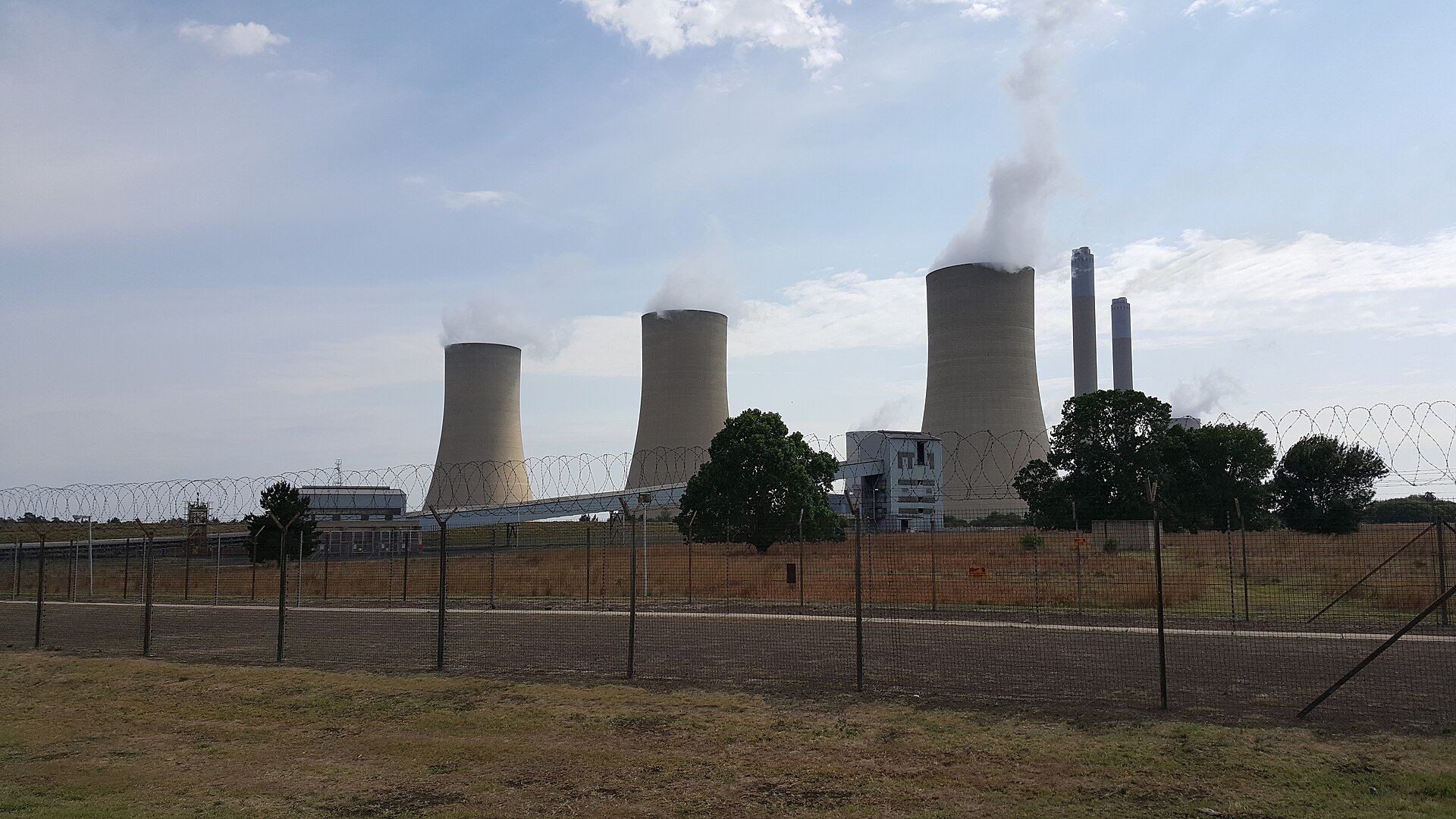
Ramokgopa’s message on South Africa coal exit
Ramokgopa is not saying South Africa will abandon the energy transition entirely. He is saying the country will pursue it on its own terms and pace, with coal retained longer than climate advocates want.
The minister has repeatedly argued that South Africa has a coal problem in emissions terms rather than an absolute coal problem. His stance is that the country is not abandoning coal, even as it builds cleaner capacity.
Bloomberg reported in January 2026 that Ramokgopa said South Africa was reluctant to tap billions in climate finance because of the cost and strings attached. That reluctance sits at the heart of his argument against externally imposed decarbonisation timelines.
The money and power stakes behind coal
South Africa accepted the Just Energy Transition Partnership, known as the JETP, as a way to help finance a difficult shift away from coal. The $8.5 billion package was announced at COP26 in November 2021 by rich-country backers.
But officials and critics have fought over the conditions attached, the speed of coal closures, and the sovereignty implications of wealthy states setting the pace. Ramokgopa’s comments reflect a domestic political criticism that the transition is being framed as a development obligation imposed by the West rather than a locally chosen industrial strategy.
The Komati closure has become a symbol of that tension. Speaking at a Standard Bank event in July 2023, Ramokgopa called the shutdown “an injustice that is unfolding at Komati in the name of the transition” and said: “We are getting 217MW of alternative energy and we removed 1 000MW.”
The 1,000 MW figure is contested. When reporters visited Komati in early 2021, only one of its nine generating units was still running, producing just over 100 MW, and energy analysts have disputed the minister’s characterisation of the plant’s output at closure.
Grid stability and the case for keeping coal
South Africa has suffered severe electricity shortages and load shedding in recent years. The coal fleet remains the backbone of baseload power and industrial electricity supply.
Extending coal plant life can therefore be presented as a pragmatic response to grid fragility. That argument conflicts with climate commitments and investor expectations, but it resonates with a public tired of blackouts.
Speaking at a University of South Africa energy-security forum on 13 August 2026, Ramokgopa put it plainly: coal, he said, is going nowhere. He argued that a country does not relinquish its strategic assets to satisfy foreign interests.
The great-power contest over South Africa’s energy
The JETP gives Western donor governments a quasi-diplomatic bargaining relationship with South Africa over decarbonisation. But South Africa is also deepening energy ties with China, which changes the negotiating landscape.
Ramokgopa said in August 2026 that a South African delegation to Beijing had received “firm commitments” from Chinese companies to help deliver more than 100 GW of new power capacity over the next decade. Those commitments, as he described them, cover manufacturing of transformers, wires, pylons, inverters and smart meters rather than signed generation contracts.
South Africa’s foreign-policy posture under the coalition government includes promoting the Global South and reforming global governance. This fits Ramokgopa’s broader argument that South Africa should not accept a transition dictated externally, a theme explored in our pillar on Africa: The New Scramble.
What a slower South Africa coal exit costs
South Africa’s export industries face potential penalties from carbon-border taxes in key markets. Dragging out coal dependence raises the cost of those exports even if it helps domestic reliability in the short run.
The country is both a major emitter and a vital supplier of minerals and industrial output. Coal supports not just electricity but also the wider minerals-energy complex and export-oriented heavy industry.
South Africa’s Integrated Resource Plan 2025, unveiled by Ramokgopa in October 2025, does not abandon coal. It projects coal falling from about 58% to 27% of installed generation capacity by 2039, a shift driven by new capacity being added alongside coal rather than by deep closures: coal capacity itself declines only from 45.3 GW to 40.9 GW.
What to watch next
The immediate question is whether South Africa formally revises its coal decommissioning schedule. Any delay will test the patience of JETP donor countries and climate-focused investors.
The longer-term question is whether the commitments Ramokgopa describes turn into delivered capacity, and how that reshapes South Africa’s energy choices. If Chinese finance arrives with fewer conditions, Western climate leverage will weaken further.
Ramokgopa’s stance is a clear signal that South Africa wants investment, grid stability, and industrial competitiveness without surrendering policy control. The fight over coal is really a fight over who sets the terms of the country’s energy future.
More: South Africa news in English, every day from The Rio Times.
Frequently Asked Questions
Is South Africa abandoning coal?
No. Minister Kgosientsho Ramokgopa says the country is not abandoning coal, though coal’s share of the energy mix is expected to decline over time.
How much climate finance was South Africa promised?
South Africa was pledged an initial US$8.5 billion under the Just Energy Transition Partnership announced at COP26 in November 2021. The United States withdrew from the partnership in March 2025.
Why does Ramokgopa want to keep coal plants running longer?
He argues that coal provides essential baseload power, and in July 2023 said the Komati closure removed 1,000 MW while only 217 MW of alternative energy replaced it. That 1,000 MW figure is disputed, as only one of Komati’s nine units was still running by 2021.
Connected Coverage
For more on how outside powers are competing for African energy and minerals, read our pillar Africa: The New Scramble.
Sources
- Business Day — Ramokgopa says coal is going nowhere (14 Aug 2026)
- Statistics South Africa — Electricity, gas and water supply industry, 2024
- TechCentral — Electricity minister attacks climate pact (25 Jul 2023)
- OPIS — South Africa’s Integrated Resource Plan 2025
- Bloomberg via MyBroadband — Chinese commitments on 100GW (4 Aug 2026)
- US Energy Information Administration — South Africa country analysis
This article was produced by The Rio Times’ automated newsroom system. How we use AI · Report an error
LatAm Markets: Live Signals → — real-time movers, turnover leaders and FX across Latin America.
Read More from The Rio Times