Serbia Election Defeat Tests Ties to Moscow

SERBIA · POLITICS
Key Facts
- The country Serbia, an EU candidate of 6.6 million people, relies on Russian gas and has not sanctioned Moscow.
- Prediction markets Polymarket gives economist Dejan Šoškić 36.4% to become Serbia’s next prime minister (4:35 p.m. ET, 28 October).
- What happened On 25 October 2026 a student-led list beat ex-president Aleksandar Vučić’s party, in power 14 years.
- The count With 97.5% of polling stations counted on 26 October, the Student List led 52.73% to 39.15%.
- The deadline The US licence for NIS stake-sale talks ends on Friday 30 October unless extended.
The Serbia election defeat of Aleksandar Vučić’s party matters to US readers because the winners must decide how close Serbia stays to Russia. The Student List took about 53% of the vote on Sunday 25 October 2026, against about 39% for Vučić’s list.
Vučić, the strongman who resigned as president in September to run for prime minister, conceded on election night. Our guide to who holds power and our report on what happens next have the full political picture.
What Happened in the Serbia Election Defeat
The Serbia election defeat came in an early vote on Sunday 25 October for the 250-seat National Assembly, where 126 seats make a majority. Turnout topped 67% an hour before polls closed, more than 12 points above the same hour in 2023, according to Crta, a Serbian election monitor.
RIK had counted 8,181 of 8,392 polling stations by Monday 26 October. It gave the Student List 2,266,939 votes (52.73%) and Vučić’s United Serbia 1,683,090 votes (39.15%).
The Socialist Party, Vučić’s long-time partner, stayed under the 3% threshold for seats. Ipsos, a polling firm, and CeSID, a Serbian monitor, projected about 140 seats for the students, which would let them govern alone.
RIK’s official seat split is the number that counts. Until it arrives, every seat figure is an estimate.
How Fair Was the Vote?
ODIHR said on Monday 26 October that voters had a real choice and that voting was assessed positively at 96% of polling stations observed. It also found that the ruling party’s advantages seriously compromised equal conditions.
These included misuse of state resources and almost one billion euros (about US$1.1 billion) in announced benefits. Observers also reported physical violence, pressure on voters and some discrepancies in results protocols.
The same statement records that Russian President Vladimir Putin was quoted on 1 October as hoping Vučić would become prime minister. It also notes that Russian officials alleged Western attempts to interfere in the vote.
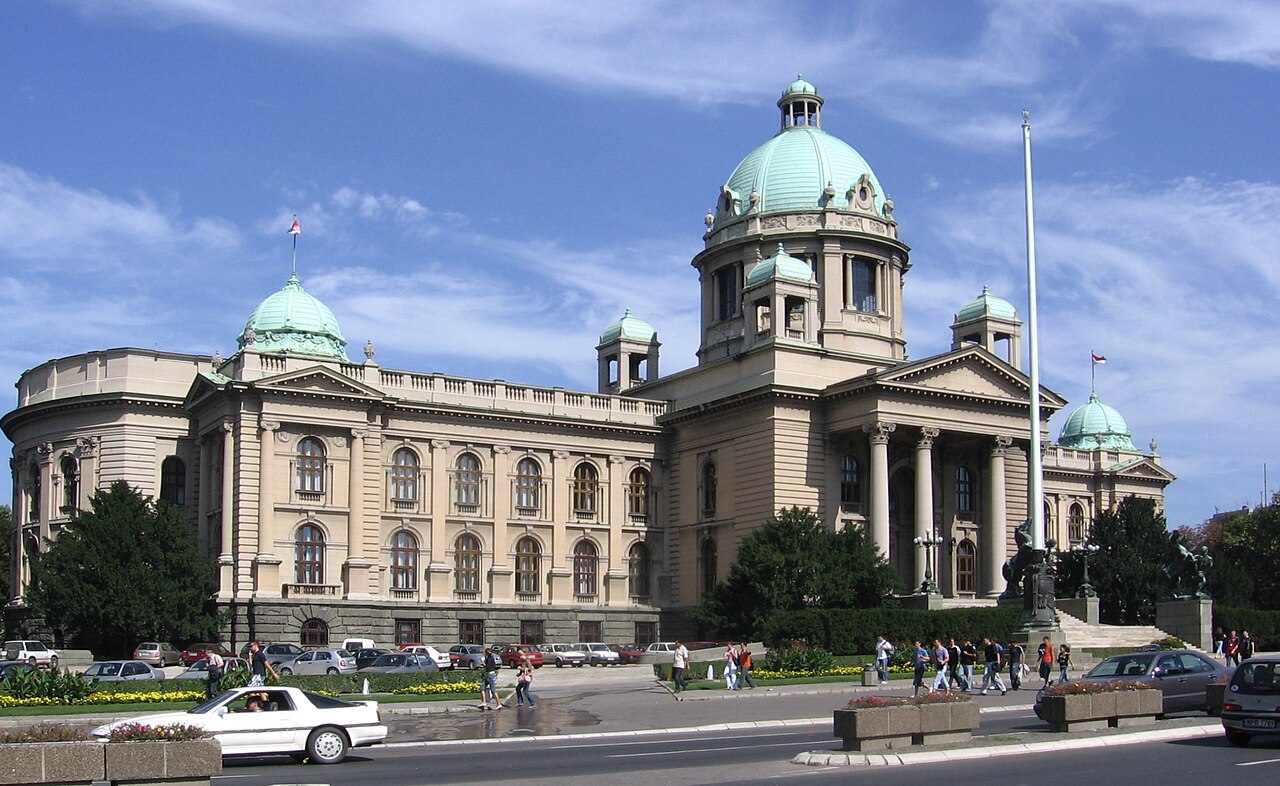
Why the Serbia Election Defeat Matters for Moscow
Serbia is a candidate to join the European Union, yet it has refused to join Western sanctions on Russia since 2022. It also depends heavily on Russian gas, and Moscow has long treated Belgrade as a close partner in the Balkans.
After the Serbia election defeat, Kremlin spokesman Dmitry Peskov said Moscow greatly appreciated Vučić’s contribution. He said Moscow hoped the new government would keep developing ties.
The Student List said on 30 September that Serbia would keep its principled stance against sanctions on Russia. Vučić had claimed the opposite.
The EU expects candidates to align with its foreign policy, so Brussels will watch whether the students keep that line in power. The EU’s ambassador to Serbia said on election day that he was deeply concerned about violent incidents at polling stations.
The NIS Oil Sale and Washington
NIS, Serbia’s national oil company, is 56.15% owned by Gazprom Neft and operates under US Treasury sanctions because of that Russian ownership. MOL, a Hungarian oil and gas group, is negotiating to buy the stake.
A licence from the US Treasury’s sanctions office (OFAC) is reported to allow those talks until Friday 30 October. MOL says no purchase agreement is concluded and more regulatory approvals are needed.
The new government in Belgrade will inherit the deal. The Serbia election defeat also gives Washington a new partner to negotiate it with.
What Prediction Markets Say
Polymarket, an online prediction market, prices Dejan Šoškić, an economist and former central bank governor, at 36.4% to become prime minister. Radomir Saičić, a chemistry professor who spoke for the list, trades at 22.9%, and cardiologist Ilija Srdanović, its leader, at 16.0%.
About US$3.64 million has traded on the market in total (4:35 p.m. ET, 28 October). These prices are bets, not polls.
Why we show this: prediction markets turn real-money bets into a live probability that moves within minutes of the news, which is why investors, campaigns and newsrooms in the United States now follow them closely. We show them next to polls and official results, never instead of them.
What It Means for You
If you invest in energy or Central European assets, watch the 30 October licence date. A lapse could disrupt fuel supply in Serbia.
US companies doing business with NIS or its Russian owners must follow Treasury rules whatever Belgrade decides. For travellers, Serbia remains open, but large rallies in Belgrade and Novi Sad are likely while the government forms.
For US policy, the Serbia election defeat could soften Belgrade’s dependence on Moscow. The winners’ own platform, however, rejects sanctions.
What Is Not Known
After the Serbia election defeat, RIK’s official seat split is still to come, and it is not known who will be prime minister. It is also unknown when parliament will meet, or when the presidential election after Vučić’s resignation will take place.
Nobody knows whether the licence for the NIS talks will be extended past 30 October. Washington has not said how it will deal with a government that opposes sanctions on Russia.
More: Europe and Russia news in English, every day from The Rio Times.
Frequently Asked Questions
Who won Serbia’s election?
The Student List, a citizens’ group born of protests, won about 53% of the vote on 25 October 2026. Aleksandar Vučić’s United Serbia list took about 39%.
Will Serbia sanction Russia now?
Not on the students’ own platform, which opposes sanctions on Russia. Vučić claimed they would impose them, but the Student List said on 30 September it would keep Serbia’s current stance.
What happens next in Serbia?
RIK must declare the final result, and parliament must meet to elect a government. A presidential election is also due because Vučić resigned in September.
Sources: ODIHR, Serbia Early Parliamentary Elections 25 October 2026: Statement of Preliminary Findings and Conclusions, 26 October 2026; Republic Electoral Commission (RIK), election results, 26 October 2026; US Treasury OFAC, recent actions, 28 October 2026.
This article was produced by The Rio Times’ automated newsroom system. How we use AI · Report an error · Editorial responsibility: Matthias Camenzind, Editor-in-Chief