Petrobras Tupi Hits 4 Billion Barrels; Pemex Deal Follows
Brazil · Energy
Key Facts
- Petrobras says its Tupi field — once called Lula — passed 4 billion barrels of oil equivalent produced in August 2026.
- Tupi sits in the Santos Basin, off the coast between Rio de Janeiro and São Paulo. It started producing in 2010.
- The field still pumps more than 1 million barrels a day. That is roughly a fifth of all the oil Brazil produces.
- Nine floating platforms work the field. Its reserves are estimated at up to 8 billion barrels.
- Petrobras and Mexico’s state oil company Pemex signed a two-year cooperation memorandum in June 2026. It is friendly, not binding.
- Presidents Lula and Claudia Sheinbaum held a video call on 13 August 2026 to check on the plan and push it forward.
A single Brazilian oil field just crossed a line few fields on Earth ever reach — and Brazil is now offering to share the hard-won know-how with its neighbours.
The Petrobras Tupi 4 billion barrels milestone is the kind of number that sneaks up on you. Brazil’s flagship deep-sea oil field has now pumped 4 billion barrels since 2010. That is more oil than most countries hold in total reserves.
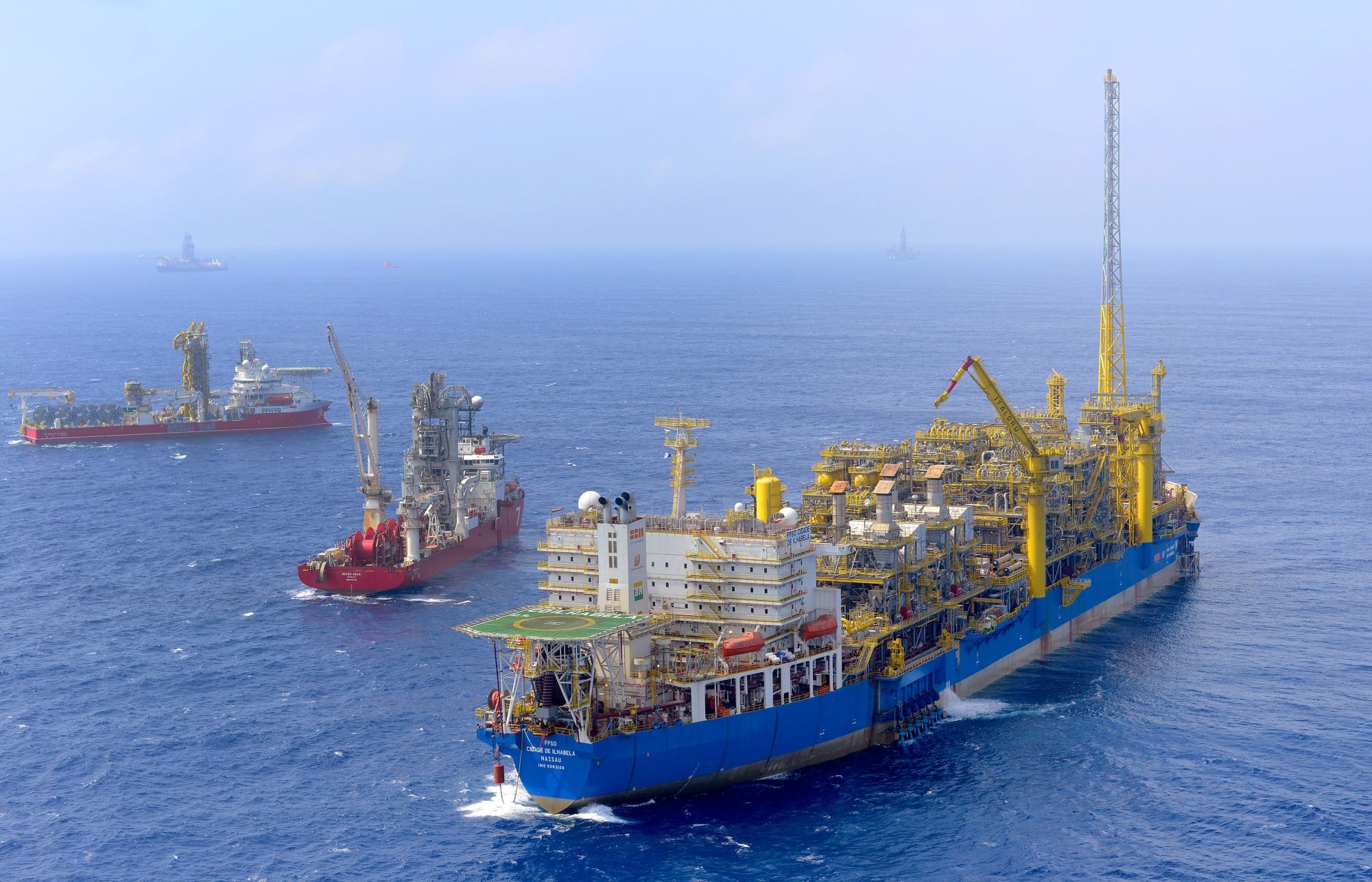
Petrobras Tupi 4 billion barrels: a quiet giant
Tupi lives about 250 kilometres off the coast, in the Santos Basin. To reach the oil, engineers drill through deep water and then through a salt layer nearly 7,000 metres down.
The field began producing in 2010. It was the first of Brazil’s deep fields to pump oil for real money, not just for tests.
Today Tupi still delivers more than 1 million barrels a day. That is about 20 percent of everything Brazil produces. In 2023 alone, the field generated around R$37 billion in taxes and royalties (about US$7.2 billion).
Live Company IntelligencePetroleo Brasileiro Petrobras SA ADR — the full investor dossier
Wall Street view
Valuation & profitability
Price & risk
$10.6552-wk high
$21.99
Revenue trend · 6y
Ownership
Dividend
What “pre-salt” actually means
You will hear the word “pre-salt” a lot in Brazil. It sounds technical, but the idea is simple.
Millions of years ago, a thick blanket of salt settled over the seabed. Oil formed and got trapped underneath it. “Pre-salt” just means the oil sitting below that salt.
Getting to it is the hard part. The oil hides under kilometres of water, rock and salt, at crushing pressure and high heat. Petrobras had to invent much of the technology as it went.
One more phrase worth knowing is “barrels of oil equivalent”. Fields produce oil and natural gas together, so companies add the gas in and count it as if it were oil. It gives you one tidy number for everything that comes up the pipe.
The Petrobras–Pemex handshake
Now to the second piece of news. In June 2026, Petrobras signed a cooperation memorandum with Pemex, the state oil company of Mexico.
Be clear about what this is. It is a memorandum of understanding — a friendly promise to work together and study ideas. It is explicitly non-binding. No merger, no forced marriage, no money committed yet.
The two-year deal covers a lot of ground. Think joint exploration in Mexican waters, reviving old fields, refining, fertilisers and cleaner fuels. Brazil’s prize offering is its deep-water expertise, learned the hard way at fields like Tupi.
A new Brazil–Mexico energy alliance
The timing is no accident. On 13 August 2026, Lula and Sheinbaum spoke by video to review progress on trade and on the Pemex–Petrobras plan.
Mexico needs the help. Pemex now pumps about 1.65 million barrels a day, less than half its 2004 peak of 3.4 million. Its best offshore fields are tired and its finances are strained.
Brazil, meanwhile, is riding high on the pre-salt. So the logic is neat: Latin America’s two oil giants pooling skills instead of competing alone. A second agreement, on refining and fuel sales, is being prepared for signing.
Why this matters to you
If you live in or invest in Latin America, this is worth watching. Oil money still shapes budgets, currencies and jobs across the region, from Brazilian pensions to Mexican fuel prices.
A stronger, better-run Pemex could steady Mexico’s public finances and calm one of the region’s biggest debt worries. And a confident Petrobras, sharing its know-how, hints at a Latin America that solves its own problems rather than waiting on outside partners. That is a quiet but real shift.
Background: Braskem Bond Tender Rejected Amid $9.4B Debt Crisis.
Background: Petrobras P-32 Recycling Yields 44,000 Tonnes of Steel.
More: Brazil news in English, every day from The Rio Times.
Frequently Asked Questions
Is the Tupi field the same as the Lula field?
Yes. The field was discovered as Tupi, renamed Lula, and then changed back to Tupi in 2019. It is Brazil’s flagship pre-salt field in the Santos Basin.
How much oil has Tupi produced in total?
Petrobras says Tupi passed 4 billion barrels of cumulative production in August 2026. It has been producing since 2010 and still pumps over 1 million barrels a day.
Is the Petrobras–Pemex deal a merger?
No. It is a two-year memorandum of understanding signed in June 2026. It is a non-binding plan to cooperate, not a merger or a firm investment commitment.
Why is Brazil helping Mexico with its oil?
Brazil has world-class deep-water skills, while Pemex’s output has fallen by more than half since 2004. The two countries see value in pooling expertise across Latin America.
Sources: Offshore Engineer (oedigital.com); energy-pedia news; Click Petróleo e Gás; Mexico Business News; Mexico Solidarity Media; Infobae; official statements from Petrobras, Pemex and the presidencies of Brazil and Mexico.
This article was produced by The Rio Times’ automated newsroom system. How we use AI · Report an error
Read More from The Rio Times