
PERU · ELECTIONS
Key Facts
- The country Peru is an Andean copper and gold exporter, and its capital, Lima, is the business hub and the home of the US Embassy.
- Why it matters Lima’s mayor runs the city where US companies, diplomats and visitors are based, and the credential ruling will show how Peru applies its ban on immediate re-election of mayors.
- Why now Francis Allison, the runner-up for mayor of Lima, conceded on Friday 30 October 2026 with 99.989% of the tally sheets counted.
- What happened The Renovación Popular list led by conservative Rafael López Aliaga finished 49,132 votes ahead of Allison’s Avanza País list, with 27.685% of valid votes against 26.810%.
- The numbers The winning list has 1,554,690 valid votes and the runner-up 1,505,558, a gap of 49,132, while third-placed Somos Perú has 15.089%.
- What it means for you Nothing changes for visitors, but firms that hold or seek Lima permits will not know who signs them from January until electoral judges rule on the mayor’s credential.
- Still open López Aliaga ran as first councillor because the Constitution bars immediate re-election, so who gets the mayor’s credential is undecided.
- Prediction markets Polymarket prices López Aliaga at about 71% to become Lima mayor, with about US$209,000 traded on that contract (as of 4:23 a.m. ET on 31 October 2026).
- Power Index Peru ranks 5th of 14 in The Rio Times Latin America Power Index, with 54.7 points (October 2026 edition).
In Plain English
ONPE and JNE: ONPE is the national electoral office that runs the vote and publishes the count. The JNE is the top electoral court, and its local special electoral juries, known as JEE, proclaim winners and hand out credentials.
First councillor: the first councillor, or primer regidor, is the top-ranked council seat on a municipal list. López Aliaga headed the winning list in that slot because the list has no candidate for mayor.
Credential: the credential is the official document that makes a winner the holder of an office, here issued by the local electoral jury. Without it a candidate cannot take the mayor’s chair.
Parties: Renovación Popular is López Aliaga’s conservative party, and Avanza País is the party of Allison, who stays mayor of the Lima district of Magdalena until the end of 2026. Allison says his list will hold nine seats on the Metropolitan Council.
Francis Allison, the Avanza País candidate for mayor of Lima, conceded on Friday 30 October 2026 that he had lost the capital’s mayoral race to the Renovación Popular list led by conservative Rafael López Aliaga. With 99.989% of tally sheets counted, that list held 27.685% of valid votes against 26.810% for Allison, a gap of 49,132 votes, El Comercio reported from the national electoral office’s figures.
The count is settled but the job is not, because Peru’s Constitution bars mayors from immediate re-election and López Aliaga, elected mayor in 2022, ran only as first councillor. For US companies, investors and travellers who deal with Lima, the open question is who receives the mayor’s credential, a decision for a local electoral jury that the National Jury of Elections (JNE) can review on appeal.
Earlier reports on this site cover the 95.4% count of 17 October and the dispute over the mayor’s credential. This article adds the near-final count, Allison’s concession and the scenarios now discussed for the credential.
How the Count Ended
The National Office of Electoral Processes (ONPE) had counted 99.989% of Lima’s tally sheets by mid-afternoon on Friday 30 October, with only three sheets still with the special electoral juries, El Comercio reported. At that cut Renovación Popular had 1,554,690 valid votes (27.685%) and Avanza País had 1,505,558 (26.810%).
Carlos Bruce of the Somos Perú party followed with 15.089%, then Podemos Perú with 8.022% and Alianza para el Progreso with 4.347%. Third place trailed second by about 11.7 percentage points, so the race was between the two leading lists.
Two election specialists had called the result a day earlier. On Thursday 29 October, with 99.85% counted, specialist José Manuel Villalobos told El Comercio that the roughly 100 sheets still to count represented 30,000 to 35,000 votes, too few to close a gap of about 50,000.
Another specialist, Jorge Jáuregui, preferred to wait for the official results before naming a winner. Allison’s concession the next day ended that wait for the losing side.
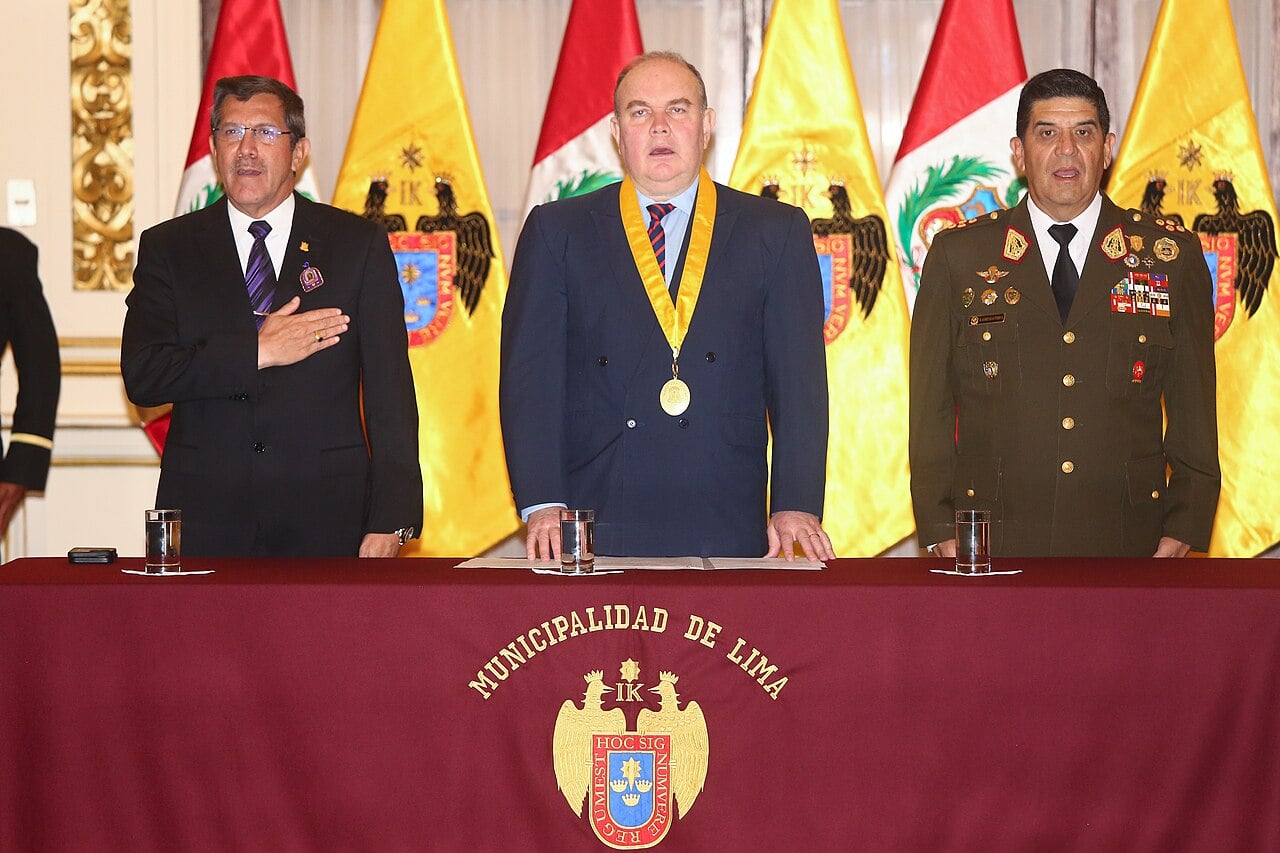
What Allison Told El Comercio
Allison spoke on El Comercio’s program Tenemos que hablar on Friday 30 October. “I have not won the election, I am clear about that, and I recognize the results, which were not in my favor by a narrow margin, but I am happy and thank everyone who voted for me,” he said.
He said his team filed few challenges because contesting about 500 tally sheets would have cost about S/250,000 (US$72,000), money he said he could not raise without compromising the city’s interests. The dollar figure uses the interbank close of S/3.470 per US$ on Friday 30 October, the latest business day, as reported by El Comercio.
“I do not call it a defeat; when I was a child my father told me that sometimes you win by losing,” Allison said. He also said he opposed his own party’s request to the JNE for a Lima runoff, although he called the idea worth debating because of the size of the capital’s electorate.
Allison said Avanza País will hold nine seats on the Metropolitan Council and practise what he called constructive opposition, according to Infobae. Seven of the nine, he told El Comercio, are people he chose himself.
The Credential Question
Peru’s Constitution bars mayors from immediate re-election, so López Aliaga, elected mayor in 2022, ran as first councillor on the Renovación Popular list instead. The winning list has no candidate for mayor, which leaves open who receives the mayor’s credential, according to the electoral specialists El Comercio consulted on Thursday 29 October.
Villalobos listed three scenarios. The first proclaims the winning list and gives the mayor’s credential to the first councillor, a formula with precedents in the 2018 and 2022 municipal elections.
In the second, which he said a JNE spokesperson has suggested, the special jury would only proclaim the list and issue the first councillor’s credential, and in January the council would ask the jury to give the mayor’s credential to the person the law calls, who would be López Aliaga. In the third, the mayor’s credential goes to the list’s second councillor and not to López Aliaga.
The first decision belongs to the Lima Centro special electoral jury, and an appeal could take the matter to the JNE, Villalobos said. Specialist Fernando Rodríguez Patrón said the vote count does not settle which office a first-councillor candidate may take after the ban, while Jáuregui argued that López Aliaga is barred and called the arrangement a fraud against the Constitution.
Allison said the JNE has reached a point between violating a constitutional mandate that bans re-election and violating the popular will. He added that it should have ruled earlier instead of waiting until the end and leaving doubts and complaints on both sides.
Runoff Request and Next Steps
Avanza País also asked the JNE for a second round in Lima, and Allison noted that the capital’s city hall carries regional-government functions, whose authorities go to a runoff when none passes 30% of valid votes. Renovación Popular’s 27.685% is below 30%, yet Allison said he opposed his own party’s request.
The JNE said on Wednesday 28 October that special electoral juries across the country had begun proclaiming results of the 4 October elections, starting with district races in Jaén, Tumbes and Bagua. It expects the proclamations to finish by the second week of November.
As of 29 October the JNE portal showed that the Lima juries had processed 100% of observed tally sheets, with 11 of 1,917 files awaiting second-instance rulings and nine recount hearings still to be scheduled, El Comercio reported. Earlier coverage of the runoff request and the 50,000-vote claim shows how the dispute developed.
What Prediction Markets Say
Polymarket’s market on the Lima mayor winner priced López Aliaga at about 71% and Allison at about 2% on Saturday 31 October, with about US$209,000 traded on the López Aliaga contract and about US$593,000 across all candidates. Kalshi’s thinner market listed López Aliaga at a last price of 78 cents, a bid of 68 cents and an ask of 77 cents, with 30,731 contracts traded in total, but its data was last updated on 10 October.
Polymarket’s rules resolve the market to the candidate who becomes the next mayor of Lima, with the JNE and ONPE as the reference if results are ambiguous. That wording ties the contract to whoever actually takes the mayor’s chair, which the credential dispute leaves open, and the market does not state the reasons for its price.
Why we show this: prediction markets turn real-money bets into a live probability that moves within minutes of the news, which is why investors, campaigns and newsrooms in the United States now follow them closely. We show them next to polls and official results, never instead of them.
What It Means for You
Nothing changes for visitors, because the new city council is not due to be installed until January and the count does not alter any rule in force today. US firms that hold or seek Lima permits should expect no clarity on who signs them until the jury rules on the mayor’s credential.
A ruling for or against López Aliaga will show how Peru’s electoral bodies read the ban on immediate re-election, and Allison argues that the municipal elections law requires the credential to go to whoever heads the most-voted list, citing the cases of Eloy Chávez in Villa María del Triunfo and Delia Najarro in San Juan de Miraflores as precedents, according to Infobae. The Peru country page tracks the follow-up.
What Is Not Known
It is not known who will receive the mayor’s credential, how long the Lima Centro special electoral jury will take, or whether an appeal will reach the JNE. The JNE expects all proclamations to finish by the second week of November, but its 28 October note gives no date for Lima.
It is also not known whether the JNE has ruled on the Avanza País request for a Lima runoff, because none of the El Comercio, Infobae or JNE reports of 28 to 30 October mentions one. The last few tally sheets, three at mid-afternoon on Friday 30 October, are too few to change the order of the two lists.
Frequently Asked Questions
Who won the Lima mayor race?
The Renovación Popular list led by Rafael López Aliaga finished first with 27.685% of valid votes, 49,132 ahead of Avanza País, at 99.989% counted on 30 October. Formal proclamation by the electoral jury was still pending.
Why can López Aliaga not simply take office as mayor?
Peru’s Constitution bars mayors from immediate re-election, and he ran as first councillor on the list. Whether he can receive the mayor’s credential is for the electoral authorities to decide.
Did Francis Allison concede the Lima race?
Yes, Allison told El Comercio on Friday 30 October that he had not won and recognized the results. He said his party will hold nine council seats and practise constructive opposition.
Will Lima hold a runoff?
Avanza País asked the JNE for one, but Allison said he opposed the request. None of the 28 to 30 October reports mentions a ruling on it.
When will the Lima winner be official?
The JNE expects proclamations in all races to finish by the second week of November. Its 28 October note gives no date for Lima.
Sources: National Jury of Elections, proclamations begin, 28 October 2026; El Comercio, Lima count at 99.989%, 30 October 2026; El Comercio, Allison concedes, 30 October 2026; El Comercio, specialists on the credential, 29 October 2026; El Comercio, dollar close, 30 October 2026; Infobae, Allison on the result, 30 October 2026.
This article was produced by The Rio Times’ automated newsroom system. How we use AI · Report an error · Editorial responsibility: Matthias Camenzind, Editor-in-Chief
Living in or visiting Lima? See this month's events and our Lima city guide with rents, safety and upcoming concerts.