
PERU · ECONOMY
Key Facts
- The country Peru is a Pacific-coast economy built on copper, gold and fruit exports, and its north is the region most exposed to coastal El Niño rains.
- Why it matters US investors and fruit importers face a longer weather shock, because a university worst case puts Peru’s 2027 growth at 2%, against 3% in its milder scenario, if El Niño lingers.
- Why now A University of Lima report, described by La República on Friday 30 October 2026, weighs a long El Niño just as the national forecast for the event was extended.
- What happened The national El Niño commission now sees extraordinary-strength sea warming until February 2027 and the event lasting to June 2027, while the university’s worst case has growth at 2%.
- The numbers The economy grew 3.2% in August 2026 and 3.1% from January to August, against a worst-case 2% for 2027 and private investment slowing from above 14% to about 6.5%.
- What it means for you Watch northern Peru, where forecast rain and floods threaten export farming, fishing and transport, because supply and prices of some goods could tighten in early 2027.
- Still open How long the event really lasts, and how much of the government’s El Niño spending reaches projects in time.
- Power Index Peru ranks 5th of 14 in The Rio Times Latin America Power Index, with 54.7 points (October 2026 edition).
In Plain English
ENFEN: the multisectoral commission that issues Peru’s official El Niño alerts and forecasts. Its communiqués have kept the coastal El Niño alert active for months.
Coastal El Niño: a warming of the sea off Peru’s coast that brings heavy rain to the north and centre of the country and normal or lower rain to parts of the south. It also pushes anchovy and other fish away from their usual areas.
University of Lima observatory: the Observatorio Económico, Financiero y Social is the university’s economic research unit, and its report is titled 100 días: perspectivas y retos económicos. Its 2027 numbers are scenarios, meaning what-if projections with stated assumptions, and not government forecasts.
Peru’s economy could grow only 2% in 2027, against 3% in a milder scenario, if the coastal El Niño lasts into the third or fourth quarter, according to the worst case in a University of Lima report that La República described on Friday 30 October 2026. The same day Infobae reported that ENFEN, Peru’s national El Niño commission, now expects the event to last until June 2027, with extraordinary-strength sea warming until February 2027.
For US investors and importers the numbers matter because Peru is a large exporter of copper, gold and fruit, and the regions at greatest risk include Piura, Lambayeque and La Libertad, home to export farming. The Economy Ministry’s own latest data show growth of 3.2% in August 2026 despite El Niño, so the 2% case is a university warning and not a government forecast.
Earlier reports on this site cover the US$5.2 billion El Niño plan and the US$2.4 billion extra spending bill. This article adds the new forecast and the growth scenarios.
What ENFEN Now Expects
ENFEN says sea warming off Peru will keep an extraordinary magnitude until February 2027 and then ease gradually, with the event lasting until June 2027, Infobae reported on Friday 30 October. Its previous forecast, communiqué 18-2026 as reported by Gestión on 17 October, saw the extraordinary magnitude lasting until January 2027 and strong conditions until early autumn.
Between November 2026 and January 2027 ENFEN expects above-normal rain on the north and central coast and in parts of the western highlands, with moderate to strong episodes, and north-coast rivers including the Tumbes, Chira, Piura, La Leche and Jequetepeque could run above usual. From December the higher flows would spread to the central coast, including the Chillón, Rímac and Lurín basins around Lima.
Air temperatures could set new records along the coast, and sea level is expected to stay above normal, which together with abnormal swells raises the risk of flooding and coastal erosion. At sea, anchovy would stay deeper and closer to shore, which limits its availability to seabirds and sea lions, ENFEN warned.
What the University Scenarios Say
The university’s economic observatory set out two 2027 scenarios in its report, La República reported on Friday 30 October. In the first, with an extraordinary El Niño until the second quarter of 2027 and 50% execution of fiscal measures for maintenance and infrastructure, GDP would grow 3%.
In the second, with the event lasting into the third or fourth quarter, weaker world growth and only 30% execution of those fiscal measures, growth would slow to 2%. Economist Julio del Castillo of the university said private investment should close 2026 with growth above 14% but advance only about 6.5% in 2027, as firms postpone projects until the emergency ends.
Del Castillo said the main channels would be higher prices and interrupted transport routes, and that price increases have already begun and could intensify in the first quarter of 2027. The report names Tumbes, Piura, Lambayeque and La Libertad as most exposed to heavy rain and flooding, with consequences for export agriculture, fishing and transport, and Lima, Callao, Áncash and Ica as exposed to landslides that could disrupt supply chains and food prices.
Business expectations stay optimistic in the report, with the three-month index at 57 points and the twelve-month index at 68 points in September, above the 50-point line that separates optimism from pessimism. The scenarios are the university’s own assumptions, and the report is not an official forecast.
Where the Economy Stood Before the Shock
Peru’s Economy Ministry said on Thursday 15 October that GDP grew 3.2% in August 2026, the 29th consecutive month of expansion, and 3.1% from January to August. Fishing fell 17.3% in August on lower catches of squid, scallops and jack mackerel, and mining and hydrocarbons fell 5.5% on lower zinc, gold and copper output, in a context the ministry described as marked by the coastal El Niño.
Economy Minister Elmer Cuba said on 7 October that the government is weighing expansive fiscal measures, because non-primary sectors face oil and diesel price shocks and higher global interest rates on top of El Niño. “Fiscal policy cannot be neutral: it will have to be expansionary,” he told a Peru-Japan business council.
The Instituto Peruano de Economía (IPE), a Lima research institute, cut its 2027 growth projection to 3.2% from 3.4% on 13 October and kept 3.3% for 2026, La República reported. Without an extraordinary coastal El Niño, the institute estimates that growth would reach 4.2% in 2026 and 4.4% in 2027.
Fruit and Export Farms at Risk
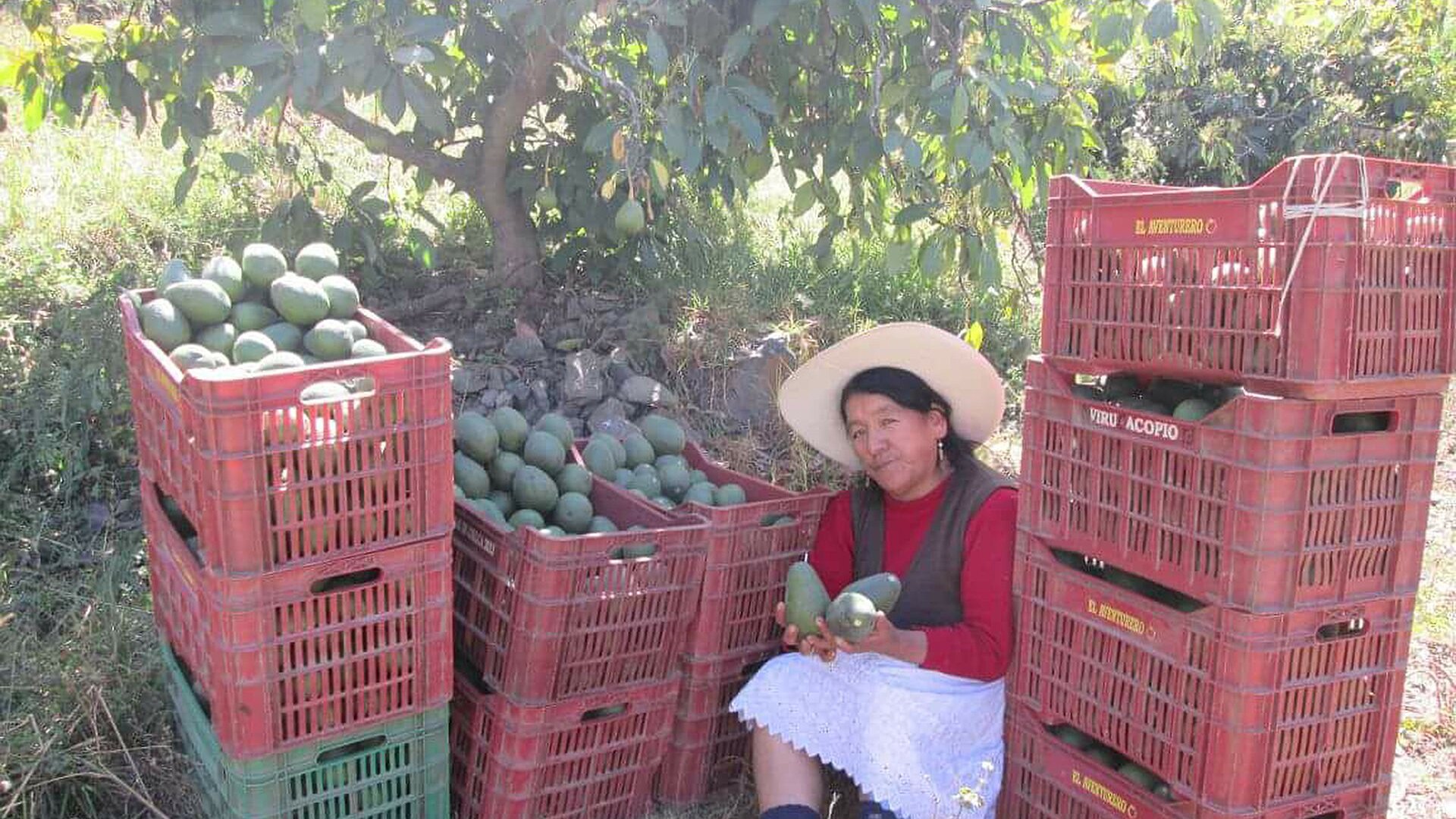
Peru’s agricultural exports reached US$8.334 billion from January to August, up 2.3%, with avocados at US$1.343 billion, blueberries at US$1.050 billion (up 47.9%) and grapes at US$816 million (up 17.6%), La República reported from Agriculture Ministry figures. August shipments grew only 0.9%, to US$1.493 billion, and the ministry projects about US$15 billion for 2026, close to the US$15.013 billion of 2025.
The university report lists export agriculture among the activities at risk in Tumbes, Piura, Lambayeque and La Libertad, the regions with the heaviest forecast rain. La República’s account of the report gives no figure for lost fruit exports.
What to Watch Next
The sol closed at S/3.470 per US$ in the interbank market on Friday 30 October, a weekly depreciation of 0.4%, El Comercio reported. Trader Jorge Luis Huayta of Kambista told El Comercio that attention next week would center on October consumer prices, due Monday 2 November, because of their weight in the central bank’s coming policy decisions.
What It Means for You
US importers of Peruvian fruit and US investors in Peruvian assets should treat the 2% case as a stress scenario and watch rainfall and road reports from the north after November, when ENFEN expects rain to intensify. The ministry’s own recent data still show growth above 3%, and the minister says the government is weighing expansive fiscal measures to cushion the shock.
Travellers heading to northern Peru and the coast between November and March should expect a higher risk of heavy rain and road disruption, while ENFEN forecasts normal or lower rain for the southeastern highlands, where Cusco lies. The Peru country page tracks the follow-up.
What Is Not Known
It is not known how long the event will last, because the university’s worst case assumes the third or fourth quarter of 2027 while ENFEN’s latest forecast ends in June 2027, the end of autumn. It is also not known how much of the government’s El Niño money will be spent in time, since the university’s scenarios simply assume 50% or 30% execution.
No official government growth forecast for 2027 that reflects the new ENFEN outlook appears in the reports cited, and none puts a number on damage to fruit exports. The University of Lima’s full report was not accessible, so its figures here come from La República’s account.
Frequently Asked Questions
How much could Peru’s economy grow in 2027?
A University of Lima worst-case scenario sees 2% growth if El Niño lasts into the third or fourth quarter of 2027. Its milder scenario sees 3%, and both are university scenarios, not government forecasts.
How long will El Niño last in Peru?
ENFEN’s latest forecast, reported by Infobae on 30 October, has the event lasting until June 2027. Extraordinary-strength sea warming is expected until February 2027 before easing gradually.
Which parts of Peru face the most rain?
ENFEN expects above-normal rain on the north and central coast from November 2026 to January 2027. The University of Lima names Tumbes, Piura, Lambayeque and La Libertad as most exposed to flooding.
How did Peru’s economy perform before the shock?
The Economy Ministry reported 3.2% growth in August 2026 and 3.1% from January to August. Fishing fell 17.3% in August, and mining and hydrocarbons fell 5.5%.
What does it mean for US fruit buyers?
Peru’s agricultural exports reached US$8.334 billion from January to August, led by avocados, blueberries and grapes. Northern farming regions are among those the university report sees as exposed to heavy rain.
Sources: La República, University of Lima scenarios, 30 October 2026; Infobae, ENFEN forecast, 30 October 2026; Gestión, ENFEN communiqué 18-2026, 17 October 2026; Ministry of Economy and Finance, August GDP, 15 October 2026; Ministry of Economy and Finance, fiscal measures, 7 October 2026; La República, agricultural exports from Agriculture Ministry figures, 27 October 2026; La República, IPE cuts its 2027 projection to 3.2%, 13 October 2026; El Comercio, dollar close, 30 October 2026.
This article was produced by The Rio Times’ automated newsroom system. How we use AI · Report an error · Editorial responsibility: Matthias Camenzind, Editor-in-Chief