
PERU · POLITICS
Key Facts
- The country Peru is an Andean copper exporter led by President Keiko Fujimori, with a two-chamber Congress made up of a Senate and a Chamber of Deputies.
- Why it matters The bill would erase the criminal case of a former president who tried to dissolve Congress, which tests Peru’s rule of law while foreign investors watch its stability.
- Why now The filing came to light on Friday 30 October 2026, a little over five weeks before the fourth anniversary of the failed coup attempt of 7 December 2022.
- What happened Deputies of Juntos por el Perú and Obras filed a bill that grants amnesty for Pedro Castillo’s 7 December 2022 speech and for acts in protests since 28 July 2021.
- The numbers Castillo faces a sentence of 11 years and 5 months, and the bill has the backing of 29 further Juntos por el Perú deputies and 14 from Obras besides its author.
- What it means for you Nothing changes yet for US travellers or firms in Peru, because the bill is only a filing and no vote date is known.
- Still open Whether the Chamber of Deputies will schedule a debate and whether the Fujimori government will back or oppose the text.
- Power Index Peru ranks 5th of 14 in The Rio Times Latin America Power Index, with 54.7 points (October 2026 edition).
In Plain English
Amnesty: an amnesty is a law that erases criminal liability for named kinds of acts, so cases end and sentences lapse. Under this bill, prosecutors and judges would apply it, on their own initiative or on request.
Juntos por el Perú and Obras: both are parties with deputies in the Chamber of Deputies, the lower house of Peru’s two-chamber Congress. The bill’s author, Catherin Palomino, belongs to Juntos por el Perú.
7 December 2022: on that day Castillo announced his intention to dissolve Congress and install an exceptional government, a coup attempt that failed and led to his removal. He is held at the Barbadillo prison in Lima.
Deputies of Peru’s Juntos por el Perú and Obras parties filed a bill in the Chamber of Deputies, reported on Friday 30 October 2026, that would grant an amnesty to former president Pedro Castillo, who faces a prison term of 11 years and 5 months for conspiracy to rebel after he announced the dissolution of Congress on 7 December 2022. The text also covers people prosecuted over protests from 28 July 2021 until the day before any law takes effect, El Comercio, RPP and Infobae reported.
For US readers, the bill matters because it would cancel arrest warrants, including international ones, for covered acts, and because Peru’s political stability weighs on investors in its copper and gold sector. No vote has been scheduled, and the bill must pass Congress before it can become law.
Earlier reports on this site cover the Castillo bribery case over military promotions and the safe-conduct that let Betssy Chávez leave for Mexico. This article adds the new bill, its limits and the first reaction.
What the Bill Would Do
The text offers two kinds of amnesty, one for acts tied to Castillo’s 7 December 2022 message and one for acts in protests, marches, strikes and other collective actions between 28 July 2021 and the day before the law takes effect. The first covers everyone who took part in preparing, writing, reading, broadcasting, countersigning or administratively carrying out the speech, at any level of participation and whatever their procedural status, the bill says.
An amnesty would end criminal proceedings or sentences, archive cases for good and cancel detention orders and national and international arrest warrants, according to the text El Comercio quotes. Infobae reports that judges and prosecutors could apply it on their own initiative or on request, with ten business days to rule on each request and release from prison within 24 hours of a judicial notice, unless another detention order applies.
The protest amnesty lists crimes such as disturbances, obstructing public services, violence or resistance to authority, damage, trespass, extortion tied to roadblocks without a profit motive, and criminal organization when the charge rests on calling, organizing or financing protests with lawful money. Infobae says it excludes drug trafficking, illegal mining, illegal logging, smuggling, money laundering, and acts committed for profit, with firearms or with explosives.
The bill also excludes genocide, crimes against humanity, war crimes and serious human rights violations, and Infobae lists intentional homicide, serious injuries, sexual violence, torture and enforced disappearance. It leaves out public officials, soldiers and police investigated for use of force in public-order operations, so inquiries into deaths and injuries attributed to state agents would continue.
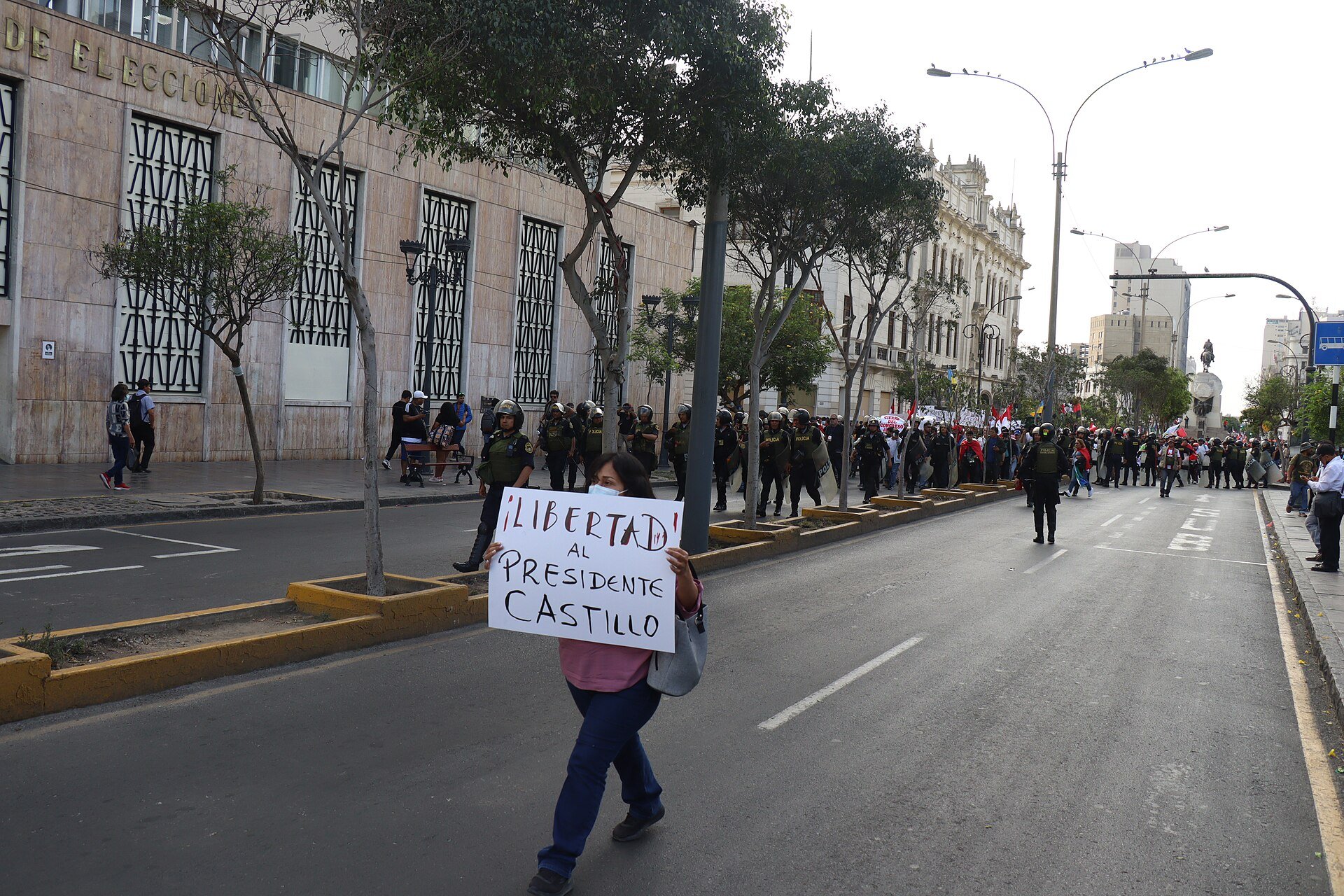
Who Would Benefit
Castillo, who is held at the Barbadillo prison in Lima, would be the main beneficiary, and El Comercio notes that former prime minister Betssy Chávez faces the same sentence of 11 years and 5 months. Chávez is in Mexico, where she arrived after leaving Peru on 7 August on a safe-conduct granted by the government of President Keiko Fujimori.
Castillo was sentenced on 4 December 2025 to 11 years, 5 months and 15 days for conspiracy to rebel, and RPP reported on 27 October that a Supreme Court criminal chamber ruled on 22 October that his appeal against the conviction was properly filed. The chamber must still decide whether to revoke the conviction, which means the case is not yet final.
RPP says the annex of the bill names Castillo, former cabinet heads Aníbal Torres and Betssy Chávez, and former interior minister Willy Huerta Olivas as explicit beneficiaries, along with others prosecuted over the protests. El Comercio adds that the amnesty could reach Torres, then an adviser at the prime minister’s office, and Huerta, who was interior minister on 7 December 2022.
Who Backs It and Who Objects
The author is deputy Catherin Palomino of Juntos por el Perú, and El Comercio says 29 other deputies of the party and 14 of Partido Cívico Obras back the text, with César Holguín of the Ahora Nación caucus among the co-authors. The bill says its aim is to contribute to pacification and reconciliation and to ensure that criminal law is not used to punish peaceful assembly, free expression and political participation, as RPP quotes it.
Constitutional lawyer Natale Amprimo told El Comercio the amnesty is a political decision but warned that approving it would send a bad message, noting that Castillo tried to close the Constitutional Court, the prosecutors’ office, the judiciary and Congress. Approval, he said, “would be the legalization of a state of absolute arbitrariness in which whoever is in government considers that he is not obliged to respect the Constitution.”
Infobae adds that the amnesty would be granted for acts and not for named people, would not rule on anyone’s guilt and could be waived by anyone who prefers a court to decide the case. The text cites the Peruvian Constitution, the International Covenant on Civil and Political Rights and the American Convention on Human Rights, according to Infobae.
A Separate Bribery Case Is Still Pending
Separately from the amnesty bill, the Chamber of Deputies is weighing a constitutional complaint that accuses Castillo of selling promotions of military and police officers. The Chamber’s plenary, led by Óscar Reto, postponed the debate set for Thursday 29 October after lawyers for Castillo and former minister Walter Ayala wrote that they would not attend, Gestión reported.
The complaint, filed by former attorney general Patricia Benavides, proposes charging Castillo with illegal sponsorship, abuse of authority and passive bribery, and Gestión says one of six witnesses in the prosecutors’ file is reportedly a police officer who admitted handing over US$40,000 to secure promotion to general. If both chambers have not decided by 15 November the case closes, Gestión reports, which leaves little time for the Chamber to set a new date.
Congress Is Not an Easy Partner Now
The filing comes as relations between the Fujimori government and parts of Congress are tense, with the Senate granting 27 of the 66 decree powers the government requested, El Comercio reported on 25 October. Justice Minister Ernesto Álvarez said the government faced “visible and direct obstruction from extreme-left organizations,” and an earlier report covers the decree powers law itself.
The El Comercio, RPP and Infobae reports of 30 and 31 October carry no reaction from President Fujimori, her cabinet or the Fuerza Popular party to the amnesty bill. The Fujimori government did grant Chávez a safe-conduct on 7 August, and Fujimori said then that “it was appropriate, and that is why we acted this way,” El Comercio recalled.
What It Means for You
Nothing changes for US travellers or businesses in Peru today, because the bill is only a filing and no vote has been announced. Investors and diplomats who follow Peru can note that dozens of deputies signed it, which makes it a political fact even before any vote.
The text would also cancel international arrest warrants for covered acts, which matters to governments such as Mexico that host people prosecuted in Peru. The Peru country page tracks the follow-up.
What Is Not Known
It is not known when, or whether, the Chamber of Deputies will assign the bill to a committee and schedule a debate, because the 30 and 31 October reports give no bill number, committee or vote date. It is also not known how the Fujimori government and the Fuerza Popular party will respond.
It is not known whether the amnesty, if passed, would touch separate proceedings such as the military promotions bribery complaint, which the bill as reported does not mention. Castillo’s own legal team is not quoted on the bill in the El Comercio, RPP or Infobae reports.
Frequently Asked Questions
What does the Peru amnesty bill for Pedro Castillo do?
It would grant amnesty for acts linked to Castillo’s 7 December 2022 speech and for protest acts since 28 July 2021, ending cases and cancelling arrest warrants. It excludes genocide, crimes against humanity, war crimes and serious human rights violations.
Who filed the Castillo amnesty bill?
Deputy Catherin Palomino of Juntos por el Perú is the author, and El Comercio says 29 other deputies of the party and 14 from Obras back it. It was filed in the Chamber of Deputies and reported on 30 October.
How long is Pedro Castillo’s sentence?
El Comercio reports that Castillo faces 11 years and 5 months in prison for conspiracy to rebel after the December 2022 coup attempt. He is held at the Barbadillo prison in Lima.
Will the amnesty become law?
No vote has been announced, and the bill must pass Congress before it can become law. Constitutional lawyer Natale Amprimo told El Comercio that approving it would send a bad message.
Who else could benefit from the bill?
RPP says the annex names former cabinet heads Aníbal Torres and Betssy Chávez and former interior minister Willy Huerta Olivas. Chávez is in Mexico after leaving Peru on 7 August on a government safe-conduct.
Sources: El Comercio, Juntos por el Perú and Obras file amnesty bill, 30 October 2026; RPP, amnesty bill for Castillo, 31 October 2026; Infobae, what the bill proposes, 31 October 2026; Gestión, Chamber postpones the promotions case debate, 30 October 2026; El Comercio, decree powers, 25 October 2026.
This article was produced by The Rio Times’ automated newsroom system. How we use AI · Report an error · Editorial responsibility: Matthias Camenzind, Editor-in-Chief