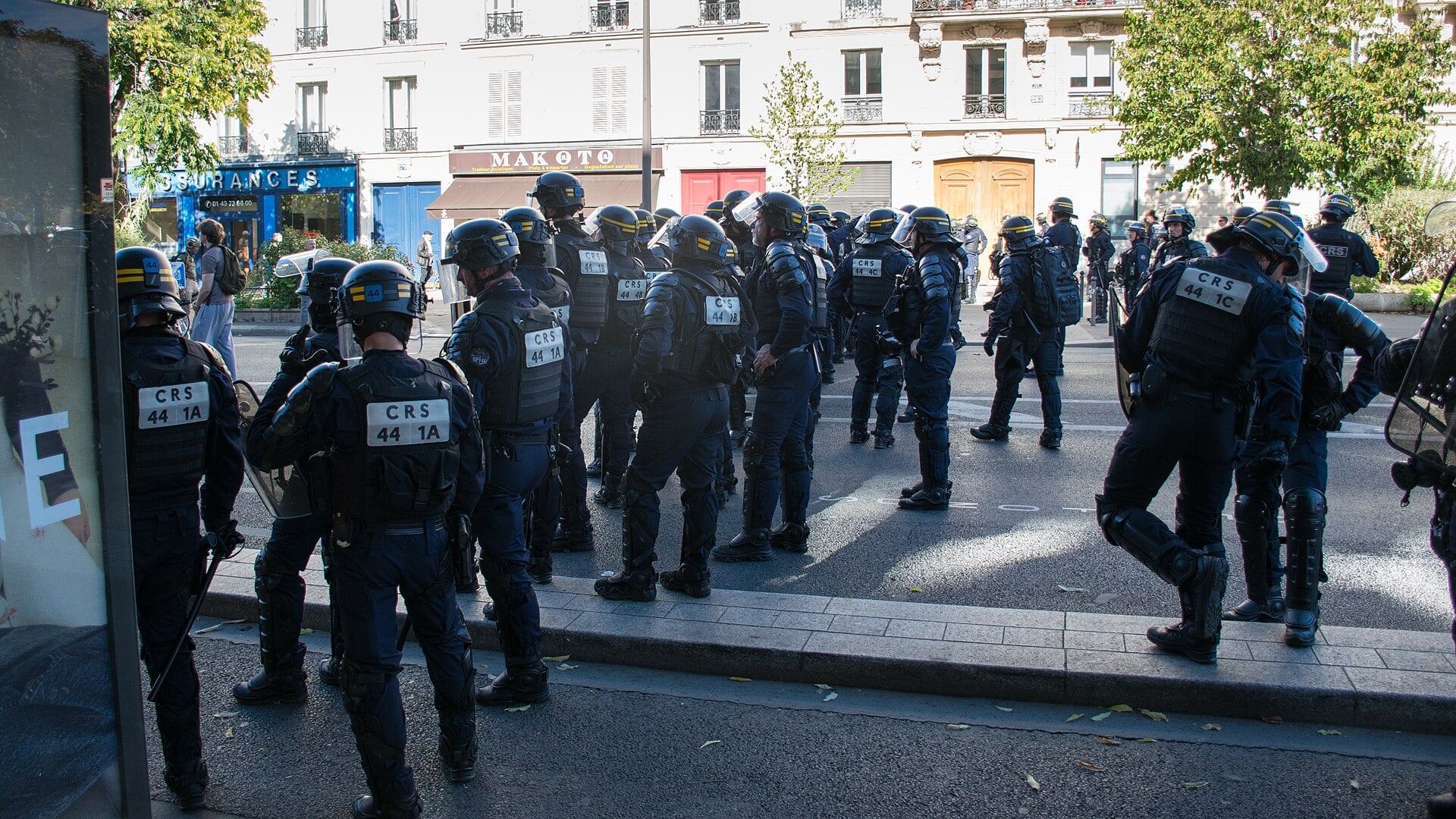
Published Wednesday, 28 October 2026, 9:30 a.m. ET (2:30 p.m. Paris) · Source: French Interior Ministry, CGT union, Rio Times reportingFrance’s government has weighed cutting off social networks and even mobile internet to stop a third weekend of street violence, according to reports.Officials have neither confirmed nor denied it, and nothing was switched off.The story sits at the heart of the Europe political crisis, in which France faces its worst unrest in years.
For readers in the United States, it is a test of how far a democracy will go to control protests.
Key Facts
- Report: Officials asked phone operators how to block social networks or mobile data; no cut happened.
- 24 October: 410,000 marched, says the Interior Ministry; the CGT union says more than 800,000.
- Arrests: 1,314 on 24 October, about half the total from the 17 October riots.
- Next: Protests on Saturday, 31 October; a national strike on Thursday, 5 November.
This story is part of our coverage of the europe political crisis. Dates, times and how to follow it are in our guide.
What the Reports Say
Reports on 27 October said the prime minister’s office asked France’s big phone operators to be ready to block X, TikTok, Instagram and Snapchat. The Interior Ministry reportedly also asked how mobile internet could be cut during the protests.
Officials from the prime minister’s office and two ministries neither denied the move nor the existence of the letter. The reports rely partly on anonymous sources, and no public order has been issued.
No cut happened on the weekend of 24 and 25 October. Cutting mobile data would also break card payments and emergency calls, which makes a full shutdown hard to carry out.
Macron Hardens His Line
President Emmanuel Macron said on Thursday, 22 October that “illegitimate” protests would be banned. He blamed “ultra-left” groups for what he called “political and seditious acts”.
He said union marches would stay legal, though authorities could reroute them to protect shops. The Yellow Vests, a protest movement that began in 2018 over fuel prices, have announced a new day of action for 31 October.
A national strike by students and unions is set for Thursday, 5 November. Together, the two dates give the government a second reason to seek tougher tools.

The Numbers From Two Weekends
On Saturday, 24 October, the Interior Ministry counted 410,000 marchers across France, while the CGT, France’s biggest union, put the figure above 800,000. Paris alone saw about 110,000 marchers.
Interior Minister Laurent Nuñez put the arrest toll that day at 1,314, and about 50 officers were hurt.The 17 October riots were far worse, with about 550,000 marchers and roughly 2,400 arrests, the ministry says.The government says about 3,000 shops were affected.
The Money Behind the Anger
The protests began over living costs, taxes and public services. France’s government forecasts a 2026 budget deficit of 5.4% of economic output (GDP), after 5.1% in 2025 according to INSEE, the national statistics office.
Similar unrest has appeared elsewhere in Europe, with clashes in Brussels and looting in Barcelona, where 128 people were arrested on 24 October. The causes differ by country, so we treat them as parallel stories, not one movement.
What It Means for You
American travellers should expect disruption in French cities on 31 October and 5 November. Check transport and hotel plans, and keep cash and offline maps in case of network problems.
For US companies with French staff or customers, a mobile-internet cut would hit payments, delivery apps and alarms.
What Is Not Known
It is unclear whether the government formally ordered a block or only explored one. No public order, start date or area has been published.
We also do not know whether the 31 October marches will be allowed in every city. Police numbers for another large deployment have not been announced.
What Prediction Markets Say
Polymarket, a prediction market where users trade real money on outcomes, priced a French state of emergency by 31 December 2026 at 7.5% and by 31 October at 1.3% on 28 October 2026, 9:22 a.m. ET, with about US$2.6 million traded.
Why we show this: prediction markets turn real-money bets into a live probability that moves within minutes of the news, which is why investors, campaigns and newsrooms in the United States now follow them closely. We show them next to polls and official results, never instead of them.
Sources
French Interior Ministry figures, 24 and 25 October 2026; CGT union statement, 24 October 2026; presidential statement, 22 October 2026; INSEE deficit data; reports of 27 October 2026 on the operator letter; Polymarket, read 28 October 2026.
Related: Europe political crisis: live coverage.
This article was produced by The Rio Times’ automated newsroom system. How we use AI · Report an error · Editorial responsibility: Matthias Camenzind, Editor-in-Chief
Frequently Asked Questions
Did France cut social media during the protests?
No. Reports say officials asked phone operators about blocking social networks or mobile data, but nothing was switched off and no public order exists.
When are the next protests in France?
A Yellow Vests day of action is announced for Saturday, 31 October, and a national strike for Thursday, 5 November 2026.
How many people protested in France on 24 October?
The Interior Ministry counted 410,000 marchers and the CGT union said more than 800,000. Police made 1,314 arrests.