Over 70 Percent of Brazil’s Rural Properties Lack Internet Access
RIO DE JANEIRO, BRAZIL – Internet access in the countryside is one of the main challenges of Brazilian agribusiness. According to the last 2017 Agribusiness Census, over 70 percent of rural properties are not connected.
According to the Brazilian Institute of Geography and Statistics (IBGE), in charge of the Census:

- Brazil has 5.07 million rural farms;
- 71.8 percent do not have access to the internet (3.64 million properties)
The IBGE considers rural farms as areas where agricultural production occurs as an income activity. Lands used in mining, ranches, estates, and military areas are not considered.
Despite the 1,900 percent growth between the two Agricultural Census (2006 and 2017), access to the Internet leaves much to be desired in a sector that moved over R$1.43 trillion (US$357.5 billion) in 2018, the equivalent of more than 20 percent of Brazil’s GDP.
Of the ten main producing cities in the country, only Sapezal and Nova Mutum, municipalities of Mato Grosso, have more properties with internet than unconnected farms.
The IBGE Census further shows that the municipality accounting for more rural farms without Internet access is Cametá, in Pará. More than 11,000 properties have declared having no connection.
In São Félix do Xingu, a city in Pará with the largest cattle herd in the country, there are more than 5,300 properties without Internet access, which is equivalent to 83 percent of all establishments in the municipality.
The significance of the internet in agriculture and cattle raising
In addition to increasing access to information and technical assistance, the Internet helps rural producers to improve the use of technology on farms.
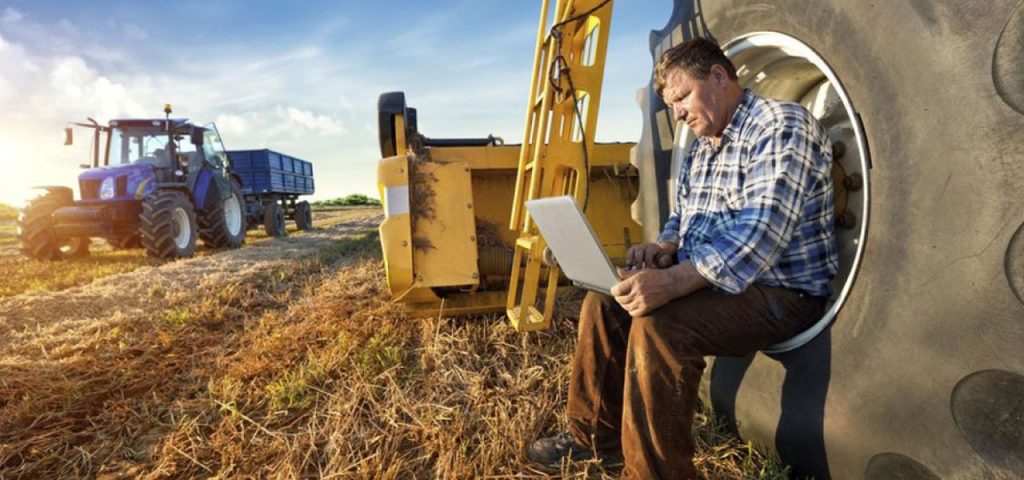
“Agriculture 4.0 is connectivity. It’s getting a machine communicating with another machine, monitoring the property. You need this information online, to be able to make real-time decisions,” explains Silvia Massruhá, general manager of EMBRAPA Agricultural Computer Science
“Technologies can be opportunities to improve business models, reduce costs, and improve production. The connectivity challenge is present throughout the chain,” she adds.
According to Silvia, large producers are able to invest in connectivity by hiring satellite internet and installing antennas on the properties to provide internet access at all points in the farm.
But this type of farmer is the minority and the small and medium-sized face greater difficulties in obtaining internet by conventional means and do not have the resources to contract a satellite connection.
Challenge of fast internet
“The challenge of the Internet is to reach the rural environment. 4G would already work for the ‘farm of the future’, in full operation it would already solve the connectivity issue”, says Silvia, head of EMBRAPA, which is focused on developing software for agricultural activities.
4G is a mobile internet connection, used directly by cell phones, tablets, and other equipment, which is usually faster than the fixed internet.
The ‘TIC Domicílios’ (Households Information and Communication Technologies) survey, one of the country’s leading studies on the subject, says 77 percent of Internet users connect exclusively by phone and 20 percent use cell phones and computers.
According to the National Telecommunications Agency (ANATEL), 4,757 of the 5,570 Brazilian municipalities have a 4G signal (85 percent). This number, however, only takes into account the cities’ headquarters, which are far away from rural properties.
ANATEL says that there are 15,469 inhabited areas in the country identified as areas without 4G connection. By 2023 this number should drop to 13,996, according to the agency’s General Plan of Universalization Goals (PGMU).
Taking into account rural areas alone, the Ministry of Science, Technology, Innovation, and Communications (MCTIC) believes that 800 of the 7,645 inhabited rural areas in Brazil have 4G. By 2023, the government estimates that 622 more localities will have access to technology, totaling 1,422.
“It is an expressive contingent of the population. And it is a recurrent demand of the activity. For instance, they implemented the Electronic Invoice and have producers lacking the required Internet access to do this. The challenge is to cover the rural area,” says ANATEL’s manager of universalization, Eduardo Jacomassi.
The agency says it receives, on average, 500 requests per year to expand Internet access.
How does the government expect to expand access?
Jacomassi said solutions are being thought up within the federal government so that in the 5G auction, scheduled for 2020, operators will be forced to expand connectivity in the countryside.
Another plan is to reallocate public resources to expand access. ANATEL hopes a bill will be passed in Congress to allow the use of a fund financed by operators to guarantee the universalization of fixed telecommunications.
This fund, established in 2000, provides investments in the installation of phones throughout the country but does not estimate investments in mobile internet access. According to the agency’s calculations, the change in legislation could guarantee R$1 billion per year in resources for the expansion of the Internet in the country.
4G is a high-speed Internet that would help the transmission of data produced in the field, and a broadband with lower speed is available throughout Brazil, according to MCTIC.
“The launch of 4G’s public notice in 2012 establishes the obligation (of operators) to serve the rural area with broadband. It’s a sluggish service, of 1 Mbps of speed, to which producers are entitled”, says Eduardo Jacomassi.
Concerning fiber-optics connection, broadband internet with greater speed, the ministry says 70 percent of the country already has access to this technology.
More: Brazil news in English, every day from The Rio Times.
This article was produced by The Rio Times’ automated newsroom system. How we use AI · Report an error
Read More from The Rio Times