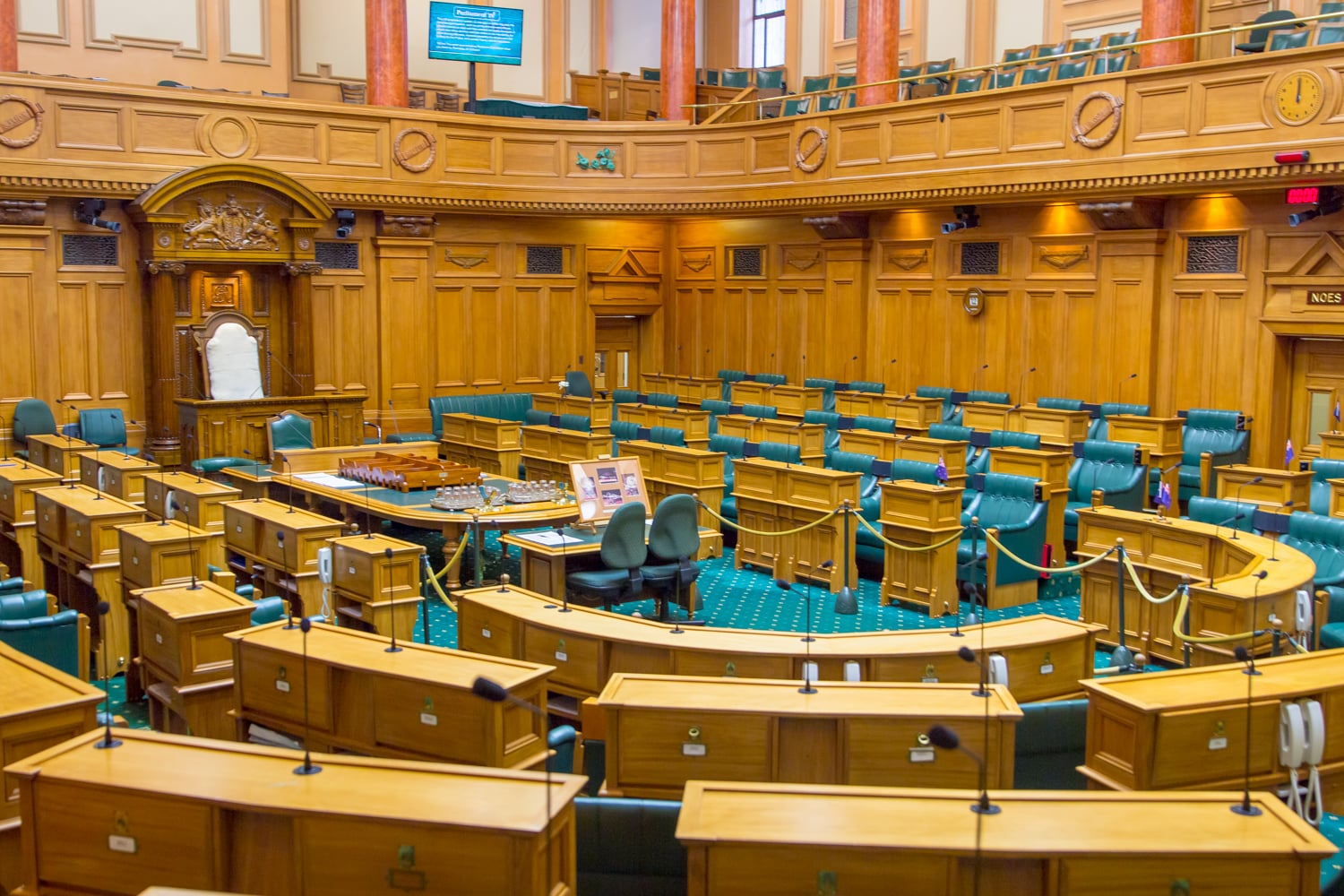
New Zealand’s election ended on Saturday night without a clear government. National, the centre-right party of Prime Minister Christopher Luxon, and Labour, the centre-left opposition led by Chris Hipkins, finished almost level on votes, and the governing coalition holds 67 seats, one above the 66 needed.
The official result is not due until Friday, 27 November, after three weeks of counting late votes. For US readers, this is the vote of a close US partner, and its next government is still undecided.
Key Facts
- Who. Luxon’s National and partners ACT and NZ First hold 67 seats; Labour, Greens and Te Pāti Māori hold 56 or 57.
- Parliament. Parliament has 130 or 131 seats, so 66 are needed for a majority.
- Newcomer. The new Opportunity Party, led by Qiulae Wong, won 7 seats and enters Parliament for the first time.
- Next. Late ballots, known as special votes, are still being counted; official result due Friday, 27 November.
- Prediction markets. Polymarket, a crypto-based prediction market, 7 November, 3:35 p.m. ET: Luxon 81.5%, Hipkins 12.5% to be next prime minister; US$314,321 traded.
Published Saturday, 7 November, 3:50 p.m. ET (9:50 a.m. Sunday in New Zealand) · Source: New Zealand Electoral Commission (the election authority) timetable, election-night statements by party leaders, Polymarket data, Rio Times research
Why the Count Is Too Close to Call
On election-night counts, with most votes counted, National won 42 seats, ACT 13 and NZ First 12. ACT is a free-market party led by David Seymour, and NZ First is a populist party led by Winston Peters.
Together those three parties hold 67 seats, one more than the 66 needed in a Parliament of 130 or 131. Labour won 35 or 36 seats depending on the tally, the environmentalist Green Party 16 and Te Pāti Māori (the Māori party) 5, a total of 56 or 57.
National and Labour each took about 29% of the party vote, and their combined share was under 60%. The rest went to smaller parties.
How the Opportunity Party Changes the Maths
The Opportunity Party, a newcomer led by Qiulae Wong, crossed the 5% party-vote threshold and enters Parliament for the first time with 7 seats. It won about 6% of the party vote.
If late votes cost the governing bloc two seats, it would fall to 65, below the 66 needed. The final count will show whether that happens.
Live Market IntelligenceCrypto — Live Market Board
Rio Times · Live Market Intelligence
Crypto — Live Market Board
-0.17%
| Instrument | Last | Change | YoY | Prev. | High | Low | Volume |
|---|---|---|---|---|---|---|---|
| BTC | 75,615 | -0.17% | -26.85% | 75,747 | 76,101 | 75,600 | 10,569,650,176 |
| ETH | 2,229 | -0.28% | -35.12% | 2,235 | 2,247 | 2,229 | 4,192,006,912 |
| SOL | 89.34 | -0.80% | -44.75% | 90.06 | 90.52 | 89.23 | 890,848,192 |
| XRP | 1.16 | -1.75% | -49.98% | 1.18 | 1.18 | 1.15 | 1,434,953,728 |
| BNB | 695.25 | +0.31% | -29.81% | 693.12 | 696.30 | 692.51 | 986,054,400 |
| ADA | 0.18 | -1.57% | -68.58% | 0.18 | 0.19 | 0.18 | 106,506,608 |
| DOGE | 0.07 | -1.15% | -59.98% | 0.07 | 0.07 | 0.07 | 211,694,624 |
| AVAX | 8.19 | -1.64% | -53.72% | 8.33 | 8.35 | 8.18 | 136,239,040 |
| LINK | 10.78 | -0.57% | -31.62% | 10.84 | 10.92 | 10.74 | 154,886,048 |
| DOT | 0.90 | -1.63% | -72.32% | 0.91 | 0.91 | 0.89 | 40,376,308 |
| LTC | 52.06 | -0.91% | -48.86% | 52.54 | 52.54 | 51.74 | 120,867,712 |
| BCH | 256.59 | -2.66% | -49.80% | 263.59 | 264.26 | 255.99 | 130,432,696 |
| TRX | 0.32 | +0.64% | +9.55% | 0.32 | 0.32 | 0.32 | 286,896,768 |
| XLM | 0.15 | -1.70% | -48.34% | 0.15 | 0.15 | 0.15 | 84,446,184 |
| HBAR | 0.07 | -0.53% | -62.02% | 0.07 | 0.07 | 0.07 | 29,293,054 |
| NEAR | 3.65 | -1.52% | +32.38% | 3.71 | 3.77 | 3.64 | 307,419,296 |
| ATOM | 1.37 | -0.98% | -54.82% | 1.39 | 1.39 | 1.37 | 17,979,472 |
| AAVE | 130.50 | -0.07% | -37.22% | 130.59 | 132.53 | 128.71 | 113,311,136 |
Overhang Seats and Special Votes Explained
Parliament normally has 120 seats, but it grows when a party wins more local electorate seats than its party-vote share entitles it to. These extra seats are called overhang seats, and this year they lift the total to 130 or 131.
Special votes are late ballots, such as those cast overseas or outside a voter’s home electorate. They are still being counted, which matters when the margin is a single seat.
What the Leaders Said
Luxon said the result was too close to call. His coalition, he said, still has a pathway to forming the next government.
Hipkins said every vote must now be counted. Labour took about 29% of the party vote.
What Prediction Markets Say
On Polymarket, a crypto-based prediction market, traders priced Luxon at 81.5% and Hipkins at 12.5% to be the next prime minister at 3:35 p.m. ET on 7 November. About US$314,321 had been traded across the markets on the next prime minister, and prices are bets, not polls.
Why we show this: prediction markets turn real-money bets into a live probability that moves within minutes of the news, which is why investors, campaigns and newsrooms in the United States now follow them closely. We show them next to polls and official results, never instead of them.
What It Means for You
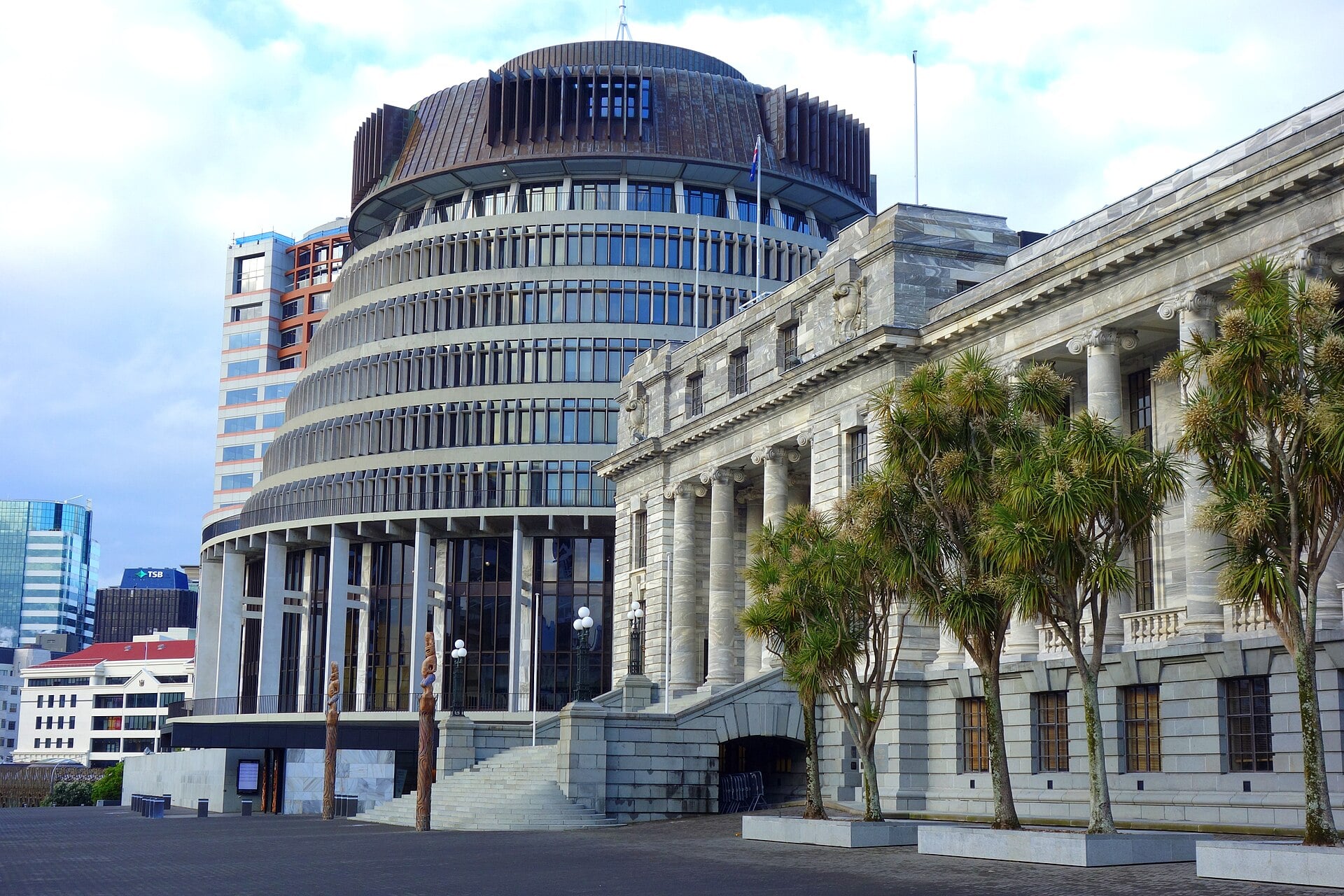
New Zealand is a close US partner and a member of the Five Eyes intelligence-sharing group with the United States, Britain, Canada and Australia, so its next coalition matters to Washington. A National-led deal with ACT and NZ First would keep the current coalition, while Labour and its likely partners hold 56 or 57 seats, nine or ten short of 66.
The next government will not be settled until the final count.
What Is Not Known
The final seat count, the size of the overhang and who will form the government are unknown until the official result on 27 November. Our earlier coverage is in our election preview, the last poll report and the New Zealand election hub.
Frequently Asked Questions
When will New Zealand know its next government?
The official result is due on Friday, 27 November 2026, after special votes are counted.
Who won the New Zealand election?
Nobody has won yet. National and ACT with NZ First hold 67 seats, one above the 66 needed, but late votes could change that.
What is the Opportunity Party?
It is a new party led by Qiulae Wong that crossed the 5% threshold and won 7 seats. It won about 6% of the party vote.
Why does Parliament have more than 120 seats?
Overhang seats arise when a party wins more electorate seats than its party-vote share allows. They enlarge Parliament beyond 120.
This article was produced by The Rio Times’ automated AI newsroom. Editorial responsibility: Matthias Camenzind, Publisher and Editor-in-Chief. How we use AI · Report an error
Read More from The Rio Times