Namibia’s Journey from Apartheid to Independence and Economic Growth
On March 21, 1990, Namibia marked its emergence as a sovereign state, breaking free from the clutches of South African apartheid. This momentous event set the stage for its journey as one of Africa’s youngest nations.
Governed by a multi-party democracy, Namibia regularly holds both general and local elections, underpinning its commitment to democratic processes.
Namibia’s governance framework facilitated a seamless leadership transition in February 2024. A new Vice President was installed within 15 hours after President Geingob’s demise, adhering strictly to constitutional mandates.
Geographically, Namibia lies in the southwest of Africa, bordered by Angola, Zambia, Zimbabwe, Botswana, and South Africa.
It boasts a 1,500-kilometer coastline along the Atlantic Ocean, rich in fish, diamonds, and recently discovered oil reserves.
However, it ranks as the world’s third-least densely populated nation, with a vast area of 825,000 square kilometers inhabited by just 3.0 million people.
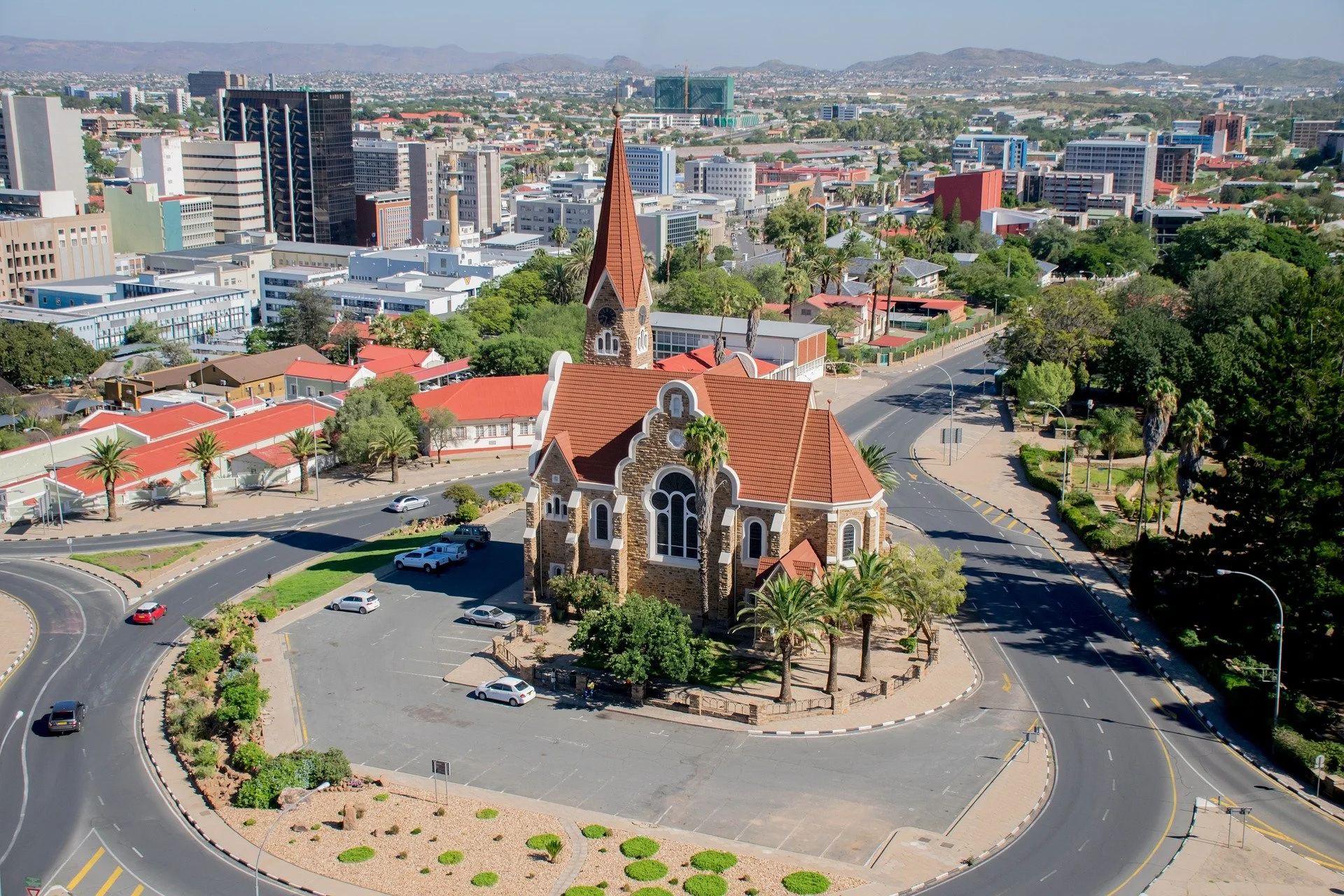
This sparse population presents unique challenges and opportunities for delivering public services and fostering business operations.
The economy of Namibia leans heavily on its mining sector, which contributed 16.2% to the GDP in 2023 and is dominated by diamonds, uranium, and gold. Despite its lucrative output, the sector employs a meager 1.7% of the workforce as of 2018.
In contrast, tourism has risen as a significant industry, bolstering employment and foreign exchange through its 11.4% contribution to total employment in 2018.
Namibia’s Economic Outlook
However, Namibia grapples with severe income disparities. The Gini coefficient was 63.3 in 2022, indicating one of the world’s highest inequality rates.
Such economic division constrains domestic demand for goods and services and underscores the ongoing struggle for equitable wealth distribution.
The nation has seen a decrease in poverty, with rates dropping from 37.5% to 17.4% between 2003 and 2004.
Life expectancy, too, has rebounded from a low in 2005, reaching 64.9 years by 2017, a testament to the country’s health initiatives, particularly in combating HIV/AIDS.
Looking ahead, Namibia faces economic challenges driven by global market fluctuations and internal resource limitations.
Its GDP growth is projected at 3.3% for 2024 and 2025, with the primary industries expected to see variable growth rates.
Fiscal strategies aim to stabilize the economy, with the fiscal deficit forecast to hold at 4% of GDP in the coming years.
Namibia’s vast coastline and strategic ports at Walvis Bay and Lüderitz position it as a budding regional logistics hub. This offers gateways for landlocked neighbors like Botswana and Zambia.
Yet its remote location from major markets such as South Africa and Angola poses logistical and competitive challenges.
Namibia continues to navigate its post-independence era. The focus on enhancing infrastructure, improving regulatory frameworks, and fostering a conducive business environment remains paramount.
These efforts are crucial in overcoming the persistent barriers to economic and social development. They ensure that Namibia can achieve sustainable growth and greater equity among its citizens.
More: Angola news in English, every day from The Rio Times.
This article was produced by The Rio Times’ automated newsroom system. How we use AI · Report an error
Part of our ongoing coverage
Africa: The New Scramble — the great-power contest over the continent.
Read More from The Rio Times