South Africa Economy 2026 — 33.6% Unemployment and the November Vote
Economy · South Africa
Key Facts
- —The stakes The Government of National Unity, or GNU, must show results before the 4 November 2026 municipal elections.
- —The date President Ramaphosa announced the local election date on 30 April 2026; Minister Hlabisa gazetted it on 7 August.
- —The economy Real GDP grew 1.1% in 2025, StatsSA says, with 2026 forecasts between 1.2% and 1.5%.
- —The jobs crisis Unemployment rose to 33.6% in the second quarter of 2026, StatsSA’s highest reading in years.
- —The catch All GNU parties need visible delivery in the Gauteng metros to survive the ballot.
A coalition that has held for roughly two and a half years now faces its first local test. The 4 November municipal elections will measure whether the GNU can turn fragile stability into visible delivery.
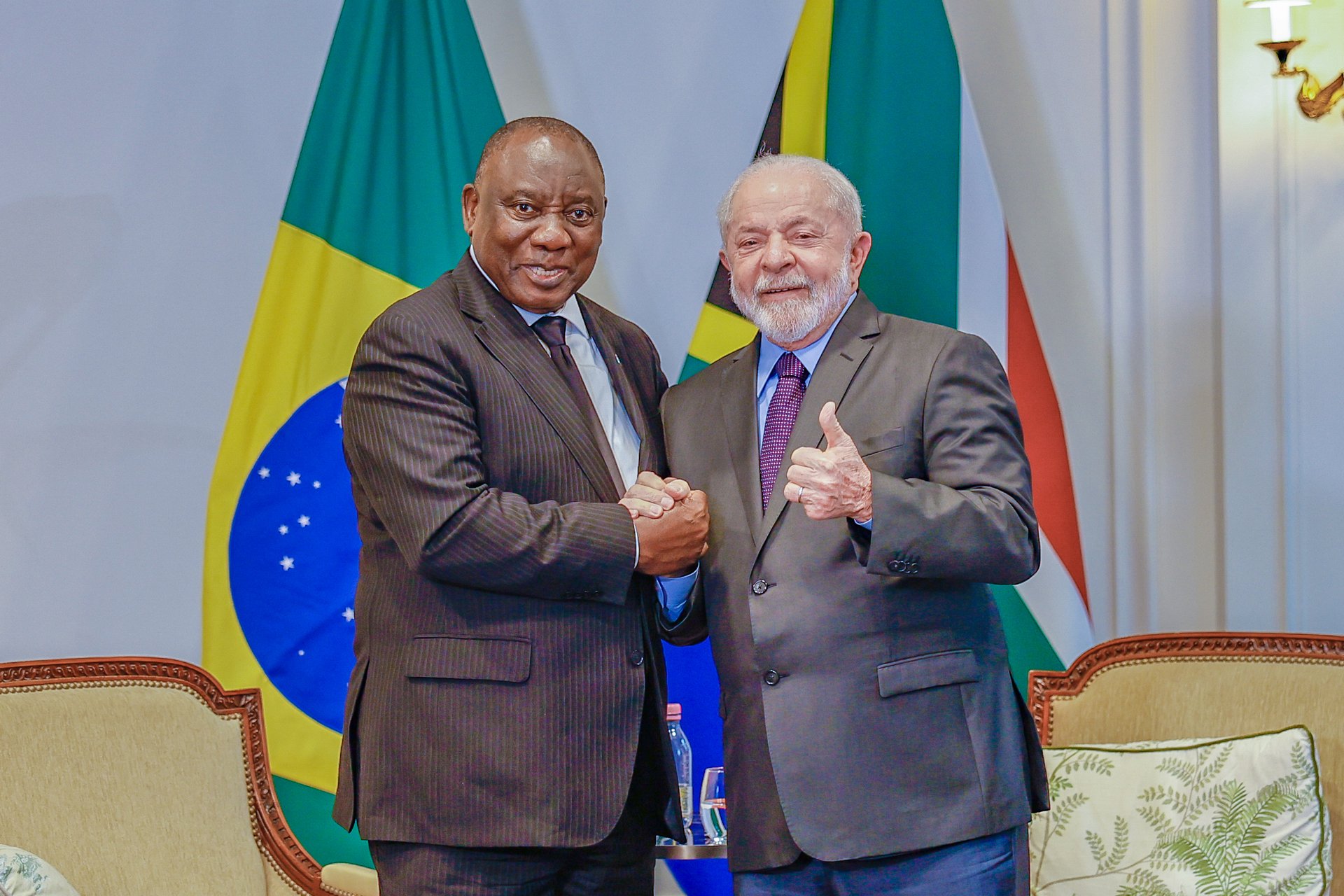
South Africa’s growth stayed modest through 2025 and into 2026, while joblessness kept climbing. Both numbers will shape how voters judge the ANC and its coalition partners.
The coalition that changed South African politics
The African National Congress lost its outright parliamentary majority for the first time since 1994 in the 2024 general election. That forced it into a Government of National Unity, or GNU, a coalition government.
The BTI 2026 Country Report calls it a 10-party coalition led by the ANC. The Democratic Alliance, the former official opposition, is the second-largest partner, after winning 21.8% of the national vote.
The Friedrich Naumann Foundation says the coalition has faced tension, especially over the 2025 budget. Even so, it has held together for roughly two and a half years, longer than several early predictions expected.
Why 4 November 2026 matters
South Africa will hold local government elections on Wednesday, 4 November 2026. President Cyril Ramaphosa announced the date on 30 April 2026, and Minister Velenkosini Hlabisa formally gazetted it on 7 August.
Voters will elect councillors for all 8 metropolitan municipalities and all 205 local municipalities. They will also choose 40% of councillors in the country’s 44 district municipalities.
Some 620 political parties are registered nationally for the vote, spread across 4,488 voting districts. It is the first local election since the GNU formed in 2024, and a test of ANC support after its 2024 loss.
The Gauteng metros as the main battleground
The Daily Maverick expects the vote to entrench coalition politics in South Africa’s biggest cities. Johannesburg, Tshwane and Ekurhuleni, the three Gauteng metros, are the key battlegrounds.
The ANC has struggled in those metros, where local coalitions have proved unstable for years. The BTI report warns the election will pressure the GNU to show faster results, or risk weakening every partner in it.
Growth: modest, not transformative
South Africa’s economy grew 1.1% in 2025, its strongest pace since 2022, Statistics South Africa said. Statistics South Africa, known as StatsSA, is the government agency that produces the country’s official economic data.
The most recent confirmed figure is for Q1 2026: GDP rose 0.5% quarter-on-quarter, StatsSA reported on 9 June. That was a sixth straight quarter of growth, helped by finance, agriculture, trade and transport.
Second-quarter 2026 GDP data are due from StatsSA on 8 September, after this article was written. The National Treasury forecasts 1.5% growth for all of 2026, while SARB’s July projection was lower, at 1.4%.
These figures fall well short of what South Africa needs to cut unemployment sharply. The GNU’s economic record remains thin heading into the vote.
Unemployment and the jobs target
South Africa’s official unemployment rate rose to 33.6% in the second quarter of 2026, up from 32.7% in Q1, StatsSA said. Including people who have given up looking for work, the rate was 43.8%.
The number of unemployed people grew by 345,000 in the quarter, to 8.481 million. A government-business partnership has set a goal of one million new jobs alongside 3% growth, a target well beyond current momentum.
Municipal elections often turn local service delivery into a stand-in for this national jobs crisis. Voters commonly judge coalition governments on refuse collection, water supply and electricity reliability.
Eskom and the power supply
Eskom, the state power utility, reported 441 consecutive days without load-shedding as of 4 August 2026. That marks one of its strongest operational runs in years, after a decade of rolling blackouts hurt the economy.
Energy security still matters at the local level, since networks that fail can be punished at the ballot box. Investors continue to watch Eskom’s plant reliability as a core economic risk, even with the recent improvement.
The rand and interest rates
The rand traded near 16 to the US dollar in early September 2026, having firmed slightly through the past month. SARB, the South African Reserve Bank, raised its repo rate to 7% in May 2026, then held it there in July.
Both figures matter for the election. A calm vote would likely support the currency and keep borrowing costs steady; a chaotic one could push both the wrong way.
Budget tensions inside the GNU
The 2025 budget debate exposed real strain inside the coalition, the Friedrich Naumann Foundation says. Spending priorities and fiscal discipline remain contested between the ANC and the DA.
Despite that, no formal split or collapse has occurred as of September 2026. The municipal elections could reopen these fault lines, since partners may campaign against each other locally while still governing together nationally.
What the vote means going forward
The 4 November ballot is a mid-term judgement on the GNU’s economic delivery. Voters will weigh growth of about 1.1% in 2025 against a similarly modest outlook for 2026.
Strong results for reform-minded parties could reinforce the Treasury’s fiscal plans. Weak results for the ANC could stall difficult decisions on spending and energy.
Foreign and domestic investors are watching the Gauteng metros most closely. A credible vote would support South Africa’s democratic reputation; a disputed one would add risk to the rand.
Background: Brazil Focus Survey Shows Weaker Growth, Sticky Inflation.
More: South Africa news in English, every day from The Rio Times.
Local Votes Now Carry National Coalition Risks
The municipal election on 4 November 2026 is now a firm date. President Ramaphosa announced it on 30 April 2026. The Minister of Cooperative Governance and Traditional Affairs later gazetted it on 7 August 2026. The Independent Electoral Commission confirmed the date is for the 2026 Local Government Elections. These elections cover all municipal councils. Formal proclamation and closure of the voters’ roll follow the announcement. This makes the vote real and close.
The main tension is not about who controls parliament in Cape Town. National coalition partners in the Government of National Unity still work together in Pretoria. But local elections force them to compete against one another in cities and towns. Johannesburg is the main flashpoint. GNU-linked parties are expected to fight for control of the city. Each party wants to win wards and council seats. That means they must attack each other in campaigns while still sharing power nationally.
This split creates a stress test for coalition discipline. A party may support a national budget in the morning and campaign against its coalition partner in the afternoon. Voters may find this confusing. Local results could shift trust between national leaders. If the campaign becomes bitter, cooperation in Pretoria may cool. The vote will not change the national government directly. But it can weaken the informal rules that keep the GNU together.
Related analysis: South Africa Municipal Elections 2026 Test ANC Grip as Johannesburg Coalition Fears Grow
Two and a half years in, the real test begins
The GNU has already outlasted some early predictions, keeping national politics stable despite the ANC’s loss of its majority. But stability is not the same as delivery.
Growth near 1.1%, unemployment at 33.6%, and a rand near 16 to the dollar are the numbers voters will weigh. The result will shape South Africa’s economic policy long after the count is finished.
Connected Coverage
Brazil and South Africa Talk Trade as US Tariffs Push Them Together
Eskom’s Best Grid Year in Six Comes With a US$187 Million Caveat
Two Mexicans, Three Zimbabweans in Court Over Limpopo Meth Lab
The Big Picture
More from the South Africa section
This article was produced by The Rio Times’ automated newsroom system. How we use AI · Report an error · Editorial responsibility: Matthias Camenzind, Editor-in-Chief
Expat Guide to South Africa
What The Rio Times publishes for foreigners who live in or move to South Africa.
Start here
- Best Places to Live in South Africa for Expats 2026
- South Africa Taxes for Expats 2026: What You Pay
- South Africa Remote Work Visa 2026: Rules and Income
- Moving to South Africa: Visa Route Decides Everything, 54,000 Applications Overdue at Home Affairs
City guides
Cape Town, Johannesburg, Durban
Coming up in South Africa
- Sjava 10 Year Celebration Tour Ends Sold Out in South Africa on 23 October 23 Oct
- Soweto Derby Tickets Sold Out for 31 October 31 Oct
- Kruger Park Fees Rise to US$42 a Day on 1 November 1 Nov
- Kunye Jozi XI Fills Johannesburg's Huddle Park on 7 November 7 Nov
Understand South Africa