Europe Intelligence Brief — Saturday, October 31, 2026
Executive Summary
Europe Intelligence Brief for October 31: Youth protests hit 34 German cities, France deploys 70,000 police, and the US approves a $2.1B Patriot sale.
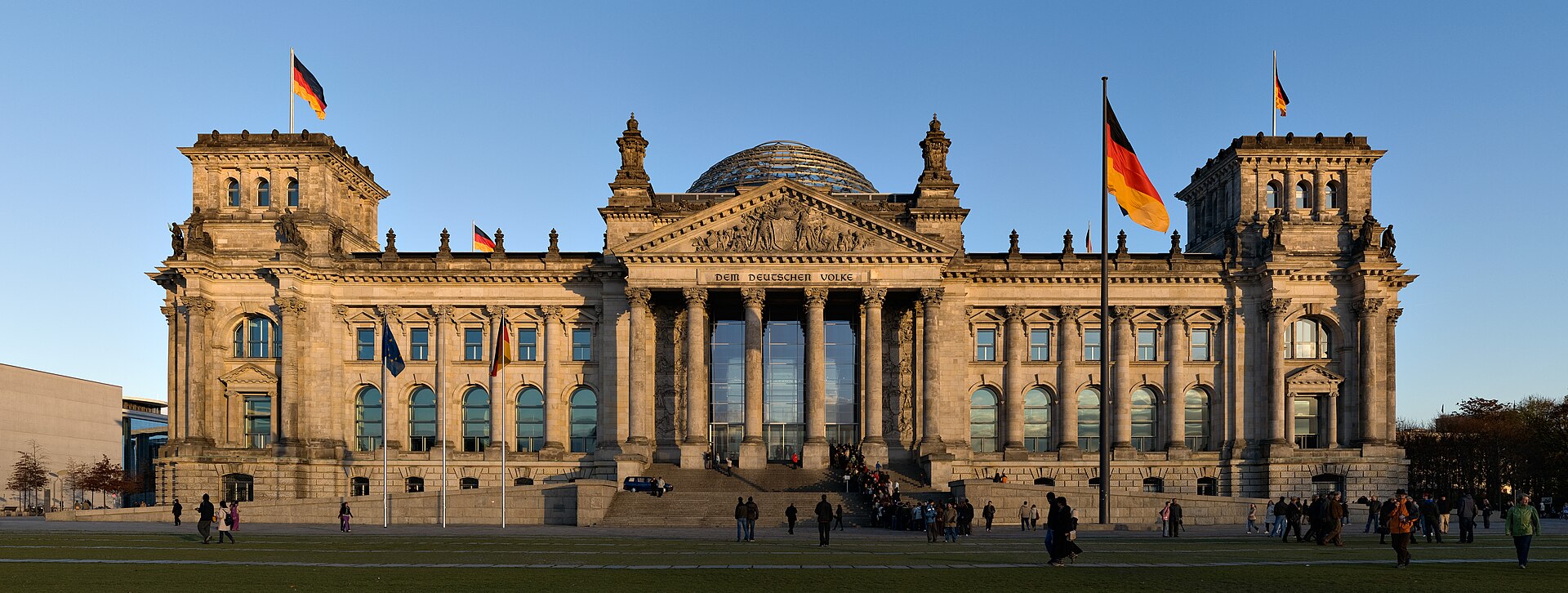
Europe wakes on Saturday to a continent of closed metro stations, curfews and riot-ready police, as a youth-led wave of protest over living costs, public services and political exclusion reaches its third consecutive weekend. The demonstrations planned across Germany, France, Italy and Spain, with spillover calls in Belgium, the Netherlands, Austria, Switzerland and Portugal, mark the broadest coordinated expression of generational discontent the region has seen in years.
The register is one of confrontation and containment: organisers speak of hope and political voice, while interior ministries speak of public order, restricted zones and maximum alert levels. The through-line is a Europe that is expanding its security commitments abroad while struggling to convince its own young citizens that the price of those commitments is fair at home.
Key Facts
- Germany. Organisers expected about 140,000 online sign-ups across 23 cities on 31 October.
- France. Around 70,000 security personnel were deployed for a third weekend of protests.
- France. A night curfew was imposed in République and Châtelet–Les Halles from 23:00 Saturday to 06:00 Sunday.
- Ukraine. The United States approved a US$2.1 billion Patriot missile sale to Ukraine on 30 October.
- EU. The European Commission proposed €45 billion (US$50.2 billion) in additional Ukraine assistance for 2027.
Germany: A Generation Demands To Be Heard
The “Gen Z regelt” movement has turned diffuse frustration into a national mobilisation, with demonstrations scheduled in Berlin, Hamburg, Cologne, Frankfurt, Munich and 17 other German cities on Saturday. Almost 140,000 people had confirmed online that they would join “Gen Z regelt” demonstrations in 23 German cities, demanding better-funded schools, lower living costs, social justice, stronger climate protection and an end to compulsory military service.
The demands reveal a generation that feels excluded from decisions about budgets, defence and the future, and is now testing whether street pressure can force political attention. For a US reader, the German protests matter because they challenge the fiscal consensus behind rearmament and austerity at the very moment Berlin is being asked to help finance Ukraine’s air defence.
France: The State Prepares For A Third Weekend
France approached Saturday with a security apparatus more typical of a national emergency than a social movement, deploying around 70,000 personnel and closing more than forty Paris metro stations. Interior Minister Laurent Nuñez described the risk of public disorder as very high, while reports said that demonstrations would remain permitted outside city centres but banned from sensitive areas.
The movement has broadened from living costs and inequality to include civil liberties and the right to protest itself, after a security clampdown and serious injuries to demonstrators. With presidential elections six months away, the protests are now inseparable from a political contest over who can claim to represent the excluded.
Italy And Spain: Anger Meets The Security State
In Rome, protesters clashed with police near the Colosseum during a nationwide strike that combined opposition to the high cost of living with criticism of defence spending, according to local reports. The Italian mobilisation is the sharpest expression yet of a fiscal trade-off that is being felt across the continent: guns or butter, Ukraine or schools.
In Catalonia, police prepared their highest alert level for possible gatherings linked to the “Blocus” network, after last Saturday’s riots led to around 130 arrests, mostly of minors, reports said. Spanish authorities were exchanging information with other EU members, a sign that governments now treat these youth networks as a cross-border security challenge rather than a purely domestic protest wave.
Ukraine And Brussels: Security Commitments Deepen
Even as streets filled with protesters, the machinery of European security policy continued to turn, with the United States approving a US$2.1 billion Patriot missile sale to Ukraine on Friday. The financing will come from Canada, Germany and Norway through the JUMPSTART programme, together with Ukrainian national funds financed through the EU Ukraine Support Loan, according to the State Department.
The European Commission and Ukraine agreed on 1 October to move forward with €45 billion (US$50.2 billion) for 2027 under the €90 billion Ukraine Support Loan, split between budgetary support and defence-industrial capacity. The juxtaposition of these commitments with the weekend’s protests captures the central tension of the moment: Europe’s leaders are doubling down on security spending while their youngest citizens question the social cost.
What This Means From Latin America
The European protest wave over living costs, housing, transport and public services speaks a political language that is immediately recognisable across Latin America, where affordability crises have repeatedly reshaped elections and governing coalitions. The difference is that Europe’s unrest is unfolding in wealthy democracies with far greater fiscal capacity, which may make the political fallout more about legitimacy than survival.
The proposed €45 billion (US$50.2 billion) Ukraine package and the Patriot missile financing also signal that European budgets will remain tilted toward defence and security, with potential consequences for development cooperation, trade preferences and commodity demand relevant to Latin American exporters. The direction is toward a more inward-looking, security-first Europe, and that will shape its commercial and diplomatic relationships with the Global South over time.
What We Are Watching
- 1 November, 06:00 local time: The overnight curfew in Paris’s République and Châtelet–Les Halles neighbourhoods is due to end. The morning will show whether the third protest weekend ended in containment or escalation.
- 1 November, 8:01 p.m. ET: Ireland S&P Global Manufacturing PMI for October, forecast at 55 after 55.5. The print will indicate whether Irish industry is holding up despite European social and fiscal uncertainty.
- 2 November, 2:00 a.m. ET: Germany retail sales for September, forecast at -0.3 percent month-on-month after -0.4 percent. The data will show whether German households are cutting spending as living-cost anger rises.
- 2 November, 3:15 a.m. ET: Spain S&P Global Manufacturing PMI for October, forecast at 50.6 after 51. The reading will test whether Catalonia’s unrest is affecting industrial confidence.
- 4 November, 5:00 a.m. ET: Eurozone inflation rate for October, forecast at 2.2 percent after 2.2 percent. A rise would deepen the cost-of-living grievances driving the weekend’s protests.
Background: Europe Intelligence Dossier archive
Frequently Asked Questions
Why are young Europeans protesting on 31 October 2026?
Demonstrations were planned across Germany, France, Italy and Spain over unaffordable living costs, deteriorating public services, political exclusion, climate anxiety and, in Germany, opposition to compulsory military service. Almost 140,000 people had confirmed online that they would join the demonstrations in 23 German cities, while France prepared for a third consecutive weekend of protests.
What security measures did France impose for the protests?
France deployed around 70,000 security personnel, closed more than 40 Paris metro stations and restricted demonstrations in city centres. A night curfew was imposed in République and Châtelet–Les Halles from 23:00 on Saturday to 06:00 Paris time (1:00 a.m. ET) on Sunday.
What happened in Italy and Spain on 31 October?
In Italy, protesters clashed with police near Rome’s Colosseum during a nationwide strike against the high cost of living and defence spending. In Spain, Catalan police prepared their highest alert level after last Saturday’s riots led to around 130 arrests, mostly of minors.
What new Ukraine support was announced on 30 October?
The United States approved a US$2.1 billion Patriot missile sale to Ukraine, financed partly by Canada, Germany and Norway through the JUMPSTART programme. The European Commission and Ukraine agreed on 1 October to move forward with €45 billion (US$50.2 billion) for 2027 under the €90 billion Ukraine Support Loan.
Keep reading: Europe Intelligence Dossier — 31 October 2026 | Archive
This article was produced by The Rio Times’ automated newsroom system. How we use AI · Report an error · Editorial responsibility: Matthias Camenzind, Editor-in-Chief
LatAm Markets: Live Signals → — real-time movers, turnover leaders and FX across Latin America.