MSC Afungi Shuttle Signals Return to US$20B Mozambique LNG
Africa · Southern
Key Facts
—The service. MSC announced the Afungi Shuttle on 22 July 2026, a dedicated coastal feeder linking Afungi to Nacala and Maputo.
—The project. Mozambique LNG at Afungi is a $20 billion megaproject led by TotalEnergies, targeting first gas in 2029.
—The restart. Construction resumed fully in January 2026 after a five-year freeze caused by an Islamist insurgency in Cabo Delgado.
—The money. US EXIM backs the project with a $4.7 billion loan, its largest ever in Sub-Saharan Africa.
—The stakes. The shuttle signals that global capital is returning to Cabo Delgado faster than humanitarian aid.
MSC’s new Afungi Shuttle is far more than a logistics upgrade—it is the clearest signal yet that the $20 billion Mozambique LNG project has moved from frozen ambition to full-scale execution, pulling a web of great-power finance, Asian shipyards, and African security forces into its orbit.
What the Afungi Shuttle actually does
On 22 July 2026, Mediterranean Shipping Company (MSC) announced a new dedicated maritime service called the Afungi Shuttle. It connects the remote Afungi peninsula in northern Mozambique to the country’s two main ports, Nacala and Maputo, via regular feeder rotations.
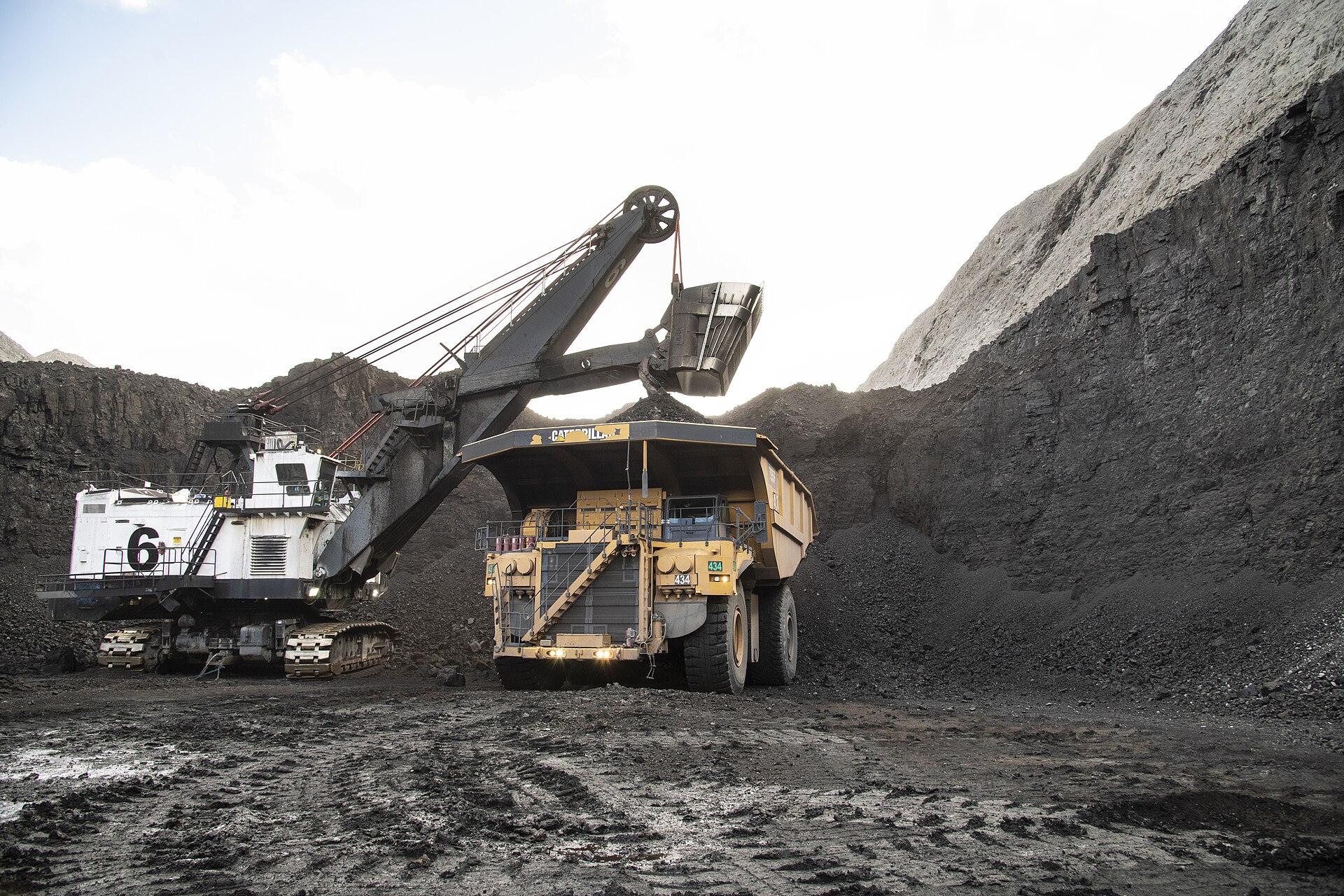
The service is built for one purpose: moving construction materials, heavy machinery, industrial equipment, and project cargo to the Mozambique LNG site. Customers can book an entire movement from any origin port to Afungi under a single MSC contract, simplifying the paperwork and planning that a $20 billion megaproject demands.
MSC framed the launch as “opening a new gateway to northern Mozambique.” In practice, it creates a controlled logistics corridor that plugs a security-sensitive construction site directly into the company’s global network spanning Europe, Asia, the Americas, and the Middle East.
The megaproject behind the shuttle
Mozambique LNG is the largest foreign direct investment in the country’s history. The consortium, led by French major TotalEnergies with a 26.5 percent stake, plans to produce 13.12 million tonnes of LNG per year across two liquefaction trains, with first gas targeted for 2029.
The ownership structure reveals the project’s geopolitical weight. Three Indian state-linked firms—ONGC Videsh, Bharat Petroleum, and Oil India—hold a combined 30 percent.
Japan’s Mitsui controls 20 percent, and Mozambique’s national oil company ENH holds roughly 15 percent.
By late March 2026, the site was 42 percent complete with over 6,000 workers on the ground. The Mozambican state expects up to $35 billion in revenue over the project’s lifetime, a figure that dwarfs the country’s annual GDP.
From insurgency to restart: why the Afungi Shuttle matters now
The Afungi peninsula sits in Cabo Delgado province, where an Islamist insurgency linked to Islamic State has killed thousands since 2017. In March 2021, militants attacked the nearby town of Palma, leaving more than 1,400 people dead or missing, including foreign nationals.
TotalEnergies declared force majeure in April 2021 and evacuated the site. Financing from US EXIM and other lenders was suspended.
The project—and Mozambique’s hopes of becoming a top-tier LNG exporter—went into deep freeze.
The picture shifted dramatically in late 2025. The consortium lifted force majeure on 7 November, and on 29 January 2026, President Daniel Chapo and TotalEnergies CEO Patrick Pouyanné stood together at Afungi to announce the full restart of onshore and offshore activities.
The Afungi Shuttle is the logistical backbone of that restart.
The security architecture protecting the gas
The return to Afungi was made possible by a foreign military presence. Rwanda deployed an estimated 2,500 troops to Cabo Delgado under bilateral arrangements, though some reports cite up to 5,000, with the European Union providing roughly €20 million in funding for counter-insurgency operations.
That security umbrella is fragile. Rwanda has signalled it may withdraw its forces if EU funding is not extended beyond May 2026.
The Afungi Shuttle will operate in a zone where the line between stability and renewed violence depends on decisions made in Kigali and Brussels.
Meanwhile, humanitarian conditions remain dire. The UN’s 2026 response plan for Cabo Delgado requested $348 million but had received only $102 million by mid-year—about 25 percent of what is needed for roughly 919,000 people classified at the highest severity level.
Great-power money and the new scramble for African gas
The Afungi Shuttle is a cog in a much larger machine of great-power competition. The US Export-Import Bank has committed $4.7 billion to Mozambique LNG—its largest deal in Sub-Saharan Africa and a direct counter to Chinese and Russian interest in financing the project.
Asian lenders have reconfirmed roughly $5 billion in financing. South African commercial banks and state-backed institutions have committed over $2.2 billion combined.
The UK, by contrast, withdrew $1.15 billion in export credit support in 2025, citing climate and human rights concerns.
The project will require at least 16 new LNG carriers worth about $2.9 billion, built mainly by Hyundai Heavy Industries and Samsung Heavy Industries in South Korea. Japanese shipping lines NYK, MOL, and K Line will operate 12 of those vessels, with Greece’s Maran Gas Maritime taking the remaining four. This is the full architecture of a global energy play, and the Afungi Shuttle is the feeder that connects it all. Readers following the broader contest for African resources will recognise the pattern described in our pillar, Africa: The New Scramble.
What the shuttle tells investors and professionals
For business readers, MSC’s decision to launch a dedicated service is a market signal. Shipping companies do not invest in tailored feeder routes for projects that might happen.
They do it for projects that are happening now, with cargo already moving and contractors demanding reliable lead times.
The shuttle also functions as a risk-mitigation tool. By controlling the coastal corridor, MSC reduces dependency on ad-hoc shipping and road convoys through a province with a recent history of insurgent attacks.
That matters to insurers, lenders, and the engineering firms sending expensive equipment to site.
For Latin American readers, the parallels are instructive. Mozambique LNG mirrors the scale and complexity of Brazil’s pre-salt developments, where dedicated logistics chains turned remote offshore fields into national revenue engines. The difference here is the overlay of active conflict and great-power military and financial positioning.
What to watch next
The immediate question is whether Rwanda’s troop deployment will be extended past May 2026. A withdrawal would test the security assumptions underpinning both the construction schedule and MSC’s logistics calculus.
Beyond security, watch the financing. Several European banks and insurers had yet to reconfirm their commitments as of early 2026.
Any further withdrawals would shift more weight onto US and Asian lenders, deepening the geopolitical character of the project.
Finally, watch the humanitarian gap. The contrast between returning capital and shrinking aid is already sharp. If that gap widens, the project’s social licence—and the stability of the communities around Afungi—will come under strain, with consequences that no shuttle service can insulate against.
Connected Coverage
Frequently Asked Questions
What is the Afungi Shuttle and why was it launched?
The Afungi Shuttle is a dedicated coastal shipping service launched by MSC on 22 July 2026. It connects the Mozambique LNG construction site at Afungi to the ports of Nacala and Maputo, moving construction materials, heavy machinery, and project cargo.
It was launched to secure the supply chain now that the $20 billion megaproject has fully restarted after a five-year freeze.
Who owns and finances the Mozambique LNG project?
TotalEnergies leads the consortium with a 26.5 percent stake. Indian state-linked firms hold 30 percent, Japan’s Mitsui holds 20 percent, and Mozambique’s ENH holds roughly 15 percent.
Financing comes from a $14.9 billion debt package backed by eight export credit agencies and 19 commercial banks, with US EXIM providing the largest single loan at $4.7 billion.
Is the Cabo Delgado region safe for the project to proceed?
Security has improved enough for TotalEnergies to lift force majeure in November 2025 and restart construction in January 2026. Roughly 5,000 Rwandan troops, partly funded by the EU, provide security around Afungi.
However, the situation remains fragile, and Rwanda has indicated it may withdraw its forces if EU funding ends in May 2026.
Sources
Sources: MSC.
This article was produced by The Rio Times’ automated newsroom system. How we use AI · Report an error
LatAm Markets: Live Signals → — real-time movers, turnover leaders and FX across Latin America.
Read More from The Rio Times