TotalEnergies Restarts Mozambique Gas as Insurgents Keep Killing Civilians

Economy · Mozambique
Key Facts
- —The restart TotalEnergies restarted construction onshore and offshore at Afungi on 29 January 2026, after lifting force majeure on 7 November 2025.
- —The progress The project was 40% complete at January’s restart; TotalEnergies put it at 45% by July 2026, with over 6,000 workers on site.
- —The security paradox Rwandan troops have improved safety around the US$20 billion project, but attacks continue elsewhere in Cabo Delgado province.
- —The cost dispute A government audit found a US$2 billion gap between TotalEnergies’ claimed costs and what could be verified.
- —The catch First LNG, liquefied natural gas, is expected in 2029, but security and fiscal issues remain unsettled.
A $20 billion megaproject is moving again in a province where civilians are still dying. The restart is real, but it sits on top of unresolved security and money disputes.
The 29 January announcement
TotalEnergies issued a public statement on 29 January 2026 confirming the full restart of Mozambique LNG. Construction resumed both onshore and offshore at the Afungi peninsula site in Cabo Delgado province.
The company described the project as a $20 billion investment, with more than 4,000 workers mobilised, over 3,000 of them Mozambican nationals. TotalEnergies said the project was about 40% complete at the time.
First LNG output is expected in 2029, according to both TotalEnergies and Reuters. The consortium had already decided to lift force majeure, a legal declaration suspending contractual obligations, on 7 November 2025.
Progress has moved on since January
The January figures are no longer current. TotalEnergies chief executive Patrick Pouyanné said on 30 April 2026 that over 6,000 workers were now on site.
He put the project at 42% complete at that point, on the company’s Q1 2026 earnings call.
By a further update on 24 July 2026, Pouyanné put completion at 45%. The 2029 first-gas target has not changed.
The force majeure timeline
Force majeure was declared in 2021 after insurgent violence struck near Palma and the Afungi site. That attack forced TotalEnergies to evacuate staff and halt construction for close to five years.
TotalEnergies notified Mozambique’s government of its decision to lift force majeure on 24 October 2025. The consortium formally confirmed the lift on 7 November 2025, ahead of January’s public restart.
Almost all engineering and procurement work was completed during the suspension. That means the physical restart is mostly about construction, not fresh design work.
The Mozambican ownership stake
Mozambique LNG is led by TotalEnergies alongside international partners. Mozambique’s state firm, Empresa Nacional de Hidrocarbonetos, known as ENH, also holds a stake.
That gives the government a direct interest in export revenue. The wider gas economy includes offshore projects in the Rovuma basin, seen as central to future export income.
Civil society groups have questioned how much ordinary Mozambicans will actually benefit from that revenue.
Cabo Delgado security in 2026
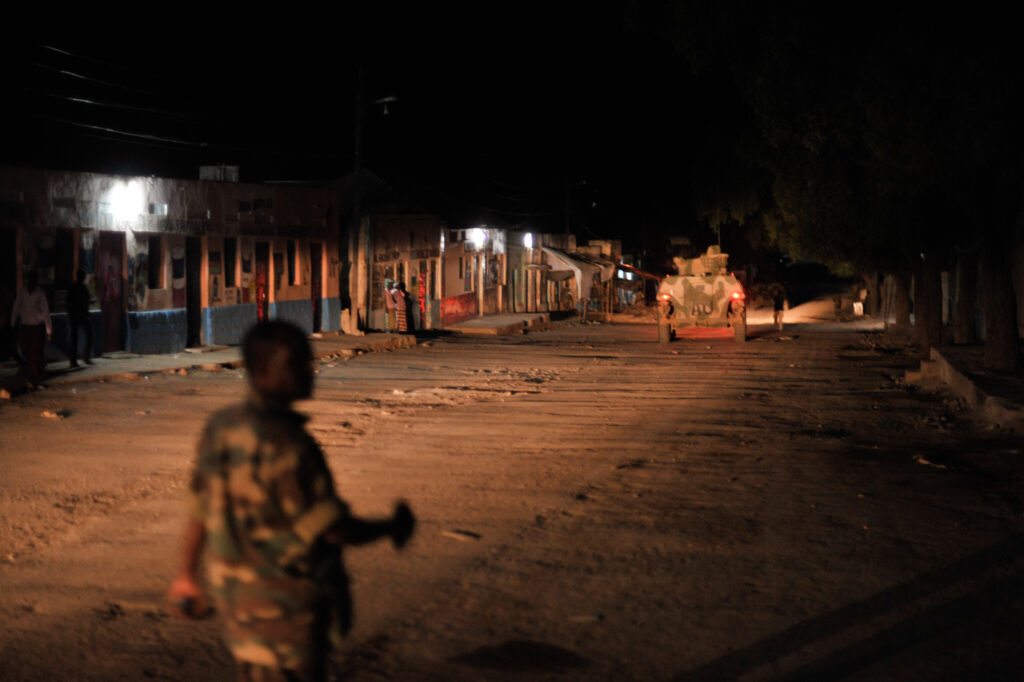
Security around Afungi has improved because of Rwandan troops deployed there, Reuters reported in 2026. But the insurgency remains active elsewhere in the province.
Since 1 October 2017, Cabo Delgado has recorded 2,342 political violence events and 6,515 fatalities, including 2,732 civilians, according to conflict monitors. ACLED, a research group that tracks political violence worldwide, is one of them.
It logged eight violent events in the two weeks before 3 June 2026, killing eight people including six civilians. Macomia district remained unsafe despite the presence of Mozambican and Rwandan troops.
A Reuters news feed on 4 September 2026 reported a fresh attack in northern Mozambique.
The Rwandan funding question
Rwanda signalled on 14 March 2026 that it might withdraw troops unless international funding was assured. Mozambique said on 19 May 2026 that it had secured funds to keep the Rwandan force deployed.
That dependency is a single point of failure for the project’s security. If funding lapses again, protection around Afungi could weaken quickly.
Post-election instability
Mozambique’s 2024 elections deepened instability nationwide. A February 2026 submission to the UN’s human rights review process documented more than 400 post-election incidents involving violence, injuries or deaths.
The submission said the crisis exposed weaknesses in security and justice institutions and eroded public trust. National political calm has not been fully restored by 2026.
The LNG site itself is more secure than during the 2021 emergency. But the wider political climate remains a risk for procurement, logistics and labour.
Project size and importance
Mozambique LNG is one of the largest private investments in sub-Saharan Africa. Reuters cited World Bank material pointing to a possible $50 billion in LNG-linked economic exposure, most of it concentrated in this project.
Success would transform Mozambique’s export earnings over the next decade. Failure would push its debt, currency and export outlook off course, which is why lenders and donors are watching every milestone.
IMF and World Bank fiscal outlook
The IMF, the International Monetary Fund, published its 2025 Article IV consultation for Mozambique in August 2026. It projects government revenue rising to about 25.4% of GDP, gross domestic product, over the medium term.
That figure still marks near-term LNG revenue as too uncertain to estimate.
The World Bank’s Mozambique Macro Poverty Outlook, also from August 2026, forecasts growth of just 0.9% in 2026. World Bank reporting on the wider region has linked weaker 2026 forecasts partly to global price pressures, alongside continued Mozambique LNG construction.
Debt absorption risk
The World Bank has flagged Mozambique’s debt burden and fiscal weaknesses as risks to the LNG project’s benefits reaching the public. Future gas revenue may be partly absorbed by debt service and existing budget gaps rather than new spending.
That matters because expectations are high that gas wealth will visibly improve public services. Reuters reported in February 2026 that the World Bank aims to give Mozambique $6 billion over five years, tied to reforms.
Cost and compensation disputes
A government audit into TotalEnergies’ costs during the force-majeure period found a gap. Reported on 27 May 2026, it said TotalEnergies claimed about $5 billion in costs.
Only about $3 billion of that could be properly documented, leaving a $2 billion gap. The government said the verification process was in its final phase as of that report.
TotalEnergies has not publicly committed to a revised final cost figure. The original $20 billion project price may therefore understate the eventual total.
What to watch through 2026
Security around Afungi, Macomia and the port town of Mocímboa da Praia is worth tracking first. Control of that area has shifted repeatedly during the insurgency.
Rwandan funding is the second thing to watch. That arrangement wobbled in March and May 2026 and could do so again.
Project execution milestones, including offshore vessel work and onshore construction pace, matter because 2029 remains the deadline for revenue expectations. The cost-audit outcome could still alter how much revenue reaches the government.
Macro indicators worth tracking include debt service, currency pressure and the World Bank’s growth forecast. Whether the 2024 post-election unrest reignites around economic or electoral grievances is a further open question.
Where things stand
Mozambique’s gas restart in 2026 is real progress, not just an announcement. Workers are on site, construction is measurably further along than in January, and the 2029 target for first gas has held.
But the surrounding conditions remain unsettled. Cabo Delgado still has fewer attacks around key project sites, yet civilians keep dying elsewhere in the province.
Rwandan security funding depends on renewal, and a $2 billion cost gap with the government is still unresolved.
The Big Picture
More from the Mozambique section
Latest developments
- Botswana With 130,000 Elephants Says Transfers Stall — 10 October 2026
- Zimbabwe Stadium Can Admit 10,000 Fans for 2 Matches — 10 October 2026
- Ethiopia Opens Gold Refinery With 600-Tonne Capacity — 10 October 2026
- South Africa Sends Army to Durban After Days of Unrest — 10 October 2026
This article was produced by The Rio Times’ automated newsroom system. How we use AI · Report an error · Editorial responsibility: Matthias Camenzind, Editor-in-Chief
LatAm Markets: Live Signals → — real-time movers, turnover leaders and FX across Latin America.