Morocco’s Authenticity and Modernity Party Leads Election as Turnout Falls
MOROCCO · POLITICS
Morocco latest: Morocco news — latest coverage · Morocco's Africa Role as a New Government Forms
Key Facts
- The country A kingdom of about 37 million people on Africa’s north-west corner, 14 kilometres from Spain at the narrowest point.
- The result The Authenticity and Modernity Party took 97 of 395 seats on provisional figures, ten more than in 2021.
- The runners-up The National Rally of Independents won 66 and Istiqlal 65. The Islamist PJD took 54, up from 13.
- Turnout 38.02 percent, down from 50.35 percent in 2021 and the lowest since 2007. About 62 percent of registered voters stayed home.
- Who really decides No party is near the 198 seats needed for a majority, and King Mohammed VI appoints the head of government whoever wins.
- Why it counts abroad Morocco holds about two-thirds of the world’s phosphate reserves and sold Brazil US$1.16 billion of fertiliser in 2025.
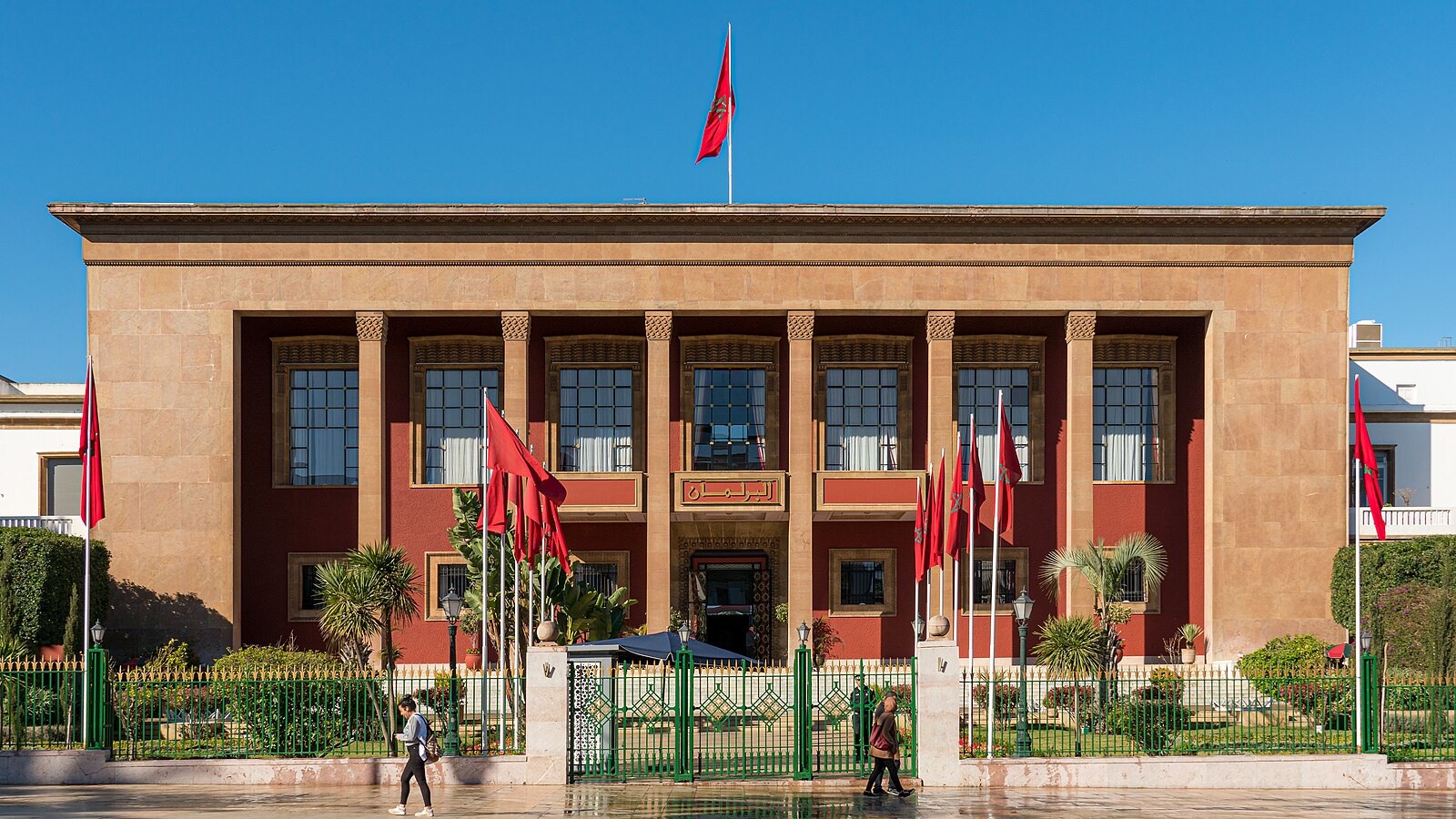
Provisional Interior Ministry figures put the Authenticity and Modernity Party first, with the National Rally of Independents and Istiqlal close behind. Turnout fell to 38.02 percent.
Morocco election results announced in the early hours of Thursday 24 September 2026 put one party clearly ahead. The Interior Ministry’s provisional count gave the Authenticity and Modernity Party, known as PAM, 97 of 395 seats.
Morocco is a kingdom of about 37 million people, sitting on Africa’s north-west corner. Only 14 kilometres of water separate it from Spain at the narrowest point of the Strait of Gibraltar.
Its elections fill a parliament. They do not decide who holds ultimate power, and that distinction shapes how any Moroccan result should be read.
What the Morocco election results show
The Interior Ministry published its provisional national count overnight, hours after polling stations closed. It gave PAM 97 seats and the National Rally of Independents (RNI) 66 seats.
Istiqlal, Morocco’s oldest party, took 65 seats. The Justice and Development Party (PJD) won 54 seats, up from 13 in 2021.
Those names carry histories. PAM was founded in 2008 by Fouad Ali El Himma, a former deputy interior minister and adviser to the king.
Istiqlal dates from 1943 and issued the 1944 manifesto that launched the campaign against French rule. The RNI is the party of business and technocrats, and the PJD is Morocco’s moderate Islamist party.
The House of Representatives has 395 seats in total. Voters fill 305 of them through local constituencies, while 90 come from regional lists reserved for women.
Turnout was 38.02 percent, the ministry said after voting ended on Wednesday 23 September 2026. That is well down from 50.35 percent at the 2021 election.
Put plainly, about 62 percent of registered voters did not vote. Turnout has not been this low since 2007, when it was about 37 percent.
The register is also narrower than the country. Morocco’s rolls held 15,801,162 voters this year, in a population of about 37 million.
A 38.02 percent turnout on that roll is close to six million ballots. The winning party’s 97 seats rest on a slice of that.
The Interior Ministry runs elections in Morocco, rather than a separate commission. The numbers it issued are provisional, and final seat totals are confirmed later.
No majority, and no government yet
A party needs 198 seats for a majority in the House of Representatives. PAM’s 97 seats leave it well short of that mark.
Even a deal with the RNI alone would produce only 163 seats. PAM would therefore need at least two partners to reach a working majority.
The outgoing government was a three-party coalition of the RNI, PAM and Istiqlal. It was led by Aziz Akhannouch of the RNI, in office since October 2021.
Those same three parties now hold 228 seats between them on the provisional count. Whether they rebuild that coalition, and on what terms, is not yet known.
Akhannouch stepped down as RNI leader earlier in 2026 and did not stand again. No new head of government has been appointed.
How the parties moved since 2021
In 2021 the RNI won 102 seats, PAM 87 and Istiqlal 81. This time the RNI lost 36 seats and Istiqlal lost 16.
PAM gained ten seats and moved from second place to first. That is a modest gain, but enough to lead a divided chamber.
The sharpest change came from the PJD, which rose from 13 seats to 54. The party had governed for about a decade before its collapse in 2021.
The scale of that earlier fall is easy to miss. The PJD went into the 2021 election with 125 seats and came out with 13.
It had led the government since late 2011, after region-wide protests that year produced a new Moroccan constitution. Its partial recovery returns an Islamist bloc to the chamber.
No single party has won an outright majority in recent Moroccan elections. Coalition building is the norm, and it usually takes several weeks.
Why the palace still decides
Morocco’s constitution sets out how a government is formed. Article 47 says the king appoints the head of government from the party that came first.
King Mohammed VI then appoints ministers on that person’s proposal. The constitution also makes him supreme head of the royal armed forces.
The Council of Ministers, which he chairs, handles strategic policy, the budget bill and senior appointments. Defence and foreign affairs stay close to the palace.
So the Morocco election results reshape parliament without changing where final authority sits. That is the steady part of the system, whichever party leads.
What this means for business in and with Africa
Morocco sells itself to investors as a manufacturing and logistics base serving Europe and Africa. The broad direction of that strategy is set by the palace, not by the party in first place.
The bigger question for suppliers and contractors is spending. Both leading parties promised costly wage, tax and housing measures during the campaign.
The RNI offered a 5,000-dirham (US$521) monthly minimum wage and one million jobs. PAM offered tax relief on salaries below 15,000 dirhams (US$1,564) and 100,000 housing solutions for young people.
Dirham figures here use the rate on 24 September 2026, about 9.59 dirhams to the dollar. How much of this survives contact with the budget is the thing to track.
For readers in Latin America the connection runs through fertiliser. Morocco holds about two-thirds of the world’s phosphate reserves, 50 billion of 73 billion tonnes on United States Geological Survey estimates.
Brazil bought US$1.16 billion of Moroccan fertiliser in 2025, about 2.1 million tonnes. That made Morocco its fourth-largest supplier, behind Russia, China and Canada.
That trade runs through OCP, a state-controlled company rather than a ministry the winning party will staff. Nothing in this result changes who directs it.
What is not known is who will lead the next government, or which parties will join it. The final seat totals are not confirmed either.
The timetable is also open, because there is no fixed deadline for forming a cabinet. In 2021 the new government took office about a month after the vote.
What to watch next
The first thing to watch is confirmation of the final seat totals. The second is the king’s choice of head of government.
Coalition talks follow, and they will set policy on wages, housing and public services. Spending tied to the 2030 FIFA World Cup will sit inside that debate.
Morocco co-hosts that tournament with Spain and Portugal, which brings stadium, transport and hotel work. Turnout of 38.02 percent was the lowest in nearly two decades, Reuters reported.
That distance between voters and parties is the first real test for whoever forms the next cabinet. The picture will get clearer once the king names a head of government.
More: Morocco news in English, every day from The Rio Times.
The big picture: Morocco explained — economy, politics, society and daily life in one read.
Frequently Asked Questions
Which party came first in Morocco’s 2026 election?
The Morocco election results gave the Authenticity and Modernity Party 97 of 395 seats, on provisional Interior Ministry figures.
What was the turnout in Morocco’s 2026 election?
Turnout was 38.02 percent, down from 50.35 percent in 2021 and the lowest in nearly two decades.
Who will be Morocco’s next head of government?
No one has been appointed yet. The king picks the head of government from the party that finished first.
Connected Coverage
Morocco Election 2026: Where the Minimum Wage Stands
Morocco Votes on 23 September, and Candidates Register Online First
Sources: Provisional figures from Morocco’s Interior Ministry, as reported by the Associated Press, Reuters and Yabiladi, with constitutional text from the Constitute Project and campaign pledges from the Associated Press and Al Jazeera; phosphate reserves from the US Geological Survey Mineral Commodity Summaries 2026 and Brazil’s fertiliser imports from Comex Stat, the Brazilian government trade database, and the size of the electoral roll from maroc.ma, the Moroccan government portal, all retrieved 24 September 2026.
More Africa news: Nigeria | South Africa | Kenya | Egypt | Ghana | Morocco | DR Congo | Angola | Ethiopia | Tanzania
This article was produced by The Rio Times’ automated AI newsroom. Editorial responsibility: Matthias Camenzind, Publisher and Editor-in-Chief. The Rio Times also runs Ask Rio Times, which answers from 100,000+ of our own articles, the daily Latin America Power Map, and prediction-market odds on elections and markets.. How we use AI · Report an error