Hurricane Rachel Category 2 Off Mexico: Heavy Rain Forecast for Four Pacific States
WEATHER · MEXICO
Key Facts
- —The country Mexico’s Pacific coast faces its second hurricane in a week, after Hurricane Polo made landfall in Baja California Sur on 29 September.
- —What happened Rachel reached Category 2 early on Thursday 1 October. At 15:00 UTC it had 105 mph (165 km/h) winds, the US National Hurricane Center (NHC) said.
- —The numbers Mexico’s weather service forecasts 75–150 mm of rain in southern Baja California Sur and Sinaloa, and 50–75 mm in Nayarit and western Jalisco (1 October).
- —What it means for you No coastal watches or warnings are in force, and the centre stays offshore. Waves of 4–6 metres and rip currents make beaches the main danger.
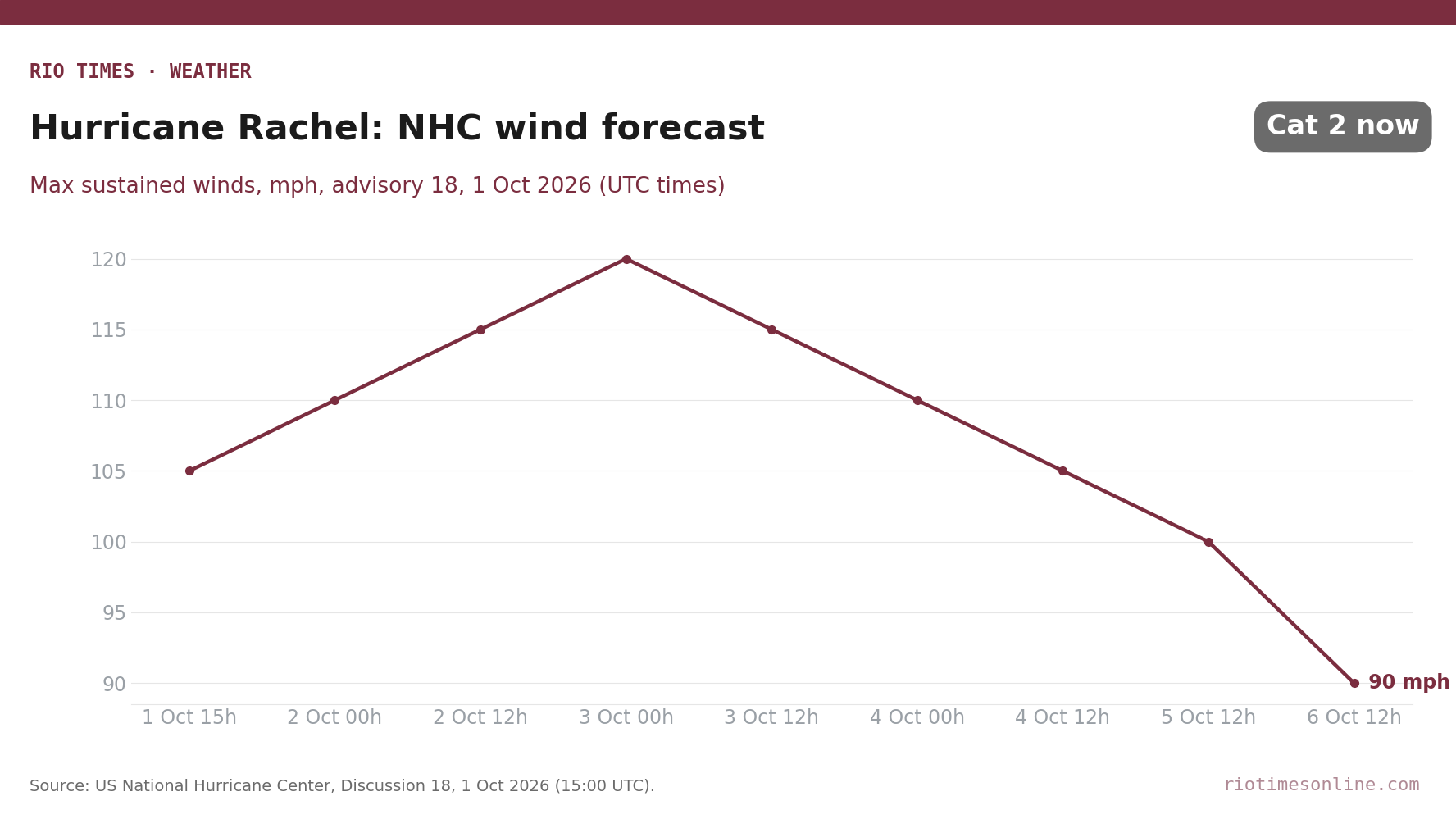
- —Still open How strong Rachel gets: the NHC forecasts 120 mph by Friday evening, then gradual weakening. Rain totals on land are still forecasts.
Hurricane Rachel reached Category 2 on Thursday as it strengthened over the Pacific, south of Mexico’s Baja California Peninsula. Mexico’s weather service now forecasts heavy rain in four states.
The storm is not expected to make landfall, and no coastal warnings are in force. The risk on land comes from rain, high surf and rip currents through the weekend.

Where Rachel Is Now
At 8 a.m. Mountain Standard Time (15:00 UTC), Rachel sat about 230 miles (370 km) south of the southern tip of Baja California. It was moving west-northwest at 6 mph (9 km/h), the NHC said in its 18th advisory.
Maximum sustained winds rose to 105 mph (165 km/h), from 100 mph at 2 a.m. and 90 mph on Wednesday evening. The Category 2 band on the Saffir-Simpson scale runs from 96 to 110 mph.
Mexico’s National Meteorological Service (SMN), part of the water authority Conagua, said Rachel reached Category 2 at 03:00 central Mexico time. Its 09:00 bulletin gave the same 165 km/h winds, with gusts of 205 km/h.
Hurricane Rachel Category 2: Which Four States
Conagua forecasts intense rain of 75 to 150 mm in southern Baja California Sur and in central and southern Sinaloa. Nayarit and western Jalisco should see very heavy rain of 50 to 75 mm.
The SMN warned of landslides, rising rivers and flooding in low-lying areas of those states. It expects waves of 4 to 6 metres on the Baja California Sur coast.
Waves of 3 to 4 metres are forecast for Sinaloa, Nayarit and Jalisco. Gusts of 60 to 70 km/h are possible on the southern Baja California Sur coast, El Universal reported, citing the SMN.
How Los Cabos Is Preparing
Civil protection officials in Los Cabos opened four temporary shelters in Cabo San Lucas and San José del Cabo, El Universal reported. Classes at all levels were suspended on Thursday as a precaution.
The port of Cabo San Lucas stays closed to shipping because of the swell, the newspaper said. The US Embassy in Mexico told its citizens to stay out of the water.
The embassy said the port had been closed since Wednesday 30 September and did not expect a direct hit on Cabo San Lucas. It warned that rain could last until Sunday 4 October.
Why the Threat Should Ease
The NHC forecasts Rachel to peak near 120 mph by Friday evening, local time, which would make it a major hurricane. Moderate wind shear has so far kept strengthening gradual.
From about Saturday, drier air and marginal sea temperatures should start to weaken the storm as it turns west, away from land. The NHC still lists no coastal watches or warnings.
Rachel follows the warning phase covered in Hurricane Rachel Strengthens Off Mexico: Coastal Warnings Dropped, Major Hurricane Forecast. Travel advice from earlier in the week remains in Hurricane Rachel Off Mexico’s Pacific Coast: What Travelers Need to Know.
What Is Not Yet Known
The NHC calls its intensity forecast uncertain beyond three days, and how fast Rachel weakens depends on its structure. Rain totals on land are forecasts, not measurements.
The Los Cabos shelter, school and port measures come from El Universal and have not been independently confirmed. Damage reports, if any, are not yet available.
Sources: US National Hurricane Center, Public Advisory and Discussion 18, 1 October 2026; Conagua/SMN, 1 October 2026; Conagua/SMN, 1 October 2026; El Universal, 1 October 2026; El Universal, 1 October 2026.
Read More from The Rio Times