
MEXICO · CATTLE TRADE
Key Facts
- The country Mexico is a major supplier of young cattle that US feedlots fatten for slaughter, and a screwworm outbreak has kept most of that trade shut since late 2024.
- Why it matters US feedlots and beef buyers gain supply as the Chihuahua route to Columbus, New Mexico, reopens to Mexican cattle.
- Why now A first shipment of 750 head left the Puerto Palomas quarantine station on Monday 26 October 2026.
- What happened Mexico resumed live cattle exports from Puerto Palomas, Chihuahua, to Columbus, and about 3,500 head a day now cross through Chihuahua and Sonora.
- What it means for you US feedlots regain a third open crossing for young Mexican cattle, but the effect on beef prices is not yet measurable.
- Still open Whether new US screwworm cases delay the Nogales reopening set for 30 November, and how many head cross daily at Columbus.
- Power Index Mexico ranks 2nd of 14 in The Rio Times Latin America Power Index, with 71.4 points (October 2026 edition).
Mexico resumed live cattle exports to the United States through a third crossing on Monday 26 October 2026, sending a first shipment of 750 head from the Puerto Palomas quarantine station in Chihuahua to Columbus, New Mexico. Mexico’s agriculture ministry announced the restart, which makes Puerto Palomas the third Mexican quarantine station exporting cattle, after Agua Prieta in Sonora and San Jerónimo in Chihuahua, where exports resumed on 24 September.
US Agriculture Secretary Brooke Rollins was in Columbus for the reopening, the Texas Farm Bureau reported, and the Mexican ministry named Under Secretary Dudley Hoskins and Kelly Moore, administrator of the Animal and Plant Health Inspection Service (APHIS), among the US officials at the start. An earlier report on the USDA announcement of the Columbus date covers the plan that this shipment now carries out.
What Mexico and the US Announced
The ministry, known as Agricultura, said exports through ports in Chihuahua and Sonora now average about 3,500 head a day. Javier Calderón Elizalde, director in chief of the food safety agency Senasica, spoke at the restart on behalf of Agriculture Secretary Columba López Gutiérrez.
Calderón tied the restart to the Mexican government’s commitment to keep sanitary standards, and El Financiero reported that President Claudia Sheinbaum’s instruction is to work with domestic producers and meet the measures agreed with APHIS. The ministry added that the exports benefit small-scale ranchers, livestock buyers, transporters and the wider population.
How the Columbus Crossing Works
The Columbus Stockyards in New Mexico reopened to Mexican cattle on 26 October, the third US southern port to take them after Douglas, Arizona, on 24 August and Santa Teresa, New Mexico, on 24 September, the Albuquerque Journal reported. The cattle come from Chihuahua and are branded with the letter M.
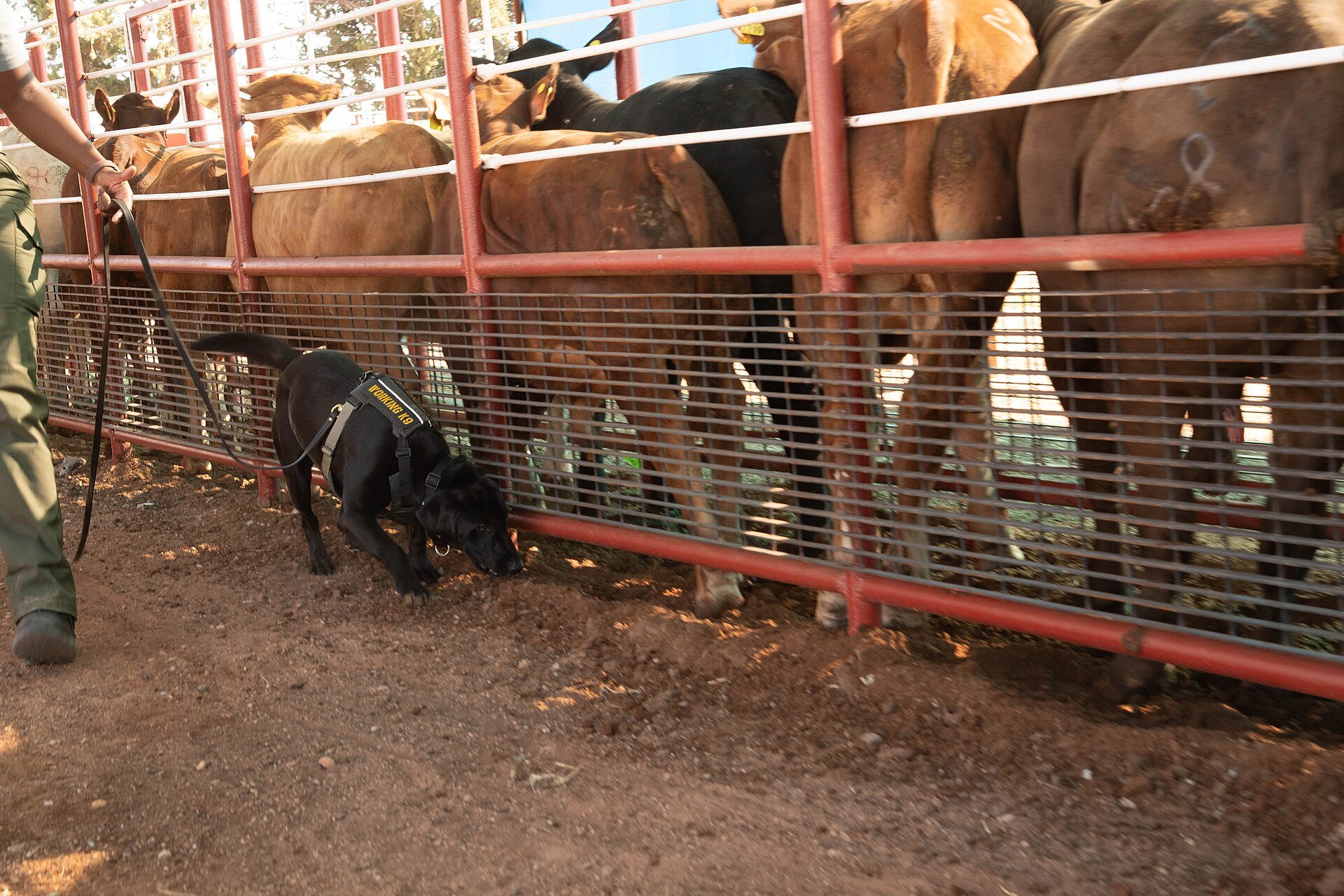
At a gathering center in Mexico, veterinarians check vaccination and treatment records and examine each animal for wounds, lameness, pain or infestation, the Albuquerque Journal reported. Senasica and USDA inspect the animals again before entry, USDA inspectors record ear-tag data at the Mexican-side facilities, and at the crossing the cattle are sorted by size, pass through a tick-dipping vat and dry in a holding pen.
Screwworm Pressure on Both Sides of the Border
The New World screwworm is a parasite whose larvae feed on living flesh, and the US closed its ports to Mexican cattle in November 2024 after a case in southern Mexico. The Albuquerque Journal reported that imports resumed in February 2025 and stopped again in May 2025 as infestations moved north.
A USDA public dashboard showed 65 confirmed US cases in New Mexico and Texas since June, the Albuquerque Journal reported on 26 October, all but one in domestic animals. The response includes infestation zones with movement limits and the release of sterile male flies.
Nogales and the Next Steps
Agricultura expects exports through the port of Nogales, Sonora, to resume by the end of November, and APHIS lists the Nogales, Arizona, crossing for cattle on 30 November 2026. APHIS ties that date to conditions that continue to support safe trade and to inspection arrangements and infrastructure being in place.
APHIS also resumed horse imports at Santa Teresa on 26 October, with a seven-day quarantine at a USDA-approved facility on the US side, while quarantine facilities on the Mexican side remain closed. USDA will evaluate that operation before adding other locations.
What It Means for You
US feedlots regain a third open crossing for young cattle from Mexico, which adds supply after months of closure. Cattle and beef prices depend on many factors, and none of the announcements gives a price forecast.
Shoppers should not expect a quick change at the counter, because the young cattle are fattened at feedlots before slaughter. Inspections and the sterile fly program keep the trade open, so new US cases near the border are the main risk to watch.
What Is Not Known
It is not clear whether the average of 3,500 head a day includes the 750 head shipped from Puerto Palomas, because the ministry’s wording says only that this number of head brings the average to that level, while Excélsior reported about 2,500 head a day on 20 October. Nor is it known how many head will cross daily at Columbus, as the Albuquerque Journal gave no count for the first day.
Whether new screwworm cases near the border will delay the Nogales reopening on 30 November remains open. USDA tied that date to animal health conditions and inspection readiness rather than to a fixed commitment.
Frequently Asked Questions
When did cattle exports resume at Puerto Palomas?
Mexico resumed live cattle exports from the Puerto Palomas quarantine station in Chihuahua on Monday 26 October 2026. The first shipment of 750 head went to Columbus, New Mexico.
Which US ports are open to Mexican cattle?
Douglas, Arizona, reopened on 24 August, Santa Teresa, New Mexico, on 24 September and Columbus, New Mexico, on 26 October. USDA lists Nogales, Arizona, for 30 November.
Why was the border closed to Mexican cattle?
The US closed its ports in November 2024 to keep out the New World screwworm, a parasite whose larvae feed on living flesh. Imports resumed in February 2025 and stopped again in May 2025.
Will the reopening lower beef prices?
No official forecast ties the reopening to beef prices. The young cattle must also be fattened at US feedlots before they reach the market.
What is still closed?
The Nogales crossing is still closed to cattle, with USDA listing 30 November 2026. Quarantine facilities for horses on the Mexican side also remain closed.
Sources: USDA APHIS, phased reopening of southern border ports to livestock imports (Columbus 26 October, Nogales 30 November 2026); Agricultura communiqué as published by Pregonero Baja, 26 October 2026; El Financiero, 26 October 2026; Imagen Agropecuaria, 26 October 2026; La Razón, 26 October 2026; La Jornada San Luis, 26 October 2026; Albuquerque Journal, 26 October 2026; Texas Farm Bureau, 26 October 2026; Excélsior, 20 October 2026.
This article was produced by The Rio Times’ automated newsroom system. How we use AI · Report an error · Editorial responsibility: Matthias Camenzind, Editor-in-Chief
In depth