
MEXICO · CATTLE TRADE
Key Facts
- Open ports USDA lists Douglas (Arizona), Santa Teresa and Columbus (New Mexico) as reopened to Mexican cattle.
- Still closed USDA says all other southern border ports remain closed to livestock imports.
- Next port USDA lists Nogales, Arizona, for reopening on 30 November 2026.
- Palomas start Chihuahua’s government reported a first crossing of 750 cattle at Palomas on 26 October.
- Ranchers’ goal A national ranchers’ group says daily flows should grow from 750 to about 1,500 cattle.
- Power Index Mexico ranks 2nd of 14 in The Rio Times Latin America Power Index, with 70.8 points (November 2026 edition).
Mexico cattle exports to the United States are returning slowly, one border post at a time, since the US began reopening in August. The US Department of Agriculture (USDA) now lists three open crossings, and Nogales, Arizona, is planned for 30 November.
USDA says all other southern border ports remain closed to livestock imports. The CNOG, Mexico’s national cattle ranchers’ confederation, says Palomas flows should grow from 750 to about 1,500 cattle a day.
How the Border Reopened Step by Step
Mexican cattle face tighter health checks because of the New World screwworm, a parasite that threatens livestock. The USDA has therefore reopened its border posts one at a time.
USDA’s Animal and Plant Health Inspection Service (APHIS) lists Douglas, Arizona, as reopened on 24 August 2026 and Santa Teresa, New Mexico, on 24 September. It lists Columbus, New Mexico, on 26 October.
The Newest Crossing Opens at Palomas
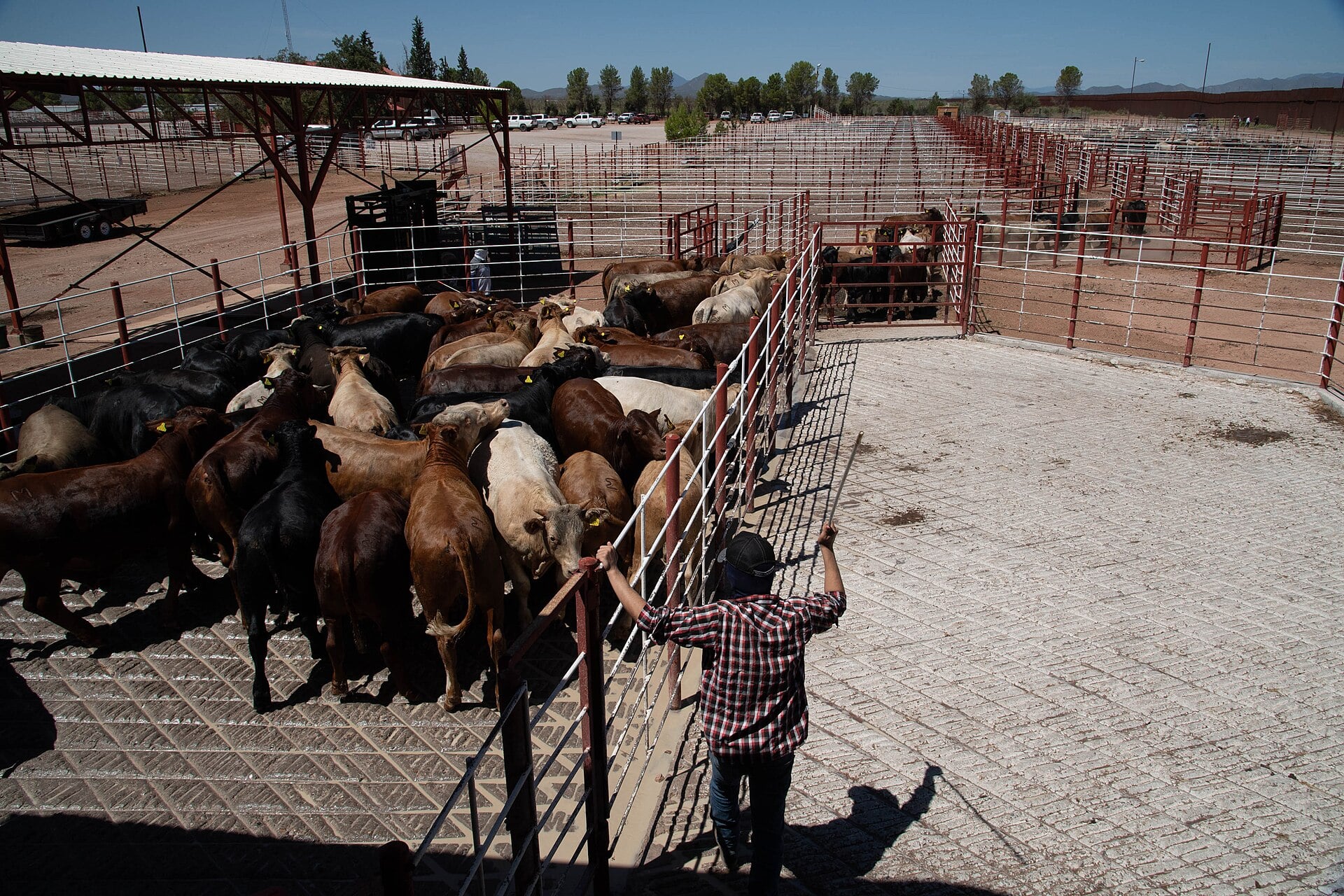
On 26 October the government of Chihuahua, a northern Mexican state, reported a first crossing of 750 cattle at its Palomas border post. The animals went to Columbus, New Mexico, just across the line, as our earlier report on the Chihuahua crossings described.
State officials said they expect movement to grow day by day as trade normalizes through the state’s border posts. The state describes the aim as a gradual recovery of trade flows.
What the Ranchers’ Group Expects
The CNOG says the Palomas start of 750 cattle a day should rise week by week. It targets about 1,500 cattle a day if operations stay smooth and health rules are met.
The CNOG says it is working with Mexico’s agriculture ministry, Senasica and USDA to open more crossings before the end of 2026. Its priorities are Ciudad Acuña, Coahuila, to Del Río, Texas, and Colombia, Nuevo León, to Laredo, Texas.
In Plain English, Who Is Who
The CNOG is the Confederación Nacional de Organizaciones Ganaderas, Mexico’s national confederation of cattle ranchers’ groups. Senasica is Mexico’s national animal and plant health agency.
APHIS is the US agency that sets the health rules for imported animals and decides when each border post opens. It describes its approach as a phased reopening of select ports of entry along the southern border.
What It Means for You
For US readers, the pace of reopening decides how quickly Mexican cattle can reach US ranches again. For now USDA lists only three open crossings, and our earlier report on the Columbus and Nogales reopening tracks the same trade.
The next test is Nogales, Arizona, which USDA lists for 30 November. USDA’s screwworm status page also lists a USDA confirmation of New World screwworm in Arizona, dated 28 October 2026.
What Is Not Known
Whether Nogales opens as planned on 30 November is not yet known. USDA can say, and its screwworm status page lists the date.
Whether crossings reach 1,500 cattle a day is also open. The CNOG and Mexico’s agriculture ministry can say as the weeks pass.
More: Latin America news in English, every day from The Rio Times.
Frequently Asked Questions
How many Mexican cattle cross into the US each day?
The CNOG says the Palomas crossing started at 750 cattle a day and should grow toward 1,500. Chihuahua reported a first crossing of 750 cattle on 26 October.
Which US border ports are open to Mexican cattle?
USDA has reopened Douglas, Arizona, Santa Teresa and Columbus in New Mexico. It says all other southern border ports remain closed to livestock imports.
Why are there extra checks on Mexican cattle?
The New World screwworm is a parasite that threatens livestock, and USDA links to an inspection and treatment certificate for cattle exported to the US. USDA reopens ports in phases.
When will Nogales reopen?
USDA lists 30 November 2026 for Nogales, Arizona. The date is planned, and USDA can change it.
Sources: USDA APHIS, Current Status of New World Screwworm (port reopening dates, Douglas, Santa Teresa, Columbus and Nogales), 4 November 2026; USDA APHIS, Importing Live Cattle and Bison From Mexico; Government of Chihuahua, press release on the Palomas cattle crossing, 26 October 2026; CNOG (Confederación Nacional de Organizaciones Ganaderas), announcement on the Palomas reopening, 26 October 2026.
This article was produced by The Rio Times’ automated newsroom system. How we use AI · Report an error · Editorial responsibility: Matthias Camenzind, Editor-in-Chief
In depth