IBOV 177,547.57 ▲ 2.44% IPSA 11,009.22 ▲ 0.50% IPC MEX 67,303.83 ▲ 0.88% MERVAL 3,379,771 ▲ 2.98% COLCAP 2,297.00 ▼ 0.19% BVL PERÚ 57,575.02 — — USD/BRL5.05▼ 0.37% USD/MXN17.38▼ 0.05% USD/CLP937.27▲ 0.17% USD/COP3,205▼ 1.57% USD/PEN3.39▼ 0.16% USD/ARS1,482▲ 0.30% USD/UYU40.14▲ 1.07% USD/PYG6,035▲ 1.50% USD/BOB10.95▲ 3.79% USD/DOP57.99▼ 0.36% USD/CRC447.42▲ 1.35% USD/GTQ7.62▲ 2.27% USD/HNL26.74▲ 1.52% USD/NIO36.62▲ 0.72% USD/VES736.04▼ 0.04% USD/PAB1.00— 0.00% USD/BZD2.00— 0.00% USD/JMD157.49▲ 0.36% USD/TTD6.71▲ 0.76% EUR/BRL5.78▼ 0.76% BRENT 96.23 ▲ 5.74% WTI 88.48 ▲ 4.20% IRON ORE 161.91 — — COPPER 6.53 ▲ 0.31% GOLD 4,128 ▲ 1.40% SILVER 60.04 ▲ 2.05% SOY 1,241 ▲ 1.74% CORN 484.75 ▲ 7.07% WHEAT 703.25 ▲ 3.72% COFFEE 318.05 ▼ 4.19% SUGAR 14.75 ▼ 0.87% ORANGE JUICE 147.50 ▲ 2.57% COTTON 81.36 ▲ 3.04% COCOA 5,353 ▼ 4.53% BEEF 219.20 ▼ 3.30% CATTLE 336.15 ▼ 3.83% LITHIUM 69.00 ▼ 0.12% PETR4 42.58 ▲ 2.21% VALE3 75.10 ▲ 3.96% ITUB4 42.90 ▲ 0.87% BBDC4 18.97 ▲ 2.26% ABEV3 16.13 ▲ 2.09% BBAS3 21.09 ▲ 1.01% B3SA3 15.90 ▲ 4.81% WEGE3 46.74 ▲ 10.05% PRIO3 59.77 ▲ 2.73% SUZB3 42.66 ▲ 2.47% RENT3 37.14 ▲ 1.61% AZZA3 17.81 ▲ 1.89% CSAN3 3.92 ▲ 3.70% RAIZ4 0.27 — 0.00% PCAR3 2.75 ▲ 0.73% GMAT3 3.91 ▲ 2.09% PSSA3 55.45 ▲ 3.68% CVCB3 1.27 ▲ 13.39% POSI3 3.70 ▲ 0.54% SLCE3 13.96 ▲ 1.53% NATU3 8.68 ▼ 0.34% BRKM5 6.07 ▲ 6.30% RANI3 8.00 ▲ 1.39% CSNA3 5.38 ▲ 6.32% CMIN3 5.84 ▲ 4.66% USIM5 8.65 ▲ 2.25% GGBR4 24.06 ▲ 2.43% ENEV3 25.97 ▲ 2.16% CPFE3 46.71 ▲ 0.67% CMIG4 11.21 ▲ 1.72% EQTL3 39.35 ▲ 1.34% LREN3 13.54 ▲ 2.03% VIVT3 35.38 ▼ 1.17% RAIL3 13.64 ▲ 3.02% KLABIN 17.93 ▲ 1.93% RAIA DROGASIL 18.29 ▲ 0.88% RDOR3 34.49 ▲ 1.68% HAPV3 11.39 ▲ 1.33% FLRY3 16.65 ▲ 0.60% SMTO3 16.05 ▲ 3.02% UGPA3 32.83 ▲ 3.17% VBBR3 34.98 ▲ 3.03% BBSE3 42.58 ▲ 2.48% BPAC11 57.02 ▲ 2.98% CURY3 30.20 ▲ 0.83% AERI3 2.05 ▲ 0.49% VIVARA 21.55 ▲ 0.65% COMPASS 24.81 ▲ 1.51% VAMOS 3.23 ▲ 4.53% SANB11 26.95 ▼ 0.96% ASAI3 8.40 ▲ 1.82% SBSP3 29.29 ▲ 2.41% WALMEX 48.65 ▼ 1.02% GMEXICO 214.34 ▲ 2.57% FEMSA 227.98 ▲ 0.55% CEMEX 22.17 ▲ 0.45% GFNORTE 191.99 ▲ 3.33% BIMBO 60.30 ▲ 1.53% TELEVISA 9.82 ▲ 0.61% AMX 22.70 ▼ 0.26% GAP 378.40 ▼ 0.03% ASUR 273.53 ▼ 0.52% OMA 229.62 ▲ 1.49% KOF 182.55 ▲ 1.15% GRUMA 280.45 ▼ 0.76% KIMBER 38.85 ▲ 1.17% SQM-B 65,055 ▲ 0.80% COPEC 6,550 ▲ 1.55% BSANTANDER 79.85 ▲ 1.06% FALABELLA 6,042 ▲ 2.08% ENELAM 84.53 — 0.00% CENCOSUD 2,010 ▼ 0.89% CMPC 1,070 ▼ 1.28% BANCO CHILE 193.50 ▲ 1.84% LATAM AIR 24.09 ▼ 0.45% YPF 82,500 ▲ 2.33% GGAL 8,275 ▲ 3.89% PAMPA 5,625 ▲ 2.74% TXAR 668.50 ▼ 1.55% ALUAR 974.00 ▲ 0.10% TGS 9,905 ▲ 2.01% CEPU 2,411 ▲ 3.03% MIRGOR 16,925 ▲ 0.89% COME 43.14 ▲ 0.63% LOMA NEGRA 3,823 ▲ 6.03% BYMA 295.00 ▲ 0.94% TELECOM ARG 4,420 ▲ 3.88% ECOPETROL 16.69 ▲ 0.97% BANCOLOMBIA 84.66 ▲ 1.22% GRUPO AVAL 5.04 ▼ 0.98% CREDICORP 393.43 ▲ 0.60% SOUTHERN COPPER 195.48 ▲ 3.97% BUENAVENTURA 32.09 ▲ 2.69% MERCADOLIBRE 1,799 ▼ 1.29% NUBANK 14.51 ▲ 0.83% XP 17.30 ▲ 2.67% PAGSEGURO 9.67 ▲ 0.94% STONE 11.36 ▲ 0.93% GLOBANT 30.67 ▼ 4.45% TECNOGLASS 45.24 ▲ 0.20% GAP AIRPORT 217.70 ▲ 0.01% ASUR 273.53 ▼ 0.52% OMA AIRPORT 105.35 ▲ 1.07% AMX ADR 26.12 ▲ 0.12% FEMSA ADR 130.96 ▲ 0.47% CEMEX ADR 12.74 ▲ 0.32% PETROBRAS ADR 18.89 ▲ 1.89% VALE ADR 14.85 ▲ 4.21% ITAU ADR 8.48 ▲ 0.95% SANTANDER BR 5.45 ▲ 0.74% AMBEV ADR 3.14 ▲ 0.96% CSN 1.09 ▲ 9.00% GERDAU 4.77 ▲ 2.69% LATAM ADR 51.22 ▼ 0.68% BTC 65,625 ▼ 0.72% ETH 1,920 ▼ 0.72% SOL 77.58 ▼ 0.42% XRP 1.13 ▼ 0.74% BNB 570.08 ▼ 0.12% ADA 0.17 ▼ 0.12% DOGE 0.07 ▼ 0.85% AVAX 6.53 ▼ 1.32% LINK 8.58 ▼ 0.48% DOT 0.82 ▼ 1.58% LTC 47.27 ▲ 0.42% BCH 217.93 ▼ 0.93% TRX 0.33 ▼ 0.12% XLM 0.18 ▼ 1.76% HBAR 0.07 ▼ 0.27% NEAR 1.87 ▼ 0.16% ATOM 1.45 ▼ 1.20% AAVE 96.88 ▼ 0.49% SELIC 14.25% EMBRAER 83.79 ▲ 1.38% EMBRAER ADR 66.05 ▲ 0.89% JBS 12.25 ▲ 2.51% JBS BDR 61.80 ▲ 2.62% MBRF3 16.03 ▲ 6.09% MBRFY 3.19 ▲ 8.14% INTER 5.69 ▲ 1.97% EGX 53,932 ▼ 0.11% USD/ZAR16.35▼ 0.24% USD/NGN 1,370 — 0.00% NIKKEI 66,543 ▲ 0.65% CSI300 4,708 ▼ 0.20% HSI 25,243 ▲ 1.41% NIFTY 23,920 ▼ 0.32% KOSPI 7,023 ▲ 3.32% JCI 6,422 ▲ 1.38% USD/JPY163.04▼ 0.07% USD/CNY6.77▼ 0.09% DAX 25,155 ▲ 0.58% CAC 8,438 ▲ 0.89% FTSE 10,717 ▲ 1.24% MIB 52,792 ▲ 0.97% IBEX 19,571 ▲ 0.99% STOXX 646.93 ▲ 0.58% EUR/USD1.14▲ 0.29% GBP/USD1.34▼ 0.32% SPX 7,499 ▼ 0.14% DJI 52,219 ▼ 0.01% NDX 28,998 ▼ 0.54% RUT 2,960 ▼ 0.92% TSX 35,485 ▲ 0.33% VIX 16.64 ▼ 2.40% USD/CAD1.41▼ 0.17% US10Y 4.6570 ▲ 0.63% IBOV 177,547.57 ▲ 2.44% IPSA 11,009.22 ▲ 0.50% IPC MEX 67,303.83 ▲ 0.88% MERVAL 3,379,771 ▲ 2.98% COLCAP 2,297.00 ▼ 0.19% BVL PERÚ 57,575.02 — — USD/BRL 5.05 ▼ 0.01% USD/MXN 17.38 ▼ 0.05% USD/CLP 937.27 ▲ 0.17% USD/COP 3,205 ▼ 0.70% USD/PEN 3.39 ▼ 0.31% USD/ARS 1,482 ▼ 0.03% USD/UYU 40.14 ▲ 1.16% USD/PYG 6,035 ▲ 1.38% USD/BOB 10.95 ▲ 3.79% USD/DOP 57.99 ▼ 0.36% USD/CRC 447.42 ▲ 1.36% USD/GTQ 7.62 ▲ 2.27% USD/HNL 26.74 ▲ 0.88% USD/NIO 36.62 ▲ 0.31% USD/VES 736.04 ▼ 0.13% USD/PAB 1.00 — 0.00% USD/BZD 2.00 — 0.00% USD/JMD 157.49 ▲ 0.36% USD/TTD 6.71 ▲ 0.76% EUR/BRL 5.78 ▼ 0.36% BRENT 96.23 ▲ 5.74% WTI 88.48 ▲ 4.20% IRON ORE 161.91 — — COPPER 6.53 ▲ 0.31% GOLD 4,128 ▲ 1.40% SILVER 60.04 ▲ 2.05% SOY 1,241 ▲ 1.74% CORN 484.75 ▲ 7.07% WHEAT 703.25 ▲ 3.72% COFFEE 318.05 ▼ 4.19% SUGAR 14.75 ▼ 0.87% ORANGE JUICE 147.50 ▲ 2.57% COTTON 81.36 ▲ 3.04% COCOA 5,353 ▼ 4.53% BEEF 219.20 ▼ 3.30% CATTLE 336.15 ▼ 3.83% LITHIUM 69.00 ▼ 0.12% PETR4 42.58 ▲ 2.21% VALE3 75.10 ▲ 3.96% ITUB4 42.90 ▲ 0.87% BBDC4 18.97 ▲ 2.26% ABEV3 16.13 ▲ 2.09% BBAS3 21.09 ▲ 1.01% B3SA3 15.90 ▲ 4.81% WEGE3 46.74 ▲ 10.05% PRIO3 59.77 ▲ 2.73% SUZB3 42.66 ▲ 2.47% RENT3 37.14 ▲ 1.61% AZZA3 17.81 ▲ 1.89% CSAN3 3.92 ▲ 3.70% RAIZ4 0.27 — 0.00% PCAR3 2.75 ▲ 0.73% GMAT3 3.91 ▲ 2.09% PSSA3 55.45 ▲ 3.68% CVCB3 1.27 ▲ 13.39% POSI3 3.70 ▲ 0.54% SLCE3 13.96 ▲ 1.53% NATU3 8.68 ▼ 0.34% BRKM5 6.07 ▲ 6.30% RANI3 8.00 ▲ 1.39% CSNA3 5.38 ▲ 6.32% CMIN3 5.84 ▲ 4.66% USIM5 8.65 ▲ 2.25% GGBR4 24.06 ▲ 2.43% ENEV3 25.97 ▲ 2.16% CPFE3 46.71 ▲ 0.67% CMIG4 11.21 ▲ 1.72% EQTL3 39.35 ▲ 1.34% LREN3 13.54 ▲ 2.03% VIVT3 35.38 ▼ 1.17% RAIL3 13.64 ▲ 3.02% KLABIN 17.93 ▲ 1.93% RAIA DROGASIL 18.29 ▲ 0.88% RDOR3 34.49 ▲ 1.68% HAPV3 11.39 ▲ 1.33% FLRY3 16.65 ▲ 0.60% SMTO3 16.05 ▲ 3.02% UGPA3 32.83 ▲ 3.17% VBBR3 34.98 ▲ 3.03% BBSE3 42.58 ▲ 2.48% BPAC11 57.02 ▲ 2.98% CURY3 30.20 ▲ 0.83% AERI3 2.05 ▲ 0.49% VIVARA 21.55 ▲ 0.65% COMPASS 24.81 ▲ 1.51% VAMOS 3.23 ▲ 4.53% SANB11 26.95 ▼ 0.96% ASAI3 8.40 ▲ 1.82% SBSP3 29.29 ▲ 2.41% WALMEX 48.65 ▼ 1.02% GMEXICO 214.34 ▲ 2.57% FEMSA 227.98 ▲ 0.55% CEMEX 22.17 ▲ 0.45% GFNORTE 191.99 ▲ 3.33% BIMBO 60.30 ▲ 1.53% TELEVISA 9.82 ▲ 0.61% AMX 22.70 ▼ 0.26% GAP 378.40 ▼ 0.03% ASUR 273.53 ▼ 0.52% OMA 229.62 ▲ 1.49% KOF 182.55 ▲ 1.15% GRUMA 280.45 ▼ 0.76% KIMBER 38.85 ▲ 1.17% SQM-B 65,055 ▲ 0.80% COPEC 6,550 ▲ 1.55% BSANTANDER 79.85 ▲ 1.06% FALABELLA 6,042 ▲ 2.08% ENELAM 84.53 — 0.00% CENCOSUD 2,010 ▼ 0.89% CMPC 1,070 ▼ 1.28% BANCO CHILE 193.50 ▲ 1.84% LATAM AIR 24.09 ▼ 0.45% YPF 82,500 ▲ 2.33% GGAL 8,275 ▲ 3.89% PAMPA 5,625 ▲ 2.74% TXAR 668.50 ▼ 1.55% ALUAR 974.00 ▲ 0.10% TGS 9,905 ▲ 2.01% CEPU 2,411 ▲ 3.03% MIRGOR 16,925 ▲ 0.89% COME 43.14 ▲ 0.63% LOMA NEGRA 3,823 ▲ 6.03% BYMA 295.00 ▲ 0.94% TELECOM ARG 4,420 ▲ 3.88% ECOPETROL 16.69 ▲ 0.97% BANCOLOMBIA 84.66 ▲ 1.22% GRUPO AVAL 5.04 ▼ 0.98% CREDICORP 393.43 ▲ 0.60% SOUTHERN COPPER 195.48 ▲ 3.97% BUENAVENTURA 32.09 ▲ 2.69% MERCADOLIBRE 1,799 ▼ 1.29% NUBANK 14.51 ▲ 0.83% XP 17.30 ▲ 2.67% PAGSEGURO 9.67 ▲ 0.94% STONE 11.36 ▲ 0.93% GLOBANT 30.67 ▼ 4.45% TECNOGLASS 45.24 ▲ 0.20% GAP AIRPORT 217.70 ▲ 0.01% ASUR 273.53 ▼ 0.52% OMA AIRPORT 105.35 ▲ 1.07% AMX ADR 26.12 ▲ 0.12% FEMSA ADR 130.96 ▲ 0.47% CEMEX ADR 12.74 ▲ 0.32% PETROBRAS ADR 18.89 ▲ 1.89% VALE ADR 14.85 ▲ 4.21% ITAU ADR 8.48 ▲ 0.95% SANTANDER BR 5.45 ▲ 0.74% AMBEV ADR 3.14 ▲ 0.96% CSN 1.09 ▲ 9.00% GERDAU 4.77 ▲ 2.69% LATAM ADR 51.22 ▼ 0.68% BTC 65,625 ▼ 0.72% ETH 1,920 ▼ 0.72% SOL 77.58 ▼ 0.42% XRP 1.13 ▼ 0.74% BNB 570.08 ▼ 0.12% ADA 0.17 ▼ 0.12% DOGE 0.07 ▼ 0.85% AVAX 6.53 ▼ 1.32% LINK 8.58 ▼ 0.48% DOT 0.82 ▼ 1.58% LTC 47.27 ▲ 0.42% BCH 217.93 ▼ 0.93% TRX 0.33 ▼ 0.12% XLM 0.18 ▼ 1.76% HBAR 0.07 ▼ 0.27% NEAR 1.87 ▼ 0.16% ATOM 1.45 ▼ 1.20% AAVE 96.88 ▼ 0.49% SELIC 14.25% EMBRAER 83.79 ▲ 1.38% EMBRAER ADR 66.05 ▲ 0.89% JBS 12.25 ▲ 2.51% JBS BDR 61.80 ▲ 2.62% MBRF3 16.03 ▲ 6.09% MBRFY 3.19 ▲ 8.14% INTER 5.69 ▲ 1.97% EGX 53,932 ▼ 0.11% USD/ZAR 16.36 ▼ 0.33% USD/NGN 1,370 — 0.00% NIKKEI 66,543 ▲ 0.65% CSI300 4,708 ▼ 0.20% HSI 25,243 ▲ 1.41% NIFTY 23,920 ▼ 0.32% KOSPI 7,023 ▲ 3.32% JCI 6,422 ▲ 1.38% USD/JPY 163.04 ▼ 0.03% USD/CNY 6.7671 ▲ 0.05% DAX 25,155 ▲ 0.58% CAC 8,438 ▲ 0.89% FTSE 10,717 ▲ 1.24% MIB 52,792 ▲ 0.97% IBEX 19,571 ▲ 0.99% STOXX 646.93 ▲ 0.58% EUR/USD 1.1432 ▲ 0.20% GBP/USD 1.3389 ▲ 0.10% SPX 7,499 ▼ 0.14% DJI 52,219 ▼ 0.01% NDX 28,998 ▼ 0.54% RUT 2,960 ▼ 0.92% TSX 35,485 ▲ 0.33% VIX 16.64 ▼ 2.40% USD/CAD 1.4064 ▼ 0.13% US10Y 4.6570 ▲ 0.63%
since 2009
Thursday, July 23, 2026

Shortage of Medical Supplies Foments Debate on Reconversion of Brazilian Industry

By · May 5, 2020 · 7 min read

Daily Brief

The morning intel from across Latin America. Free.

By subscribing you agree to our privacy policy. We never share your email.

RIO DE JANEIRO, BRAZIL – With the escalation of Covid-19 cases in Brazil and the high demand for medical and healthcare equipment for infected patients, companies from different sectors have already begun to adapt their plants to help produce the needed medical supplies, such as ventilators and masks, to fight the disease.

Chevrolet, for one, proposed to repair malfunctioning ventilators in the country, combining labor and equipment available in GM plants.
Auto division Chevrolet has proposed to repair malfunctioning ventilators in the country, combining labor and equipment available in GM plants. (Photo: internet reproduction)
One-stop reference
Company Intelligence
Every listed company in Latin America — financials, ownership and structure for 1,450+ companies across 26 exchanges, in one place.
Browse the directory →
RT
Ask Rio Times
Latin American markets, currencies and companies.
Open the full Ask Rio Times →

This adaptation, also called industrial reconversion or productive reconversion, has been pointed out by several economists as one of the potential strategies to tackle the pandemic and reduce dependence on China, overburdened by global demand, since today the Asian country is the largest supplier of protective masks and intensive care unit (ICU) equipment.

With its assembly lines temporarily suspended, the automotive sector was among those that joined the efforts to reduce the impact of the coronavirus crisis in Brazil. Chevrolet, for one, proposed to repair malfunctioning ventilators in the country, combining labor and equipment available in GM plants.

Ford announced that it would initially produce 50,000 face protection masks made of polyvinyl at its plants in Camaçari (Bahia State) and Pacheco (Argentina). The brand will also repair ventilators.

In partnership with the Mauá Institute of Technology and the University of São Paulo (USP), Mercedes- Benz is developing a prototype ventilator using parts from the automotive industry as raw material. The product is still in its testing stage, but Ricardo Bocciardi, director of planning and manufacturing engineering at Mercedes-Benz, says the production of the ventilators is expected to begin at the São Bernardo do Campo plant, in São Paulo. The assembler has also started 3D printing of face protection masks at its facilities.

“The ventilator concept was developed in the laboratory and was reproduced within the company with industrial resources. Some materials have been changed so that we reach a low-cost range. In parallel, tests are being conducted for ANVISA accreditation and other constituent bodies”, explains Bocciardi.

Most of the project was designed with home office staff, but a small group will need to be present at the plant to help, following all the safety regulations in times of coronavirus.

The company is still conducting a survey with the administrations of seven municipalities located in the so-called “ABC region” around the capital – Santo André, São Bernardo do Campo, São Caetano do Sul, Diadema, Mauá, Ribeirão Pires and Rio Grande da Serra – so as to determine the volume of equipment the region requires.

“It will be an open project, available for other companies to develop in other regions of the country. The initiative is not just about us. Other automakers have already expressed interest”, explains the planning director. All ventilators will be donated to government bodies.

“We hope to overcome all the required steps for the use of this device as soon as possible. This ventilator is not to be used in ICUs, it is to be used in semi-intensive care or patient transportation. It is an intermediate ventilator,” he explains.

The Ministry of Health signed a contract with Magnamed, Brazil’s largest manufacturer of lung ventilators – a key player in the treatment of critically ill patients – to deliver 6,500 units by August 2020.

In order to meet the increase in the product’s supply the manufacturer had to turn to a group of companies from different sectors, led by Positivo Tecnologia, Suzano, Klabin, Flex, and Embraer.

Each one contributes something to make large-scale production feasible within a short period of time. Embraer, with the help of eight companies in the aeronautical sector, used its expertise in complex processing to manufacture 5,000 components that were used in the assembling of ventilators by the end of April.

Klabin, a producer and exporter of packaging paper, will be in charge of purchasing and importing the components for assembling the ventilators, in addition to supplying all the packaging required for shipping the devices to the target hospitals.

“We must join forces to fight the spread of the coronavirus. The moment is sensitive and requires strict guidelines that value life,” says Cristiano Teixeira, Klabin’s director general.

According to Otto Nogami, a professor at Insper (school of business, economics, and engineering), an industrial reconversion in such a short period of time is not easy. Therefore, he stresses that activities somehow more related to the demands of the pandemic are the first that manage to adapt.

For instance, the chemical industry for the production of sanitizer gel, the textile industry for production of masks and the automotive sector for the maintenance of ventilators and, ultimately, their production.

“For the moment, it is more logical and rational to use the industry that has some kind of synergy with equipment and supplies used in the health sector. Reasoning in terms of investment to suit other sectors is not worth it now. The pandemic is a temporary issue,” explains the professor.

In China, there was a manufacturing complex focused on the production of PPEs. But during the pandemic they began to operate under a 24X7 system to meet the domestic market and international demand.

The Asian country benefits from having a large manufacturing and technological complex, particularly after many global companies have outsourced production lines there in search of lower costs.
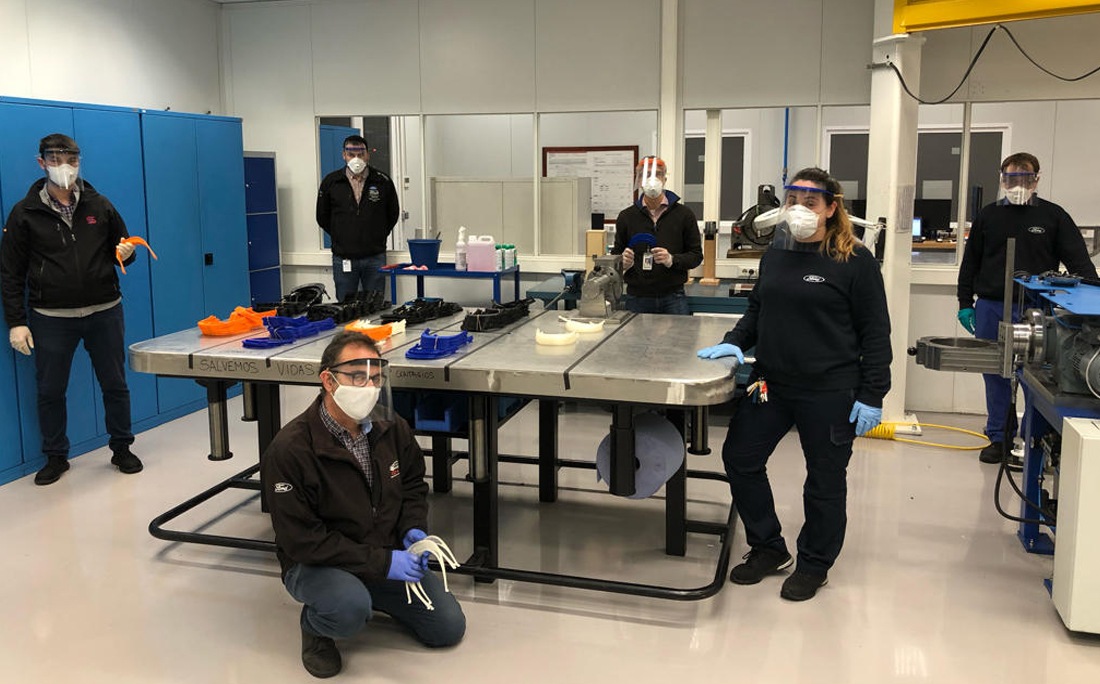
Ford announced that it would initially produce 50,000 face protection masks made of polyvinyl at its plants in Camaçari (Bahia State) and Pacheco (Argentina). The brand will also repair ventilators.
Ford announced that it would initially produce 50,000 face protection masks made of polyvinyl at its plants in Camaçari (Bahia State) and Pacheco (Argentina). (Photo: internet reproduction)

Long-term conversion

However, Nogami believes that within a longer-term strategic plan, the country could think about how to address other pandemics, but this would require direction from above.

“From the Ministry of Health, to have the industrial complex prepared to provide supplies in an emergency situation. That would be worthwhile. No company would do that spontaneously. This demands resources, and a need for strategic planning from above, within a national health plan, broader than just supply production, but also expanding basic rights such as sanitation,” says the professor.

On April 9th, the PSOL (Socialism and Liberty Party) submitted a bill to the Chamber of Deputies to establish an Emergency Plan for Productive Reconversion (PERP), which proposes that industries and companies, public or private, produce the goods and supplies needed to fight the novel coronavirus pandemic in Brazil.

The plan is that companies able to produce protective equipment for health care personnel and hospitals, masks, sanitizer gel, ICU beds, ambulances, ventilators, respirators, blood oxygenation machines, in addition to rapid tests for the detection of coronavirus, among other products, may be required to produce them, when so decided by the Emergency Productive Conversion Plan Management Committee (CGPERP). The plan would remain in force during the Emergency Public Health Decree of National Importance.

The shortage of supplies is affecting other countries that rely on the importation of hospital equipment, triggering an alert. In several of them, governments have also sought or demanded help from private companies. In the United States, President Donald Trump res;urrected a 1950 law – from the time they were involved in the Korean War – to force General Motors (GM) to manufacture ventilators to assist patients with coronavirus (Covid-19).

In an interview, economist Monica de Bolle suggested that an industrial reconversion plan could be made feasible through the BNDES (National Bank for Economic and Social Development), offering a line of credit for the production of hospital equipment.

“Convert your production plants into health equipment manufacturing plants, all part of protection, mask, and clothing. This is what I see countries doing according to their specific needs,” she said.

Fausto Augusto Junior, the technical director of DIEESE, a labor union lobbying association, argues that the reconversion concept should not be focused only on an emergency, which is what Brazil is doing now. “This is only a first step. We should seize this opportunity to strengthen domestic industry, which until the 1990s produced virtually everything and had the capacity for reconversion,” he explains.

Augusto Junior points out that for the production of ventilators, not only companies like Mercedes-Benz are sufficient for assembling them, an entire chain producing ventilators is required, with more than 90 percent of the microelectronic and conductor components being manufactured abroad.

According to the expert, to build a production process for several components in Brazil – which today need to be imported – purchase stability must first be guaranteed.

“If a company creates a testing production line, for instance, it needs to be sure that ãt a given time someone will buy it. SUS [Brazil’s National Health System] is one of the largest buyers of supplies in the world, its purchasing power is enormous, it has an induction capacity to reconvert the medical area. But in order to do that, you need to arrange it,” he says.

According to Augusto Junior, some countries, such as Japan, are currently rethinking their strategy of having sent a large part of its production chain to China, and considering a return. “We need to extrapolate a little from the immediate discussion, think about the next step. What we should do from now on,” the union leader says.

Source: El País

Read More from The Rio Times

The Rio Times · Power Map
See who really holds power in Latin America
Click to open the Power Map

Rotate for Best Experience

This report is optimized for landscape viewing. Rotate your phone for the full experience.