South Africa’s Mbeki Foundation Warns US Afrikaner Push Risks Racial Rift
South Africa · GEOPOLITICS
Key Facts
- —The country South Africa, home to about 65 million people, is Africa’s most industrialised economy. Its output of about US$427 billion in 2025 was a little smaller than Denmark’s.
- —Why it matters Apartheid, the system of legal white minority rule, ended in 1994. Since 2025 the Trump administration has accused Pretoria of discriminating against Afrikaners, the white minority descended mainly from Dutch settlers.
- —Why now Washington announced visa curbs on selected South African officials in mid-September. Its ambassador then named former president Thabo Mbeki as best placed to help, before denying he sought mediation.
- —What happened On Sunday 27 September the Thabo Mbeki Foundation published a 123-page paper saying that US backing for Afrikaner autonomy could deepen racial divisions.
- —Who is involved Mbeki was South Africa’s president from 1999 to 2008. The paper criticises the Solidarity Movement and AfriForum, Afrikaner lobby groups that took their case to Washington.
- —What it means for you Black Economic Empowerment (BEE), South Africa’s race-based ownership rules, stays central to doing business there. The visa curbs announced so far target officials, not ordinary travellers.
- —Still open Neither government has given Mbeki a mediation role. Washington has promised further action, and the Afrikaner groups named in the paper may yet respond.
A foundation set up by South Africa’s former president Thabo Mbeki says the row with Washington is really about race and history. It warns that dropping policies meant to repair apartheid’s damage could bring a “social explosion”.
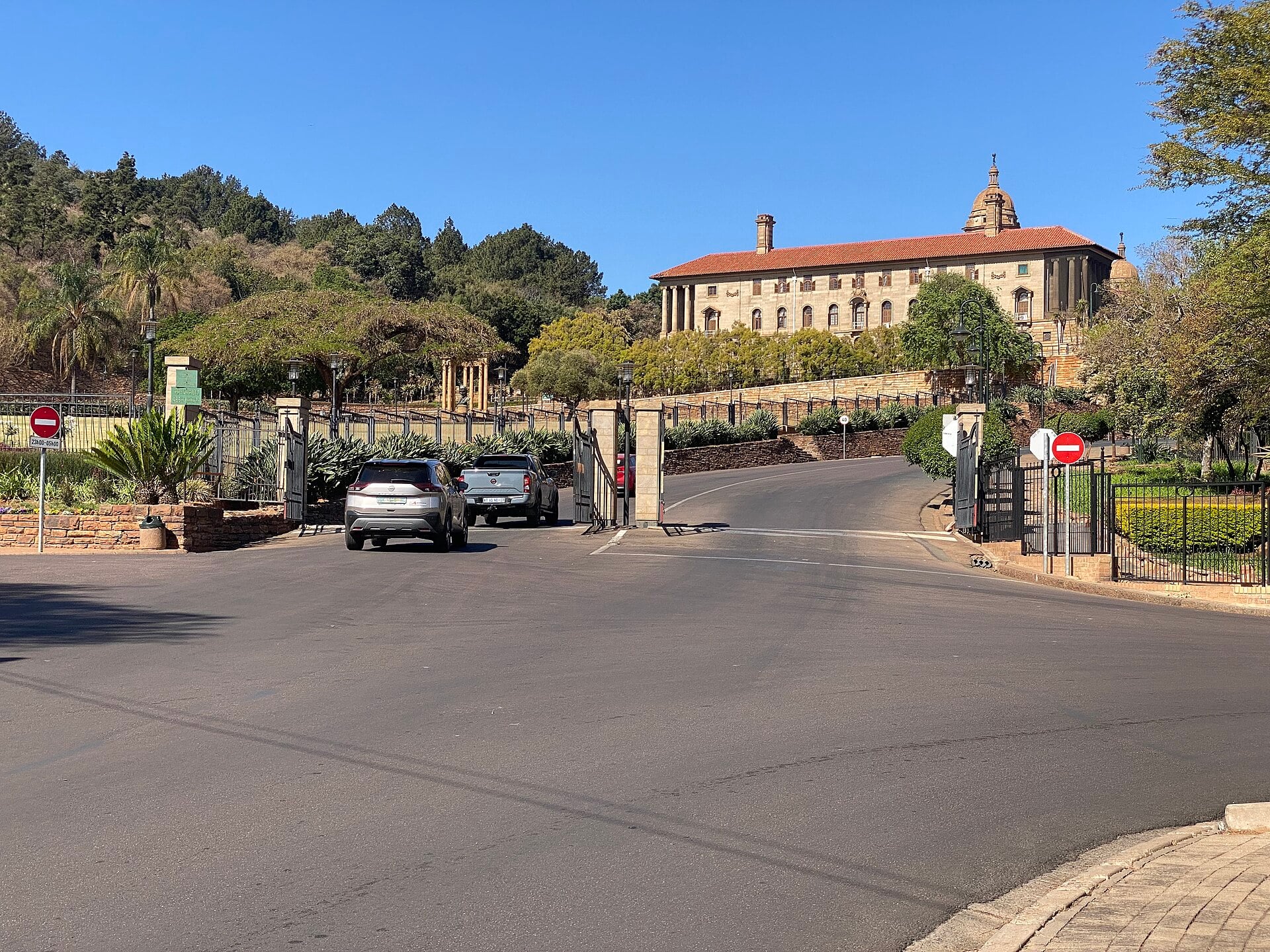
South Africa’s dispute with the United States has a new voice. On Sunday the Mbeki Foundation, set up by former president Thabo Mbeki, published a 123-page paper on the crisis.
Mbeki led South Africa from 1999 to 2008, succeeding Nelson Mandela. His foundation argues the row is not only about land reform, farm attacks or Black Economic Empowerment (BEE), which favours black ownership.
Instead, it says both countries still face an unresolved “national question”. In the US that means the legacy of slavery and segregation; in South Africa, colonialism and apartheid.
What the paper says about Afrikaner autonomy
The paper is titled The United States of America and the Future of the Afrikaners in South Africa. It warns that growing US support for Afrikaner organisations risks entrenching the racial divisions the country has spent three decades dismantling.
It examines visits to Washington by the Solidarity Movement and AfriForum, two Afrikaner lobby groups. It also looks at a June 2025 delegation of Afrikaner politicians, farm leaders and employers.
A key target is Solidarity’s “Washington Memorandum”. It sought recognition of Afrikaner cultural autonomy and US help for an Afrikaner development fund.
The memorandum also mentioned a place where Afrikaners could settle in concentrated numbers. It does not call for an independent state.
The foundation nevertheless likens the project to apartheid-era “separate development”. The Mail & Guardian newspaper noted these characterisations will probably be strongly contested by the groups concerned.
The warning of a “social explosion”
The paper accepts that the democratic state has failed on poverty, unemployment, crime and service delivery. It argues these failures cannot be fixed by abandoning policies that tackle racial inequality inherited from apartheid.
It invokes the Kerner Commission, which in 1968 warned that the US was moving towards “two societies, one black, one white”. If South Africa drops redress, the foundation says, it risks a “social explosion”.
The foundation frames this as a warning about continued inequality, not a prediction of violence. It closes with advice Mbeki heard from Constand Viljoen, a right-wing Afrikaner general, before the 1994 election.
“Do not start a fire unless and until you are sure you can put it out,” the paper concludes.
Not all Afrikaners are on one side
The paper separates Afrikaner organisations from Afrikaners as a whole. It cites “Not In My Name!”, a 2025 statement by 46 prominent Afrikaners rejecting the idea that they are a persecuted minority.
It also cites research attributed to analysts Frans Cronje and Hermann Giliomee. It found Afrikaner living standards rose faster in the 20 years after 1994 than in any similar period since 1945.
To answer US critics, the paper points to America’s own race-conscious programmes. They include affirmative action and Donald Trump’s 2020 “Platinum Plan” for black Americans.
The diplomatic backdrop
In mid-September Secretary of State Marco Rubio announced visa restrictions on selected South African officials. Washington tied them to what it calls race-based discrimination against Afrikaners.
The foundation called Washington’s recent actions deeply unfortunate. Max Boqwana, its chief executive, criticised the visa curbs and described talks between the two governments as a conversation of the deaf, according to Channel Africa, the state broadcaster’s international service.
Days earlier, US ambassador L. Brent Bozell III said Mbeki was best placed to help break the impasse. He also said Washington had “run out of patience” with President Cyril Ramaphosa’s government.
Bozell later denied calling on Mbeki to mediate, and neither government has announced such a role. The paper itself does not present Mbeki as an intermediary.
Why the row matters beyond South Africa
Relations are also strained over trade, land policy and foreign policy, including South Africa’s BRICS membership alongside China and Russia. The paper adds history and race to that mix.
This fits the pattern covered in Africa: The New Scramble, where domestic transformation and great-power rivalry increasingly overlap.
For foreign companies, the most concrete stake is BEE. One demand the Afrikaner delegation brought back from Washington was an exemption for US companies from these rules.
The Mbeki Foundation’s paper argues strongly against any such retreat. Mbeki remains influential in the African National Congress (ANC), which has governed since 1994 and now leads a coalition.
What to watch next
Watch whether Washington follows the visa curbs with wider measures, as officials have signalled. Also watch for replies from Solidarity, AfriForum and the US embassy to the paper’s charges.
The deeper test is whether Pretoria can defend its redress policies while keeping trade and diplomatic channels open. The foundation’s answer is that backing down is not an option.
Frequently Asked Questions
What is the Mbeki Foundation paper about?
It is a 123-page paper on the row between South Africa and the United States, released on 27 September 2026. It argues the dispute is rooted in the unresolved legacy of slavery, colonialism and apartheid in both countries.
What does the paper warn could happen?
It warns that growing US support for Afrikaner autonomy demands could deepen racial divisions. It adds that abandoning policies to redress apartheid-era inequality could lead to a social explosion.
Why are US-South Africa tensions rising now?
The US accuses Pretoria of discriminating against Afrikaners and announced visa restrictions on selected South African officials in mid-September. Trade, land policy and foreign policy are further sources of friction.
Does the row affect visitors and investors?
The visa curbs announced so far target selected officials, not ordinary travellers. For investors, Black Economic Empowerment rules remain in force, and the paper argues strongly against weakening them.
Connected Coverage
Sources
This article was produced by The Rio Times’ automated newsroom system. How we use AI · Report an error
Read More from The Rio Times