Key Facts
- What — Teresa Margolles’s major exhibition ’¿Cómo salimos?’ at MARCO, Monterrey.
- Where — MARCO museum, upper floor rooms 6 to 11, Monterrey, Mexico.
- When — November 14, 2025 to May 3, 2026, extended due to demand.
- Curator — Taiyana Pimentel, MARCO’s director, calls it the first major American review of Margolles.
- Works — 23 pieces from 18 projects, spanning 2003 to 2025.
- Highlights — Glass from abandoned shops and water from violent sites in Monterrey.
- Why — A rare chance to see art confronting borders and the body as political territory.
The acclaimed Mexican artist’s powerful exhibition on migration and violence ends May 3. Here’s why you should go.
If you’re in Monterrey or planning a visit, there’s one exhibition you shouldn’t miss: Teresa Margolles MARCO Monterrey. The show ’¿Cómo salimos?’ runs until May 3, 2026, at the Museo de Arte Contemporáneo de Monterrey. It’s powerful, moving, and unlike anything else in the city right now.
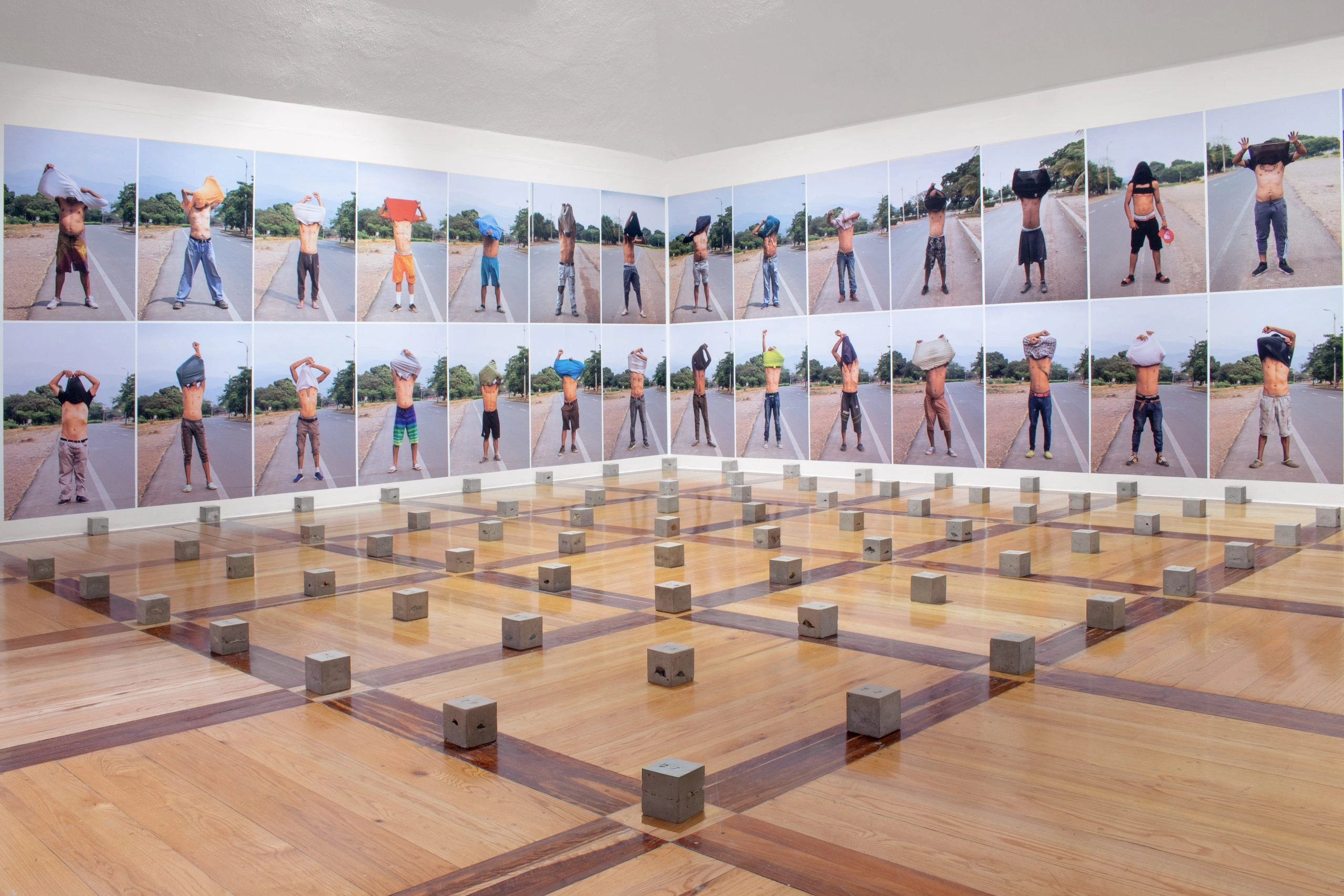
What Is Teresa Margolles’s Exhibition About?: Teresa Margolles MARCO Monterrey
Margolles is one of Mexico’s most important living artists. Her work deals with the hard realities of the northern border, migration, and violence.
This exhibition, her first major review in the Americas, brings together 23 works from 18 projects, created between 2003 and 2025.
The title ’¿Cómo salimos?’ translates to ’How do we get out?’ It’s a question about survival, movement, and escape.
Three new commissions were made especially for MARCO, so you’ll see art that has never been shown before.
One of these new pieces uses concrete from a collapsed building in Ciudad Juárez, a nod to the fragility of urban life. Another hears the voices of families looking for missing relatives, played through speakers in a dark room.
Margolles often works with forensic materials, but she transforms them into subtle, quiet objects. The result is art that demands patience and rewards attention.
The exhibition also includes earlier works like ’Vapor’ (2003), where a fine mist of water from a morgue fills a room. It’s a haunting reminder of bodies that have been lost.
In another piece, ’Muro Ciudad Juárez’ (2010), a wall of bricks recovered from a violent site is reconstructed brick by brick. Each brick carries the stain of its past, creating a powerful physical map of pain.
Why This Show Matters for Visitors
The exhibition uses materials with deep meaning. One piece features glass taken from shops abandoned due to violence.
Another uses water absorbed from sites of violent events in Monterrey and its municipalities. These are not just objects; they carry stories.
For expats and nomads, this is a window into the region’s soul. You’ll understand the border’s weight and the resilience of its people.
It’s art that makes you think, not just look.
The glass shards are displayed on white pedestals, lit to catch the light. They look almost beautiful, until you read the label that tells you where they came from.
In a separate room, you’ll find a sound installation: recordings of rain falling on the rooftops of neighborhoods affected by violence. It’s an ordinary sound, but in this context, it becomes a kind of requiem.
Margolles’s work has been shown in the world’s top museums, from the Venice Biennale to the Guggenheim. Yet this show feels particularly urgent because it’s set in the very region she explores.
Monterrey is a city of commerce and industry, but also of pain. Her art bridges that gap, giving voice to those who are often silent.
Practical Tips for Your Visit to MARCO
MARCO is in central Monterrey, easy to reach by taxi or rideshare. It’s open Tuesday to Sunday, and the upper floor rooms 6 to 11 house the show.
Allow at least two hours to fully absorb it.
Check MARCO’s official website for ticket prices and hours, as they may vary. The museum is well-known, so ask the staff for a map or audio guide if available.
They’re friendly and helpful.
If you’re driving, there’s a public parking lot nearby, though it can fill up on weekends. Consider taking the metro to the Fundadores station and walking the short distance to the museum.
The museum has a café on the ground floor, perfect for a coffee before or after your visit. You’ll also find a gift shop with books on Margolles and other Latin American artists.
Photography is allowed in most rooms, but without flash. You’ll want to capture the textures of the glass and water, but be mindful of other visitors.
Guided tours in English are available on request if you book in advance. Check the website for tour schedules, which may change seasonally.
Why This Exhibition Is Worth Your Time
This is a rare chance to see a major artist in a regional context. Margolles’s focus on the north of Mexico is especially relevant for anyone living here.
It connects with the city’s own history and challenges.
The exhibition has been extended due to public demand, a true sign of its impact. Don’t wait until the last week, as crowds may grow.
Go during a weekday morning for a quieter experience.
When you leave, you might find yourself thinking about the city differently. The spaces you pass daily—the shops, the streets—take on new weight.
For newcomers to Monterrey, this is an essential introduction to what the city has been through. It’s a conversation starter for your own travels and observations.
The show also invites you to reflect on the larger picture of migration across the Americas. It’s not just about Mexico; it’s about borders everywhere.
You’ll see how art can hold grief and still offer a way forward.
A Deeper Look at Margolles’s Vision
Margolles is known for using materials that bear traces of violence. Her work is not easy, but it is honest.
For those new to contemporary art, the pieces may feel confronting at first. Give them time.
The exhibition also includes works from her earlier career, offering a full arc of her evolution. You’ll see how her concerns have stayed constant while her methods have refined.
She trained as a forensic pathologist before turning to art, which explains her clinical eye. That background gives her work an authority that’s hard to shake.
In one early piece, she made objects from the dust of a crime scene in a Mexico City suburb. The dust is invisible, but its presence is felt throughout the room.
Another work, ’Piedra’ (2010), features stones recovered from a mass grave. They are arranged in a circle, like a ritual space, inviting silent contemplation.
Margolles has said that she wants her art to ’make visible what is often hidden.’ This show does exactly that, without sensationalism.
It’s a rare thing: art that is both politically charged and deeply humane. You won’t forget it soon.
More: Mexico news in English, every day from The Rio Times.
Frequently Asked Questions
When does the Teresa Margolles exhibition at MARCO close?
The exhibition ’¿Cómo salimos?’ closes on May 3, 2026, after an extension. It originally ended earlier but was prolonged because of high visitor numbers.
Where exactly is the exhibition in MARCO?
It is in rooms 6 to 11 on the upper floor of the MARCO museum. Look for signs directing you to the temporary exhibition area.
What themes does Margolles’s work address in this show?
The show focuses on the northern border, migration, and the body as a political territory. Materials like glass and water are used to reference violence and loss.
Is the exhibition suitable for first-time contemporary art viewers?
Yes, but be prepared for heavy themes. The works are thought-provoking rather than purely decorative. Take your time and read the wall texts for context.
Connected Coverage
Sources: Culturacolectiva, Press, Fontsinuse, Coleccionfemsa, Archdaily
This article was produced by The Rio Times’ automated newsroom system. How we use AI · Report an error
Read More from The Rio Times