IBOV 185,529.61 ▼ 0.98% IPSA 11,314.82 ▼ 0.87% IPC MEX 65,073.88 ▲ 0.01% MERVAL 3,066,324 ▼ 0.31% COLCAP 2,578.60 ▲ 0.36% BVL PERÚ 60,246.14 ▲ 0.52% USD/BRL5.10▲ 0.33% USD/MXN16.88▼ 0.19% USD/CLP926.93▲ 0.18% USD/COP3,100▼ 0.85% USD/PEN3.35▼ 0.03% USD/ARS1,514▲ 0.12% USD/UYU40.22▲ 3.03% USD/PYG5,869▲ 1.64% USD/BOB12.58▲ 3.76% USD/DOP58.60▲ 2.09% USD/CRC448.95▲ 2.03% USD/GTQ7.63▲ 3.05% USD/HNL26.84▲ 3.17% USD/NIO36.62▲ 2.65% USD/VES818.05▼ 0.13% USD/PAB1.00— 0.00% USD/BZD2.00— 0.00% USD/JMD 157.28 — 0.00% USD/TTD6.70▲ 1.87% EUR/BRL5.94▼ 0.30% BRENT 88.88 ▼ 0.03% WTI 83.11 ▼ 0.11% IRON ORE 161.91 — — COPPER 6.61 ▲ 0.03% GOLD 4,461 ▲ 1.78% SILVER 65.59 ▲ 1.26% SOY 1,184 ▲ 3.20% CORN 480.50 ▲ 10.02% WHEAT 655.00 ▲ 3.93% COFFEE 317.25 ▼ 5.51% SUGAR 16.43 ▼ 1.79% ORANGE JUICE 138.55 ▼ 0.47% COTTON 85.03 ▲ 2.33% COCOA 5,719 ▲ 3.18% BEEF 223.60 ▼ 3.93% CATTLE 339.10 ▼ 3.16% LITHIUM 75.20 ▲ 1.47% PETR4 41.64 ▼ 0.05% VALE3 72.97 ▲ 0.83% ITUB4 38.60 ▼ 1.03% BBDC4 16.85 ▲ 0.36% ABEV3 14.89 ▼ 0.80% BBAS3 19.37 ▲ 0.47% B3SA3 14.26 ▼ 0.21% WEGE3 47.59 ▲ 0.49% PRIO3 59.14 ▼ 0.19% SUZB3 41.33 ▲ 2.35% RENT3 34.68 ▼ 0.09% AZZA3 15.89 ▼ 2.63% CSAN3 3.22 ▼ 1.83% RAIZ4 0.25 — 0.00% PCAR3 2.75 ▼ 0.36% GMAT3 3.65 ▼ 1.08% PSSA3 48.13 ▼ 0.54% CVCB3 1.33 ▼ 2.92% POSI3 3.36 ▲ 2.44% SLCE3 13.34 ▲ 0.30% NATU3 8.14 ▼ 0.73% IBOV 185,529.61 ▼ 0.98% IPSA 11,314.82 ▼ 0.87% IPC MEX 65,073.88 ▲ 0.01% MERVAL 3,066,324 ▼ 0.31% COLCAP 2,578.60 ▲ 0.36% BVL PERÚ 60,246.14 ▲ 0.52% USD/BRL 5.16 ▲ 0.01% USD/MXN 17.06 ▼ 0.24% USD/CLP 913.98 ▲ 0.04% USD/COP 3,140 ▲ 0.03% USD/PEN 3.36 ▼ 0.66% USD/ARS 1,493 ▲ 0.10% USD/UYU 40.27 ▲ 1.24% USD/PYG 5,939 ▲ 1.68% USD/BOB 11.64 ▼ 0.76% USD/DOP 58.34 ▲ 1.25% USD/CRC 445.92 ▲ 0.89% USD/GTQ 7.62 ▲ 2.21% USD/HNL 26.79 ▲ 1.57% USD/NIO 36.62 ▲ 0.69% USD/VES 762.44 ▼ 0.13% USD/PAB 1.00 — 0.00% USD/BZD 2.00 — 0.00% USD/JMD 157.28 — 0.00% USD/TTD 6.70 ▲ 0.61% EUR/BRL 5.95 ▲ 1.01% BRENT 88.88 ▼ 0.03% WTI 83.11 ▼ 0.11% IRON ORE 161.91 — — COPPER 6.61 ▲ 0.03% GOLD 4,461 ▲ 1.78% SILVER 65.59 ▲ 1.26% SOY 1,184 ▲ 3.20% CORN 480.50 ▲ 10.02% WHEAT 655.00 ▲ 3.93% COFFEE 317.25 ▼ 5.51% SUGAR 16.43 ▼ 1.79% ORANGE JUICE 138.55 ▼ 0.47% COTTON 85.03 ▲ 2.33% COCOA 5,719 ▲ 3.18% BEEF 223.60 ▼ 3.93% CATTLE 339.10 ▼ 3.16% LITHIUM 75.20 ▲ 1.47% PETR4 41.64 ▼ 0.05% VALE3 72.97 ▲ 0.83% ITUB4 38.60 ▼ 1.03% BBDC4 16.85 ▲ 0.36% ABEV3 14.89 ▼ 0.80% BBAS3 19.37 ▲ 0.47% B3SA3 14.26 ▼ 0.21% WEGE3 47.59 ▲ 0.49% PRIO3 59.14 ▼ 0.19% SUZB3 41.33 ▲ 2.35% RENT3 34.68 ▼ 0.09% AZZA3 15.89 ▼ 2.63% CSAN3 3.22 ▼ 1.83% RAIZ4 0.25 — 0.00% PCAR3 2.75 ▼ 0.36% GMAT3 3.65 ▼ 1.08% PSSA3 48.13 ▼ 0.54% CVCB3 1.33 ▼ 2.92% POSI3 3.36 ▲ 2.44% SLCE3 13.34 ▲ 0.30% NATU3 8.14 ▼ 0.73%
since 2009
Wednesday, September 9, 2026

Brazil Politics - Brazil

Lula’s Jakarta–Kuala Lumpur Push: Brazil Courts Southeast Asia To Rewire Trade

By · October 23, 2025 · 2 min read

The LatAm Brief

One email, every weekday morning. What moved in Latin American markets, politics and expat life.

Yesterday’s subject line: “Eleven of fifteen Brazilian police directors offered to quit”

Free. We send a confirmation link first — nothing arrives until you click it. Unsubscribe with one click in any edition. If you stop opening us for 30 days we stop sending by ourselves, as we assume the interest is no longer there. See our privacy policy. We never share your email.

Brazil’s president arrived in Jakarta with a straightforward goal: lock in long-term markets and influence in the world’s fastest-growing trade corridor.

The two-day state visit to Indonesia opens with meetings at Merdeka Palace and a slate of agreements covering science and technology, energy and mineral resources, food-safety rules, and statistics—nuts-and-bolts areas that quietly decide whether goods actually move across borders.

The numbers explain the timing. Indonesia is Southeast Asia’s largest economy and the world’s fourth most-populous country. ASEAN as a whole accounts for roughly 680 million people and is deepening regional supply chains just as global manufacturers look to spread risk.

Brazil, for its part, posted a record $6.3 billion in trade with Indonesia in 2024, with a Brazilian surplus of $2.6 billion—driven by agricultural exports, energy inputs, and emerging industrial ties.

What’s different now is the scope. Alongside the political agenda, a Brazil–Indonesia economic forum gathers executives to nail down market access and standards—particularly sanitary and phytosanitary rules that decide which meat, poultry, and processed foods can enter Indonesia’s halal market.
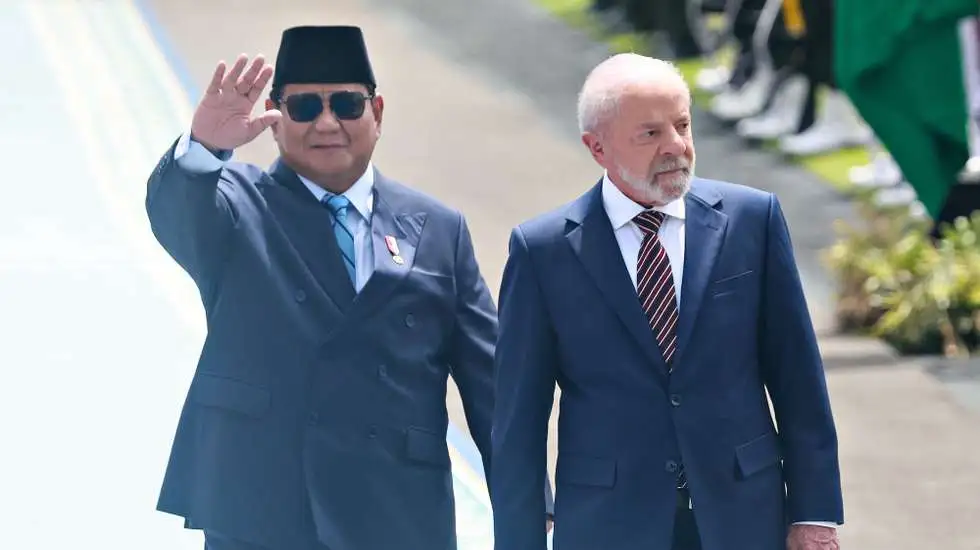
Lula’s Jakarta–Kuala Lumpur Push: Brazil Courts Southeast Asia To Rewire Trade.
One-stop reference
Company Intelligence
Every listed company in Latin America — financials, ownership and structure for 1,450+ companies across 26 exchanges, in one place.
Browse the directory →
RT
Ask Rio Times
This story and the bigger picture.
Open the full Ask Rio Times →

Aviation is also on the table, with Brazil’s aircraft industry seeking a bigger footprint as Indonesia upgrades fleets and regional connectivity. Defense cooperation, which entered a new phase this year, adds another channel for technology and training exchanges.

Lula’s ASEAN Trip Aims to Open Durable Markets

From Jakarta, Lula heads to Kuala Lumpur for the ASEAN Leaders’ Summit and the East Asia Summit. Brazil is ASEAN’s only Latin American Sectoral Dialogue Partner, a status that gives Brasília a seat—selectively—when the bloc sets priorities on trade facilitation, standards, and climate-related transitions.

A potential bilateral with U.S. President Donald Trump has been discussed during the summit window, underscoring how Brazil is working multiple power centers at once.

The story behind the story is de-risking. Brazil wants to rely less on a narrow set of buyers and more on a diversified Asia strategy that matches its strengths—food, energy tech, and regional aircraft—to concrete needs in Southeast Asia: affordable protein, cleaner fuels, and short-haul mobility.

By prioritizing technical standards and regulatory alignment, Brasília is trying to lower friction costs that quietly price exporters out of new markets.

For readers outside Brazil, the takeaway is simple: this trip isn’t pageantry. If the talks yield durable doors for Brazilian food, energy, and aviation—and clearer rules to keep them open—Brazil will have anchored new demand in a region shaping the next decade of trade.

The immediate signals to watch are which agreements get signed, any fresh market-access steps in Jakarta, and how visible Brazil is in Kuala Lumpur’s closed-door agenda.

This article was produced by The Rio Times’ automated newsroom system. How we use AI · Report an error

Read More from The Rio Times

The Rio Times · Power Map
See who really holds power in Latin America
Click to open the Power Map

Rotate for Best Experience

This report is optimized for landscape viewing. Rotate your phone for the full experience.