Living in Equatorial Guinea: What Expats Need to Know
Key Facts
- The country. Equatorial Guinea, on Africa’s Atlantic coast, has about 1.9 million people, roughly as many as Nebraska. Its economy, worth about US$12.8 billion in 2025, rests on oil and gas.
- Why it matters. It is Africa’s only Spanish-speaking country, ruled by President Teodoro Obiang Nguema Mbasogo since 1979. Foreigners there mostly work in energy, diplomacy or construction.
- Why now. The state named a new capital in January 2026 and blocked Facebook and TikTok in September, changing daily life for newcomers.
- What happened. Since early September 2026, Facebook and TikTok have needed a VPN (virtual private network), press reports say, after a corruption video.
- The numbers. GDP per person was about US$6,600 in 2025, World Bank data show. The CFA franc trades near 582 to the US dollar.
- What it means for you. Get an e-visa and yellow fever certificate before flying. Carry cash and your passport, and buy insurance with medical evacuation cover.
- Still open. How long the social media block lasts, and when ministries and embassies will actually move to the new capital.
An oil-rich, Spanish-speaking state where expat life is comfortable inside the compound and complicated outside it.
Living in Equatorial Guinea means settling in one of Africa’s smallest states, a former Spanish colony on the central African coast. It is split between Bioko island, home to Malabo, and a mainland region whose main city is Bata.
Oil and gas, pumped mostly offshore since the 1990s, pay for most of the state budget. President Teodoro Obiang Nguema Mbasogo has ruled since 1979, and his son Teodoro Nguema Obiang Mangue is vice president.
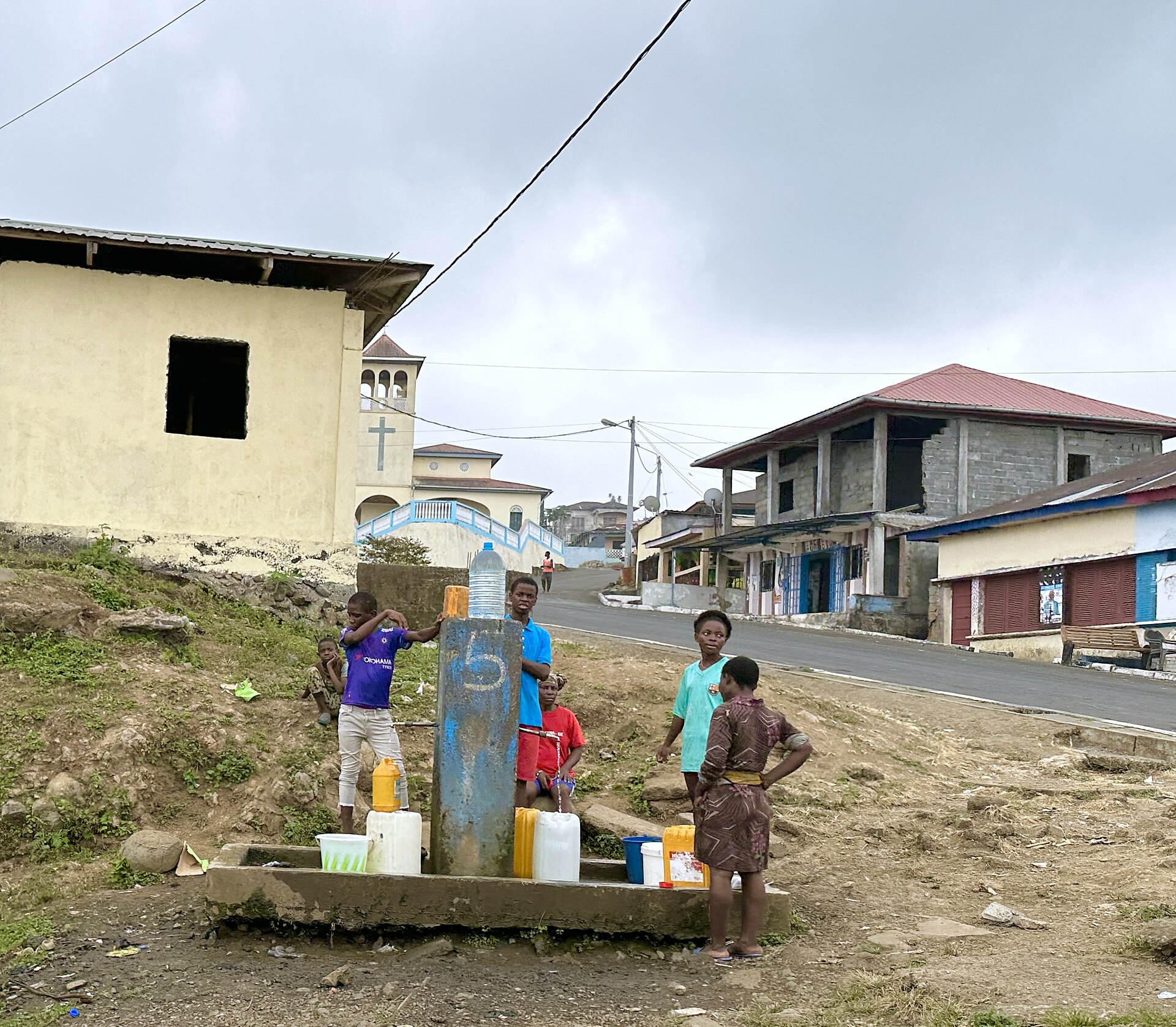
For most foreigners, the country is a work posting rather than a lifestyle choice. Expat communities are small and built around the energy industry, embassies and construction firms.
This guide sets out the practical baseline as of October 2026. Rules change with little notice, so check with your employer and your embassy before you travel.
A new capital on paper
In January 2026 a presidential decree made Ciudad de la Paz, a purpose-built mainland city, the official capital instead of Malabo. Le Monde, Xinhua and the African Press Agency all reported the move.
On the ground, little has changed for foreigners. Press reports from September describe the new city as largely empty, with few shops or schools. Expats still live and work in Malabo and Bata.
Visas and paperwork
Almost every foreigner needs a visa issued before travel. The US State Department says Americans need an approved e-visa before arrival and must carry a printed copy of the approval.
Britain’s Foreign Office says e-visas take about 72 hours to process and short-term visas are valid for 90 days. Your passport must be valid for at least six months after you arrive.
Make sure your passport is stamped on entry. The Foreign Office says travellers without a proper stamp have been delayed or threatened with detention.
Long-stay work and residence papers are normally arranged by the employer. Ask its local liaison for the current process rather than relying on online forums.
Money and costs
The currency is the Central African CFA franc, shared by the six members of CEMAC, the Central African Economic and Monetary Community. It is pegged to the euro at 655.957 francs per euro.
Conversions in this guide use 582.0 CFA francs per US dollar (open.er-api.com, 2 October 2026). The US State Department calls Equatorial Guinea “almost exclusively a cash economy”.
Credit cards are rarely accepted outside major hotels, and cash machines in the cities can be unreliable. Travellers may carry at most US$10,000 or 5 million CFA francs (about US$8,600) in or out.
Most consumer goods are imported, which pushes up prices for anything beyond local market produce. No reliable public series on rents or living costs exists, so get figures from your employer.
Safety and the law
The US State Department rates Equatorial Guinea at Level 2, exercise increased caution, citing crime, health risks and arbitrary enforcement of laws. It also advises against taking taxis, especially alone.
Britain’s Foreign Office says crime ranges from petty theft to armed robbery, with higher risks after dark in Malabo and Bata. Taxi robberies and violent assaults have been reported.
Police and military roadblocks are common, and you may be arrested if you cannot show identification. The Foreign Office says photographing government or military buildings or airports is illegal.
Political expression is tightly restricted, and public criticism of the ruling family can lead to arrest. Foreigners are wise to keep political views offline.
Internet and social media
Facebook and TikTok have been blocked since early September 2026, and internet speeds restricted since 2 September, AFP reported via Vanguard and allAfrica. WhatsApp and Instagram were also restricted but remained accessible.
The block followed a viral video in which a young woman accused the vice president of corruption; she was later arrested. The information ministry did not respond to AFP, and the platforms are reachable only through a VPN.
For residents, that means planning work calls and family contact around a slow, filtered connection. Employers with offshore operations often run their own links.
Language and daily life
Spanish is the main working language. French and Portuguese are also official, while English is rare outside the oil sector and the embassies.
Daily life for most expats runs between the compound, the office and a handful of hotels and restaurants. Learning basic Spanish makes shopping, paperwork and roadblocks much easier.
Health
A yellow fever vaccination certificate is required for entry. The US State Department says the jab must be given at least 10 days before arrival. Malaria is present all year, so prevention tablets and mosquito protection are standard.
Medical services are limited. Both the US and British governments advise travel insurance that covers medical evacuation, since serious cases usually mean a flight abroad.
What is not known
Visa fees, work permit timelines and current compound rents are not published in official sources. Treat figures quoted on forums with caution and confirm them with the embassy or your employer.
It is also unclear when ministries and embassies will move to Ciudad de la Paz, and how long the social media block will last.
Frequently Asked Questions
Do I need a visa for Equatorial Guinea?
Yes. Most visitors, including US and British citizens, need a visa approved before travel, usually through the online e-visa system. Britain says processing takes about 72 hours, and a yellow fever certificate is also required.
Is Equatorial Guinea safe for expats?
The US State Department rates it Level 2, exercise increased caution, citing crime, health risks and arbitrary enforcement of laws. Carry your passport, avoid photographing official buildings and expect police roadblocks.
What is the capital of Equatorial Guinea now?
A decree in January 2026 made Ciudad de la Paz, a new city on the mainland, the official capital. Reports from September describe it as largely empty, so expat life still centres on Malabo and Bata.
Can I use cards or social media when living in Equatorial Guinea?
Plan on cash: the US State Department calls it almost exclusively a cash economy. Since early September 2026 Facebook and TikTok have been blocked, according to press reports, and internet speeds have been restricted.
Sources
US State Department, Equatorial Guinea country information · UK Foreign Office, Equatorial Guinea travel advice · World Bank, Equatorial Guinea data · Le Monde, Equatorial Guinea relocates capital to Ciudad de la Paz · Vanguard, Facebook and TikTok shut down in Equatorial Guinea · open.er-api.com, exchange rates
This article was produced by The Rio Times’ automated newsroom system. How we use AI · Report an error
Read More from The Rio Times