
France Election 2027
Published Tuesday, 27 October, 9:15 a.m. ET (2:15 p.m. Paris) · Source: Odoxa-Mascaret, Ifop-Fiducial
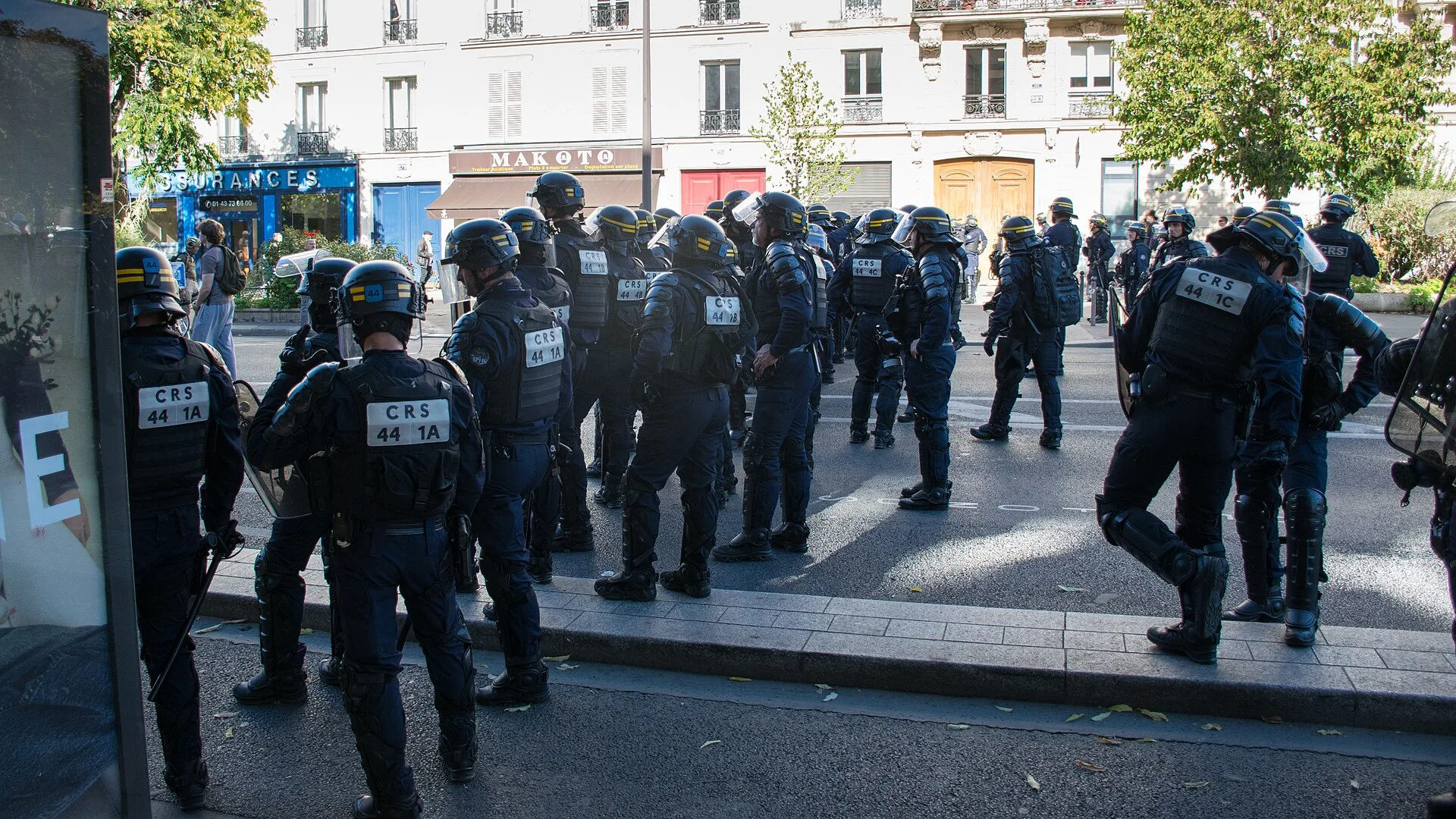
France is still digesting the riots of Saturday, 17 October, and the first answer to “who gains?” is in: the nationalist Marine Le Pen, by a long way. A new Odoxa-Mascaret poll published on Tuesday, 27 October 2026, shows 74% of French adults expect her to profit from the unrest.
That puts her far ahead of every rival in the race for the France 2027 election. Our France protests coverage tracks the street story; this is the political one.
Key Facts
- Winner: Polling firm Odoxa-Mascaret: 74% of French adults say Marine Le Pen gains most from the 17 October riots.
- Runner-up: Jean-Luc Mélenchon, the veteran left-wing leader, is named by 32%.
- Vote: France elects its next president in spring 2027, in two rounds.
- Prediction markets: Polymarket, a prediction market: Le Pen 45.1% to win, ex-premier Philippe 18.5%, Cannes mayor Lisnard 14.1% (9:15 a.m. ET on Tuesday, 27 October).
This story is part of our coverage of the why France is in crisis. Dates, times and how to follow it are in our guide.
In plain English
Odoxa is a French polling firm. Le Pen leads the National Rally, a conservative nationalist party, and Mélenchon leads France Unbowed, a left-wing movement. Both gain when voters are angry at the government, and the poll says that is happening now.
Anger Is Moving Votes To The Edges
Odoxa questioned 1,005 French adults online on 21 and 22 October, four days after the riots on Saturday, 17 October. It asked who will profit from the crisis.
Le Pen was named by 74%, and Mélenchon by 32%. Respondents could name more than one politician.
Her personal approval rating rose 3 points to 38%. Jordan Bardella, the 31-year-old president of her party, gained 2 points to 37%.
Mélenchon gained 2 points across all voters, and 7 points among people on the left. Two centrist former prime ministers, Édouard Philippe and Gabriel Attal, lost ground.
A Second Pollster Sees The Same Shift
Ifop-Fiducial, a second major French polling firm, surveyed voters from the evening of 17 October to 19 October. It put Le Pen at 36% in the first round of next year’s vote, up 2 points on the poll of 12 to 14 October.
The same survey had Mélenchon reaching the second round, while Philippe and Attal slipped back. France uses a two-round system: the top two candidates in the first round meet in a runoff.
Two firms using different samples point the same way, which makes the direction hard to dismiss. Both were taken within days of the riots, so they capture a mood, not a settled choice.
What The Markets Think
- Polymarket, next French president (US$157,748,265 traded): Marine Le Pen 45.1%, Édouard Philippe 18.5%, David Lisnard 14.1%, Jean-Luc Mélenchon 10.5%.
Prices are the implied probability of each outcome as of 9:15 a.m. ET on Tuesday, 27 October. They are real-money bets, not polls. David Lisnard, the mayor of Cannes, is the conservative that bettors rate third.
Why we show this: prediction markets turn real-money bets into a live probability that moves within minutes of the news, which is why investors, campaigns and newsrooms in the United States now follow them closely. We show them next to polls and official results, never instead of them.
Why Americans Should Care
France is the euro area’s second-largest economy, a NATO member and a permanent member of the UN Security Council. A Le Pen presidency would reshape Europe’s stance on Ukraine, trade and the EU budget.
Follow every new survey in our France 2027 poll tracker.
What Is Not Known
Polls measure moods, not votes. It is not known whether anger will last until the spring, or whether the centre will unite behind one candidate.
President Emmanuel Macron cannot run again because of term limits. It is also unclear whether the strike called for 5 November will shift the mood again.
Frequently Asked Questions
Who gains most from the French riots, according to polls?
Odoxa-Mascaret found 74% of adults expect Marine Le Pen to profit and 32% say Jean-Luc Mélenchon. Ifop-Fiducial put her at 36% for the first round.
When is the next French presidential election?
France votes in spring 2027. If no candidate wins more than half in the first round, the top two meet in a runoff.
Sources: Odoxa-Mascaret barometer, Ifop-Fiducial survey, Polymarket.
This article was produced by The Rio Times’ automated newsroom system. How we use AI · Report an error · Editorial responsibility: Matthias Camenzind, Editor-in-Chief
France in Turmoil
- Why France Is in Crisis, and How Macron Lost His Grip
- Why Is France Protesting? Riots, Curfews and the 2027 Race
- Is It Safe to Travel to France Right Now? Curfews, Strikes
- Who Will Win France’s 2027 Election? Polls and Odds