
JAMAICA · LANGUAGE GUIDE
Key Facts
- —The country Jamaica, a Caribbean island of 2,774,538 people (2022 census).
- —Official language English, used in Parliament, schools and government services.
- —Everyday language Patois (Patwa): 89% of adults polled in 2005 said they speak it.
- —Bilingual in practice 46.4% switched between Patois and English in a 2006 test.
- —US visitors 1.84 million of 2.60 million stopover arrivals in 2025.
- —Still open No official count of Patois speakers has been published.
English runs Jamaica’s government and schools, while Patois runs daily life: what US visitors will hear in Kingston and Montego Bay.
What language do Jamaicans speak? English is the official language, but most Jamaicans use Jamaican Patois, an English-based Creole, in everyday life.
This guide shows where each language is used and which Patois phrases US visitors will hear in Kingston and Montego Bay.
What Language Do Jamaicans Speak at Home and at Work
Jamaica counted 2,774,538 residents in its 2022 census, says the Statistical Institute of Jamaica (STATIN), the national statistics office. That is roughly the population of the city of Chicago.
Kingston and St Andrew, the capital region, had 672,904 people. St James, the parish around Montego Bay and its airport, had 188,656.
English is the language of the state. The Jamaican Language Unit (JLU) says it is the language in which state services are normally provided.
The JLU is a language-planning unit at the University of the West Indies (UWI) campus at Mona, in Kingston. It has worked since September 2002.
Jamaicans call their everyday tongue Patois, Patwa or simply Jamaican. Linguists class it as a Creole, a full language that grew out of contact between peoples.
Most of its words come from English, but its sounds and grammar are its own. That is why a visitor can catch single words and still miss the sentence.
The JLU’s island-wide Language Attitude Survey polled 1,000 adults aged 18 and over in October and November 2005. Some 78.6% said they speak both Jamaican and English.
Another 10.5% said they speak only Jamaican, and 10.9% only English. Together, 89.1% of respondents counted themselves as Patois speakers.
A follow-up Language Competence Survey in 2006 tested that claim in live interviews with 1,000 adults. Only 46.4% actually switched between both languages.
Some 36.5% used only Patwa and 17.1% only English. English-only speakers were more common in eastern and urban areas, the JLU found.
Many Jamaicans move along a scale between broad Patois and Standard Jamaican English, the local form of standard English. They often shift within a single conversation.

Where Patois Comes From and Who Shaped It
The Jamaica Information Service (JIS), the government news agency, dates English rule to an attack on 10 May 1655. Sugar estates then grew from 57 in 1673 to nearly 430 by 1739, worked by enslaved Africans.
Full emancipation came in 1838, and Jamaica became independent on 6 August 1962, the JIS says. Patois grew up over those centuries of colonial rule.
The Jamaica Tourist Board (JTB), the state tourism agency, describes it as shaped by African, Spanish, French, Portuguese and English influences. It calls Patois the voice of a people “forced into a society with a different language”.
The JTB puts the poet Louise Bennett-Coverley, known as Miss Lou, at the forefront of making Patois a source of pride. Born on 7 September 1919, she wrote her first dialect poem at 14, the JIS says.
Her poems in Patois raised the folk language to an art form appreciated across Jamaica, in the JIS’s words. She received the Order of Jamaica in 1974 and the Order of Merit in 2001.
Reggae, carried forward by Bob Marley, propelled Patois into the global mainstream, the JTB says. It adds that the language keeps evolving under the influence of dancehall.
Writing it down is still unsettled. The JLU’s mandate includes proposing and popularising an official standard writing system, but spellings in daily use vary widely.
In January 2011, linguists meeting at UWI Mona adopted a Charter on Language Policy and Language Rights in the Creole-speaking Caribbean. It affirms the right of Creole speakers to use their language in education, government, the courts and the media.
For the bigger picture of the island, its economy and its politics, see Jamaica explained and the Rio Times Caribbean page.
Common Patois Phrases Heard in Kingston and Montego Bay
Spellings below follow popular usage, so expect variants on signs and social media. If people talk too fast, ask them to slow down, as the JTB itself advises visitors.
Five words that unlock most sentences
- mi: I, me or my. Mi hungry means I am hungry.
- im: he, she, him or her.
- di: the. Dem after a noun makes it plural, as in di pickney dem, the children.
- a: marks an action in progress. Mi a come means I am coming.
- nuh: not or don’t. Mi nuh know means I don’t know.
Greetings
- Wah gwaan? (also Wha’ gwaan): what’s going on, used as hello. The JTB says visitors are sure to pick it up.
- Wha’appen?: what’s up, a greeting among friends.
- Mi deh yah: I’m here, the usual reply, meaning I’m fine.
- Yeah man (often written ya mon): yes, sure, no problem.
- Irie: good, fine, at ease.
- Bless up or Respect: a friendly greeting or thanks.
- Big up: praise or a shout-out. Big up yuhself means well done.
Getting around
- Weh yuh a go?: where are you going? A driver may ask this.
- Mi a go a town: I’m going downtown. In Kingston, town usually means Downtown.
- One stop, driver: please stop here, I’m getting off.
- Small up yuhself: squeeze up and make room, heard in full route taxis.
- Soon come: I’ll be back soon. The timing is flexible.
Shopping and eating
- A how much? or How much fi dis?: how much is this?
- Nuff: plenty, lots of anything.
- Mi waan…: I want…
- Nyam: eat. Likkle: little.
- Bammy: flat bread made from grated cassava. Cho-cho: the chayote squash.
Saying goodbye
- Walk good: goodbye, take care, safe travels.
- Likkle more: see you later.
- One love: a warm farewell.
Words worth recognising
- Pickney: child. Yute: young person.
- Bredren and sistren: friends, brothers and sisters.
- Bashment: a party, or anything exciting and showy.
- Duppy: a ghost. Unu: you, when speaking to several people.
- Rhaatid!: wow, an exclamation of surprise, also used to intensify.
The JTB’s official visitor site lists several of these, including bashment, nuff, rhaatid, walk good, bammy and cho-cho. A tourism board teaching Patois shows how far attitudes have moved.
Getting Around, Taxi Phrases and 2026 Fares
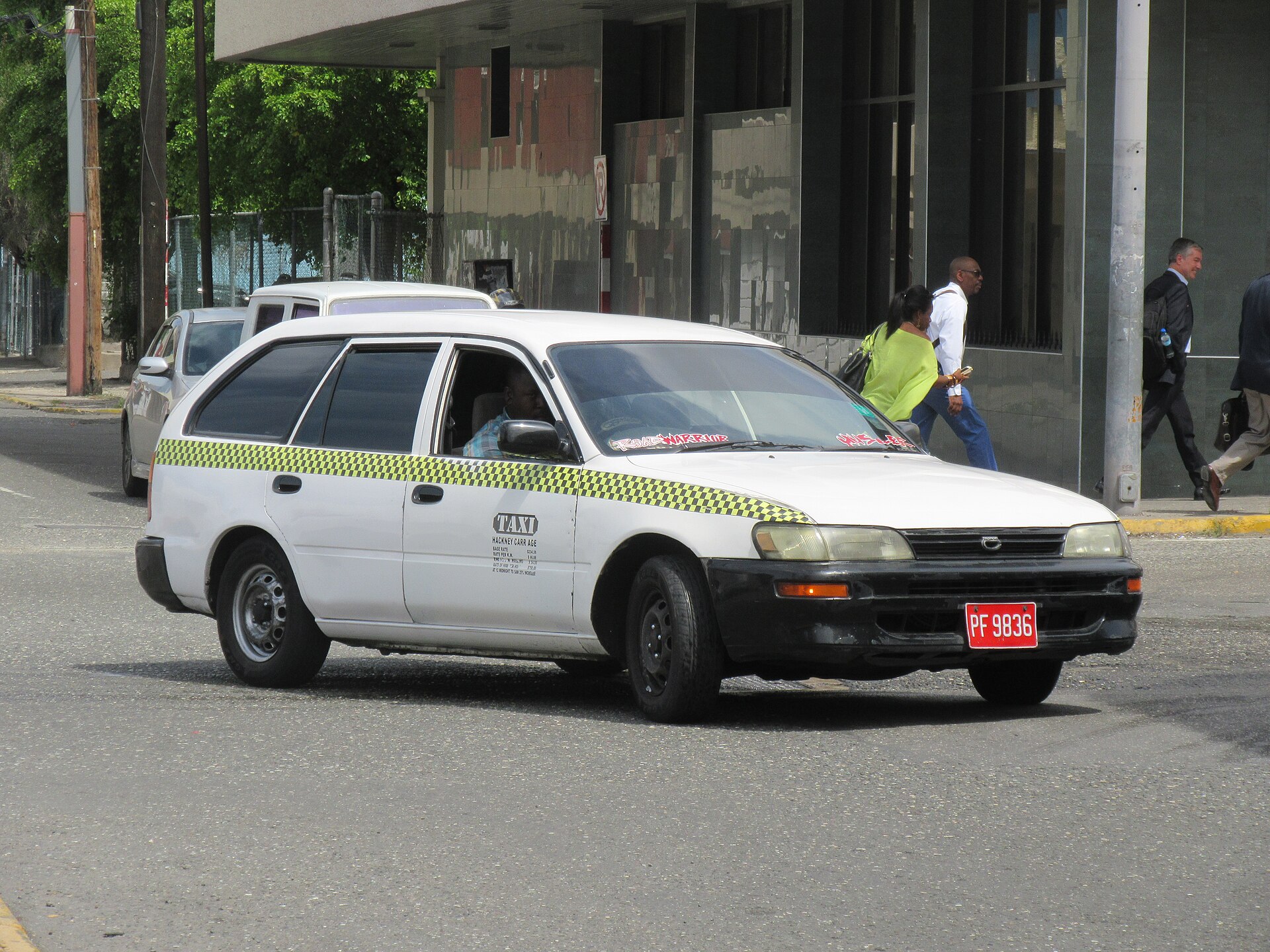
Route taxis are shared cars on fixed routes that pick up and drop off along the way. Hackney carriages are taxis hired for a private trip, like a US cab.
By rule, route taxis show the words ROUTE TAXI and their route on the front doors, says the Transport Authority, the regulator. Hackney carriages must show HACKNEY CARRIAGE or TAXI.
Route taxis are where Patois flows fastest, so “one stop, driver” and “small up yuhself” earn their keep. Licensed public vehicles carry red plates, the US State Department notes.
The Authority raised fares by 8% on Tuesday, 2 June 2026, and by another 8% on Wednesday, 1 July. Conversions use Bank of Jamaica counter rates for Thursday, 8 October 2026.
Those were JMD 157.79 buying and JMD 159.78 selling per US dollar. This guide uses the midpoint, about JMD 158.8, so JMD 100 is about US$0.63.
A route taxi now charges a base of JMD 132 (about US$0.83) plus JMD 8.64 (about US$0.05) per kilometre. Fares are rounded to the nearest JMD 10 (about US$0.06).
Sample fares from the Authority’s July 2026 tables, with US$ values at that rate:
- Route taxi, Montego Bay airport to Montego Bay, 4 km: JMD 170 (about US$1.07).
- Route taxi, New Kingston to Downtown Kingston, 5.3 km: JMD 180 (about US$1.13).
- Route taxi, Papine to Half Way Tree in Kingston, 8.6 km: JMD 210 (about US$1.32).
- Hackney carriage, Half Way Tree to UWI Mona, 6.5 km: JMD 860 (about US$5.42).
- Hackney carriage, Three Miles to the US Embassy in Kingston, 8 km: JMD 980 (about US$6.17).
- Hackney carriage, Downtown Kingston to the airport, 15 km: JMD 1,500 (about US$9.45).
Children, students in uniform, disabled passengers and senior citizens pay half fare, the Authority says. Ask “a how much?” before you sit down.
When Standard English Is Expected
Parliament is the clearest case. Standing Order 6 of the House of Representatives says: “The proceedings and debates of the House shall be in the English language.”
The same rule requires every petition to the House to be in English. Debates take place at Gordon House, the parliament building in Downtown Kingston.
The rule was tested in May 2026, the Jamaica Observer reported on 13 May. Nekeisha Burchell began her first Sectoral Debate speech in Patois, opening “Madam Speaker, mi git up dis afta noon”.
Burchell is the People’s National Party (PNP) member for St James Southern, in Montego Bay’s parish, elected in September 2025. The PNP is the main opposition party, led by Mark Golding.
The Sectoral Debate is the yearly round of speeches in which MPs review policy areas. Speaker Juliet Holness, who chairs the House, stopped her and cited the Standing Orders.
“So let me give you the Queen’s English,” Burchell replied, and continued in English, the Observer reported. Holness was still Speaker in September 2026, according to the JIS.
Classrooms and exams run in English. A 2001 Ministry of Education draft language policy, quoted by the JLU, set out five options for bilingual education.
Options included equal status for both languages, or keeping English official while using Patois orally in the early grades. The draft cited a 2000 report rating 58% of Grade Four pupils at risk or questionable in literacy.
The JLU then ran a bilingual education pilot in Grades One to Four from 2004 to 2008. It aimed at full bilingualism in Patois and English.
In 2017 Ruel Reid, then education minister, said there should be an acceptance that Jamaica’s first language is Patois. He said standard English is best taught as a second language to those raised in Patois, the JIS reported.
In May 2001, submissions recounted by the JLU asked a parliamentary committee to outlaw discrimination on the ground of language. They argued that many citizens lack competence in English, the language of state services.
The committee’s 2002 report said a language agency should be set up first, and the JLU was created that year. No law found in this check makes Patois an official language.
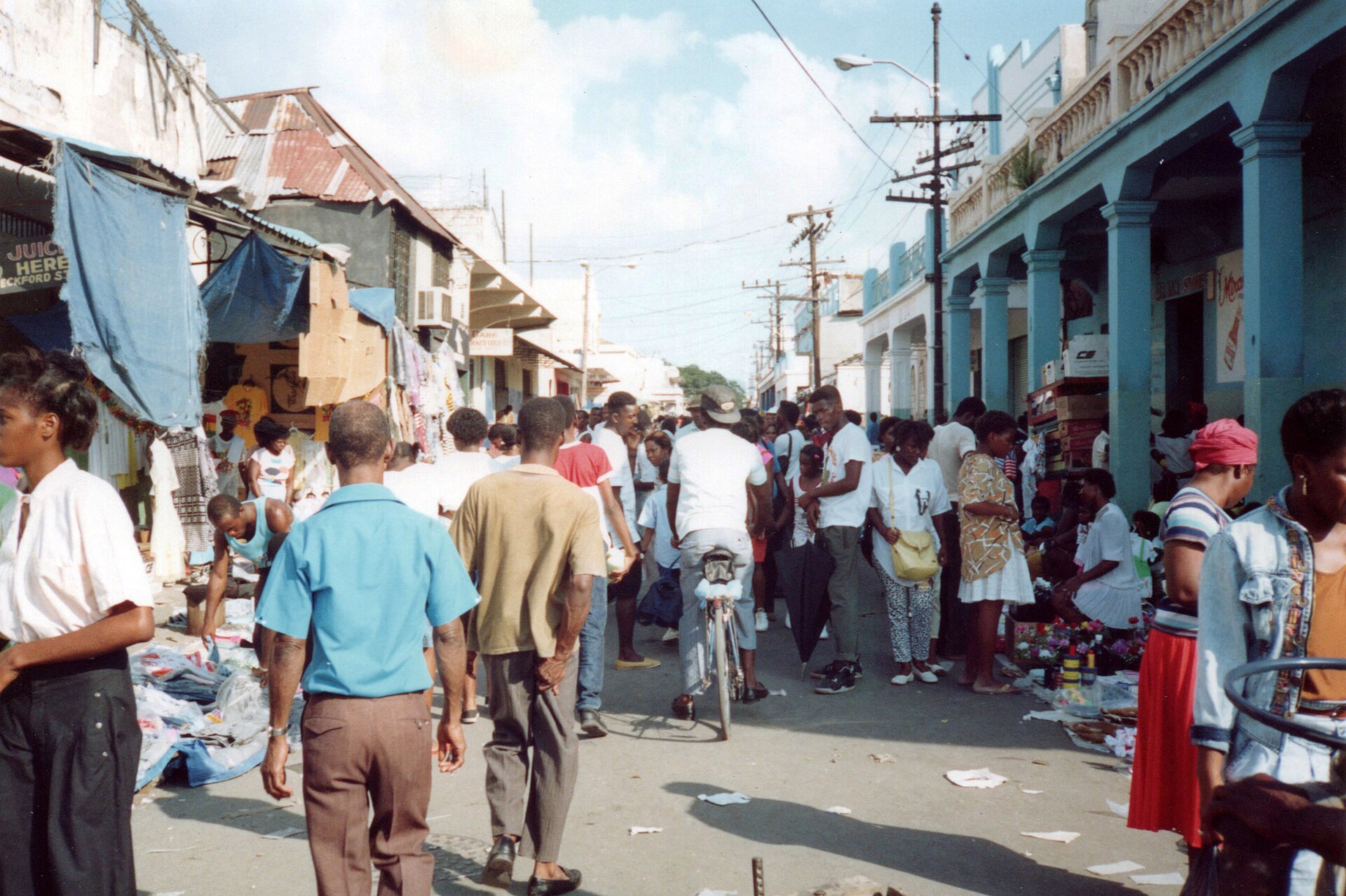
For visitors, expect English at hotel desks, banks and government offices. Expect Patois on the street, in markets, in route taxis and at the bar.
How Jamaicans View Patois Today
The 2005 JLU survey found that 79.5% of adults called Jamaican a language that can express anything. Some 68.5% wanted it made official alongside English.
Another 67.8% thought the prime minister or finance minister would communicate better by speaking Jamaican in Gordon House. And 71.1% preferred schools teaching reading and writing in both languages.
Old stereotypes persisted: 57% thought English speakers more intelligent and 61.7% thought them more educated. Patois speakers were more often seen as friendly (39.8%) and helpful (37%).
Officials use it too. In 2023 the Ministry of Culture ran Scriptures in Patois, a podcast of Bible readings by politicians and actors, the JIS reported.
“This language is incredibly important. It is part of the essence of who we are as Jamaican people,” said Oliver Watt, the ministry’s public relations director.
The 2026 episode in Parliament divided readers quoted by The Gleaner on 28 May. Some called Patois a matter of identity and respect; others said English is the formal language.
Concerts are an easy place to hear it live. For what is on in the capital, see BZR WKND in Kingston.
Etiquette and Mistakes to Avoid
Greet people before you ask for anything; a plain good morning goes a long way. Use English with confidence, since it is the language of school and government.
Do not put on a fake Jamaican accent or overuse “ya mon”. Locals can find it mocking, even when it is meant kindly.
Call the language Patois or Jamaican, not broken English. Most Jamaicans see it as a language in its own right, as the 2005 survey shows.
Do not repeat swear words you hear in songs. Words ending in claat are strong curses in Jamaica, far ruder than they sound to outsiders.
Read “soon come” as a promise, not a timetable. Build slack into tours and transfers.
What It Means for US Readers
Americans are by far Jamaica’s largest visitor group. The JTB counted 1,839,753 US stopover visitors in 2025, out of 2,601,416, or about 71%.
US citizens need no visa for stays of 90 days or less, the State Department says. Passports must be valid on entry and exit, and an electronic C-5 customs form is required before travel.
The department rates Jamaica at Level 2, exercise increased caution, in an advisory issued on Tuesday, 23 June 2026. Parts of Kingston and of St James are rated Level 3, reconsider travel.
Those include Denham Town and Parade Gardens in Kingston, and Flankers and Mount Salem in St James. The department advises licensed taxis with red plates, or transport arranged by your hotel.
Language is not a barrier: English works everywhere a visitor needs it. Uber operates mainly in Kingston, Montego Bay and Ocho Rios, the department adds.
St James is among the parishes STATIN lists as most affected by Hurricane Melissa. On recovery in the resort areas, see most Jamaican tourism jobs are back after Hurricane Melissa.
Planning a longer stay? Start with moving to Jamaica and healthcare in Jamaica for expats.
What Is Not Known
No official count of Patois speakers was found. The 2011 census questionnaire asked no language question, and no language table appears among STATIN’s published 2022 census results.
The main survey data date from 2005 and 2006, with 1,000 adults each, and may be out of date. The 2005 survey recruited people at markets and shopping areas.
No final national language education policy was found; the JLU quotes a 2001 draft. No motion to change Standing Order 6 was found as of October 2026.
No government-adopted standard spelling for Patois was found. Whether the government will act on the 2011 Caribbean language charter is also not known.
Frequently Asked Questions
What language do Jamaicans speak?
English is the official language, but most Jamaicans speak Patois in daily life. In a 2005 University of the West Indies survey, 89% of adults said they speak Patois.
Is Jamaican Patois a separate language?
Linguists treat it as a Creole language with its own grammar, although most words come from English. In 2005, 79.5% of Jamaicans polled called it a language.
Is Patois an official language in Jamaica?
No. Parliament’s rules require English, although 68.5% of adults polled in 2005 wanted Patois made official alongside English.
Will Jamaicans understand American English?
Yes, English works in hotels, shops, offices and taxis across the island. Some Jamaicans, more often in rural areas, are more at ease in Patois, so speak slowly and clearly.
What does wah gwaan mean?
It means what’s going on and works as a casual hello. A common reply is mi deh yah, meaning I’m here and doing fine.
Should visitors try to speak Patois?
A greeting such as wah gwaan or a goodbye such as walk good is welcome. Avoid imitating the accent or repeating swear words heard in songs.
How much is a route taxi from Montego Bay airport into town?
The Transport Authority’s July 2026 table sets JMD 170 (about US$1.07) for the 4 km route. A private licensed taxi costs more.
Sources: Jamaican Language Unit, UWI Mona: Background; JLU: Surveys; JLU: Language Attitude Survey of Jamaica 2005, summary of results; JLU: Language Competence Survey of Jamaica 2006; JLU: Bilingual Education Project 2004-2008 (quoting the 2001 draft Language Education Policy); JLU: Functions; JLU: Charter on Language Policy and Language Rights in the Creole-speaking Caribbean; Houses of Parliament: Standing Orders of the House of Representatives (Standing Order 6); STATIN: Population Census 2022, population change by parish; STATIN: Census 2011 individual questionnaire; STATIN: Impact of Hurricane Melissa; Jamaica Tourist Board: stopover arrivals by country and month, 2025; Jamaica Tourist Board: Jamaican Patois; JIS: Louise Bennett-Coverley; JIS: Jamaican history; JIS: Patois a first language, says education minister (3 August 2017); JIS: Bible verses to be read in Patois on Easter Sunday (5 April 2023); JIS: House Speaker champions simpler parliamentary rules (18 September 2026); JIS: The Opposition; Transport Authority: fare tables and June/July 2026 fare notices; Transport Authority: colour coding and markings; Bank of Jamaica: counter rates (8 October 2026); US State Department: Jamaica country information; US State Department: Jamaica travel advisory; Jamaica Observer (13 May 2026); The Gleaner: readers’ reactions on the Patois debate (28 May 2026); The Gleaner (6 September 2025) (all accessed 8 October 2026).
Editorial responsibility: Matthias Camenzind, Editor-in-Chief · Editorial standards · Report an error