Independent Vote Count Confirms Opposition’s Triumph in Venezuela
Today, Venezuela’s charged electoral atmosphere took a turn as an independent vote count validated the opposition’s claims of victory.
Brazil’s Estadão outlet, a newspaper of reference, accessed preprint data, set for imminent publication, showing opposition candidate Edmundo González Urrutia winning with 66.23% against Nicolás Maduro’s 31.27%.
This significant lead mirrors the figures opposition leader María Corina Machado reported. She claimed González Urrutia achieved 70% of votes from 84% of accessed election minutes.
The dataset from AltaVista, described as an independent Venezuelan NGO, corroborates these claims.
Brazilian statisticians and political scientists validated these results, highlighting a clear and irreversible trend toward González Urrutia’s victory, writes Estadão.
However, despite these confirmations, global experts insist on the National Electoral Council (CNE), under Government control, releasing official records for full validation.
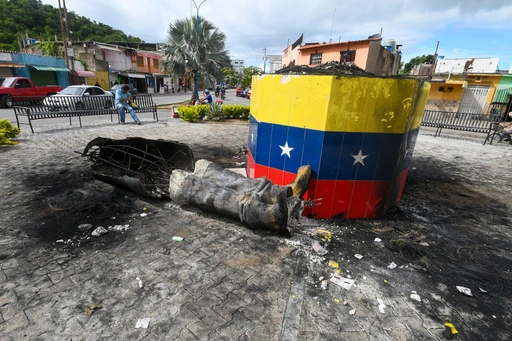
Post-election, the CNE named Nicolás Maduro the winner by 51% to González Urrutia’s 44%, yet didn’t publish the minutes. The opposition has since been collecting these documents wherever possible.
AltaVista’s data boasts a minimal 0.5% error margin. Edison Research’s exit polls also support this data, showing the opposition at 65% versus Maduro’s 31%.
Independent Vote Count Confirms Opposition’s Triumph in Venezuela
Researchers had strategically chosen 1500 ballot boxes from over 30,000, aiming to avoid bias by reflecting historical voting trends.
This thorough preparation sought to balance data collection from government and opposition areas.
Limited access allowed only 971 of 1500 targeted entries to be validated, yet this sample suffices for reliable projections.
Researchers innovated by using a chatbot for volunteers to submit voting record photos, which were validated and logged.
Should the CNE release the records, the team is ready to analyze the data further. They will apply various statistical tests to pinpoint any discrepancies.
This methodology, pre-registered with the Open Science Foundation and publicly accessible, underscores its credibility.
This narrative spotlights the complexities of electoral integrity and the vital role of transparent methodologies in such environments.
AltaVista’s data challenges the official account and marks a pivotal moment in Venezuela’s political scene.
This instance shows how technology and scientific rigor can bolster calls for transparency and fairness.
More: Venezuela news in English, every day from The Rio Times.
This article was produced by The Rio Times’ automated newsroom system. How we use AI · Report an error
Read More from The Rio Times