Hay Festival Querétaro Faces 64% Municipal Cut
Mexico · Culture
Key Facts
—Municipal reduction. Querétaro cut its Hay Festival contribution from 11.18 million pesos (about US$643,000) (US$604,000) to 4 million pesos (about US$230,000) (US$216,000).
—Percentage drop. The 7.18-million-peso cut represents a 64.22% reduction in municipal support.
—Total public funds lost. Combined public support fell from 13 million pesos (US$702,000) to 4.6 million pesos (US$248,000).
—Federal offset. The festival obtained 600,000 pesos (about US$34,500) (US$32,400) from the Profest 2026 federal program.
—2026 dates. The Querétaro edition runs from 4 to 6 September 2026.
The Hay Festival in Querétaro, the Mexican edition of the globe-trotting literary gathering born in Wales, is proceeding with its 2026 program after its host municipality slashed direct funding by 64.22 percent.
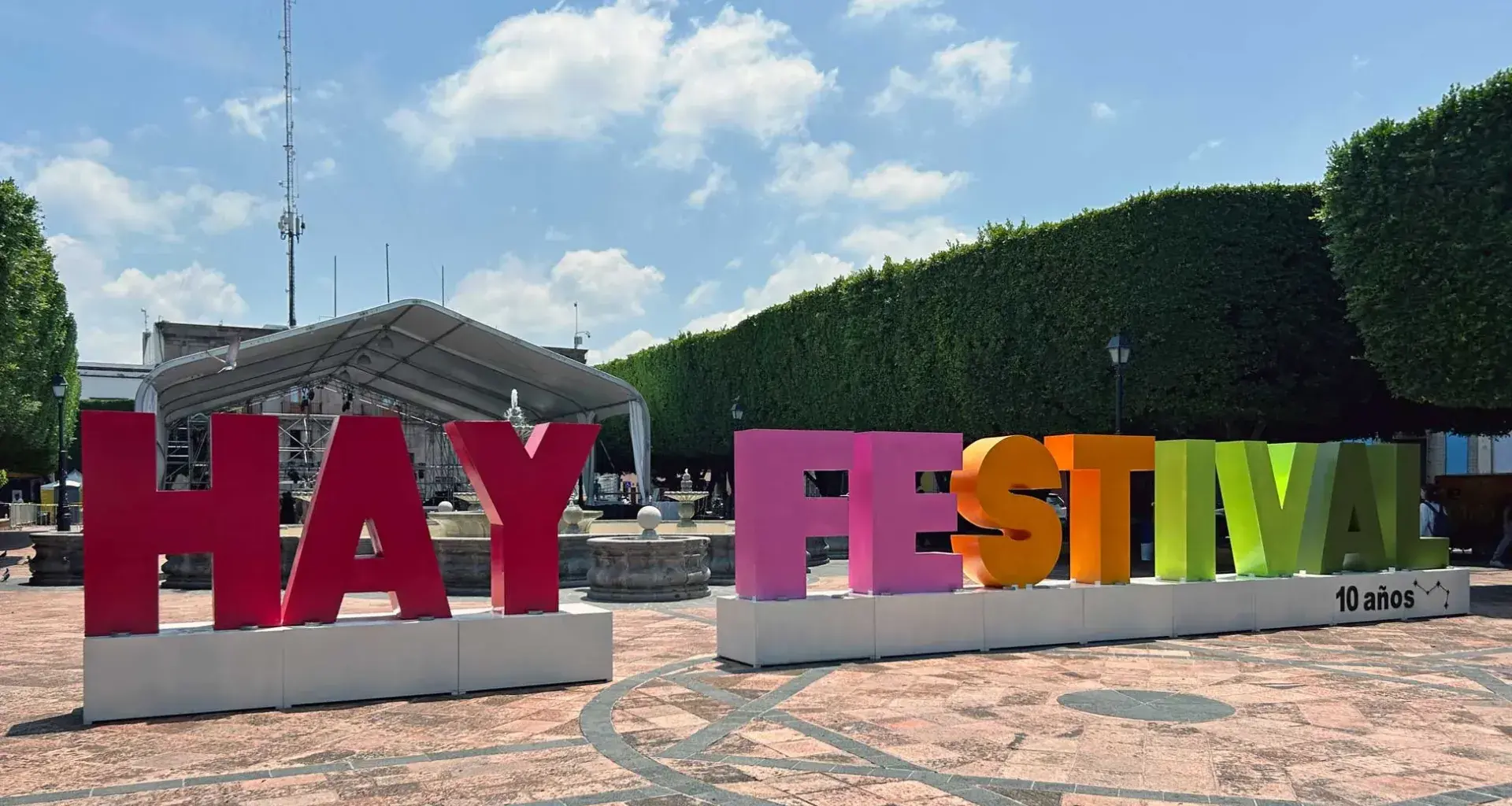
What the Hay Festival brings to Querétaro
The Hay Festival is an international cultural and literary organization that began in Hay-on-Wye, Wales, in 1987. It now runs festivals and cultural projects in Colombia, Peru, Spain, the United States, and Mexico.
The Querétaro edition brings together writers, thinkers, and artists for public conversations in the historic center of the colonial city, drawing an international audience of expats, tourists, and Mexican readers alike.
For a foreign visitor or resident, the festival transforms Querétaro’s UNESCO-listed streets into a walkable hub of ideas, with talks often held in English and Spanish. It has become a signature event that puts the city on the global cultural map alongside better-known destinations like Cartagena and Arequipa, where the festival also has a strong presence.
Beyond the main stage, the gathering typically includes workshops, book signings, and youth programs that ripple out into local schools and cafes. This blend of high-profile international authors and accessible community events has made it a rare point of connection between Mexico’s literary scene and the wider world.
The numbers behind the cut
Querétaro’s municipal government reduced its contribution from 11,180,000 pesos (US$604,000) to 4,000,000 pesos (US$216,000). That 7,180,000-peso (US$388,000) drop is a 64.22 percent reduction, according to reporting by Milenio.
Combined public support from municipal and other government sources fell from roughly 13,000,000 pesos (US$702,000) to 4,600,000 pesos (about US$34,500) (US$248,000), a total decline of 8,400,000 pesos (US$454,000) or 64.61 percent.
To put these figures in perspective, the original municipal contribution of 11.18 million pesos (about US$643,000) represented a significant bet on soft power and cultural tourism for a mid-sized Mexican city. The new figure of 4 million pesos (about US$230,000) is closer to what a single large corporate sponsor might contribute, leaving a gap that cannot easily be filled by ticket sales alone.
The combined public-funding drop of 8.4 million pesos (about US$483,000) (about US$230,000) means the festival’s operating budget for 2026 will likely be leaner, potentially affecting the number of invited authors, the scale of free public programming, or the marketing reach that draws international attendees.
The municipality’s reasoning
City officials said they are prioritizing infrastructure and cultural spaces that leave a permanent mark on the community. The budget was distributed “parejo” — evenly — across projects, they argued, and must build lasting cultural infrastructure.
Funds are being directed to the renovation of the Teatro Hércules, the Teatro en la Ciudad, and several cultural centers. The municipality framed the shift as a long-term investment in brick-and-mortar venues rather than a transient festival.
The Teatro Hércules, a historic venue in the city center, and the Teatro en la Ciudad are both well-known to locals but have long needed upgrades to host modern productions. For city planners, fixing roofs, improving acoustics, and updating seating creates a year-round asset that can serve school plays, concerts, and conferences long after the festival crowds have gone home.
This tension between funding ephemeral events and building permanent infrastructure is not unique to Querétaro. Municipalities across Latin America often face the same dilemma, especially when budgets tighten and officials must show voters tangible, lasting results from public spending.
How the Hay Festival is responding
The festival moved to seek federal support through Profest 2026, a Mexican government program that backs professional arts festivals. It secured 600,000 pesos (about US$34,500) (US$32,400) from the program to partially offset the municipal cut.
Organizers have not issued a direct public rebuttal beyond that financing response. The 2026 edition remains scheduled for 4 to 6 September 2026 in the city of Querétaro, a UNESCO World Heritage site in central Mexico.
Profest is a competitive federal fund administered by the Ministry of Culture, designed to strengthen Mexico’s festival ecosystem. The 600,000 pesos (about US$34,500) awarded is a modest sum compared to the 7.18-million-peso (about US$413,000) hole, suggesting the festival will need to lean more heavily on private sponsors, ticket revenue, and perhaps international grants to maintain its usual caliber.
By quietly securing federal money and confirming the dates, the festival signals resilience rather than retreat. For the international literary community that follows the Hay Festival circuit, the message is clear: the show will go on, even if the stage feels a little smaller.
What it means for expats, investors, and cultural tourists
For the expat community and foreign investors who call Querétaro home, the funding cut is a signal that the city is rethinking how it spends its cultural budget. A leaner festival could mean fewer English-language sessions or a reduced international lineup, which might affect the event’s draw for non-Spanish-speaking attendees.
Cultural tourists who plan trips around events like the Hay Festival should monitor the program announcements closely. A scaled-back edition may still offer rich conversations, but the intimate, high-wattage encounters that defined past years could be harder to stage without full municipal backing.
On the investment side, the redirection of funds toward permanent venues like the Teatro Hércules could eventually benefit the city’s cultural infrastructure, making Querétaro a more attractive long-term destination for arts-related businesses and real estate. However, the immediate loss of a marquee international event’s full luster may dampen the city’s short-term appeal as a cultural hub.
Ultimately, the situation highlights a broader question facing many Latin American cities: how to balance the glamour of global events with the grind of fixing local infrastructure. For now, Querétaro has chosen bricks over books, and the Hay Festival must adapt.
What happens next for the Hay Festival in Mexico
With the 2026 dates locked in, attention now turns to the program announcement and whether the festival can attract enough private sponsorship to close the funding gap. The federal Profest grant is helpful but not a long-term solution, as such programs are subject to annual budget cycles and political shifts.
If the municipality’s infrastructure bet pays off, the renovated theaters could one day host festival events, creating a symbiotic relationship between the permanent spaces and the temporary gathering. In the meantime, the festival’s ability to deliver a world-class experience on a tighter budget will be closely watched by other host cities across Latin America.
More: Colombia news in English, every day from The Rio Times.
Frequently Asked Questions
What is the Hay Festival?
The Hay Festival is an international literary and cultural organization founded in Hay-on-Wye, Wales, in 1987. It stages public conversations with writers and thinkers in several countries, including Mexico, Colombia, and Peru, and has grown into one of the world’s most respected platforms for the exchange of ideas.
How much did Querétaro cut from the Hay Festival?
The municipality cut its contribution by 7,180,000 pesos (US$388,000), from 11,180,000 pesos (US$604,000) to 4,000,000 pesos (US$216,000), a reduction of 64.22 percent. Combined public support fell by 8,400,000 pesos (US$454,000) or 64.61 percent.
Will the Hay Festival Querétaro 2026 still happen?
Yes — the festival is set for 4 to 6 September 2026 and has secured 600,000 pesos (US$32,400) in federal Profest funding to help offset the municipal cut. Organizers are expected to announce the program in the months before the event.
Connected Coverage
Sources: Querétaro municipality.
This article was produced by The Rio Times’ automated newsroom system. How we use AI · Report an error · Editorial responsibility: Matthias Camenzind, Editor-in-Chief
Expat Guide to Colombia
What The Rio Times publishes for foreigners who live in or move to Colombia.
Start here
- Colombia SIM Card and Internet for Foreigners in 2026
- Colombia Rent Increase Limit Is 5.10% in 2026
- Bancolombia Explained, Colombia's Largest Bank in 2026
- Cost of Living in Colombia for Expats in 2026: Rent, Transport and Health in Five Cities
City guides
Medellín, Bogotá, Cartagena, Cali
Coming up in Colombia
- Fonseca El Campín Concert Set for 24 October 2026 in Colombia 24 Oct
- Ryan Castro El Campín Halloween Show Set for 31 October in Colombia 31 Oct
- Los Tigres del Norte Play Bogotá's El Campín Stadium on 7 November 7 Nov
- Cartagena Independence Festivities: 11 to 16 November 2026 11 Nov
Understand Colombia