
COLOMBIA · RESOURCES
Key Facts
- —The basics As of October 2026, Colombia resources centre on oil, gas, coal, gold and coffee, backed by hydropower, Amazon forests, farmland and two coasts, and gold has overtaken coal as an export.
- —Why it matters Fuels and mining products made up 40.3% of Colombian exports from January to August 2026, and the United States was the top buyer, taking 27.2% of August sales.
- —The numbers Exports from January to August 2026 reached US$36.9 billion, including US$10.1 billion of oil and fuels, US$5.3 billion of gold, and US$3.3 billion each of coal and coffee.
- —Who is who Ecopetrol, the state oil company led by Joaquín Gutiérrez Caballero, dominates oil and gas; Glencore runs the Cerrejón coal mine; Aris Mining and Mineros mine gold; María Nohemí Arboleda is energy and mines minister.
- —What to watch Colombia’s central bank meets on Friday, 30 October 2026, while El Niño, confirmed on 8 October, threatens hydropower, and the next US forecast update is due on Thursday, 12 November.
- —Power Index Colombia ranks 6th of 14 in The Rio Times Latin America Power Index, with 51.9 points (October 2026 edition).
- —Prediction markets Polymarket gives 67% to no change in Colombia’s 12.25% policy rate on 30 October, 21% to a 25 basis point rise and 6% to a larger rise (16 October, 10:24 a.m. ET).
- —What it means for you US investors in New York-listed Ecopetrol and Aris Mining face oil price, policy and El Niño risks, and US buyers of coffee, flowers and gold face supply swings.
Colombia resources run from oil, coal and gold to coffee, water and Amazon forests. Here is who extracts them, who profits and what it costs, as of October 2026.
Colombia resources start with oil and fuels, which made up 40.3% of exports in the first eight months of 2026. Gold has now overtaken coal, with US$5.3 billion of exports in the same period, the statistics office DANE reports.
For US readers, Colombia supplies oil, coffee, flowers and gold, and the United States took 27.2% of its exports in August 2026. This guide explains each resource, who extracts it, who profits and the environmental cost.
Colombia Resources at a Glance
Colombia has coasts on both the Caribbean and the Pacific, with the Andes in the centre and the Amazon in the south. Its resources change with altitude, from coal on the northern plains to coffee on mountain slopes.
Fuels and mining products earned US$14.9 billion from January to August 2026, DANE data show. Total exports reached US$36.9 billion in those eight months, up 12.8%.
Oil and refined fuels earned US$10.1 billion, up 17.1%, and coal earned US$3.3 billion, up 8.7%. Gold exports nearly doubled to US$5.3 billion, up 95.1%, and now earn more than coal or coffee.
Farm goods are the second pillar. Coffee earned US$3.3 billion, down 11.5%, bananas US$1.1 billion, up 14.4%, and palm oil US$722 million, up 25.9%.
President Abelardo de la Espriella, a conservative, took office on Friday, 7 August 2026, succeeding Gustavo Petro. Conversions here use rates of 15 October 2026, when US$1 bought 3,183 Colombian pesos (COP).
This guide is part of a Colombia series. Related pillars cover the country’s history and its geopolitics.
Oil and Gas Under Pressure
Crude oil is Colombia’s largest export, earning US$7.8 billion from January to August 2026 on 105.0 million barrels. Volume fell 1.9%, so higher prices drove the 15.0% rise in value, DANE data show.
Ecopetrol, the state oil company, produced 705.8 thousand barrels of oil equivalent a day in the second quarter of 2026, down 6.6%. Crude made up 560.8 thousand barrels and gas and liquids 145.1 thousand, its results release says.
Net income reached COP 6.1 trillion (about US$1.9 billion), up 235%, as Brent averaged US$97 a barrel in the quarter. The Colombian state owns 88.49% of Ecopetrol, its annual report filed in April 2026 states.
Joaquín Gutiérrez Caballero became Ecopetrol’s permanent chief executive on Monday, 28 September 2026. The board named him unanimously on Thursday, 24 September, ending an interim term under Camilo Barco.
Proved oil reserves stood at 2,020 million barrels at the end of 2025, enough for 7.4 years at current output. Gas reserves fell 16.8% to 1,717 gigacubic feet, or 5.9 years, the energy ministry and hydrocarbons agency reported in June 2026.
Gas is the tighter fuel, and imports arrive through Cartagena’s SPEC terminal, which can regasify 475 million cubic feet a day. Preventive gas rationing ended at 11:59 p.m. on Tuesday, 29 September 2026, after repairs there, the energy ministry said.
Ecopetrol supplies about 62% of Colombian gas demand, and its Sirius offshore field with Petrobras is due to start in 2030. The new government wants more exploration, and its energy ministry called reviving it key to energy sovereignty on 30 September 2026.
Ecopetrol and ExxonMobil asked in September 2022 to suspend their fracking pilots, Kalé and Platero, after the government moved to prohibit fracking. Whether the new government revives them has not been confirmed.

Coal, Gold and Other Minerals
Coal exports earned US$3.3 billion from January to August 2026, after falling from US$7.1 billion in 2024 to US$4.9 billion in 2025. The industry blames taxes and a ban on sales to Israel, which once took about 3.5 million tonnes a year.
The new government said in August 2026 it would allow coal sales to Israel again. Portafolio reported on 3 September that no decree had been published yet.
Cerrejón, run by Glencore, mined 16.8 million tonnes in 2025, down from 19.2 million in 2024, Reporte Minero reported in May 2026. It employs more than 12,000 people directly and through contractors, and its concession runs to 2034.
A community blockade began on Saturday, 23 May 2026, and Cerrejón declared force majeure on Monday, 1 June. Force majeure was lifted on Tuesday, 2 June, and a report on the blockade has the details.
Gold is the new star, with exports of non-monetary gold at US$5.3 billion from January to August 2026, up 95.1%. DANE’s bulletin does not split that rise between higher prices and larger volumes.
Aris Mining, a Canadian company listed in New York and Toronto, runs the Segovia and Marmato underground mines. It reports 257,000 ounces produced in 2025 and guides for 300,000 to 350,000 ounces in 2026.
Mineros, based in Medellín, runs the Nechí alluvial property in Colombia and a mine in Nicaragua. On 13 October 2026 it raised its full-year gold guidance to 235,000 to 245,000 ounces.
Smaller minerals add up, and cut emeralds earned US$85.5 million. Copper ores and concentrates earned US$506 million from January to August 2026, against US$121 million a year earlier.
Ferronickel earned US$183 million, down 40.9%. Policy is in flux: in July 2026 the Petro government filed a new mining law in Congress, and its fate is unclear.
Farmland, Coffee and Cattle
Coffee is Colombia’s best known crop, and its harvest has shrunk. The coffee federation, led by Germán Bahamón, counted 12.65 million 60-kilogram bags for October 2025 to September 2026.
That is 15% less than the 14.87 million bags of the crop year before, Portafolio reported on 9 October 2026. A report on the harvest covers the fall, and exports earned US$3.3 billion from January to August, down 11.5%.
Bananas, palm oil and flowers add to farm earnings. Cut flowers earned US$163.9 million in August 2026 alone, up 7.8%, DANE data show.
Cattle ranching, land grabbing and unplanned roads are the main drivers of forest clearing, says IDEAM, the national weather and environment institute. Coca, the raw material of cocaine, covered 261,000 hectares in 2024, up 3.5% from 253,000, a UN survey with the government found.
The Pacific coast, Catatumbo and the Putumayo-Caquetá area hold much of the crop, Blu Radio reported. Ten municipalities hold about half of the total, Blu Radio and Forbes Colombia reported.
Water, El Niño and Hydropower
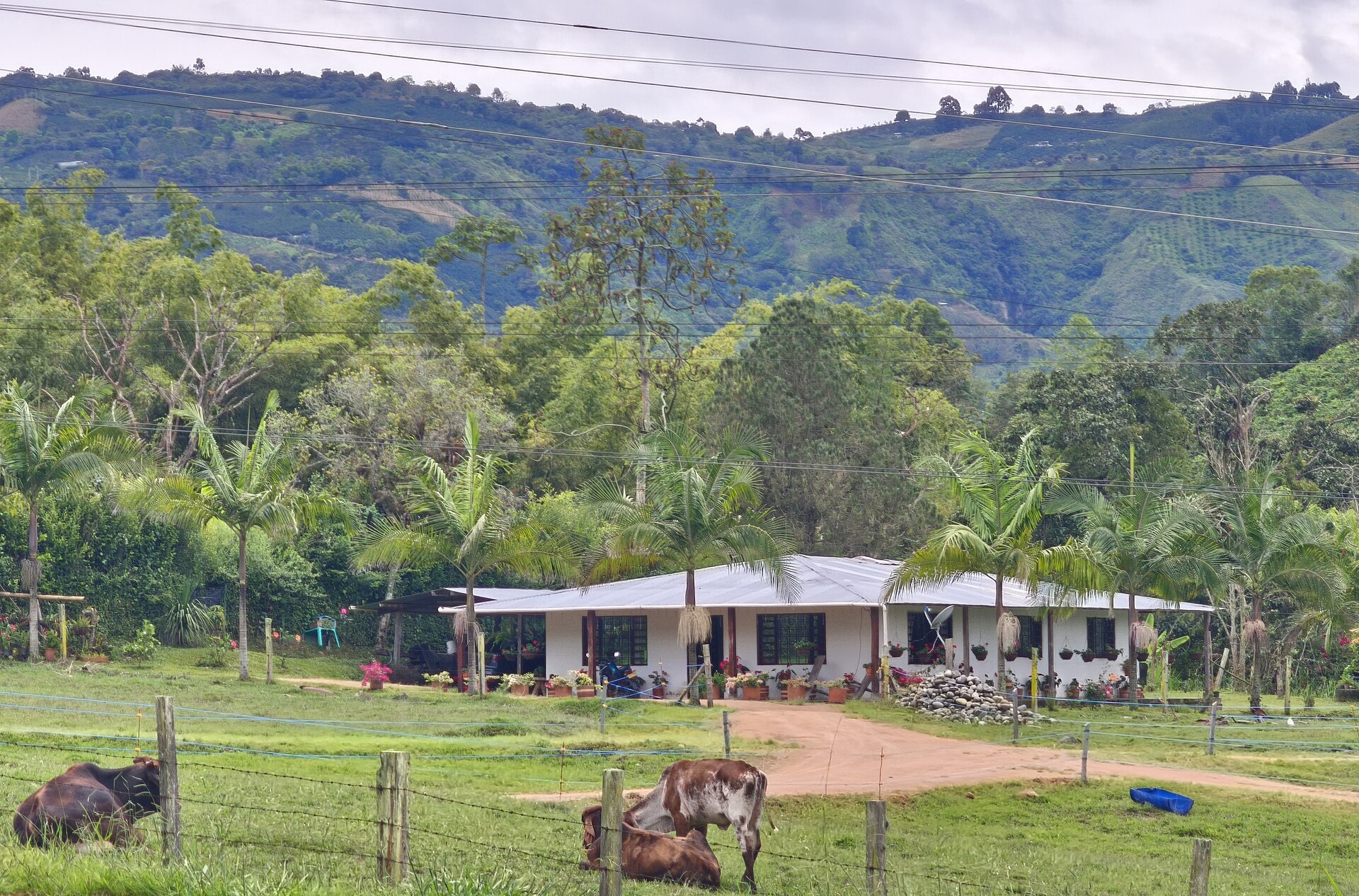
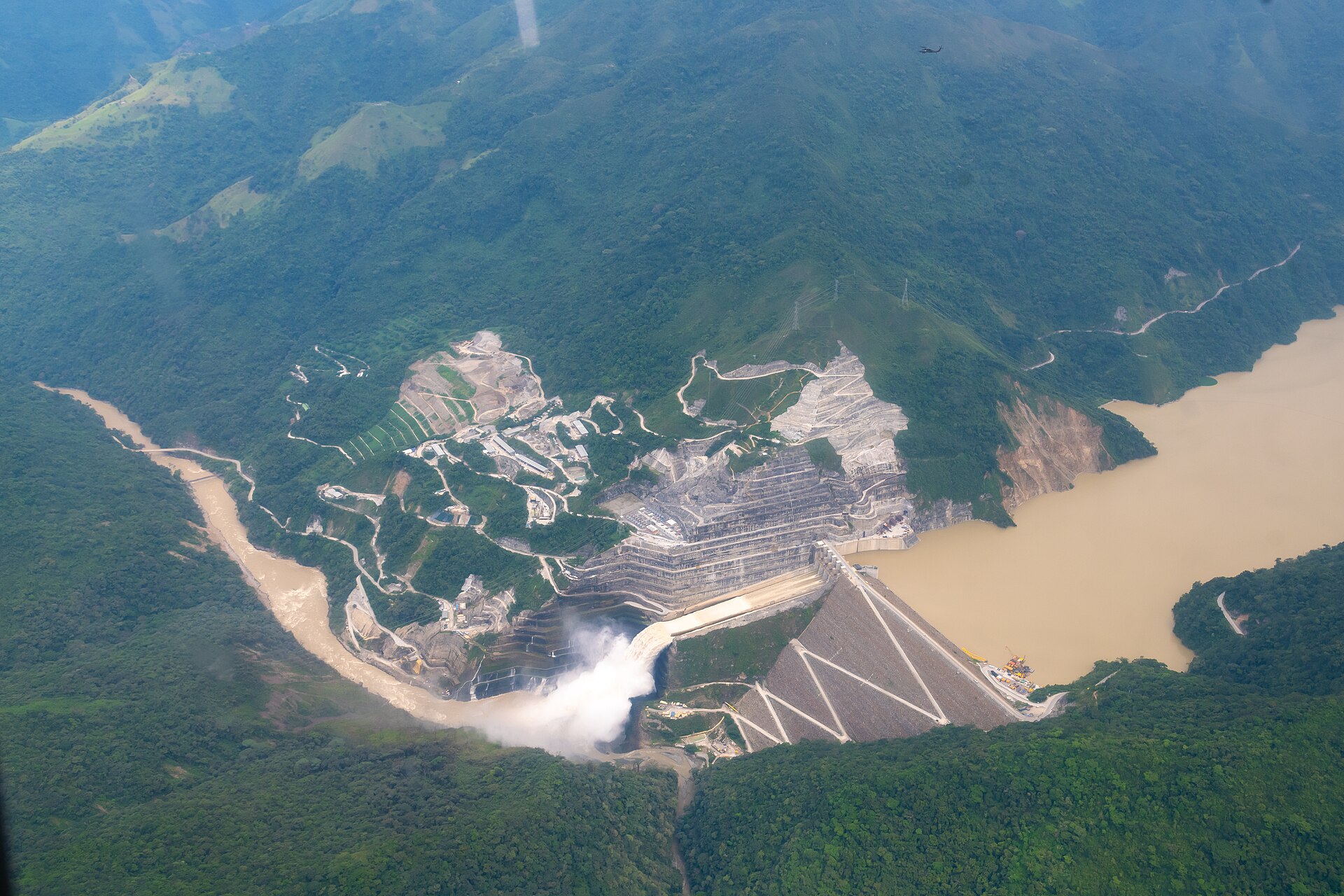
Hydropower is the backbone of Colombia’s grid, supplying 80.7% of 2025 generation, a calculation from hourly data from XM, the grid operator. Thermal plants supplied 12.8% and solar 5.3%.
Reservoirs held 75.9% of useful volume on Thursday, 15 October 2026, against 82.2% a year earlier, XM data show. That cushion matters because IDEAM confirmed El Niño, a Pacific warming that cuts Andean rain, on Thursday, 8 October.
The US Climate Prediction Center put the odds of a strong to very strong El Niño through March 2027 above 83%. Its next update is due on Thursday, 12 November 2026.
Decree 1491 of 6 October 2026 lets thermal plants buy fuel from several suppliers in emergencies. The energy ministry said its Plan Energía YA includes COP 1.9 trillion (about US$597 million) to protect supply.
Forests and Fisheries
IDEAM counted 119,483 hectares of deforestation in 2025, 31% below the 2021 level of about 174,000 hectares, the environment ministry said. The Amazon accounted for 77,805 hectares, or about 65% of the national total.
Cartagena del Chairá in Caquetá lost 16,983 hectares, the most of any municipality, the ministry said. It names land grabbing, extensive cattle ranching and unplanned roads as the main drivers, not mainly illegal crops.
Fisheries are small beside oil or coal. Exports of fish, shellfish and related products earned US$126.3 million from January to August 2026, up 3.8%, DANE data show.
Both coasts support fishing, and DANE counts seafood only as an export line, not as a measure of the whole sector. A full national catch figure is therefore listed under what is not known.
Who Extracts and Who Profits
The state profits most through Ecopetrol, which distributed COP 5.0 trillion (about US$1.6 billion) in dividends in the second quarter of 2026. It said it completed the outstanding payment to its major shareholder, the Colombian state.
Mines and Energy Minister María Nohemí Arboleda oversees the sector for the government. Coal exports fell from US$7.1 billion in 2024 to US$4.9 billion in 2025, and royalties fell about 29%, coal federation Fenalcarbón said.
Foreign firms profit too, with Glencore running Cerrejón and Canada’s Aris Mining running Segovia and Marmato. Local companies such as Mineros also earn from gold, and a guide to who dominates Colombia covers the elites behind them.
Communities near mines press for a share and a say. The blockade at Cerrejón cited court rulings on prior consultation, La República reported, and the company said it had met its duties.
The Environmental Cost
Alluvial gold mining covered 118,410 hectares in 2025, up 4.5% from 113,310, a government and UN drugs office survey found. About 75% was illegal, 21% had permits and 4% was moving towards legality.
Nearly half, 58,216 hectares, lay in zones where mining is banned, including 43,048 hectares in the Pacific Forest Reserve. Chocó, Antioquia and Bolívar hold 82% of the illegal area, and 48% of the mined land also has coca.
Minister Arboleda said on Friday, 2 October 2026 that the government will pursue criminal groups behind illegal mining. A report on the survey gives the full figures.
Attacks on pipelines also carry a cost, causing unscheduled shutdowns and environmental repairs. Ecopetrol counted 31 attacks in 2025, down from 41 in 2024, which deferred 762,684 barrels of production.
Open-pit coal mining reshapes the northern plains of La Guajira, where Cerrejón operates. The Petro government asked Glencore to plan an eventual closure to protect La Guajira’s economy, Reporte Minero reported in May 2026.
What It Means for US Readers
The United States was Colombia’s top export buyer, taking 27.2% of sales in August 2026. A 15% smaller coffee crop can tighten supply for US buyers, while El Niño raises power and farm risks.
US investors can own Ecopetrol and Aris Mining on the New York Stock Exchange, and both face policy and El Niño risks. Ecopetrol’s second-quarter net income was COP 6.1 trillion (about US$1.9 billion), while Brent averaged US$97.
Travellers meet these resources from the coffee hills to the Caribbean coast, and illegal mining and coca zones carry security risks. The Bogotá city page covers the capital, and the Colombia hub collects all Rio Times coverage.
What Prediction Markets Say
Polymarket, a prediction-market exchange, lists bets on the Banco de la República decision of Friday, 30 October 2026. No change traded at 67% (16 October, 10:24 a.m. ET).
A 25 basis point rise traded at 21%, and a rise of 50 basis points or more at 6%. The board raised the rate by 25 basis points to 12.25% on Wednesday, 30 September 2026.
Oil, coal and gold earnings affect the peso and inflation, and about US$37,000 had traded across all outcomes by 16 October. Bets are not forecasts, and prices can move within minutes.
Why we show this: prediction markets turn real-money bets into a live probability that moves within minutes of the news, which is why investors, campaigns and newsrooms in the United States now follow them closely. We show them next to polls and official results, never instead of them.
What Is Not Known
Whether the Israel coal ban is formally lifted, and what Cerrejón produced in 2026, is not confirmed. The new government’s plans for fracking pilots, new exploration contracts and the pending mining bill are also not confirmed.
DANE does not split the 95.1% rise in gold exports between prices and volumes. No official 2026 figure for national coal or gold output was confirmed.
No current national total for fish catch, fish farming or pasture area was confirmed. The damage El Niño does to hydropower and crops will only be measurable after it ends.
Frequently Asked Questions
What are Colombia’s main natural resources?
Oil, coal and gold are the main mineral exports, and coffee, bananas and palm oil lead farming. Hydropower, Amazon forests and two ocean coasts add to the list.
How much does Colombia earn from oil?
Oil and refined fuels earned US$10.1 billion from January to August 2026, up 17.1%. Crude alone earned US$7.8 billion on 105.0 million barrels.
Does Colombia export more gold than coal?
Yes, in 2026: gold earned US$5.3 billion from January to August, against US$3.3 billion for coal. In 2025 coal still led, with US$4.9 billion against US$4.6 billion for gold.
Who owns Ecopetrol?
The Colombian state owns 88.49% of Ecopetrol, and the rest trades in Bogotá and on the New York Stock Exchange. Joaquín Gutiérrez Caballero has led the company since 28 September 2026.
How much of Colombia’s electricity is hydropower?
Hydropower supplied 80.7% of electricity generated in 2025, a calculation from hourly XM grid data. El Niño, confirmed on 8 October 2026, puts that supply at risk.
How much forest did Colombia lose in 2025?
IDEAM counted 119,483 hectares of deforestation in 2025, about 65% of it in the Amazon. That is 31% below the 2021 level, the environment ministry said.
Sources: DANE, exports bulletin for August 2026; DANE, exports annex tables, August 2026; DANE, exports bulletin for December 2025; Banco de la República, board statements; Ecopetrol, second-quarter 2026 results; Ecopetrol, new chief executive, 24 September 2026; Ecopetrol, Form 20-F for 2025; Ministerio de Minas y Energía, news; Minenergia and UNODC, alluvial gold report, 2 October 2026; Minenergia, Decree 1491 and Plan Energía YA, 7 October 2026; Minenergia, SPEC LNG rationing ends, 29 September 2026; Ministerio de Ambiente, deforestation 2025; IDEAM, press room; XM, grid data service; NOAA Climate Prediction Center, ENSO discussion, 8 October 2026; Aris Mining; Mineros; Cerrejón; Forbes Colombia, reserves in 2025; Radio Nacional, years of oil left; Forbes Colombia, coca in 2024; Portafolio, coffee crop year 2025/26; Reporte Minero, Cerrejón closure plan, May 2026; Reporte Minero, Cerrejón blockade, June 2026; El Tiempo, Fenalcarbón on coal royalties, 4 February 2026; Publimetro, coal and Israel, 22 August 2026; Portafolio, Israel coal decree, 3 September 2026; Forbes Colombia, Cerrejón restart, 2 June 2026; La República, Cerrejón blockade, 1 June 2026; Mining.com, Cerrejón closure plans, 19 May 2026; Blu Radio, coca in 2024; Vanguardia, coffee crop year 2025/26; El Universal, mining bill, 28 July 2026; Infobae, cabinet sworn in, 8 August 2026 (all accessed 16 October 2026).
This article was produced by The Rio Times’ automated newsroom system. How we use AI · Report an error · Editorial responsibility: Matthias Camenzind, Editor-in-Chief
Expat Guide to Colombia
What The Rio Times publishes for foreigners who live in or move to Colombia.
Start here
- Colombia SIM Card and Internet for Foreigners in 2026
- Colombia Rent Increase Limit Is 5.10% in 2026
- Bancolombia Explained, Colombia's Largest Bank in 2026
- Cost of Living in Colombia for Expats in 2026: Rent, Transport and Health in Five Cities
City guides
Medellín, Bogotá, Cartagena, Cali
Coming up in Colombia
- Bad Gyal Bogotá Concert Brings Más Cara Tour to Colombia on 18 October 18 Oct
- Fonseca El Campín Concert Set for 24 October 2026 in Colombia 24 Oct
- Ryan Castro El Campín Halloween Show Set for 31 October in Colombia 31 Oct
- Los Tigres del Norte Play Bogotá's El Campín Stadium on 7 November 7 Nov
Understand Colombia